Germany's football giants ranked
Ask ten supporters for Germany's ten biggest football clubs and the argument usually starts at number three. Bayern Munich's supremacy is measurable and Borussia Dortmund's second place is hard to challenge. After that, trophies, membership, crowds, regional identity and historical eras pull the list in different directions.
This ranking makes those choices visible. It weighs major domestic and European honours most heavily, then considers supporter scale, Bundesliga legacy and present relevance. It is a September 2026 editorial assessment—not an official league table—and every close call comes with the evidence that could move it.
The 10 Biggest Football Clubs in Germany: Quick Ranking
Our answer is Bayern Munich first, Borussia Dortmund second and Schalke 04 third, followed by seven clubs whose order becomes much closer. This is not a ranking of the best current squad or the richest company. It combines major trophies, European achievement, sustained support, historical importance, top-flight legacy and modern relevance.
| Rank | Club | Why the club is here |
|---|---|---|
| 1 | Bayern Munich | Germany's defining trophy power and a global superclub |
| 2 | Borussia Dortmund | European champion, huge crowds and Bayern's strongest modern rival |
| 3 | Schalke 04 | Massive Ruhr support, seven German titles and major cup history |
| 4 | Hamburger SV | European Cup winner with a giant northern identity |
| 5 | Borussia Mönchengladbach | The great 1970s counterweight to Bayern and a two-time UEFA Cup winner |
| 6 | Eintracht Frankfurt | National reach, five German cups and two UEFA Cup/Europa League wins |
| 7 | VfB Stuttgart | Five German championships, multiple cups and a major regional base |
| 8 | Werder Bremen | Four Bundesliga titles and six DFB-Pokals across enduring top-flight history |
| 9 | 1. FC Cologne | The first Bundesliga champion and one of Germany's largest member clubs |
| 10 | Bayer Leverkusen | An unbeaten Bundesliga champion with European silverware and elite relevance |
The top two are clear. From third downward, “biggest” depends on what you value. Schalke's recent second-tier years do not erase an enormous following; Leverkusen's brilliant modern peak does not instantly reproduce a century of mass identity. Hamburg and Gladbach gain from European glory, while Frankfurt's support and continental revival push it above clubs with a similar domestic record.
Treat the list as an argued snapshot in September 2026, not a permanent law. For objective answers, use the current Bundesliga table or our review of the last ten Bundesliga winners. The rest of this guide shows exactly why each club occupies its place.
What “Biggest” Means in This Ranking
“Biggest” is not a statistic stored in a league table. To make the comparison useful, we give roughly half the weight to sustained sporting achievement, then use supporter scale, historical influence and present relevance to separate clubs with similar records. The method rewards a complete institution, not one hot season or one social-media total.
Sporting Success Carries the Most Weight
German championships, Bundesliga titles, DFB-Pokals and major UEFA trophies form the foundation. A European Cup or Champions League carries exceptional weight because only Bayern, Hamburg and Dortmund have won it among German clubs. UEFA Cup and Europa League wins also matter, especially for Gladbach and Frankfurt. We value repetition over a solitary peak and recognise pre-1963 German championships, while noting that they came before the national Bundesliga format.
Support, Membership and Stadium Pull Matter
Membership gives a verified view of people formally attached to a club. In late 2025, official Bundesliga reporting put Bayern at 432,500 members, Dortmund at 230,000 and Schalke at 200,000. Matchday demand adds another signal: Dortmund averaged almost 80,000 spectators in the 2025/26 Bundesliga, while second-tier Schalke averaged more than 61,000. Those figures help explain why relegation does not immediately make a giant club small.
Neither measure is perfect. A sports club's membership can include people from non-football departments; attendance is capped by stadium size; and millions of international followers never enter either count. We therefore use membership and crowds as evidence of depth, not as a universal fan census.
History Counts, but This Is Not a Nostalgia List
Founding importance, iconic teams, regional identity and long top-flight presence all add scale. Cologne's status as the first Bundesliga champion and Gladbach's 1970s influence matter. So do modern achievements: Leverkusen's unbeaten 2023/24 domestic double changed its historical standing, while Frankfurt's European revival expanded its profile.
The balance prevents two distortions. A current standings table cannot erase 100 years of support, and an old trophy cannot automatically outweigh decades of smaller reach. Readers who prefer a pure results list should use our Bundesliga winners history; this ranking asks the broader cultural question.
Ranks 1–3: Bayern, Dortmund and Schalke
Germany's top three demonstrate why the ranking needs more than one column. Bayern dominate measurable success, Dortmund combine elite trophies with the country's largest weekly crowd, and Schalke remain a giant because support can survive sporting decline.
1. Bayern Munich
Bayern are Germany's biggest football club by a distance. The September 2026 Bundesliga record book credits them with 34 championships in the Bundesliga era, plus their pre-Bundesliga title in 1932. They have also won the European Cup or Champions League six times. No German rival can match that combination of domestic repetition, continental authority and modern global recognition.
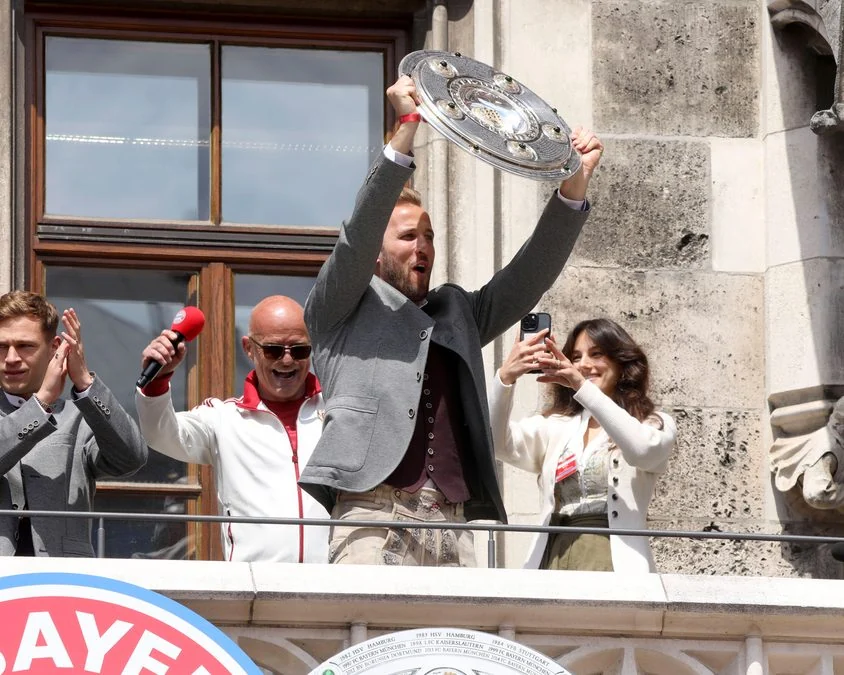
The institution is as large as the trophy cabinet. Bayern reported 432,500 members at their 2025 annual meeting, then a world-record figure for a sports club. The Allianz Arena averaged roughly 75,000 in 2025/26. Decades associated with Beckenbauer, Müller, Rummenigge, Matthäus, Kahn, Lahm, Neuer and Thomas Müller have made Bayern a reference point far beyond Bavaria. German rivals may resent the financial gravity, but the number-one position is not close.
2. Borussia Dortmund
Dortmund are the only convincing second choice. BVB have eight German championships across eras—five since the Bundesliga began—and became European champions in 1997. Their 1966 Cup Winners' Cup was the first continental trophy won by a German club. Jürgen Klopp's 2010/11 and 2011/12 champions restored the club as Bayern's defining modern challenger, and repeated Champions League runs kept its international profile high.
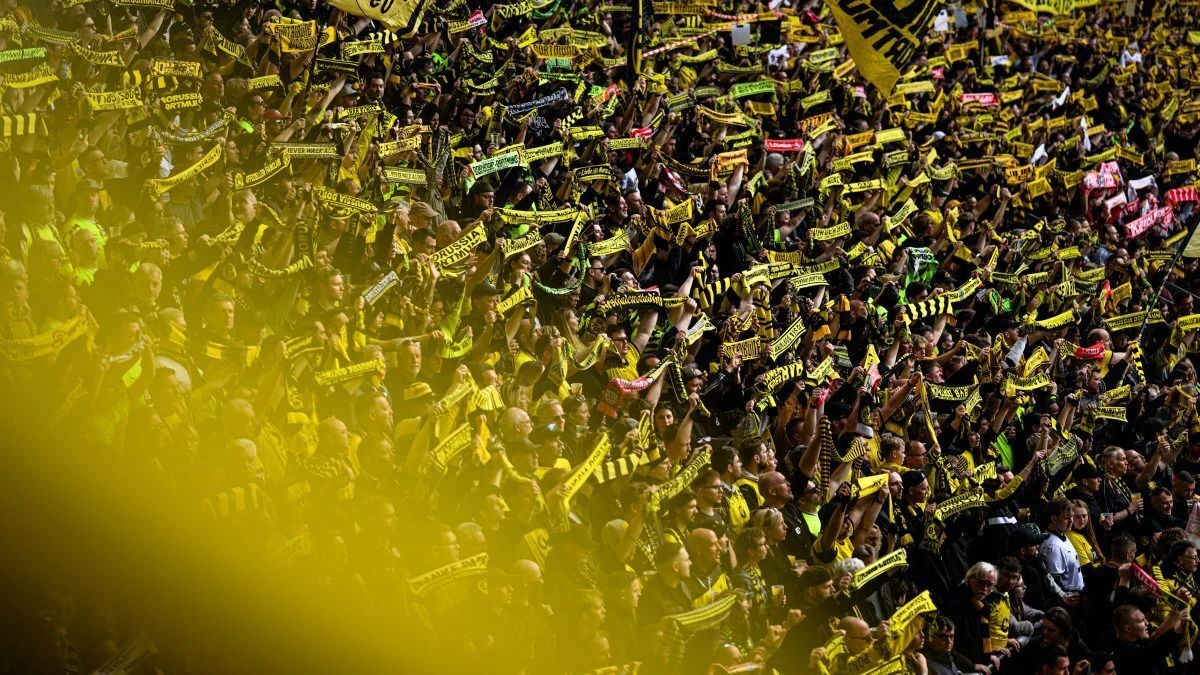
Then there is the Südtribüne. Dortmund led Bundesliga attendance again in 2025/26 at almost 80,000 per match and reported 230,000 members in summer 2025. The yellow wall is not merely a television image; it expresses the club's Ruhr roots and gives BVB cultural reach that trophy-only lists miss. Bayern have more of almost everything, but no German club combines a comparable stadium identity with such sustained elite relevance.
3. Schalke 04
Schalke are the controversial placement and the best test of the method. Their seven German championships all predate the Bundesliga, which they have never won. Yet the Royal Blues also own five DFB-Pokals and the 1997 UEFA Cup, while their great 1930s side is essential to German football history. The 2001 four-minute championship heartbreak remains one of the Bundesliga's defining stories.
Sporting instability sent Schalke into Bundesliga 2, but the audience barely behaved like that of a diminished club. Membership reached 200,000 in September 2025, and more than 61,000 spectators per game made Schalke the second tier's attendance leader in 2025/26. Promotion back to the Bundesliga for 2026/27 restored the Revierderby stage. Hamburg, Gladbach and Frankfurt have strong cases, but Schalke's mass Ruhr identity and proven loyalty give them third place.
Ranks 4–6: Hamburg, Gladbach and Frankfurt
The next group is where reasonable rankings diverge. Hamburg own the rarest trophy, Gladbach produced a domestic dynasty and Frankfurt combine deep support with the most recent European breakthrough.
4. Hamburger SV
HSV's fourth place begins with the 1983 European Cup. Only Bayern and Dortmund share European champion status among German clubs, and Hamburg added the 1977 Cup Winners' Cup, six German championships across eras and three DFB-Pokals. The side of Kevin Keegan, Manfred Kaltz, Horst Hrubesch and Felix Magath made Hamburg a European capital of football around the turn of the 1980s.
Seven seasons in Bundesliga 2 damaged the modern record but demonstrated the depth of the institution. Crowds continued to fill the Volksparkstadion, membership was reported at 140,000 in 2025, and promotion restored HSV to the top flight that year. In 2025/26 the club averaged roughly 56,900, third in the Bundesliga. Gladbach have more Bundesliga titles; Hamburg edge them because European Cup prestige, city scale and northern reach make the overall footprint broader.
5. Borussia Mönchengladbach
Gladbach's claim is built on one of Germany's greatest teams. The Foals became the first club to defend a Bundesliga title, won five championships during the 1970s and took the UEFA Cup in 1975 and 1979. With Günter Netzer, Berti Vogts, Jupp Heynckes and Allan Simonsen, their aggressive, youthful football challenged Bayern for an era rather than a season.
Three DFB-Pokals and a 1977 European Cup final deepen the résumé. The caution is recency: Gladbach's last major trophy was the 1995 cup, and the club has not converted a loyal six-figure membership into another dynasty. Still, “biggest” must preserve transformative sporting importance. Few clubs changed how a generation imagined German football as profoundly as the Foals.
6. Eintracht Frankfurt
Frankfurt's one German championship, won in 1959, looks modest beside Gladbach's five. The wider case is powerful: five DFB-Pokals, the 1980 UEFA Cup and the 2022 Europa League. That modern European run—sealed against Rangers in Seville—connected the black-and-white history of the 1960 European Cup final with a new worldwide audience.
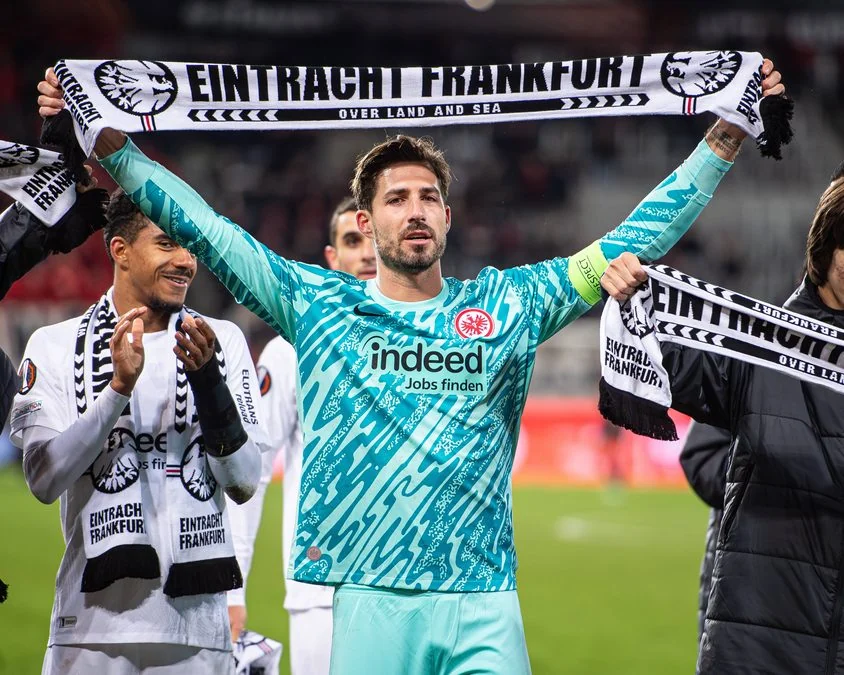
Support supplies the tiebreaker. Official reporting placed Eintracht around 155,000 members in 2025, and away-day displays have become part of the club's international image. Frankfurt are not above Hamburg or Gladbach on domestic championships, but they feel unusually alive across eras: a major-city club with historic honours, current European credibility and a fanbase large enough to turn continental trips into home ends.
Ranks 7–10: Stuttgart, Bremen, Cologne and Leverkusen
Ranks seven to ten are separated by emphasis more than status. Bremen win a trophy-count comparison with Stuttgart, Cologne dominate some membership lists, and Leverkusen have the strongest recent season. Our order rewards the broadest balance.
7. VfB Stuttgart
Stuttgart have won five German championships across eras, including Bundesliga titles in 1984, 1992 and 2007. Their fourth DFB-Pokal arrived in 2025, ending a long wait and refreshing a history that also includes the 1989 UEFA Cup final. From Fritz Walter and Jürgen Klinsmann to Sami Khedira and Mario Gómez, VfB's academy and regional player pathway have repeatedly influenced the national team.
The ranking above Bremen is narrow. Stuttgart reported 126,000 members in the official 2025 comparison, play in one of Germany's largest metropolitan regions and returned to the Champions League places in the middle of the decade. Relegations in 2016 and 2019 exposed volatility, but large crowds and immediate recoveries showed that the club's base remained Bundesliga-sized.
8. Werder Bremen
A pure post-1963 domestic résumé would put Bremen higher. Werder have four Bundesliga championships and six DFB-Pokals—the cup total is second only to Bayern—and won the 1992 European Cup Winners' Cup. Otto Rehhagel's long reign and Thomas Schaaf's 2003/04 double created two distinct golden eras rather than one isolated generation.
Bremen also have one of the league's deepest participation records and a strong northern identity built around the Weserstadion. Why only eighth? Their formal membership was around 64,000 in 2025, smaller than several direct rivals, and the club's international profile has receded since its 2000s Champions League years. Fans who prioritise trophies and all-time Bundesliga continuity can reasonably place Werder fifth or sixth.
9. 1. FC Cologne
Cologne are foundational. They won the inaugural Bundesliga in 1963/64, added another championship in 1978 and became the first Bundesliga-era club to complete a domestic double that same season. Four DFB-Pokals, a 1986 UEFA Cup final and figures such as Wolfgang Overath, Heinz Flohe, Toni Schumacher and Lukas Podolski give the record national weight.
The modern sporting curve has included repeated relegations, but the city never stopped behaving like a major football market. Official reporting put Cologne around 155,000 members in 2025, level with Frankfurt and ahead of several more successful recent teams. The carnival culture, goat mascot and RheinEnergieStadion make the club instantly recognisable. Cologne rank ninth because the trophy peak is older—not because the following is small.
10. Bayer Leverkusen
Leverkusen forced their way into the ten with the greatest Bundesliga campaign any club outside Bayern and Dortmund has produced this century. Xabi Alonso's 2023/24 side became the first to finish a Bundesliga season unbeaten, went 28-6-0, won the DFB-Pokal and completed Germany's sixth domestic double. The club had already won the 1988 UEFA Cup and 1993 German cup, reached the 2002 Champions League final and spent decades developing international stars.
Why not higher? The BayArena is smaller, membership and national matchgoing reach trail the traditional giants, and the club's Bayer-company exception produces a different ownership identity from member-led rivals. Current excellence still matters: Leverkusen's unbeaten title removed the “Neverkusen” ceiling and gave the club a signature achievement older powers cannot dismiss. Another decade of trophies and supporter growth could move them rapidly upward.
How the Order Changes When You Change the Metric
A good ranking should survive scrutiny without claiming that every input measures the same thing. Bayern remain first under almost any sensible definition. Below them, the leaderboard changes quickly.
Most Successful Is Not Always Biggest
If you count only Bundesliga championships, the order begins Bayern with 34, Dortmund and Gladbach with five each, Bremen with four, then Hamburg and Stuttgart with three. That excludes Schalke's seven pre-1963 championships and treats Leverkusen's unbeaten title like any other single win. Add the DFB-Pokal and Bremen's six victories become extremely important; Bayern moved to 21 in 2026, while Dortmund, Schalke and Frankfurt have five each.
European weighting changes it again. Hamburg and Dortmund join Bayern as European Cup winners. Gladbach and Frankfurt own two UEFA Cup/Europa League titles apiece; Schalke and Leverkusen have one. A “most successful” table therefore needs published scoring rules before it can produce a defensible number. Our broader list gives major European honours extra weight but refuses to turn every trophy from every era into an identical point.
Membership and Attendance Reward Different Clubs
A 2025 membership ranking starts Bayern, Dortmund and Schalke, then puts Frankfurt and Cologne around 155,000, Hamburg at 140,000, Stuttgart at 126,000 and Gladbach at 106,500. That would elevate Cologne well above clubs with more recent trophies. It would also understate international supporters who never register as members.
Attendance rewards stadium capacity and demand together. Dortmund led the 2025/26 Bundesliga at almost 80,000, Bayern followed near 75,000 and Hamburg averaged roughly 56,900. Schalke drew more than 61,000 in Bundesliga 2—greater than most top-flight clubs, but still limited by playing only 17 league home matches. Percentage occupancy would favor smaller sold-out grounds instead.
The practical lesson is simple: use the league table to identify the best team now, trophy records to identify sporting success, and several supporter indicators to judge institutional scale. “Biggest” is the intersection, not a synonym for any one list.
Biggest German Football Clubs FAQ
Which German Club Has the Most Fans?
There is no official census of every supporter, but Bayern have the strongest claim by formal membership and worldwide reach. They reported 432,500 members in November 2025. Dortmund offer the strongest domestic matchday counterargument: almost 80,000 average attendance in 2025/26 and 230,000 reported members. Schalke's 200,000 members and more than 61,000 per second-tier home match put them firmly in the same conversation for depth of German support. Survey answers vary with methodology, geography and whether casual international followers count.
Why Is Schalke So High Despite Recent Relegations?
Because club size changes more slowly than league position. Schalke's seven German championships, five DFB-Pokals and UEFA Cup establish historical weight. The Revierderby, mining identity and VELTINS-Arena provide cultural and physical scale. Most decisively, supporters kept joining and attending while the team struggled in Bundesliga 2. A current-power ranking would place Leverkusen, Leipzig and recent European qualifiers above Schalke; a biggest-institution ranking has to measure what remains when results turn bad. Schalke's return to the Bundesliga in 2026/27 strengthens that case without creating it.
Where Do East German Clubs Fit?
East German history counts fully, but it developed in a separate state competition until reunification. Dynamo Dresden were the DDR's most successful club and retain one of Germany's largest lower-league fanbases. Magdeburg won three East German championships in the 1970s and became the only East German club to lift a European trophy when they won the 1974 Cup Winners' Cup. Hansa Rostock and Dresden entered the expanded Bundesliga in 1991/92, while Union Berlin later built a remarkable member-led rise.
None makes this blended national top ten because sustained unified-Bundesliga success, total membership and major-honour depth are lower than the selected clubs. RB Leipzig have stronger current results and two DFB-Pokals, but a much shorter history and a disputed supporter/ownership identity. Depending on the question, Dynamo, Magdeburg, Union or Leipzig can lead the East-specific answer.
The short verdict
Bayern are Germany's biggest club overall; Dortmund are the clearest challenger; Schalke remain the largest club whose modern trophy return falls far short of its support. Beyond them, state your metric before arguing the order. For how all these clubs connect through promotion and relegation, read our German football league system guide.
JOIN THE DISCUSSION
Comments
Sign in with Google to comment. Keep the discussion focused on Bundesliga football and respectful to other supporters. New comments are reviewed before publication.
Loading comments…