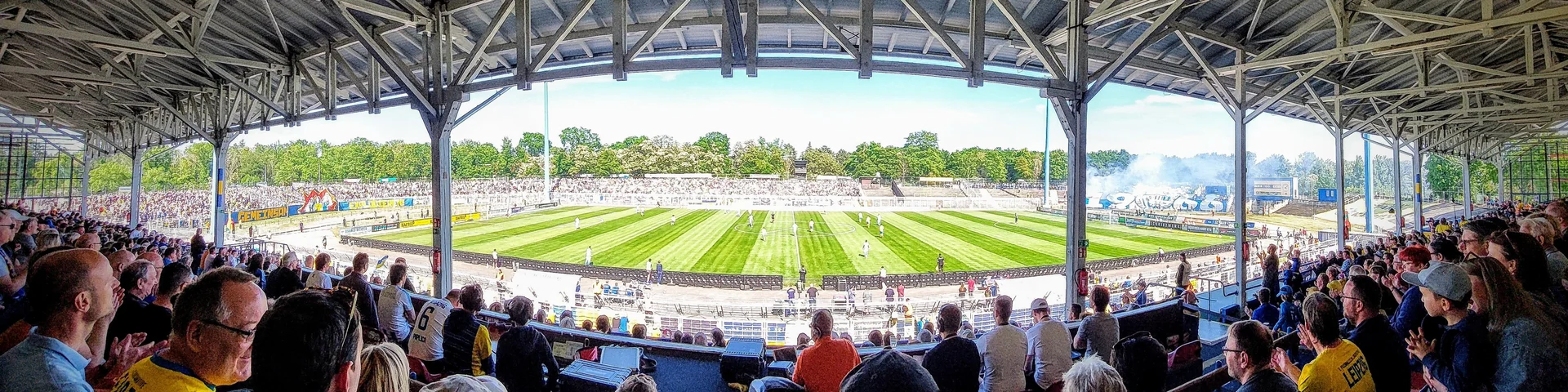
Which Regionalliga should you follow in 2026/27?
Germany's fourth tier has five parallel competitions in 2026/27: Regionalliga Nord, Nordost, West, Südwest and Bayern. Start with the club's regional league, then select that league's table and fixture list. A position in the West is measured against West opponents; it cannot be combined with points earned in Nordost to produce a national fourth-division ranking.
| Competition | Broad orientation | Supporter starting point |
|---|---|---|
| Nord | Northern Germany | Identify the northern competition and its current fixtures. |
| Nordost | North-eastern and eastern Germany | Keep the regional table separate from Nord. |
| West | Western Germany | Use the WDFV's men's competition information. |
| Südwest | South-western Germany | Find the Regionalliga Südwest competition operator. |
| Bayern | Bavaria | Use the Bavarian federation's current season. |
This guide uses information checked on November 12, 2026. That date matters because current competitions and a proposed future reorganization appear beside each other in search results. The five names above describe the season being played. The final section explains the separate proposal that would change the structure later.
The regional choice is also a football choice. It determines the clubs you meet repeatedly, the away journeys that shape a season and the specific promotion route at the top. Two teams can both be fourth-tier clubs while following quite different calendars and regional admission rules. An impressive points total is best understood alongside the number of games played, the opponents faced and the remaining schedule within that competition.
For the whole ladder above and below this level, our German football pyramid guide provides the background. Here, the useful next step is more specific: locate a club, choose the right official competition page and understand what its results can lead to. That approach makes an unfamiliar regional table much easier to follow than searching repeatedly for an unofficial “Bundesliga 4.”
West and Nordost: different regions, different football journeys
A club name is often the quickest route into the right competition. West and Nordost show why the regional labels deserve attention: they gather different football communities, and a familiar professional club's reserve side can appear alongside an independent first team.
Regionalliga West and its Rhine-Ruhr concentration
The WDFV's confirmed 2026/27 field contains 18 clubs. Rot-Weiß Oberhausen, Schalke's U23, Borussia Dortmund's U23 and Bochum's U23 give a new follower an immediate Ruhr-area foothold. Cologne's U23 and Bonner SC extend the picture toward the Rhine. Sportfreunde Siegen and Sportfreunde Lotte are useful reminders that the competition stretches beyond the central urban cluster.
That mix creates different reasons to attend. Someone following a senior club's young players may begin with a U23 team; a visitor looking for a first-team regional identity may begin with Oberhausen or Bonn. Neither choice tells you the result in advance. The shared competition, rather than the size of the parent club, determines which points count toward this table.
For a football weekend, choose one home club and build outward from its confirmed fixture. A map can identify nearby alternatives, but it cannot establish that two matches can be attended on the same day. A changed kickoff or a venue-specific admission arrangement can undo a plan based only on city names. Check the home club's match notice before choosing trains or tickets.
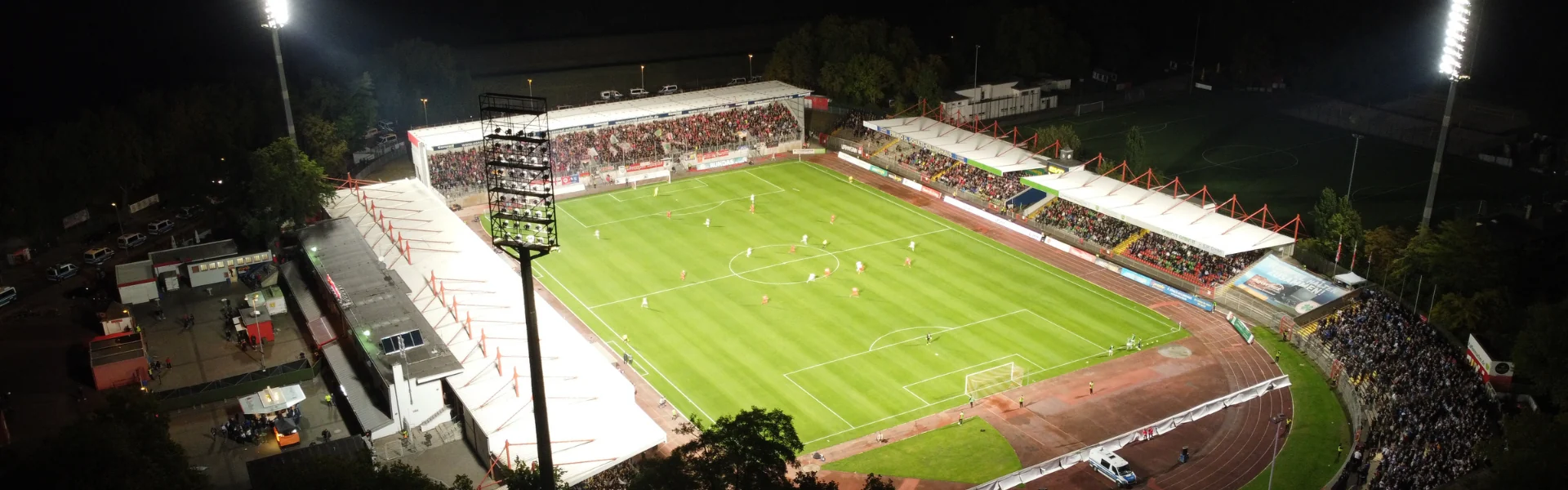
Oberhausen supplies a concrete starting point. The club identifies Stadion Niederrhein as its home since 1926. Its stadium page also distinguishes visiting supporters' areas. Treat that club information as the starting point for a visit, then read the specific match's ticket and arrival instructions.
Regionalliga Nordost beyond a single eastern city
Nordost is easy to reduce to Berlin when browsing familiar club names. The current season is wider than that. Luckenwalde's published fixture list includes Berlin opponents, both Lokomotive and Chemie Leipzig, Carl Zeiss Jena and Greifswalder FC. Those examples put several distinct cities and football traditions into one regional race.
The club's 2026/27 schedule also names away venues, including Leipzig's Bruno-Plache-Stadion and Jena's Ernst-Abbe-Sportfeld. Venue names matter: searching only for a large city's best-known stadium can send a visitor toward a different team. Search the named opponent and its actual ground together.
Use the geography to understand the season rather than assuming every away game is a local trip. A supporter following one club encounters short regional connections and longer journeys within the same fixture list. The practical rhythm changes with each destination, even though every league win has the same points value.
The NOFV's July draw announcement separated publication of the season schedule from precise appointments for the opening rounds. That distinction remains useful when reading a calendar: a round's nominal date is a planning marker until the actual match appointment is confirmed.
The Nord, Südwest and Bayern routes across Germany
The other three competitions add different regional scales. Follow their own operators when moving between them: a similar-looking result page can conceal a different season, governing body or set of match appointments.
Nord: coastal clubs, city teams and long journeys
The Northern federation's competition guide defines Nord's territory as Lower Saxony, Hamburg, Bremen and Schleswig-Holstein. That creates a useful geographic framework before you look up an individual club. Hamburg and Bremen are major city reference points, while the wider northern region gives the league a different scale from a single metropolitan competition.
The actual 2026/27 opening program makes the geography concrete. Werder Bremen's U23 hosted VfB Oldenburg on Platz 11 at the Weserstadion complex; Hamburger SV's U21 against Eimsbütteler TV was also part of the opening round, scheduled separately. The NFV's opening announcement identified both the specific Bremen venue and the delayed completion of the round.
Those details are useful beyond the opening weekend. A famous club name does not mean its reserve match uses the first team's main stadium. Similarly, a round can remain incomplete while another club has already played its next fixture. Begin with the team-specific schedule, then use the league table to place that match in context.
Südwest: several state associations in one competition
Südwest connects Baden-Württemberg, Saarland, Rhineland-Palatinate and Hesse. Its official operator describes a territory involving seven state associations and two regional associations. RLSW Regionalliga Südwest GmbH has operated the competition since 2023/24, with its office in Karlsruhe.
SV Sandhausen's 2026/27 league schedule includes FC 08 Homburg, VfR Mannheim, Eintracht Frankfurt II, VfR Aalen and KSV Hessen Kassel. These names provide more useful anchors than assuming that “south-west” means one state or one travel corridor. Kassel and a Baden-Württemberg destination require different planning, although they belong to the same league race.
Use the RLSW competition site for the common table and match information, then the home club for the experience around a particular game. A club's ticket notice answers a different question from the league calendar: the calendar identifies the contest, while the notice explains how supporters enter and attend it.
Bayern: a regional identity with its own season rhythm
The BFV's 2026/27 team list contains 19 clubs. Examples include Bayreuth, Schweinfurt, Illertissen, Unterhaching and the second teams of Bayern Munich and Nürnberg. It is therefore inaccurate to assume that every current Regionalliga contains 18 teams simply because that number appears in a generic description of the structure.
An odd number of teams has an immediate reading consequence: the Bavarian schedule includes byes. The BFV's published season calendar runs across 38 rounds, with a winter break beginning on December 5, a planned February 19 restart and a May 22, 2027 final round. Those are competition calendar markers; individual appointments and changes still need checking.
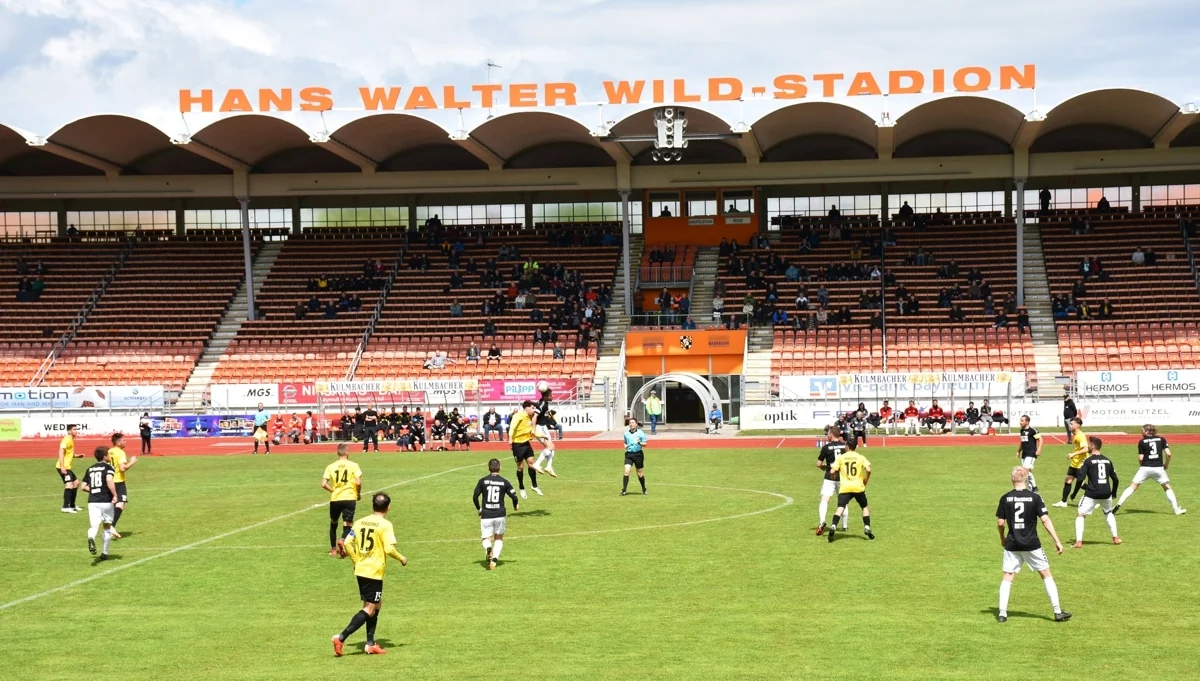
For a reader following Bayreuth, the regional competition gives the game its league context; the named stadium gives the visit its location. For someone following Bayern's second team, the suffix supplies an equally important clue about which squad is playing. Keeping region, team and venue together makes this broad competition easier to follow without confusing it with either the Bundesliga or the two Bayernliga divisions below.
How to read a Regionalliga table and find the next fixture
Choose the regional competition and the 2026/27 season before interpreting a table. Search results frequently retain older seasons, and a club can move between levels. A familiar badge on an archived page is therefore insufficient evidence that you have found the current competition.
Games in hand and the meaning of II
Read matches played alongside points. Consider a hypothetical table in which one team has 33 points from 16 games and another has 31 from 14. The first leads by two points; the second has two extra opportunities to earn points. Those unplayed matches are opportunities, not points already won. Describing the second club as the certain future leader would go beyond what the table says.
The same caution applies to form. A short winning sequence can look impressive without answering how many home games were included or which opponents were faced. Use the fixture list to interpret the run, and distinguish completed results from postponed or still-live matches. A winter comparison is especially sensitive to unequal schedules and, in this season's Bayern competition, scheduled byes.
Roman numeral II usually identifies a club's second team; U23 or U21 labels identify youth-oriented squads in the lists discussed above. Keep that suffix when searching. Bayern Munich II's match belongs to its own competition, and a first-team Bundesliga result does not update the reserve side's regional points. The label alone also does not explain every player-eligibility rule, which belongs to the applicable regulations.
Check the competition, team and match appointment together
The WDFV competition hub directs readers to Fussball.de for results and tables. For the other regions, begin with the relevant federation or RLSW destination linked earlier, then select the current men's competition. This keeps an official route available even when a search engine surfaces an older table first.
Once you have the right competition, open the team's next match and confirm the opponent, home or away status, date, kickoff and venue. Then compare the home club's latest match notice. That last step matters even if a calendar was originally published by the league.
A real West example shows how small changes matter: Wattenscheid's home match against Cologne U23 on November 20, 2026 was moved from 19:00 to 18:30. The WDFV announced the adjustment on its league hub. A calendar saved before the change would still identify the correct teams and day while leaving a visitor half an hour late.
For a supporter outside Germany, keep the displayed German local time separate from the time on your own device. Check whether a result service converts time zones before copying an appointment. The useful end product is one confirmed match entry with the correct team, ground and local kickoff, rather than several conflicting calendar screenshots.
Who can win promotion to 3. Liga in 2026/27?
The top of the five tables does not offer five identical outcomes. There are four promotion places into 3. Liga: three direct sporting routes and one place decided between two regional representatives. The season is essential because the rotating direct route changes.
Three direct routes and one two-legged tie
| Regionalliga | Route toward 3. Liga |
|---|---|
| West | Direct sporting qualification |
| Südwest | Direct sporting qualification |
| Nordost | This season's rotating direct route |
| Nord | Two-legged promotion tie against Bayern's representative |
| Bayern | Two-legged promotion tie against Nord's representative |
The NOFV explicitly identifies 2026/27 as Nordost's direct-promotion season. The BFV's current season regulations identify Nord as the opponent for Bayern's champion in home and away promotion matches. These are the relevant current rules when an older season report shows a different pairing.
For Nordost supporters, winning the league can complete the sporting route upward without an additional regional-champion tie. For Nord and Bayern supporters, the title race leads to another contest. That extra stage changes how a season's climax feels: the final league match and the final promotion decision need not be the same event.
Do not treat that matrix as an announcement of particular finalists. The clubs still have to earn their positions and satisfy the applicable requirements. Nor does knowing the pairing establish the exact dates, kickoff times or ticket arrangements for the eventual games. Those details belong to the competition's later confirmed appointments.
Admission and relegation require more than a colored row
Sporting qualification and admission answer different questions. A table identifies performance; the admission process checks whether a club can enter the next competition under its rules. The West regulations, for example, address what happens when the sporting champion does not apply or fails an admission condition. A colored promotion row cannot communicate every such circumstance.
Read the bottom of a table with the same care. Movement down from 3. Liga can affect the number of teams that must leave a regional competition. The NOFV's current explanation specifically says its number of relegated teams can increase depending on incoming third-tier clubs from its territory. One region's relegation line should therefore not be copied onto another region's table.
When a club is described as safe or promoted, identify what has actually been confirmed. It may have secured a mathematical position, received an admission decision, or completed both stages. Late-season reporting becomes much clearer when those events are named precisely. Until the relevant decisions are settled, the table remains a powerful account of results rather than a complete administrative forecast.
What the proposed Kompassmodell would change
As of November 12, 2026, the Kompassmodell is a proposal awaiting a decision. The DFB has scheduled an extraordinary congress for December 18. Its October 30 announcement proposes replacing the five regional competitions with four groups and giving every group champion a direct promotion route.
The DFB's accompanying explanation describes groups of 20 and an allocation based primarily on reducing travel, rather than the existing association boundaries. It also recognizes questions around derbies and clubs near group boundaries. Those details explain why the proposal could affect a club's opponents as well as the route upward.
That is a substantial structural change, but a proposal is not a new fixture list. It does not tell a supporter which opponents a particular club will face in a future group. Until decisions and allocations are made, a precise-looking future map would imply certainty that the published proposal does not supply.
Why 2027/28 and 2028/29 mean different things
There are three separate season labels to keep straight. The 2026/27 season is the current five-league competition described in this guide. Under the proposal, 2027/28 would be a qualification season. Subject to approval, 2028/29 would be the first season played in the new four-group structure.
For someone following a club now, this means the current regional table and this season's promotion matrix remain the immediate reading tools. For someone planning longer term, the congress decision and subsequent qualification regulations become the next documents to check. A reform headline cannot settle both questions at once.
The distinction also helps explain older and newer search results. A report about Nordost's current direct route can be accurate alongside a later-looking proposal that gives four future champions direct promotion. They refer to different competitions and different points in the timeline. Read the season and decision status before deciding that two sources conflict.
To follow the rest of 2026/27, return to the regional operator, the exact team and its confirmed next fixture. That gives each result a clear home: one table, one current promotion route and one real match appointment. When the reform decision arrives, assess its future effects separately from the football already being played.
JOIN THE DISCUSSION
Comments
Sign in with Google to comment. Keep the discussion focused on Bundesliga football and respectful to other supporters. New comments are reviewed before publication.
Loading comments…