
Bayern Munich lead the Bundesliga all-time table with 4,238 points through the end of 2025/26. Below is the complete 58-club ranking at that fixed cutoff, followed by an explanation of the common three-point scale, historical deductions and what the totals can tell supporters.
What the Bundesliga all-time table measures
The Bundesliga all-time table adds together clubs' results in Germany's national top flight from its first season in 1963/64. Bayern Munich lead the completed-season ranking shown here with 4,238 points. This article fixes the reference at the end of 2025/26 and includes all 58 clubs that had played in the competition by that point. It does not add matches from the ongoing 2026/27 campaign.
That cutoff is essential to reading the numbers. A rolling table viewed after an October matchday can legitimately show more points and appearances than a finished-season reference. The difference does not necessarily indicate an error: it may simply reflect additional matches. Compare the date and the competition scope before comparing totals. A historical table is only a useful common reference when every row belongs to the same boundary.
Elversberg provides the clearest example. The club became the Bundesliga's 59th participant in 2026/27, as the league's official history guide explains. It is therefore absent from this 58-club table through 2025/26. Its absence is a consequence of the stated cutoff, not a judgement about the club's importance or current performance. The current Bundesliga table answers the separate question of where today's teams stand.
Only Bundesliga results belong in these totals. DFB Cup matches, European competitions, promotion play-offs and seasons in 2. Bundesliga do not become extra wins or points in this ranking. A famous cup triumph can be central to a club's history while leaving its all-time league total unchanged. Likewise, a season spent outside the top division creates a pause in accumulation rather than a negative season with deductions for every match not played.
The ranking is consequently a record of long-run participation and performance within a defined competition. It is not a complete measure of German football prestige, a list of championships or a forecast of the next fixture. Reading it alongside those other records is much more rewarding than expecting one column to settle every comparison. First establish who played, how often and with what results; then consider what those figures reveal about the different paths clubs have taken through the league.
The complete 58-club table through 2025/26
The following ranking preserves the DFB Datencenter's published totals at the completed 2025/26 boundary. “P” means matches played, “W” wins, “D” draws and “L” losses. “GF:GA” gives goals scored and conceded, while “GD” is the difference between them. The points column uses a common three-point comparison across eras and retains the historical deductions reflected in the official table.
| Rank | Club | P | W | D | L | GF:GA | GD | Points |
|---|---|---|---|---|---|---|---|---|
| 1 | FC Bayern München | 2078 | 1265 | 443 | 370 | 4736:2265 | 2471 | 4,238 |
| 2 | Borussia Dortmund | 2002 | 926 | 494 | 582 | 3668:2797 | 871 | 3,272 |
| 3 | Werder Bremen | 2070 | 843 | 518 | 709 | 3400:3070 | 330 | 3,047 |
| 4 | VfB Stuttgart | 2002 | 821 | 487 | 694 | 3324:2940 | 384 | 2,950 |
| 5 | Borussia Mönchengladbach | 1976 | 786 | 521 | 669 | 3335:2910 | 425 | 2,879 |
| 6 | Hamburger SV | 1900 | 755 | 506 | 639 | 2977:2716 | 261 | 2,771 |
| 7 | Eintracht Frankfurt | 1934 | 712 | 505 | 717 | 3058:2995 | 63 | 2,639 |
| 8 | Bayer Leverkusen | 1602 | 713 | 430 | 459 | 2771:2121 | 650 | 2,569 |
| 9 | FC Schalke 04 | 1832 | 700 | 463 | 669 | 2642:2678 | -36 | 2,563 |
| 10 | 1. FC Köln | 1798 | 683 | 467 | 648 | 2880:2719 | 161 | 2,516 |
| 11 | 1. FC Kaiserslautern | 1492 | 575 | 372 | 545 | 2348:2344 | 4 | 2,094 |
| 12 | Hertha BSC | 1352 | 477 | 340 | 535 | 1887:2102 | -215 | 1,771 |
| 13 | VfL Bochum | 1296 | 391 | 336 | 569 | 1755:2152 | -397 | 1,509 |
| 14 | VfL Wolfsburg | 986 | 366 | 252 | 368 | 1478:1465 | 13 | 1,350 |
| 15 | 1. FC Nürnberg | 1118 | 344 | 286 | 488 | 1428:1794 | -366 | 1,318 |
| 16 | Hannover 96 | 1016 | 308 | 250 | 458 | 1385:1734 | -349 | 1,174 |
| 17 | MSV Duisburg | 948 | 296 | 259 | 393 | 1291:1520 | -229 | 1,147 |
| 18 | SC Freiburg | 884 | 293 | 227 | 364 | 1156:1398 | -242 | 1,106 |
| 19 | Fortuna Düsseldorf | 854 | 264 | 232 | 358 | 1245:1518 | -273 | 1,024 |
| 20 | Karlsruher SC | 812 | 241 | 230 | 341 | 1093:1408 | -315 | 953 |
| 21 | Eintracht Braunschweig | 706 | 242 | 177 | 287 | 937:1086 | -149 | 903 |
| 22 | TSV München von 1860 | 672 | 238 | 170 | 264 | 1022:1059 | -37 | 884 |
| 23 | 1. FSV Mainz 05 | 680 | 225 | 180 | 275 | 903:1010 | -107 | 855 |
| 24 | TSG Hoffenheim | 612 | 218 | 167 | 227 | 988:981 | 7 | 821 |
| 25 | Arminia Bielefeld | 646 | 173 | 167 | 306 | 739:1063 | -324 | 686 |
| 26 | RB Leipzig | 340 | 180 | 82 | 78 | 659:402 | 257 | 622 |
| 27 | FC Augsburg | 510 | 153 | 131 | 226 | 622:818 | -196 | 590 |
| 28 | KFC Uerdingen | 476 | 138 | 129 | 209 | 644:844 | -200 | 543 |
| 29 | Hansa Rostock | 412 | 124 | 107 | 181 | 492:621 | -129 | 479 |
| 30 | 1. FC Union Berlin | 238 | 87 | 61 | 90 | 304:350 | -46 | 322 |
| 31 | FC St. Pauli | 340 | 72 | 96 | 172 | 353:586 | -233 | 312 |
| 32 | SV Waldhof Mannheim | 238 | 71 | 72 | 95 | 299:378 | -79 | 285 |
| 33 | Kickers Offenbach | 238 | 77 | 51 | 110 | 368:486 | -118 | 282 |
| 34 | Rot-Weiss Essen | 238 | 61 | 79 | 98 | 346:483 | -137 | 262 |
| 35 | Energie Cottbus | 204 | 56 | 43 | 105 | 211:338 | -127 | 211 |
| 36 | Alemannia Aachen | 136 | 43 | 28 | 65 | 186:270 | -84 | 157 |
| 37 | SG Wattenscheid 09 | 140 | 34 | 48 | 58 | 186:248 | -62 | 150 |
| 38 | 1. FC Saarbrücken | 166 | 32 | 48 | 86 | 202:336 | -134 | 144 |
| 39 | Dynamo Dresden | 140 | 33 | 45 | 62 | 132:211 | -79 | 140 |
| 40 | Rot-Weiß Oberhausen | 136 | 36 | 31 | 69 | 182:281 | -99 | 139 |
| 41 | SV Darmstadt 98 | 170 | 31 | 41 | 98 | 182:359 | -177 | 134 |
| 42 | Wuppertaler SV | 102 | 25 | 27 | 50 | 136:200 | -64 | 102 |
| 43 | 1. FC Heidenheim | 102 | 24 | 25 | 53 | 128:191 | -63 | 97 |
| 44 | Borussia Neunkirchen | 98 | 25 | 18 | 55 | 109:223 | -114 | 93 |
| 45 | FC 08 Homburg | 102 | 21 | 27 | 54 | 103:200 | -97 | 90 |
| 46 | SpVgg Unterhaching | 68 | 20 | 19 | 29 | 75:101 | -26 | 79 |
| 47 | Stuttgarter Kickers | 72 | 20 | 17 | 35 | 94:132 | -38 | 77 |
| 48 | FC Ingolstadt | 68 | 18 | 18 | 32 | 69:99 | -30 | 72 |
| 49 | SC Paderborn 07 | 68 | 11 | 18 | 39 | 68:139 | -71 | 51 |
| 50 | Tennis Borussia Berlin | 68 | 11 | 16 | 41 | 85:174 | -89 | 49 |
| 51 | SpVgg Greuther Fürth | 68 | 7 | 18 | 43 | 54:142 | -88 | 39 |
| 52 | SSV Ulm 1846 Fussball | 34 | 9 | 8 | 17 | 36:62 | -26 | 35 |
| 53 | Fortuna Köln | 34 | 8 | 9 | 17 | 46:79 | -33 | 33 |
| 54 | Preußen Münster | 30 | 7 | 9 | 14 | 34:52 | -18 | 30 |
| 55 | Holstein Kiel | 34 | 6 | 7 | 21 | 49:80 | -31 | 25 |
| 56 | Blau-Weiß 90 Berlin | 34 | 3 | 12 | 19 | 36:76 | -40 | 21 |
| 57 | VfB Leipzig | 34 | 3 | 11 | 20 | 32:69 | -37 | 20 |
| 58 | SV Tasmania Berlin | 34 | 2 | 4 | 28 | 15:108 | -93 | 10 |
The presence of a club in this table does not mean it currently plays in the Bundesliga. Every entry retains the results earned during its top-flight stays, including clubs that have spent many subsequent seasons in lower divisions. A team's point total can remain unchanged while active Bundesliga clubs continue to accumulate results around it. That is a feature of an all-time record, not a missing current-season update.
Read the goals columns alongside the results if two neighbouring entries appear surprisingly close. Leverkusen's positive goal difference of 650 and Frankfurt's 63 describe very different balances across their respective histories, even though Frankfurt sit higher on total points in this snapshot. More matches provide more opportunities to collect points; a stronger scoring balance can be achieved across a shorter period. Neither observation changes the stated ranking, but both make it more informative.
The bottom of the table deserves the same care as the top. Preußen Münster's 30 appearances belong to the inaugural 16-team format, while several one-season entries have 34 matches. A shorter appearance total does not automatically mean matches were omitted. Competition size changed, and the number of games available in a season changed with it. Always consider the format rather than assuming every historical campaign offered the same schedule.
For an individual record, wins, draws and losses should add to appearances, and scored goals minus conceded goals should match goal difference. Points need an additional check because of the historical adjustments discussed below. A copied table that changes the official points to make every line equal three times wins plus draws can quietly erase penalties. The goal here is to give supporters a coherent reference they can compare with old seasons while keeping those genuine historical qualifications intact.
Why historical points use a common three-point scale
The ranking uses a common value for a win across the league's history. That makes results from different periods easier to compare, but it is a retrospective convention. It does not mean clubs actually competed under today's scoring rules in every season. To understand a historical title race, use that campaign's original table; to understand the cumulative ranking here, use its stated common scale and published adjustments.
Two points for a win before 1995/96
Until the end of 1994/95, a Bundesliga victory earned two points and a draw one. Three points for a victory began in 1995/96. Consider a hypothetical season with 20 wins and 10 draws: the old system produces 50 points, while a three-point conversion produces 70. The results have not changed. The value assigned to a win has changed, which is why copying an old season's original points straight into a converted all-time total creates an inconsistent comparison.
The conversion is descriptive rather than a simulation of an alternative competition. Teams might have approached a match differently if a win had been worth three points at the time. Revaluing recorded results cannot tell us how those tactical decisions would have changed. It simply gives every actual win the same numerical value for the purpose of this historical ranking. Keep that limitation in mind when using the table to compare eras.
Why three clubs differ from three times wins plus draws
For most entries, three times wins plus draws equals the published points. Three historical deductions remain visible in the DFB totals. Frankfurt's 712 wins and 505 draws would produce 2,641 before its two-point deduction from 1999/2000, leaving 2,639. Kaiserslautern's 575 wins and 372 draws produce 2,097 before the three-point penalty imposed for 2003/04, leaving 2,094. Both penalties are documented in official club or DFB historical accounts.
Dynamo Dresden's 33 wins and 45 draws produce 144 before a four-point deduction associated with licensing irregularities in 1993/94, giving the published 140. The DFB eternal table preserves that four-point adjustment. It should not be silently changed to six by treating the old penalty as two converted wins, even though Dresden's own retrospective explains how severe four points felt under the contemporary two-point system. The comparison follows the official published convention.
Those exceptions are why the points column is retained alongside the underlying results. A reader can understand the arithmetic without erasing the administrative history. Equally, a club article celebrating points actually earned under each era's original rules may report a different cumulative milestone. Check the convention before deciding two historical accounts disagree about the football itself.
Bayern’s lead and the different stories behind the top clubs
Bayern's 4,238 points put them 966 ahead of Dortmund's 3,272 in this snapshot. Bremen follow on 3,047. That is a substantial separation, but the ordering is easier to understand when points are placed beside appearances. Bayern combine a long uninterrupted Bundesliga presence since 1965 with an exceptionally strong return across those matches. The table captures both longevity and results, rather than awarding a fixed bonus for each championship.
Stuttgart, Mönchengladbach and Hamburg complete the first six. Their totals should not be reduced to a comment about how well the clubs are playing today. Each entry aggregates different eras, successful sides, relegation interruptions and periods rebuilding in the top flight. A long-established club's current difficulties cannot erase earlier wins; equally, historical standing cannot provide points in a new season's relegation fight. Those are different competitive stories.
Longevity and points per game answer different questions
Divide the published points by appearances to obtain a second lens. Bayern's 4,238 over 2,078 matches is approximately 2.04 points per game on this adjusted scale. Dortmund's 3,272 over 2,002 is about 1.63, while Bremen's 3,047 over 2,070 is about 1.47. These are calculations from the table, rounded to two decimal places, not another official ranking. They describe average return while the main order describes accumulated points.
Even the appearance totals need historical context. Bayern and Bremen had each participated in 61 seasons through 2025/26, yet Bayern had eight more matches. Bremen played in the first two 16-club seasons, when each team had 30 fixtures; Bayern entered in 1965, after expansion to 18. The exceptional 20-club 1991/92 season also offered a different schedule. Multiplying every club's season count by 34 would therefore produce mistakes.
A points-per-game comparison is useful because it separates the opportunity to accumulate from the rate of accumulation. It also has limits: it combines different opponents, tactical environments and competitive circumstances across decades. A strong record over ten seasons and a more moderate average across sixty tell us different things about a club. Neither alone settles which institution has the greater history, stronger support or better team this weekend.
For supporters, the best reading keeps both perspectives visible. The total rewards sustained top-flight achievement, while the average helps explain why a newer participant may sit below a much older club despite a strong record in its own period. Use the distinction to ask better historical questions, rather than replace one oversimplified league table with another.

Why the table cannot contain all of German football history
An all-time Bundesliga ranking is comprehensive within its competition and incomplete as a description of the whole sport. German clubs played important league, championship and international matches long before 1963. Others built major histories in competitions outside the West German national top flight. The sensible response is to preserve those distinctions, rather than stretch one points table until it claims to represent everything.
Championships before 1963 are outside this competition
Nuremberg and Hamburg were important names in German football before the Bundesliga existed. Their earlier achievements belong in championship histories and club accounts, but do not generate extra wins in a league founded in 1963. This is why a historically famous club can sit lower in the cumulative ranking than a supporter expects. The table begins with the competition, not with the first time the club became significant.
The reverse distinction is equally useful. Bayern's absence from the first two Bundesliga seasons does not mean the club had no previous football history. It means those seasons contributed no Bundesliga matches to its eventual total. An all-time championship list and an all-time league points table can therefore produce different impressions while both remain accurate within their stated scope.
East German history and short Bundesliga stays
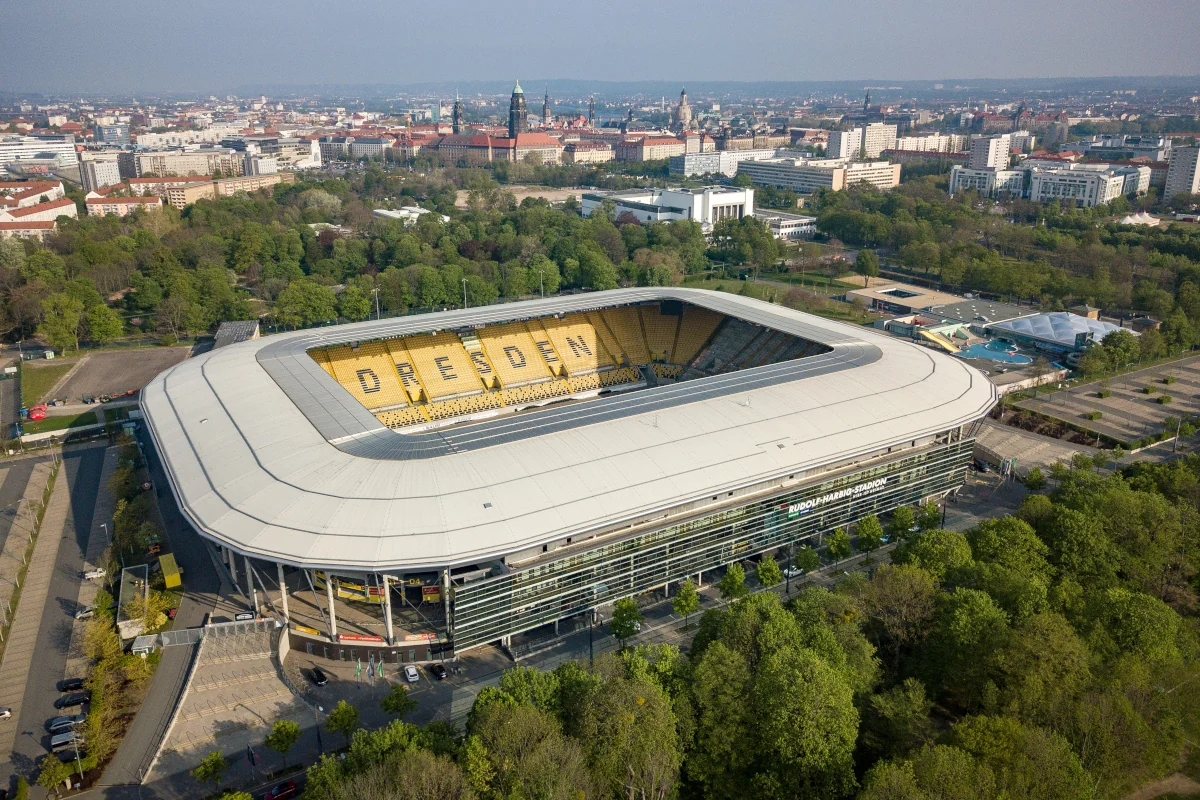
Dynamo Dresden's Bundesliga entry records the four seasons from 1991 to 1995. It does not add the club's eight East German championships or its earlier Oberliga results. Those achievements belong to a separate competition history. Hansa Rostock and Dresden entered the reunited Bundesliga in 1991/92, but their earlier matches did not retrospectively become Bundesliga fixtures. Combining the records without explanation would change the question the ranking is intended to answer.
Club identity also matters. The table's VfB Leipzig entry, with 34 matches from 1993/94, is separate from RB Leipzig. A shared city does not make one club's points transferable to another. The same caution applies when an older team appears under a historical name: follow the institution and the competition record, rather than assigning results to whichever present-day name seems geographically closest.
For supporters of clubs with short stays, the lower rows still preserve meaningful moments: a first promotion, an unexpected result, or the chance to see an established giant visit their ground. A small Bundesliga total says how brief that part of the record was. It cannot measure the importance of the club to its community, the quality of another era or the depth of loyalty maintained during years outside the top flight.
How to use the rankings without mistaking them for current form
Use three questions in order: how many points did the club accumulate, how many matches did it play, and what period produced those results? The first gives the main ranking. The second helps explain the opportunity to build that total. The third brings the football back into the discussion. Together they are much more useful than reading an all-time position as a permanent verdict on a club's quality.
Leipzig illustrate the difference between accumulated rank and average return. Their 622 points from 340 matches give approximately 1.83 adjusted points per game, yet they sit 26th in the table. That lower cumulative position reflects a much shorter Bundesliga history than clubs above them. It does not mean they performed like the 26th-best side whenever they played. Equally, the average cannot award them results in decades before they entered the competition.
At the other end, Tasmania Berlin's two wins and four draws yield 10 points on the common three-point scale. Their original 1965/66 season produced eight under the contemporary two-point system. Both figures can be correct when their conventions are stated. The example is especially useful because the arithmetic is transparent: two additional points appear when the two actual victories are each revalued by one point. No extra match or result has been invented.
For a present-day comparison, move to the current standings and the latest results. A club's recent opponents, available players and current performances matter to the next fixture in ways that a sixty-year aggregate cannot reveal. Historical rank can explain the background to a rivalry or a supporter tradition, but it does not provide a reliable match prediction by itself.
When sharing a number, include the season boundary and the scoring convention. “Bayern, 4,238 points through 2025/26 on the common three-point scale” is a clear historical claim. A bare total without those details invites confusion with a live table or an original-points archive. Then use the ranking as a starting point for a particular club's story: examine its strongest eras, the interruptions in participation and the seasons that made its place in Bundesliga history distinctive.
JOIN THE DISCUSSION
Comments
Sign in with Google to comment. Keep the discussion focused on Bundesliga football and respectful to other supporters. New comments are reviewed before publication.
Loading comments…