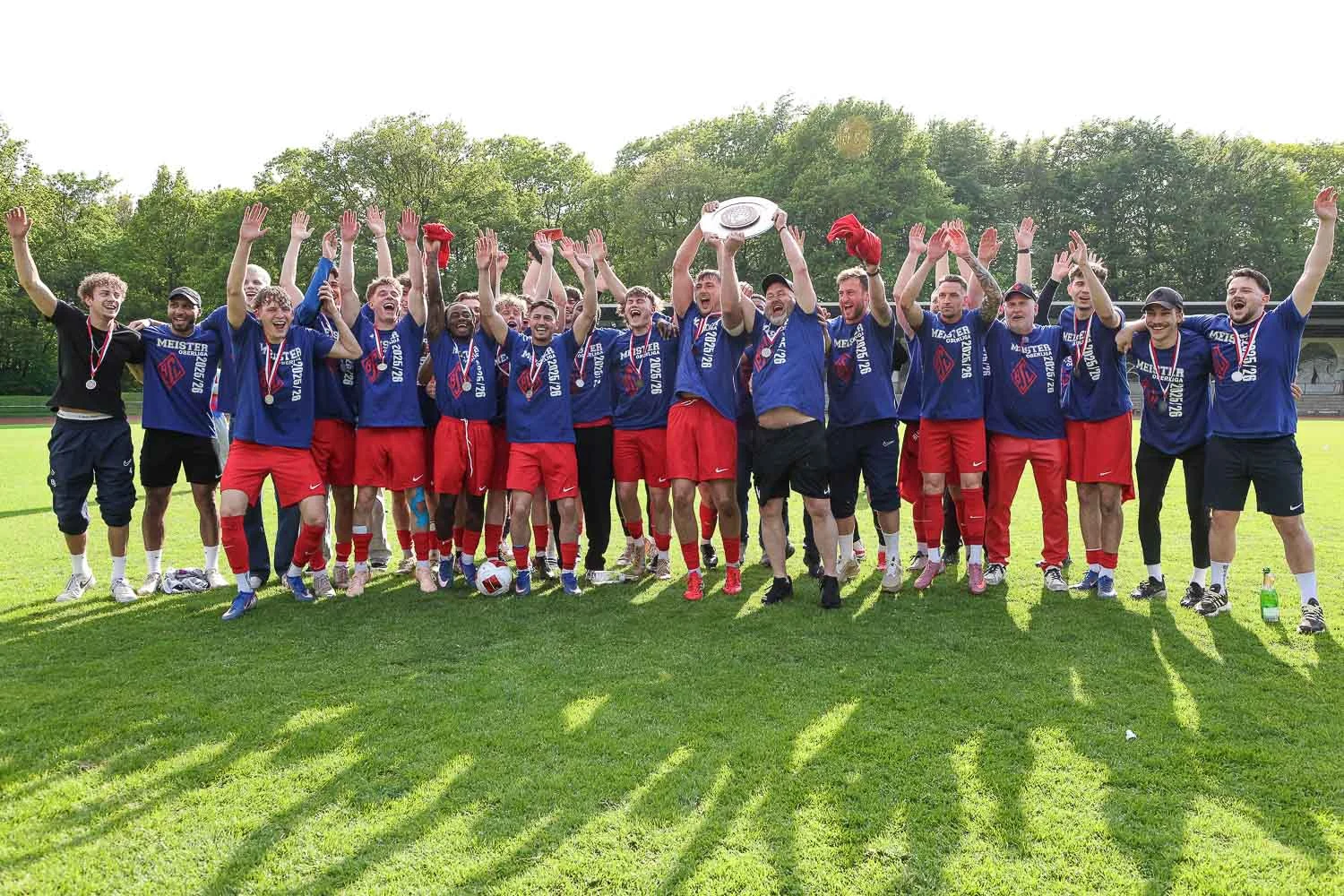
What is the Bremen-Liga?
The Bremen-Liga is the highest men's division organized by the Bremer Fußball-Verband and sits at the fifth level of German football. The 2026/27 competition has its own clubs, table and regional promotion route. It is a useful starting point for watching football around Bremen and Bremerhaven beyond the Bundesliga.
The BFV's league introduction identifies it as an Oberliga at level five. That places it below the Regionalliga and above the lower regional divisions. The current name dates from the 2008 restructuring associated with the introduction of 3. Liga. Older references to Amateurliga or Verbandsliga belong to the competition's history; they should not change how you identify the present season.
Bremen-Liga, Oberliga Bremen and Werder's different teams
“Bremen-Liga,” “Bremenliga” and “Oberliga Bremen” appear across fixture and results services. They can lead to the same regional competition, so compare the season and participant list rather than deciding from the spelling alone. A page headed “Werder Bremen” answers a different question unless it identifies the particular team and competition you want.
The official 2026/27 league listing includes SV Werder Bremen III. The Roman numeral matters: the first team, second team and third team are separate sporting entries. A first-team news story does not tell you the third team's kickoff, ground or opponent. Likewise, a result for Werder II should not be inserted into the Bremen-Liga table. Keep the suffix whenever saving a fixture or checking a match report.
For someone visiting the area, the practical choice is between following a familiar badge and following a particular competition. Both can be enjoyable, but they require different searches. Start with “Bremen-Liga 2026/27” for the regional season, then select the club. If you begin with a club name, confirm its competition before planning the afternoon around it.
Our German football league-system guide explains the wider pyramid. Here, the focus is the local season: who is playing, what the current table means, when the winter break falls and how a club can move toward Regionalliga Nord.
Which clubs are playing in 2026/27?
The official 2026/27 competition listing contains 16 teams. The following directory is alphabetical, rather than a ranking. It preserves the team identities used in the league so that you can match a name in a preview with its fixture and result.
| Club | Club |
|---|---|
| Blumenthaler SV | OSC Bremerhaven |
| Brinkumer SV | SG Aumund-Vegesack |
| BTS Neustadt | SV Grohn |
| ESC Geestemünde | SV Hemelingen |
| FC Oberneuland | SV Werder Bremen III |
| FC Union 60 | TS Woltmershausen |
| KSV Vatan Sport | TuS Schwachhausen |
| Leher TS | TV Eiche Horn |
The current official league page connects those identities to the competition. A broad club search can also show women's football, youth matches or another men's side, so match the team name to its league before selecting a fixture.
The BFV's season-opening preview identifies TuS Schwachhausen and SV Grohn as the newcomers from Landesliga. Schwachhausen came up as champion and Grohn as runner-up. Habenhauser FV and ATSV Sebaldsbrück left the league after relegation. These changes are a practical reason to use the 2026/27 list rather than an old club map.
Blumenthaler SV entered as defending champion after missing out on Regionalliga promotion. That background gives its matches a different context from those of a newly promoted club trying to establish itself. It also introduces an important feature of this competition: winning the regional league and securing promotion beyond it are separate steps.
Continuity of club names does not mean continuity of attacking strength. The same BFV preview noted that BTS Neustadt lost Ebrima Camara, scorer of 31 league goals the previous season, to Bremer SV. For a supporter returning after a summer away, checking departures and the current team sheet is more informative than assuming last season's top scorer will still lead the attack. Use those changes to understand the match, without turning them into a prediction about the final table.
Reading the table and following the title race
Start with the current official table, then use a dated snapshot to understand how the season reached that point. The figures below were checked on November 12, 2026. They describe the position after each of these four teams had played 13 games; later results will change the race.
What the November snapshot shows
| Position | Team | Played | Points |
|---|---|---|---|
| 1 | SV Hemelingen | 13 | 37 |
| 2 | Brinkumer SV | 13 | 31 |
| 3 | Blumenthaler SV | 13 | 30 |
| 4 | OSC Bremerhaven | 13 | 29 |
Hemelingen's opening record was 12 wins and one draw, with 50 goals scored and four conceded. That is 37 of a possible 39 points: only two points dropped across the first 13 games. Brinkum trailed by six points, Blumenthal by seven and OSC by eight. Because the four had played the same number of games, those gaps did not need adjusting for matches in hand.
The useful question for a supporter is how those gaps change over several rounds. A single result can narrow the margin, while a sequence of dropped points can bring another club into the race. Keep an eye on the next opponents of all four rather than judging the leader from one isolated match. That turns the table into a way of following the competition instead of a prediction based on a November position.
The Futbol24 table agreed with the official standings when checked. A second listing can help spot an obvious mismatch in season or team identity, but use the federation's competition record when a result or decision is disputed. Changing a page's matchday selector can also change the historical point in the season you are viewing.
Check played games and official match decisions
The German headings are worth learning. “Spiele” means games played, “Punkte” points and “Torverhältnis” the goals-for and goals-against record. In the official table, G, U and V identify wins, draws and defeats. Read the headings on the page you are using: an abbreviation lifted from another provider may refer to a different column.
If postponements later leave the schedule uneven, compare played games before comparing points. A game in hand gives a club another opportunity; it does not award three points in advance. Goal difference helps explain a team's scoring balance, but the applicable competition rules determine how a final points tie is resolved.
Match status matters too. FUSSBALL.DE distinguishes cancellations, abandonments and confirmed administrative or sporting-court decisions in its legend. An incomplete match is different from a completed defeat, and an official ruling may explain a result that differs from a report written on the day. Check the match record before assuming a strange-looking points total is a mistake. Near the bottom, follow the published relegation provisions as well as the table's colored rows.
The 2026/27 calendar and how to find the next game
The season runs across two calendar years, with a winter break separating the autumn program from the spring finish. Use the published season windows to choose a suitable period for a visit, then open the particular fixture for its date, kickoff and venue.
Season dates and the winter break
| Stage | Published 2026/27 window |
|---|---|
| Opening match | August 7, 2026 |
| Last round before winter break | December 11–13, 2026 |
| League restart | February 12–14, 2027 |
| Final league round | May 21, 2027 |
The BFV's March framework calendar established the opening and finishing dates. Its later August season preview included Friday games in the December and February round windows, producing the ranges shown here. These are round windows: they do not mean every club plays on the same day.
The published program contains 240 league matches. With 16 teams meeting each opponent home and away, that corresponds to 30 fixtures per team. A single club's match count is different from the number of games across the entire league; remember that each league match appears on two clubs' schedules.
The pause makes December and February particularly important for planning. A winter weekend between the published blocks is a poor date to choose solely from the assumption that league football takes place every week. Equally, a blank league weekend does not tell you whether a club has a cup match, a friendly or another team playing. Check the competition attached to the event rather than treating every appearance in a club calendar as a Bremen-Liga fixture.
Find the individual fixture before traveling
Begin at the BFV's league page and follow its results-and-table link to the official competition. Confirm the 2026/27 season, select the matchday or team and open the game itself. Note the home side first, followed by the opponent, venue and kickoff. This sequence is especially useful when two clubs meet in more than one competition during the season.
Keep the LOTTO-Pokal separate from the league. The season calendar placed its first round on August 14–16, after the league had already started. A cup result can be an interesting part of a club's season without contributing points to the Bremen-Liga table. A cup weekend can also explain why a league round is arranged differently from the weekend pattern you expected.
Calendar subscriptions are convenient reminders, but inspect the event before using it to book travel. An all-day entry may carry no confirmed kickoff, and alternate team labels can make one match appear twice. Once you select a game, compare the official match record with the home club's latest announcement. Save the complete details together so that a later change to time or venue is easy to recognize.
How promotion to Regionalliga Nord and relegation work
The Bremen-Liga title is a regional championship. Moving up to Regionalliga Nord requires an eligible club to complete the northern promotion process as well. For a supporter following the leader, those are two connected races rather than one automatic outcome.
Why the league winner still has another step
The NordFV playing regulations provide a qualifying round involving the highest-placed eligible and admitted representatives from Bremen, Hamburg and Schleswig-Holstein, together with the next eligible Lower Saxony side. The first two teams in that round gain promotion. Lower Saxony's highest-placed eligible and admitted team has a separate direct route.
For Bremen's representative, therefore, topping the local table does not settle the next division. The club needs the relevant admission, then a successful qualifying round. The regulations explicitly applying from 2024/25 onward describe this four-team arrangement; older passages retained above them on the same page should not be mistaken for the current format.
Blumenthaler SV provides a recent local example. The BFV's 2026/27 opening preview described it as defending champion following an unsuccessful Regionalliga promotion attempt. Its continued presence in the Bremen-Liga is consequently compatible with having won the previous league title. A fan who looks only at the word “champion” would miss that part of the story.
As the title race develops, follow the club's admission news alongside its results. The receiving league's procedure concerns more than the number of points earned: the NordFV provisions also require technical, organizational and economic admission conditions. Once the representatives and qualifying fixtures are confirmed, those games become the next practical dates to follow. A projected bracket based on an early-season table cannot identify the final entrants.
At the other end, relegation has a sliding component. The BFV's published general playing regulations, section 8, set out regular relegation and allow the number coming down from a division to increase when arrivals from above are not balanced by promotion. That general mechanism explains why the survival picture can depend on events beyond the local table.
Those standing provisions are different from a confirmed allocation for the end of 2026/27. For the season's final relegation decisions, check the BFV's current competition announcements and documents on its official downloads page. The exact 2026/27 cutoff depends on the applicable season provisions and the confirmed movement of clubs.
For a club near the bottom, the useful habit is to track its own points and the federation's published scenarios together. A neighboring club's promotion or an incoming relegated side can alter the calculation only through the applicable rules. Wait for the official decision before celebrating a reprieve or treating a colored row as the final word.
Three grounds to help plan a Bremen-Liga visit
Blumenthal, Bremerhaven and the Pauliner Marsch offer three different starting points for exploring the league. Each example below belongs to a confirmed 2026/27 participant. Use the club's actual home fixture to choose the day, then build the journey around its ground rather than a general search for football in Bremen.
Blumenthaler SV and Burgwall
Blumenthaler SV's official arrival guide gives Burgwall-Stadion's address as Burgwall 2, 28779 Bremen. It recommends the RS1 from Bremen Hauptbahnhof toward Bremen-Farge, leaving the train at Bremen-Blumenthal. The club describes roughly 30 minutes on the train followed by a ten-minute walk. Check the current service for your matchday and include the walking leg when deciding which departure to take.
The guide also identifies limited parking near the ground and station. Traveling by train or bicycle can therefore be worth considering before you commit to driving. The same page lists a separate facility at Bockhorner Weg; this is a useful reminder to match the named venue in the fixture with the correct destination.
For someone following the title race, a Blumenthal home game connects the local setting with the defending champion's season. Read the current opponent and team news before attending, then use the league table to understand what the result changes. The club's previous championship supplies context without determining what happens in this campaign.
OSC Bremerhaven and Nordsee-Stadion
The BFV's OSC directory entry makes an especially practical distinction: the playing venue is Nordsee-Stadion, Am Stadion 10, 27580 Bremerhaven, while the club's postal address is on Rutenbergstraße. Put the stadium address into your journey plan. Sending correspondence to the club and arriving for its match are different tasks.
The city describes OSC as the main user of a complex that also accommodates several other sports. Confirm that the event you select is the men's Bremen-Liga football fixture. A timetable for another activity at the complex does not establish the football kickoff or admission arrangements.
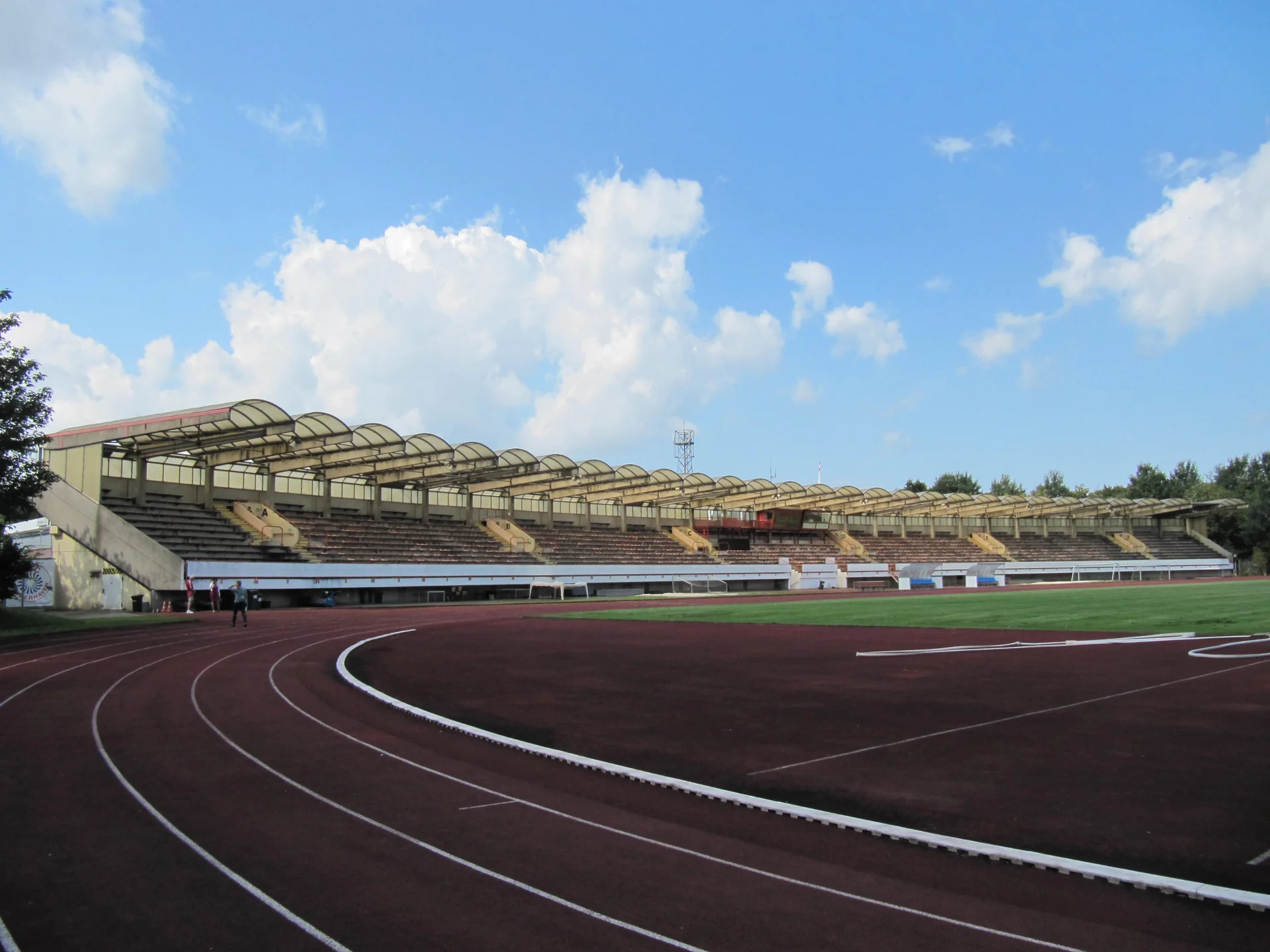
The city has documented a substantial renovation program, so older photographs are best used to recognize the venue's setting. Look at the latest club information for the arrangements on your selected day. The running track and covered stand visible in the archival image explain the ground's broader sporting character; they do not show the current condition of every entrance or spectator area.
FC Union 60 and Pauliner Marsch
FC Union 60's own introduction places the volunteer-run club in Bremen's Pauliner Marsch. Its sports complex is at Jürgensdeich 1a, 28205 Bremen. The club offers football alongside rugby and American football, making the particular team and pitch important when choosing a visit.
The official ground description lists two artificial pitches and three grass pitches. It identifies the enclosed main field as the centerpiece for matchdays, with refreshments and a stadium announcer, and says that this field is not used for training. On a site with several playing areas, being at the right address is only the first part of locating the game.
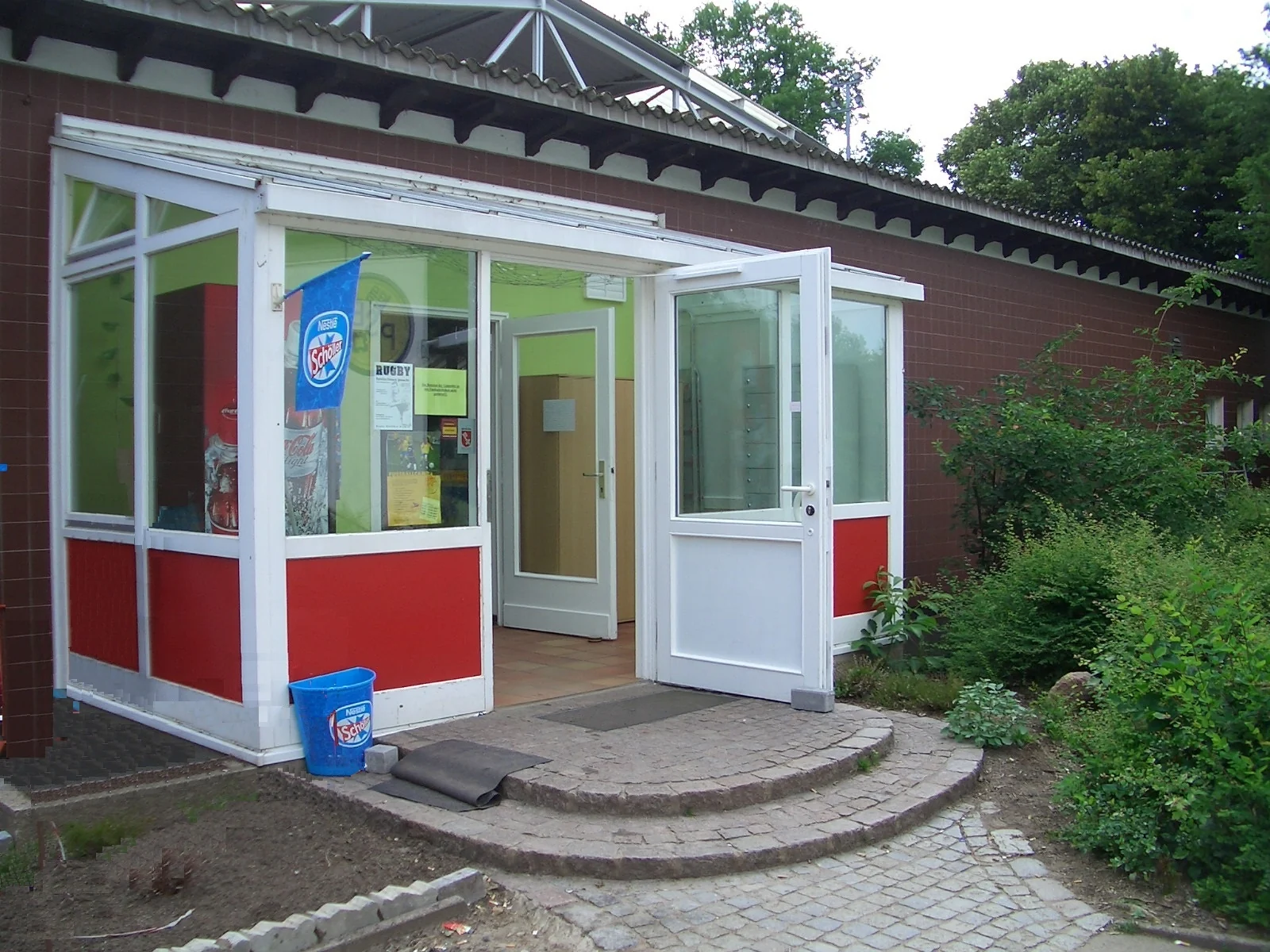
Check the home-game listing and the individual match record for the field in use, then leave time to walk through the complex. If you need information about access or a particular spectator requirement, contact the club using its current details before setting out. That gives you information about this ground and this event, rather than an assumption borrowed from a larger stadium.
Once the venue details are settled, the match can be followed on its own terms: a regional opponent, points in a distinct table and a place in the local season. Choosing one of these grounds is a way to experience the competition behind the “Oberliga Bremen” label, with the verified club identity and fixture providing the route in.
JOIN THE DISCUSSION
Comments
Sign in with Google to comment. Keep the discussion focused on Bundesliga football and respectful to other supporters. New comments are reviewed before publication.
Loading comments…