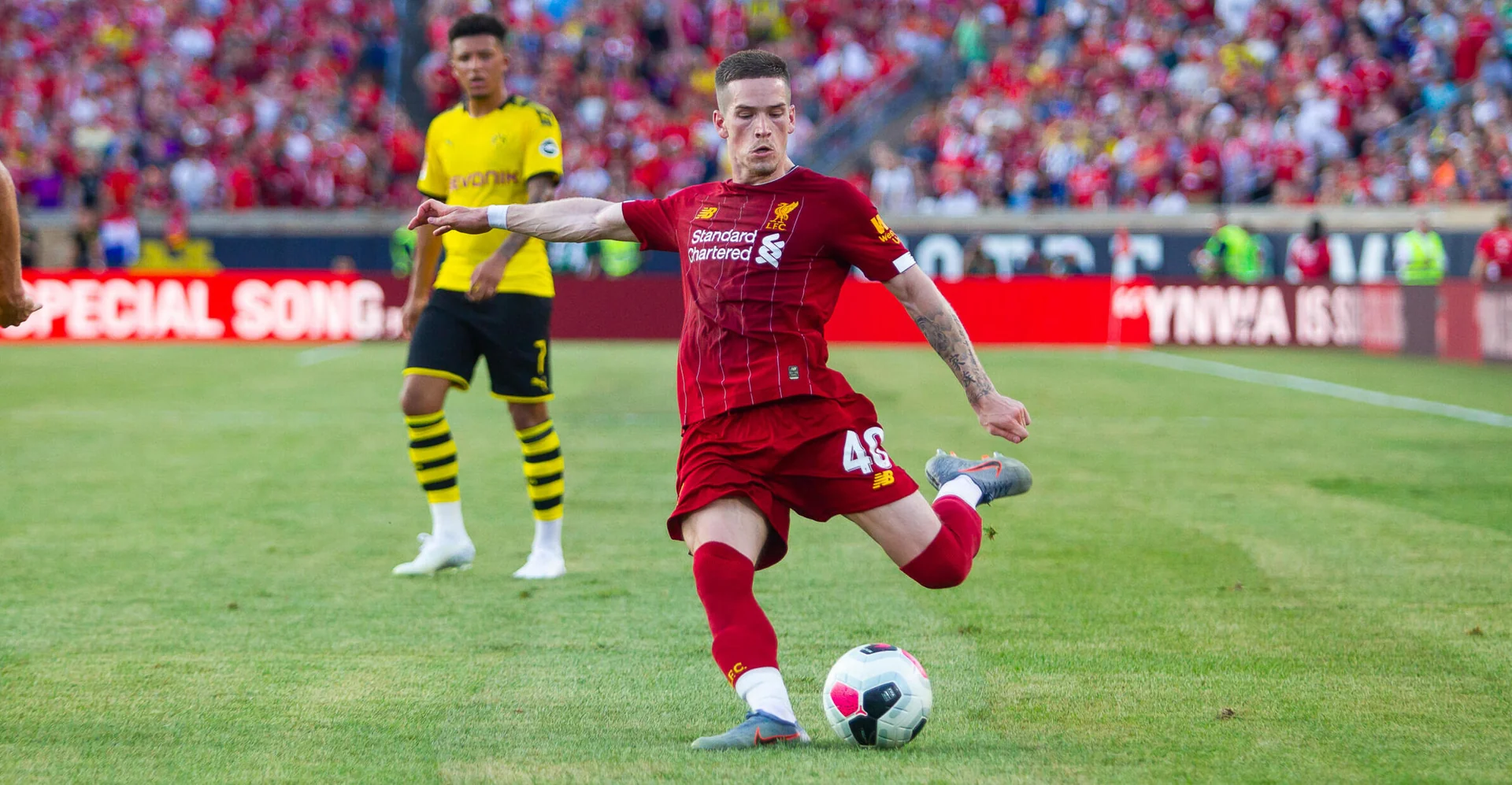
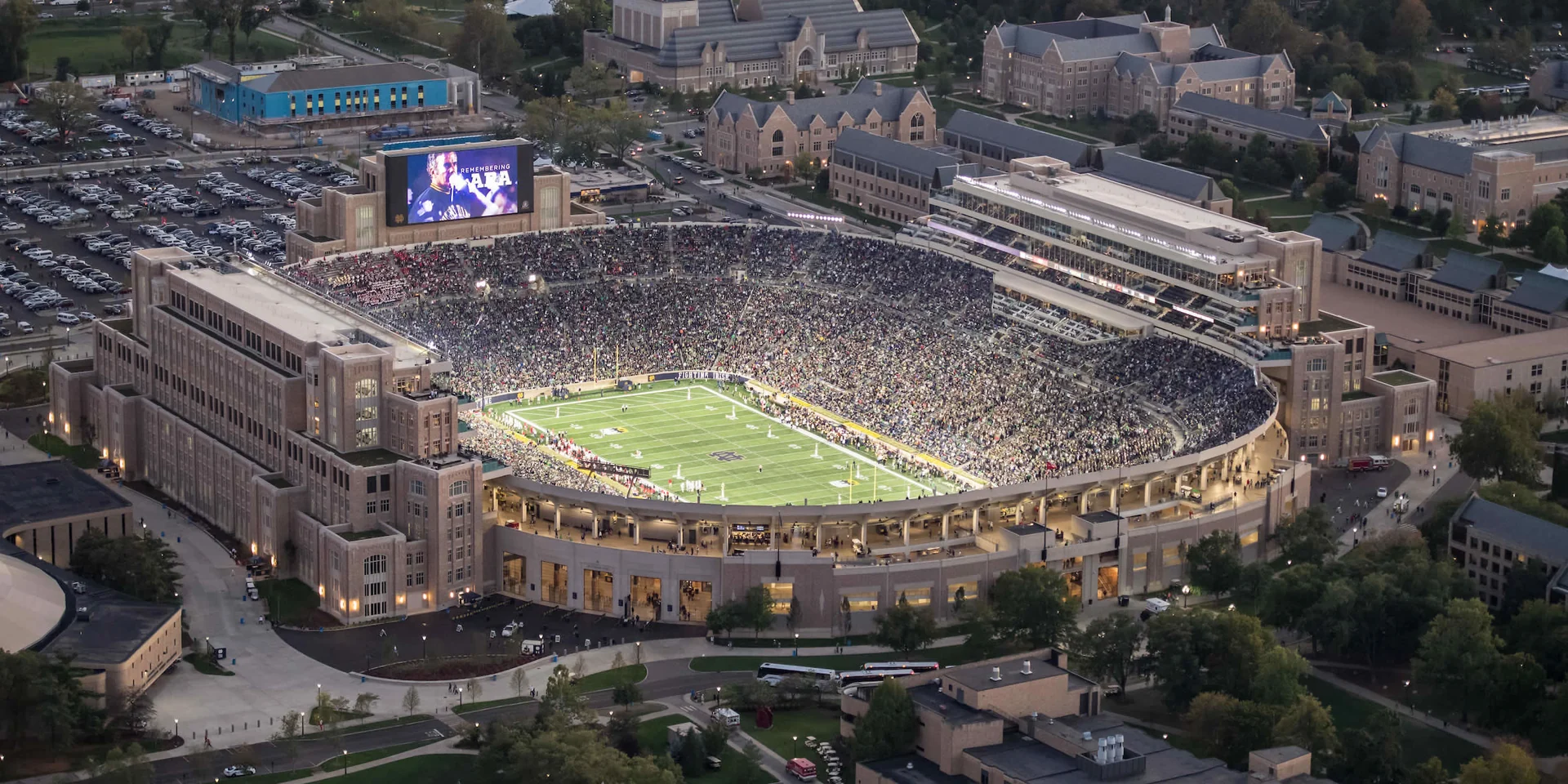
The American stadium where Borussia Dortmund beat Liverpool in 2019 is normally home to the Notre Dame Fighting Irish, a university American football team. For a Bundesliga supporter, that tour connection offers a reason to explore a different matchday culture. Here is how the friendly fits into the stadium’s history, what happens on a college football weekend, and how to choose a visit that actually takes you to the campus ground.
Why Dortmund played Liverpool at Notre Dame
Borussia Dortmund visited Notre Dame Stadium for a preseason friendly against Liverpool on July 19, 2019, local time. BVB won 3–2 in front of 40,361 spectators. This was an American tour date, not a Bundesliga fixture moved overseas, and the opponent supplied an obvious connection for Dortmund supporters: Liverpool were coached by former BVB manager Jürgen Klopp. A familiar football relationship had acquired a distinctly unfamiliar backdrop.
Dortmund’s own match report identifies Paco Alcácer, Thomas Delaney and Jacob Bruun Larsen as their scorers. Harry Wilson and Rhian Brewster scored for Liverpool, with Brewster converting a penalty. Those details are useful when finding the right highlights: the clubs have met in other settings, and a Liverpool–Dortmund video is not automatically footage from Indiana. Look for the venue and year as well as the score. European reports published on July 20 reflect the overnight timing; the university’s event date was Friday, July 19.
The occasion also mattered to the hosts. Notre Dame described it as the stadium’s first international soccer friendly. The university already had soccer facilities, but bringing two major European clubs into its American football ground created a different scale of event. Liverpool’s preparations used Alumni Stadium, while the exhibition itself took place in Notre Dame Stadium. Those are separate venues on the same campus, a distinction that becomes important if you later try to recreate the trip.
Klopp’s pre-match comments, published by Liverpool, framed Dortmund as a serious preseason test. That is the right sporting context for the result. The match offered a chance to evaluate combinations and fitness before competitive football resumed; it did not award Bundesliga points or decide a European trophy. For a supporter revisiting the footage, the interest lies in seeing familiar players adapt to an unusual setting and in recognising the links between the two clubs, rather than treating a summer score as a verdict on the season ahead.
It also gives a present-day visitor a useful starting question: what normally happens here after the touring clubs leave? A return to campus is not a promise of another Dortmund appearance. The venue’s regular sporting identity belongs to a university team, with its own supporters, traditions and autumn schedule. Following that thread makes a visit more rewarding than arriving only to photograph the place where BVB once played. The next step is to understand which ground you are looking at and whose home it is.
Whose home is Notre Dame Stadium?
Notre Dame Stadium is the home of the University of Notre Dame Fighting Irish American football team. The university is in Notre Dame, Indiana, beside South Bend. In this setting, “football” means the game played with helmets, pads and an oval ball. A ticket for Fighting Irish football does not take you to a soccer match, even though Dortmund and Liverpool once used the same stadium. The university’s men’s and women’s soccer teams have a different regular home.
The stadium opened in 1930. Notre Dame’s historical account dates its first game to October 4 that year, when the Irish beat SMU 20–14. That long association explains why the venue is meaningful beyond its size. A visiting Bundesliga supporter is entering a place shaped by decades of university football, where alumni return to the campus and students support the team representing their institution. The appeal is not simply finding an American equivalent of Dortmund’s ground; it is seeing how a different sporting community uses its home.
For soccer, the name to remember is Alumni Stadium. The university’s campus guide records its opening in September 2009, with the men’s team facing Michigan and the women hosting North Carolina three days later. It stands east of the Joyce Center. This is the facility associated with the university’s regular soccer programme, and it also appears in accounts of Liverpool’s 2019 training arrangements. A search for “Notre Dame soccer stadium” can therefore lead you somewhere different from the stadium in the Dortmund match photographs.
Put both names into your visit notes before choosing tickets or directions. If your aim is to see the ground where BVB played, select Notre Dame Stadium. If you want an additional college soccer match, check the men’s or women’s soccer schedule and its listed venue separately. A university can stage several sports during the same weekend, but one ticket should never be assumed to cover another event. Nor should a familiar university crest be treated as proof that two events take place at the same entrance.
The distinction changes what you should look for when you arrive. At Notre Dame Stadium, the football field, stands and surrounding campus setting explain the scale of the 2019 exhibition. At Alumni Stadium, the attraction is the university’s own soccer environment. You can appreciate both without collapsing them into one location. For a Dortmund fan, that is the useful bridge from a remembered tour match to a broader campus visit: identify the historic venue first, then decide which current sporting experience you actually want to attend.
What a Notre Dame football weekend adds to the visit
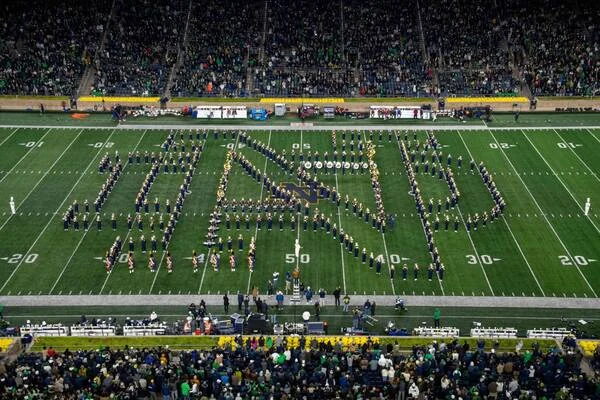
The campus programme is a reason to arrive before the game, not merely a way to fill time until the gates open. Notre Dame’s band describes a Friday march-out and open rehearsal, followed by a Midnight Drummers Circle. Its game-day activities include the Player Walk, a Concert on the Steps and a march towards the stadium. A visitor who only allows time to park and find a seat misses much of the setting that makes this a university football weekend.
For a manageable first visit, choose one musical event and one opportunity to explore the campus, then leave space for stadium entry. Dortmund supporters will recognise the importance of shared songs and anticipation before kickoff, but the form is different here: student musicians, university buildings and the team’s movement across campus help organise the experience. You do not need to know every tradition in advance. Watching how regular visitors participate is more useful than trying to complete an ambitious checklist while repeatedly crossing crowded paths.
One detail deserves particular care: the current Trumpets at the Dome information places the performance in front of the Main Building, around the Sacred Heart of Jesus statue. Do not assume that an older photograph or the familiar event name guarantees access inside the building. The university lists a 1:30–1:40 p.m. performance for a 3:30 p.m. kickoff and a 5:30–5:40 p.m. performance for a 7:30 p.m. kickoff. Those examples show why the football start time matters to the rest of your day.
Use the programme for your particular weekend before assigning exact times to the other activities. A general traditions page describes the experience; a current event listing tells you when and where to go. If you arrive on Friday, an evening event may justify staying nearby rather than making a late return journey. If Saturday is your only day, give priority to the activity you most want to see and protect enough time to reach your gate. Leaving a performance early can be a better choice than rushing the final approach.
Keep the distinction between public campus activities and ticketed access clear. Being able to watch a band performance does not mean you hold a game ticket, a hospitality reservation or a stadium tour booking. Build the day around the admission you actually have. For a first-time visitor, a short campus walk, one band event and the game itself can provide a coherent experience without trying to imitate the schedule of a regular supporter who knows every route. The point is to enjoy the setting, not to spend the afternoon chasing it.
Choose a campus game, not just a Notre Dame fixture
If the stadium is the reason for your journey, the most important column in a schedule is the venue. Notre Dame’s 2026 season illustrates why. Its September 6 opener against Wisconsin was a Shamrock Series game at Lambeau Field in Green Bay. The October 31 meeting with Navy is at Gillette Stadium in Foxborough, Massachusetts. Both involve the Fighting Irish, but neither takes you to the campus ground where Dortmund played. An opponent name or a home-style listing is not enough to choose accommodation.
For a campus visit later in the 2026 season, the university’s announced schedule lists Miami on November 7, Boston College on November 14 and SMU on November 21 at Notre Dame Stadium. Treat these as date-and-location examples, checked on October 23, rather than a promise of ticket availability. The table below separates the travel decision from kickoff details, which should be confirmed on the current official fixture listing before you finalise transport or decide which pregame activity to attend.
| 2026 game | Venue and city | Campus stadium visit? |
|---|---|---|
| October 31: Navy | Gillette Stadium, Foxborough | No |
| November 7: Miami | Notre Dame Stadium, Notre Dame | Yes |
| November 14: Boston College | Notre Dame Stadium, Notre Dame | Yes |
| November 21: SMU | Notre Dame Stadium, Notre Dame | Yes |
To compare those dates with the broader American football weekend, CollegeFootballSchedule.net’s schedule finder brings together upcoming games, results and TV information. It is a related site from the same project as Bundesliga Schedule. For this particular trip, its Notre Dame schedule page provides a more focused starting point, including the named venues. Use it to make a shortlist, then confirm the selected game, kickoff and admission arrangements with Notre Dame’s official athletics and ticket information.
A useful order is to choose the campus date first, establish that you can obtain suitable admission, and only then commit to the journey. Write down the stadium name beside the opponent so that a later search result for another Irish game does not accidentally change your destination. If several people are travelling, share the same fixture details rather than only saying “Notre Dame weekend.” The distinction is especially important when the team is playing a special event in another state.
Finally, check the German side of your sporting calendar. The Bundesliga calendar can help you compare the trip with fixtures you want to follow at home. Do not assume a college game leaves enough room for another live match simply because both appear on Saturday: the local dates, time zones and your travel between locations all matter. Choose which event is the priority before building the rest of the weekend around it.
Seeing the stadium when there is no game
An empty date on the football schedule does not automatically mean the stadium is open for tours. Notre Dame’s current stadium experiences page describes a specific Bob Hinton Tunnel Experience on home football Fridays and says there are no summer experiences available. That is a narrower offer than a year-round stadium tour. If you are visiting because of the Dortmund connection, check the actual experience on sale before treating a free afternoon as an opportunity to go inside.
The listed tunnel experience is self-guided, with staff along the route, and takes visitors towards the north end zone for photographs. It expressly does not include the Play Like a Champion sign. This matters because general university tour descriptions and old visitor stories can refer to different access. Book what the current product includes, not what a past photograph suggests. The university says tickets go on sale two weeks before each experience and recommends purchasing before arrival; availability should be checked for the date you want.
Even the Friday timetable can have an exception. As checked on October 23, 2026, the dedicated page lists a shortened 10 a.m.–1:30 p.m. window on Friday, November 6, ahead of the Miami home game. A visitor arriving late that afternoon should not assume the usual closing time applies. This is a useful example of why the final planning check belongs close to your visit: the football date, the experience date and the operating hours are three separate pieces of information.
If the Irish are away or the stadium experience is unavailable, a campus visit can still make sense. The university’s public campus tour information describes a free historical tour beginning at the Eck Visitors Center, with same-day in-person registration and limited places. Stadium access is separate. A campus tour can introduce the buildings and landmarks around the sporting venue, but it should not be presented to your travelling companions as a substitute ticket to the inside of Notre Dame Stadium.
Decide which part of the visit is essential before committing to it. If seeing the field from inside is the priority, secure the appropriate experience or game admission first. If the attraction is the campus setting and the story behind Dortmund’s American stop, an ordinary visit may be enough. Use the university map and the parking guidance for your type of day; normal visitor arrangements and home-game arrangements differ. That small amount of preparation lets the 2019 match remain the beginning of your interest, while the visit itself is built around what Notre Dame actually offers now.
JOIN THE DISCUSSION
Comments
Sign in with Google to comment. Keep the discussion focused on Bundesliga football and respectful to other supporters. New comments are reviewed before publication.
Loading comments…