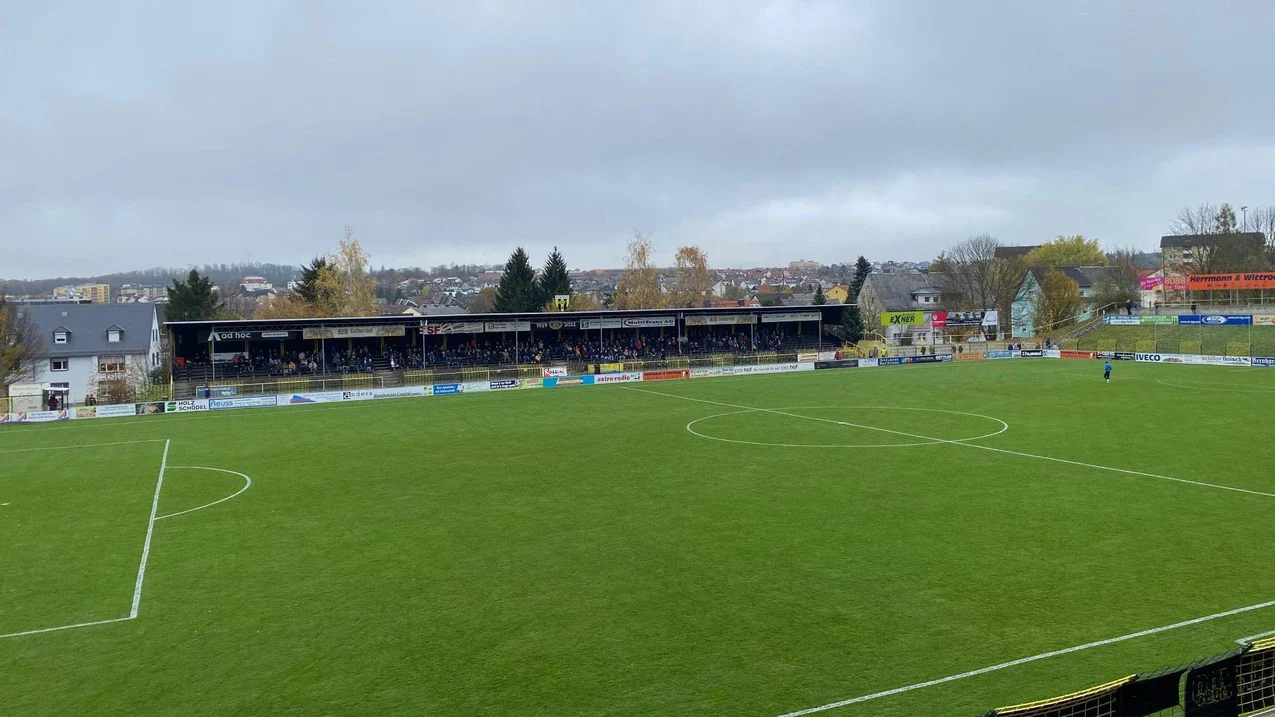
What is German fifth-division football?
Germany's fifth division is a collection of regional leagues, commonly grouped under the name Oberliga. Each competition has its own participants, table and fixture list. Some use another established name, including Mittelrheinliga. A search for “Bundesliga 5” therefore needs a second piece of information: the region or club you want to follow.
This guide concerns senior men's football and the structure checked on November 12, 2026. The fifth level sits immediately below the Regionalliga and above the next association-run level. It is a tier in the pyramid, rather than a national competition in which every fifth-tier club meets every other one. Two clubs can be equally close to the Bundesliga in the hierarchy while playing completely different opponents all season.
| Level | Competition pattern | What a supporter chooses |
|---|---|---|
| Fourth | Regionalliga competitions | The relevant regional division |
| Fifth | Oberligas and equivalent regional names | The specific regional league and season |
| Below fifth | Association and local leagues | The local name and its place in that area's structure |
Mittelrhein provides a useful example of the naming problem. Its federation explicitly identifies the Mittelrheinliga as Germany's fifth-highest level and its own highest league. The division underneath is called Landesliga. Someone looking only for a competition with “Oberliga” in its title could overlook the correct fifth-tier table altogether. The FVM's competition explanation makes the connection clear.
The region also determines which promotion rules matter. A position near the top of one table may open a different route upward from the same position elsewhere. The DFB describes this level as the substructure beneath the Regionalliga, whose regional organization affects the clubs feeding into it. Start by identifying that pathway; only then interpret the points and colored qualification bands beside a club's name.
Our broader German football pyramid guide explains the national levels above. Here, the useful detail is the fifth-tier branch: which league serves which area, where its current fixtures can be found, and what its table actually allows a club to pursue. That turns an unfamiliar competition label into something you can follow week by week.
Which regional leagues make up the fifth tier?
The most useful map groups the competitions by the Regionalliga above them. Geography gets you close, while the federation's competition label gets you to the right results. Keep that full label when searching: a short word such as North, South or West cannot identify a fifth-tier league by itself.
| Feeder family | Fifth-tier competition names to look for |
|---|---|
| Regionalliga Nord | Oberliga Niedersachsen, Oberliga Hamburg, Bremen-Liga, Oberliga Schleswig-Holstein |
| Regionalliga Nordost | NOFV-Oberliga Nord and NOFV-Oberliga Süd |
| Regionalliga West | Oberliga Westfalen, Oberliga Niederrhein, Mittelrheinliga |
| Regionalliga Südwest | Hessenliga, Oberliga Baden-Württemberg, Oberliga Rheinland-Pfalz/Saar |
| Regionalliga Bayern | Bayernliga Nord and Bayernliga Süd |
Northern and northeastern competitions
In the north, the NordFV league overview identifies the four state-association feeder areas: Lower Saxony, Hamburg, Bremen and Schleswig-Holstein. Each has its own fifth-tier competition. A Hamburg result therefore belongs to a different table from a Lower Saxony result, even though both clubs may ultimately be trying to reach Regionalliga Nord.
The northeast uses a different arrangement. The NOFV's 2026/27 fixture announcement separates Oberliga Nord and Oberliga Süd. Its North opening-round list includes Berlin clubs; its South list includes clubs from Dresden, Plauen and Halle. These are the NOFV divisions, rather than alternative names for the Hamburg or Schleswig-Holstein league. Adding NOFV to a search is a small step that prevents a very large geographical mistake.
Three different pathways in western Germany
Westfalen, Niederrhein and Mittelrhein are separate competitions feeding Regionalliga West. The WDFV's admission-applicant list gives each of those leagues its own heading. It provides a useful check on the structure, although a spring application list should never be mistaken for the following season's confirmed membership.
For a visiting fan, this means that choosing North Rhine-Westphalia as a destination is only the start. You still need the club's league and its current season. Combining results from these three competitions would hide the actual title races and suggest comparisons the competition does not make. A team can lead one of these tables without being ranked above the leader of either neighboring league.
Southern leagues with several familiar names
The Regionalliga Südwest admission page identifies three feeder competitions: Hessenliga, Oberliga Baden-Württemberg and Oberliga Rheinland-Pfalz/Saar. Bavaria has its own arrangement. The BFV's 2026/27 allocation places 36 teams into Bayernliga Nord and Süd, with 18 in each.
The distinction matters when a familiar club name takes you into unfamiliar geography. Bayern Hof appears in the northern Bayernliga allocation; that does not put it in an Oberliga associated with Regionalliga Nord. Likewise, Baden-Württemberg and Bavaria are different feeder families. Read the entire competition name alongside the club name before deciding which table, fixtures or promotion rules to follow.
Finding the right Oberliga table and fixtures
A useful search looks like “NOFV Oberliga Süd 2026/27 table” rather than “Bundesliga 5.” The longer version identifies a competition, a geographical group and a season. Once you have found the league, save its official schedule link so that the next check starts at the correct competition.
Confirm the season and the team behind the badge
Start with the season selector. A completed 2025/26 table answers a historical question; it cannot tell you who plays next weekend in 2026/27. Even the number of clubs can change between seasons. The Bayernliga allocation, for example, moved from 17 teams per group in 2025/26 to 18 in 2026/27. Treat an older league roster as a clue rather than a current fixture list.
Next, check the full team identity. II, U23 and U21 can identify a different men's team from the first team carrying the same badge. The FVN's introduction to Fortuna Düsseldorf's U23 specifically places that side in the 2026/27 Oberliga Niederrhein. Searching only for Fortuna Düsseldorf can instead take you to the first team's competition. Make the same identity check when reading an injury story, a lineup or a stadium address.
For fixtures, use the federation as your starting directory. The NOFV's season announcement links separately to the North and South schedules on FUSSBALL.DE. Follow the link for your group, then check the individual fixture: opponent, home or away, date, kickoff and venue. A team's news feed may include cup games and friendlies alongside league matches, so the opponent alone is insufficient. A federation page carrying an old season-opening story also needs its season checked before you rely on its dates.
Read the table before interpreting its colors
Read played, won, drawn and lost before you compare points. Goals for and against describe scoring; goal difference is their subtraction. A hypothetical team with 28 points from 12 games has a different position from one with 28 from 14. The first has matches in hand, but those are opportunities to earn points rather than points already secured. This distinction becomes particularly useful when postponements leave the schedule uneven.
Colored rows are shortcuts to the table provider's explanation. Open the legend, then check the applicable competition rules. A green row might indicate a direct place, a qualifying round or a conditional route; a red row cannot explain every possible relegation scenario. If teams finish level, consult that league's tie-breaking provisions instead of automatically applying the rule familiar from the Bundesliga. Likewise, an unusual points total deserves a check for an official decision before you assume that the table contains an error.
Use the Bundesliga table when following the top division. For a fifth-tier club, stay with its specific regional competition. Keeping those two levels distinct lets you enjoy both without attributing a top-flight ranking or fixture to a club playing a regional season.
Promotion to the Regionalliga depends on the region
Find the receiving Regionalliga first, then read its promotion and admission provisions alongside your league's season rules. The same finishing position can lead to different next steps in different regions. A title race, a qualifying round and an admission decision answer separate questions.
Direct routes and northern qualification
The NordFV's playing regulations, section 6, give the northern baseline as three promoted teams. Under the provisions applying from 2024/25 onward, the highest-placed eligible and admitted team from Oberliga Niedersachsen has the direct route. Two further places go to the first and second teams in a qualifying round involving the eligible representatives of Bremen, Hamburg and Schleswig-Holstein and the next eligible Lower Saxony side.
That wording has two practical consequences. Winning in Bremen, Hamburg or Schleswig-Holstein does not by itself complete the climb to Regionalliga Nord. Conversely, a Lower Saxony club outside the direct place can still have an additional route. Read the eligible entrants confirmed by the federation rather than automatically inserting every table leader into a projected bracket.
Do not confuse this qualifying round with the playoffs between Regionalliga champions seeking promotion to 3. Liga. Those matches occur one level higher. Before following an “Aufstieg” link, identify both the competition being left and the competition being entered. It is the quickest way to tell whether a playoff story affects your fifth-tier club.
Southern routes and the difference between winning and admission
The BFV's men's Bayernliga overview describes a different arrangement: the North and South champions move up to Regionalliga Bayern, while the runners-up enter promotion relegation games. Finishing second therefore has a different practical meaning from the northern qualifying system.
For Regionalliga Südwest, section 48 of the August 2026 playing regulations provides routes for the champions from its three feeder areas and a further place determined among the runners-up. Eligibility and willingness to move up matter, and the rules provide for replacement candidates in defined circumstances. A supporter should wait for the confirmed competition entrants before treating a provisional table position as a settled promotion.
Admission is the other part of the story. The Southwest admission guidance lists legal, organizational and personnel requirements; it also explicitly says that its procedure does not include an economic performance examination. Avoid assuming that every region applies one identical checklist. For your club, look for its application announcement, the receiving league's decision and any conditions still to be fulfilled.
As the season reaches its closing weeks, keep two notes beside the table: the sporting route earned by the finishing position, and the club's admission position. A club can celebrate a championship while its supporters still await confirmation of next season's division. Understanding that distinction makes the final weeks easier to follow without turning uncertainty into a prediction.
Why relegation places and reserve-team outcomes can change
Near the bottom, ask how many clubs may arrive from above and how the regional rules accommodate them. Relegation cannot always be read as a fixed number printed beside a colored line in November. The final outcome depends on the rules for that particular competition and the clubs allocated into it.
Follow the chain above the red line
The NordFV regulations explicitly allow the number of relegated teams to increase when relegations into its competitions take the membership above the prescribed size. That is an upstream effect: results in a higher division can change the room available below. The applicable Oberliga provisions determine how that pressure reaches a particular league.
Imagine a league whose annual rules connect its relegation places to arrivals from the Regionalliga. An additional club coming down into that exact feeder area could affect the survival calculation. A club entering a different regional competition may not have the same effect. This is an illustration of the question to investigate, rather than a universal formula: look for your federation's published scenarios and the final allocation announcement.
Reserve teams add another layer. The FVN explained that Fortuna Düsseldorf's U23 could not continue in Regionalliga West after the first team dropped into 3. Liga, placing the reserve side in Oberliga Niederrhein for 2026/27. This concrete case shows why the reserve team's own points are not always sufficient to explain its next division. It does not mean that every reserve side in every fifth-tier league faces an identical outcome.
For supporters following a survival battle, keep track of official decisions as well as scores: confirmed departures, arrivals, withdrawals and the relevant provisions on teams from the same club. Avoid counting a reprieve before the federation confirms it. Equally, a provisional red row should not end your interest in the remaining matches when the published rules leave other outcomes possible.
Longer-term reform is a separate issue. As of November 12, 2026, the DFB's Kompassmodell remained a proposal awaiting a December vote. It should not replace the existing regional structure when you interpret the current season. Follow the rules in force for your competition before applying any future arrangement discussed in reform coverage.
Watching fifth-division football at the ground
A fifth-tier weekend can take you from a Berlin stadium to a Bavarian ground or a venue beside a Saxon forest. The regional structure makes a club's location part of following the competition. Choose the match through the current league schedule, then use the home club's information to plan the visit.
Match the club to the actual venue and kickoff
The venue listed for the individual game matters more than the address attached to a club's name. An office, training complex and first-team stadium can be different places. Tennis Borussia's Mommsenstadion guide, for example, distinguishes the men's stadium from the other facilities used by its youth teams. That distinction helps prevent arriving at the right club's wrong pitch.
VFC Plauen's official stadium page identifies Vogtlandstadion as its home and describes a main pitch surrounded by an athletics track, with additional pitches on the site. The club appears in the NOFV's 2026/27 South schedule, while Tennis Borussia appears in the North schedule. These are useful examples of why a national “Oberliga fixtures” search needs narrowing before it becomes a travel plan.
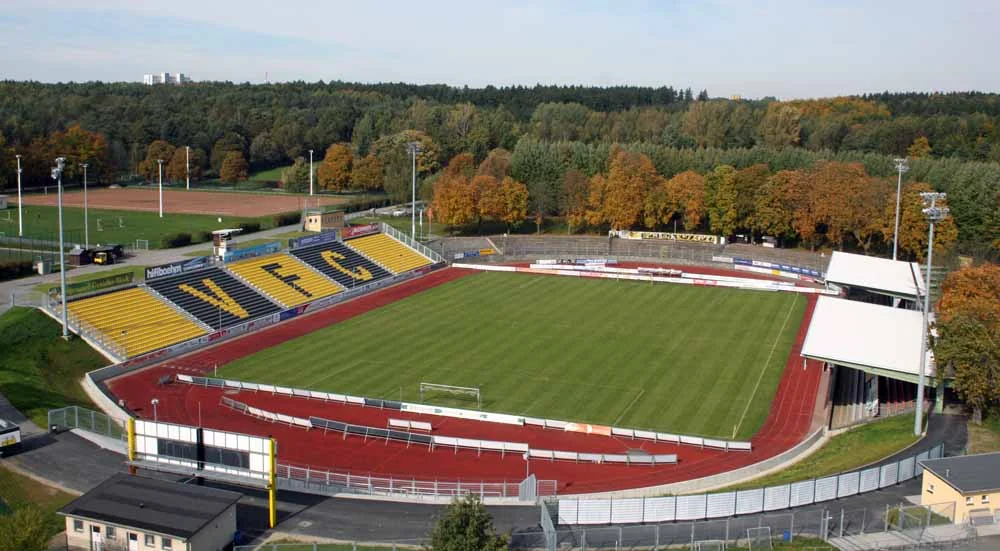
Keep the date and time together with the venue when saving a fixture. Recheck the listing close to departure, especially when traveling for a single game. If the club posts a postponement or a changed ground, update the journey rather than relying on an older calendar entry. A league's season-opening announcement gives context; it is not a substitute for the selected match's latest details.
Build the visit around the club's own information
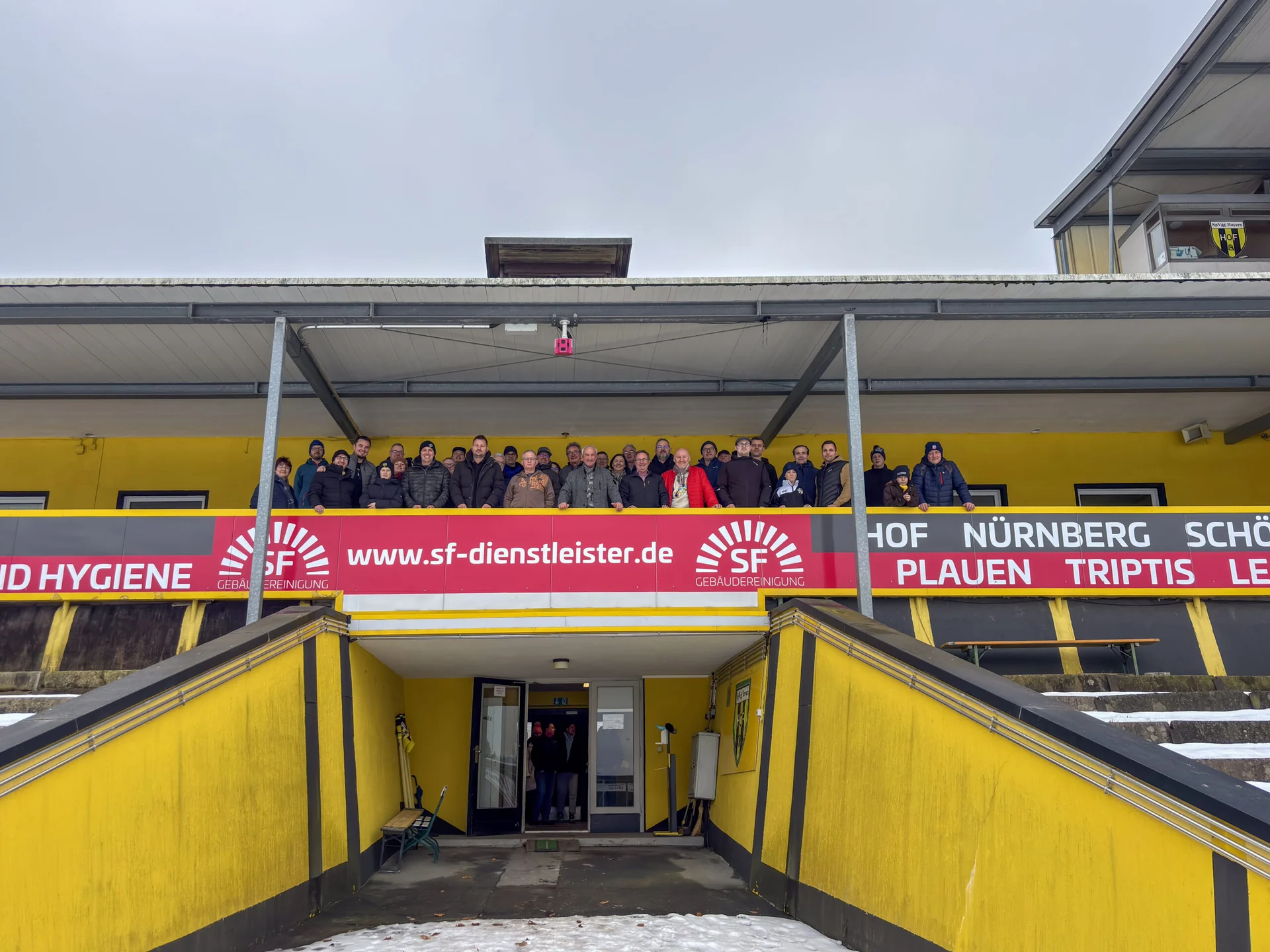
Bayern Hof supplies a concrete example of how local arrangements can change. Its 2026/27 ticketing announcement introduced digital advance sales through Reservix while retaining cash sales at matchday entrances. It also distinguished a scan-only entrance for tickets already bought. Buying a ticket and choosing the correct gate are therefore connected decisions, even at a ground familiar to regular visitors.
The same announcement described advance tickets as one euro cheaper than tickets bought at the ground. Check the club's current ticket information for your game and any concession conditions, rather than applying that difference to other clubs. Admission categories, proof requirements and sales arrangements belong to the home club. A cheap-looking offer on an unrelated page does not explain which entrance to use or whether the ticket category fits you.
Transport guidance is equally local. Tennis Borussia points visitors toward the nearby Messe Süd station for Mommsenstadion. Use that as the starting point for checking your own journey, including the return after the final whistle. Once the practical details are settled, following the league becomes straightforward: know the regional group, recognize the correct team, and enjoy a match whose significance comes from its own table and promotion race.
JOIN THE DISCUSSION
Comments
Sign in with Google to comment. Keep the discussion focused on Bundesliga football and respectful to other supporters. New comments are reviewed before publication.
Loading comments…