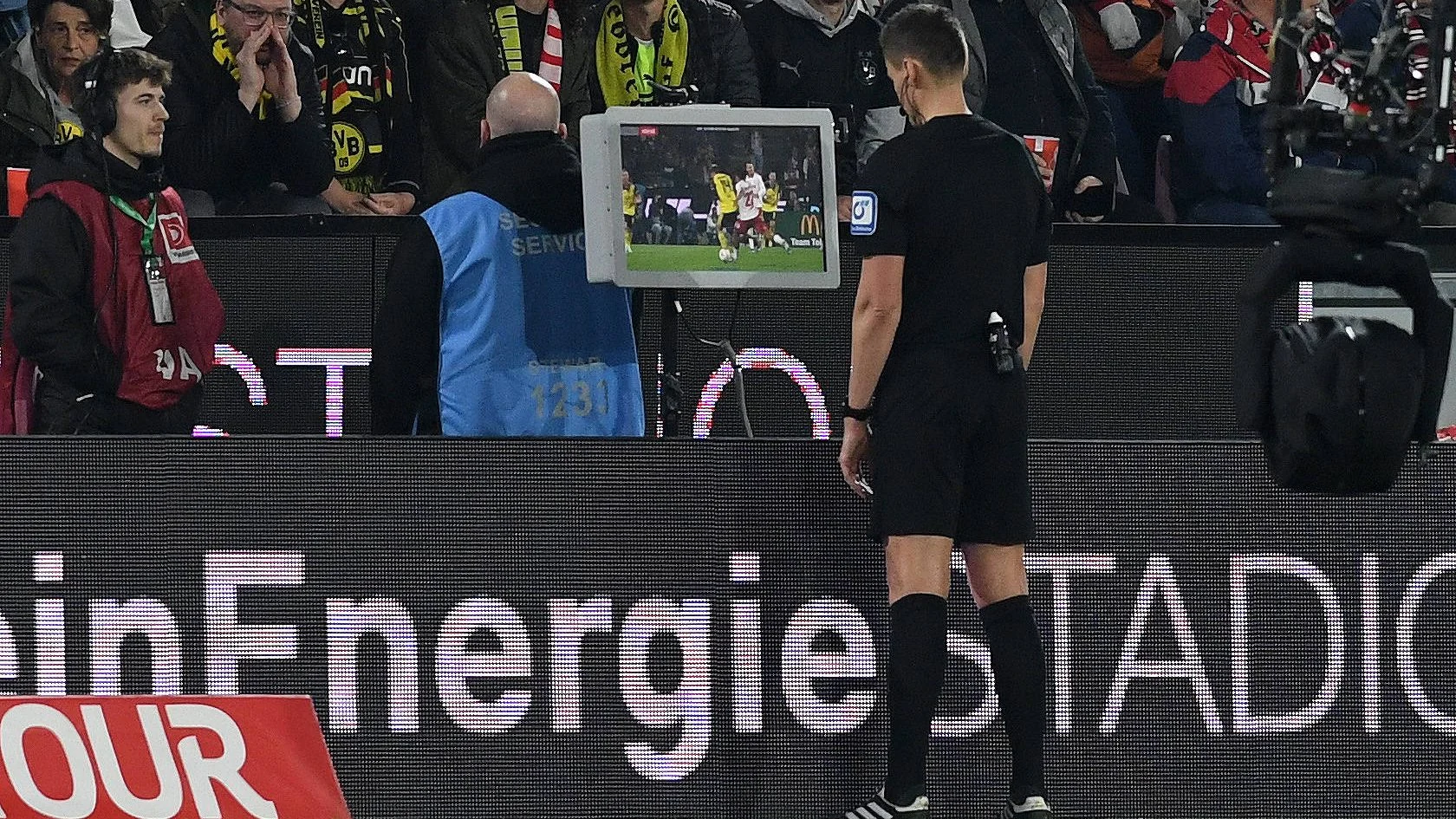
Updated September 14, 2026
The Bundesliga’s 2026/27 rule changes target wasted time and expand a few tightly defined VAR checks. Referees can impose a visible five-second deadline after identifying delay at a throw-in or goal kick, substituted players normally have ten seconds to leave, and most treated players must remain off for one running minute. VAR may also correct a clearly wrong second yellow that produces a red card and certain attacking offences committed after a restart signal but before the ball enters play.
Those headlines need qualification. The five-second count is not an automatic timer every time the ball goes out. The substitution sanction does not erase safety exceptions. Germany also declined optional VAR intervention for ordinary corner-award mistakes. This guide separates universal Law changes, Bundesliga implementation choices and rules that already existed, then turns them into practical match-viewing tests.
The 2026/27 Bundesliga rule changes at a glance
The headline change is not one universal stopwatch. From 2026/27, Bundesliga referees can show a five-second countdown when a team delays a goal kick or throw-in; a player being substituted has ten seconds to leave; and an outfield player whose injury stops play will normally spend one running minute off the pitch after the restart. VAR also gains tightly defined powers over clearly wrong second-yellow dismissals and mistaken identity.
The package entered the Laws of the Game on 1 July 2026 and applies in Germany’s professional leagues for the new season. Its common purpose is to protect effective playing time and discourage manufactured delays. Each measure nevertheless has its own trigger, signal and consequence, so the useful way to read it is incident by incident.
| Situation | Trigger or limit | Consequence |
|---|---|---|
| Delayed throw-in | Visible five-second count after delay is identified | Throw-in passes to the opponents |
| Delayed goal kick | Visible five-second count after delay is identified | Opponents receive a corner |
| Slow substitution | Outgoing player has not left within ten seconds | Replacement waits until the first stoppage after one running minute |
| On-field injury assessment | Treatment or injury stops play, subject to exceptions | Player remains off for one running minute after the restart |
| Clearly wrong second yellow | Second caution creates a red card | VAR may intervene on clear evidence |
The major German exception belongs beside the summary. IFAB offered competitions the option of letting VAR correct a clearly wrong corner award immediately, but the Bundesliga and DFB competitions declined it. Fans must therefore distinguish the international menu from the choices actually applied in Germany. Use this guide while following the current Bundesliga schedule: the schedule shows when teams play, while this article explains the calls that can shape those matches.
How the five-second restart countdown actually works
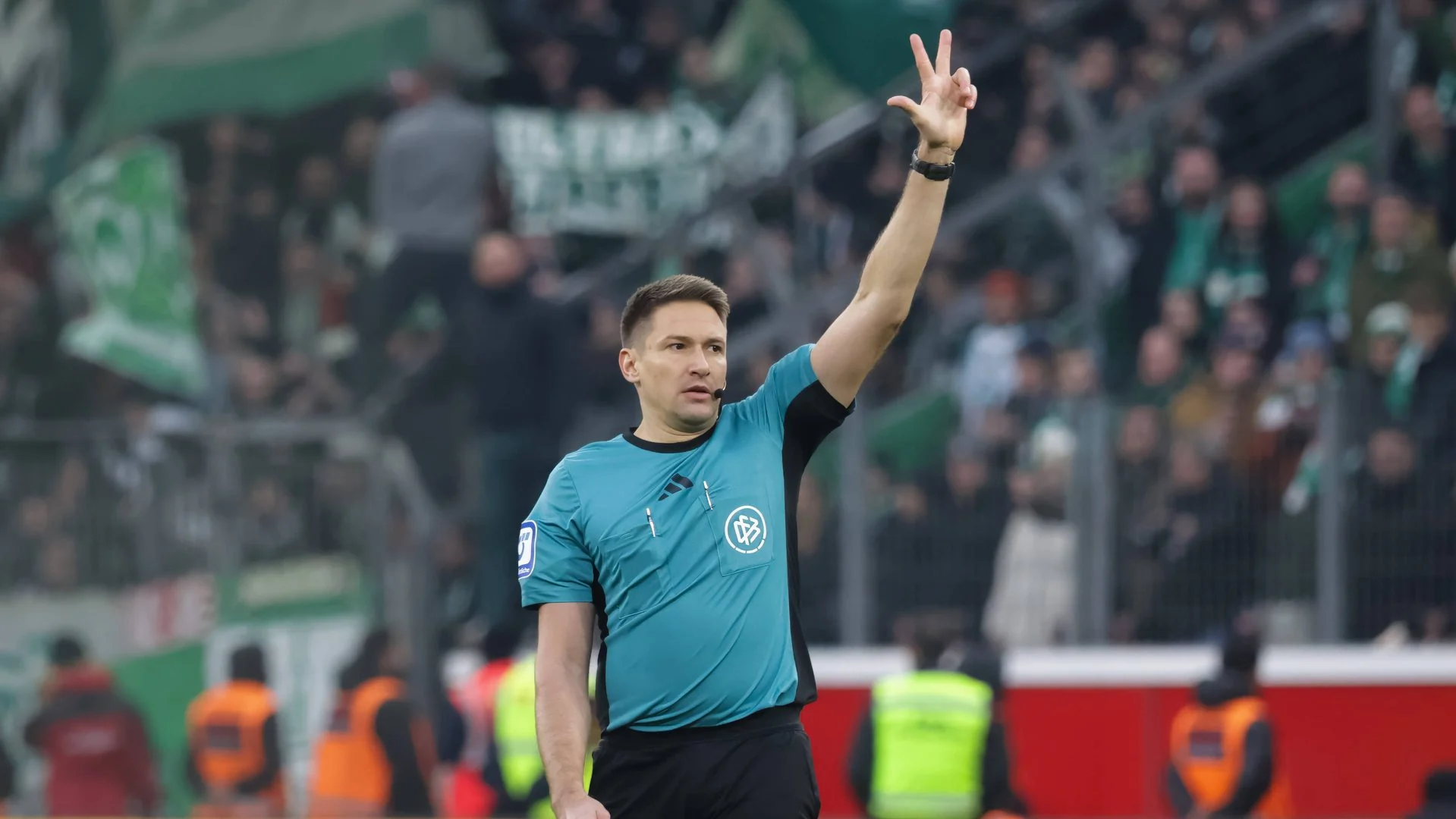
A throw-in or goal kick does not become illegal five seconds after the ball crosses the line. The referee first decides that the team taking the restart is deliberately delaying. The whistle, a clear arm signal and the visible five-to-zero hand count then create the enforceable deadline.
The referee starts counting only after identifying delay
The judgment comes before the countdown. A ball may need retrieving, opponents may still be leaving the penalty area, or the correct throw-in location may need settling. Those ordinary preparations do not create an automatic hidden clock. Once the referee identifies avoidable delay, however, the count can begin even if no player has picked up the ball.
IFAB’s protocol specifically anticipates slow ball retrieval, a player deliberately standing in the wrong place for a throw, or a goalkeeper repeatedly positioning the ball incorrectly for a goal kick. The referee may first tell the player to hurry, but does not have to give that preliminary warning before whistling and beginning the visual count. If the player is genuinely in the act of throwing or kicking as zero arrives, the protocol says the restart should be allowed rather than punished on a technicality.
A delayed goal kick becomes a corner, while a throw-in changes hands
The consequence follows the restart. If the throw is not taken, the opponents throw from the same position. If the goal kick is not taken, the opponents get a corner on the side nearest the planned kick. The second sanction carries obvious danger: a side trying to protect a one-goal lead can turn its own defensive restart into an opponent set piece in the penalty area.
Throw-in delay
Count expires → the other team throws from the original position.
Goal-kick delay
Count expires → the other team takes the nearest-side corner.
There is no automatic yellow merely because possession changes. A caution is reserved for a player or teammate who then excessively delays the opponents’ newly awarded restart.
The new countdown is not the goalkeeper’s eight-second possession rule
Since 2025/26, a goalkeeper controlling a live ball with the hands has eight seconds to release it. The referee determines when control begins and visibly shows the last five seconds; exceeding eight brings an opponent corner. The 2026/27 addition concerns Laws 15 and 16, while the ball is out of play and waiting for a throw-in or goal kick.
The clean diagnostic is: is the goalkeeper holding a live ball, or is everyone waiting for a restart? The first is the eight-second possession rule. The second may trigger the new five-second delay protocol. Similar signals, different phases.
The ten-second substitution deadline and one-minute injury absence
“Substitution limit” means a ten-second exit deadline, not fewer permitted Bundesliga replacements. The outgoing player must be off after the board or referee’s signal. A separate rule normally keeps an outfield player off for one minute after an injury-related stoppage. Both can leave a team temporarily short, but their return procedures differ.
A slow exit leaves the team temporarily a player short
The player should use the nearest boundary point unless the referee directs another route for safety, security or injury. If the replacement’s equipment must first be checked at halfway, the ten seconds start only after that inspection and the referee’s signal. Officials may show the final five seconds with a raised hand.
Missing the deadline does not allow the outgoing player to stay. They leave, play restarts, and the named substitute remains outside. The replacement can enter only at the first stoppage after one running minute has elapsed and after receiving permission. If the ball remains in play beyond 60 seconds, the practical short-handed period grows longer. The substitution cannot be cancelled and the coach cannot choose a different replacement during the wait.
Multiple substitutions create an especially demanding detail: every outgoing player must be off within ten seconds of the final change being indicated. A yellow card is not automatic at ten seconds; it is reserved for an excessive further delay. Nor should the deadline be applied rigidly when injury prevents a quick exit, when the nearest route is unsafe, or when the player is already crossing the line at zero.
Treated players face a different one-minute return rule
An outfield player normally leaves when an actual or suspected injury stops play, when the referee calls on medical staff, or when the player requests on-field attention. The one-minute clock starts when play restarts, not when treatment begins. Once the minute expires, the referee may wave the player back from the touchline while the ball is live. That differs from a delayed substitute, who must wait for a stoppage.
| Question | Late substitution | Injury assessment |
|---|---|---|
| Why is the team short? | Outgoing player exceeded ten seconds | Injury stopped play or required assessment |
| When does the minute start? | At the restart | At the restart |
| Earliest entry | First stoppage after the minute | After the minute, including during play with permission |
Goalkeeper injuries, a goalkeeper and outfielder hurt in one collision, two teammates injured together, severe injuries, harm from an opponent’s carded physical offence, and an injured player who will take an awarded penalty are among the exceptions. The point is to create genuine assessment time and discourage tactical stoppages—not to rush medical care.
What VAR can review now — and what Germany rejected
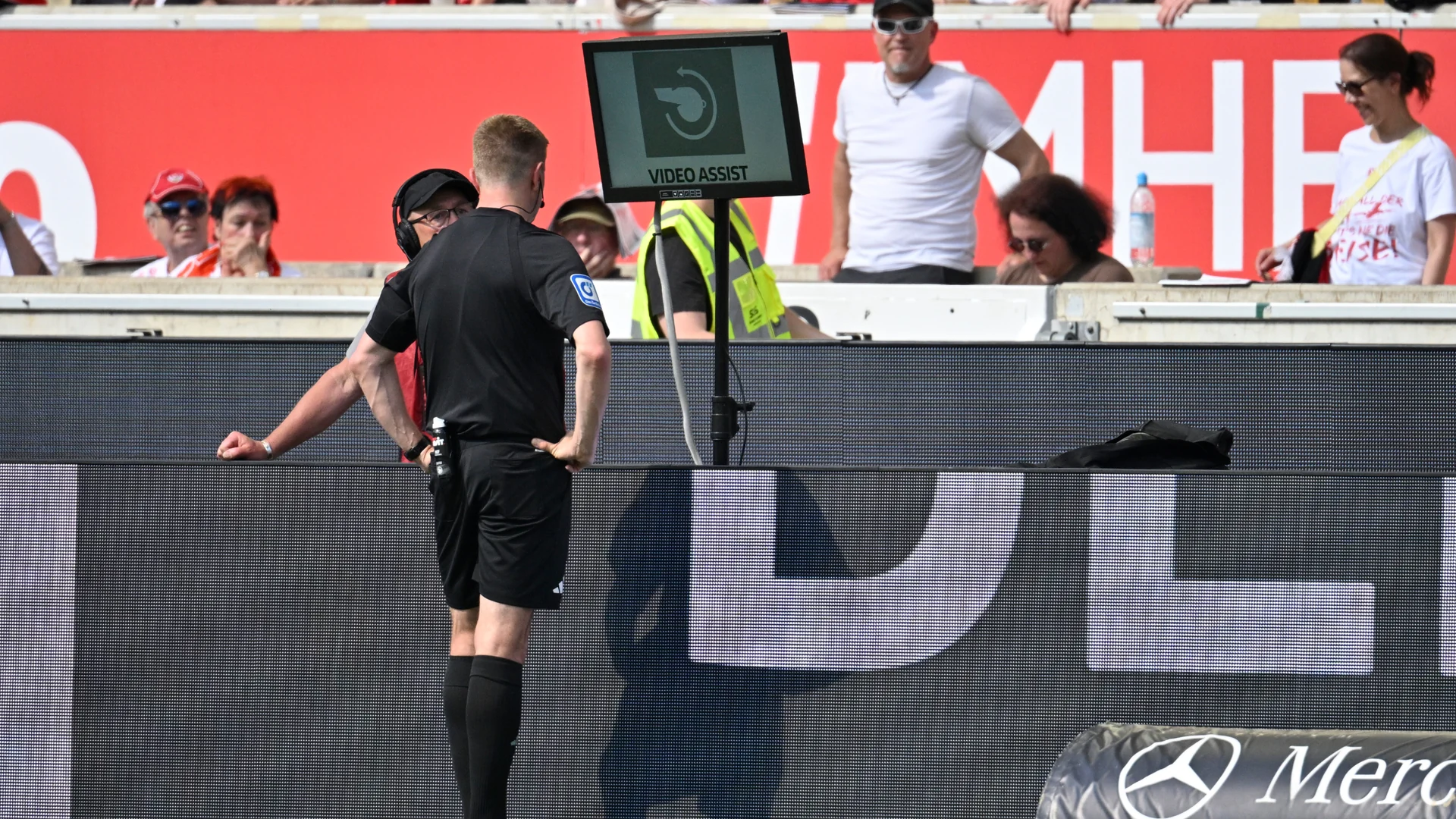
Bundesliga VAR has gained targeted powers, not a licence to re-referee every disputed caution or corner. The important additions cover a clearly wrong second yellow that produces a red, card-related mistaken identity, and certain decisive attacking offences committed before a corner or attacking free kick enters play.
Clearly wrong second-yellow reds and mistaken identity are reviewable
Previously, supporters often heard that VAR could examine a straight red but not a second yellow. The 2026/27 protocol closes the sharpest version of that gap: where a clearly incorrect second caution sends a player off, VAR may assist the referee. The match-changing red is what opens the review route. It does not mean the video team checks every first yellow, every debatable booking, or every incident in which viewers think a second caution should have been shown.
Mistaken identity is also reviewable where the wrong player receives a yellow or red. That is an objective correction about who committed the offence, not an invitation to reopen every subjective judgment about severity. The referee remains the final decision-maker, while the VAR supplies clear video evidence.
VAR can see certain attacking offences before a restart is taken
Crowded set pieces create a different blind spot. Imagine an attacker clearly pushing a marker after the referee signals for a corner but before the kick is taken. The defender is displaced, the corner is delivered and a goal follows. Under the clarified scope used in Germany, VAR can recommend an on-field review when that unseen attacking offence has a direct and immediate impact on the goal, a penalty decision or a relevant personal sanction.
If the referee confirms that the offence occurred before the ball was in play, the appropriate disciplinary consequences are applied or removed and the original corner or free kick is retaken. This is deliberately narrow. Ordinary grappling without a direct outcome is not automatically reviewed, and the extension concerns an attacking-team offence around an attacking corner or free kick—not every piece of contact before every restart.
Bundesliga VAR will not correct ordinary corner-award mistakes
Here is the distinction that resolves most confusion. IFAB gave competitions the option to correct a clearly wrong decision to award a corner if it could be done immediately, but the Bundesliga group and DFB Schiri GmbH chose not to use that option in Germany. If the ball last touched an attacker yet the referee awards that attacker’s team a corner, VAR will not intervene merely to change the restart.
| Incident | VAR route? | Reason |
|---|---|---|
| Clearly wrong second yellow causing dismissal | Yes | New reviewable red-card outcome |
| Wrong player receives a card | Yes | Mistaken identity |
| Attacker’s pre-kick foul directly shapes a goal | Potentially | Narrow pre-restart attacking-offence scope |
| Referee wrongly awards a routine corner | No | Germany rejected the optional review |
The practical test is not “did the controversy happen near a corner?” It is “what precise error is being reviewed?” That question also helps when revisiting incidents through the latest Bundesliga results.
The less-publicized changes that can still decide a match
Not every 2026/27 change comes with a countdown or a monitor gesture. Several quieter amendments tell referees when to preserve an opponent’s advantage, how to handle discipline after a goal, what equipment is safe, and which team should receive a dropped ball.
Referees can play advantage after an incorrectly taken restart
Suppose a Bundesliga player takes a throw-in from the wrong location or uses defective technique, yet the ball enters play and goes directly to an opponent who can counterattack. The referee may now apply advantage instead of immediately stopping the match to reverse or retake the throw. If the promised advantage fails to appear at that moment or within a few seconds, the official can return to the original error and order the proper restart.
This clarification serves flow and fairness together. The team that made the mistake should not benefit from a whistle that kills the opponents’ better opportunity. It does not mean restart procedure has become optional: the ball must be in play, the opposing team must benefit, and the referee still has the familiar short window to decide whether advantage materialized.
A goal after DOGSO advantage removes the caution
DOGSO means denying an obvious goal-scoring opportunity. If the referee stops play for such an offence, the normal disciplinary decision depends on the offence and location. If the referee instead lets the attack continue and the non-offending team scores as a direct result, 2026/27 makes the logic explicit: the player who committed the DOGSO offence receives no yellow or red for denying the opportunity, because the goal proves it was not ultimately denied.
Picture a goalkeeper making an illegal second touch after a short goal kick in an attempt to stop an attacker, but the loose ball reaches another forward who scores. The goal stands, and there is no DOGSO card for the goalkeeper. That feels unusual only if the original attempted denial is viewed in isolation; the Law evaluates the completed advantage.
Covered accessories and dropped balls receive clearer treatment
Law 4 now focuses on actual danger rather than treating every accessory identically. A non-dangerous item may be worn when it is safely and securely covered. A dangerous item must still be removed—it cannot be rescued by tape. The referee’s pre-match inspection therefore remains important, but cultural, religious, medical or personal items are not rejected simply because they fit a broad jewellery label.
The dropped-ball wording also sharpens possession. Outside the penalty area, the ball goes to the team that would clearly have retained or gained it had play not stopped. That includes a team that would have taken the restart if the ball was evidently going out. If an outside agent or match official caused the interference, the drop is made where that contact happened.
Supporter takeaway
When play continues after a bad throw, a DOGSO foul produces no card after a goal, or a dropped ball goes to a team that never last touched it, the referee may be applying a new clarification—not overlooking the incident.
How supporters should read disputed incidents in 2026/27
Start with the incident’s phase and trigger, not the loudest description on commentary or social media. The same raised-hand countdown can belong to goalkeeper possession, a delayed restart or the final seconds of a substitution. A VAR check near a corner may concern a goal sequence without reviewing whether the corner itself was correctly awarded.
Use a four-question incident checklist
- Was the ball live or waiting for a restart? This separates the goalkeeper’s eight-second control rule from the five-second goal-kick and throw-in protocol.
- What signal started the limit? Look for the whistle, restart gesture or substitution board rather than counting from the television shot.
- What exact consequence follows? A throw changes hands, a delayed goal kick becomes a corner, a late substitute waits for a stoppage, and a treated player may return during play.
- What category is VAR checking? Identify a goal, penalty, red-card outcome, mistaken identity or qualifying pre-restart attacking offence; do not assume every nearby decision became reviewable.
This sequence also improves replay analysis. Pause at the referee’s signal, note whether the ball had entered play, then follow the prescribed outcome. For completed games, the Bundesliga results page can identify the match, while an official competition or referee explanation should decide the rules question.
Separate the written Law from Germany’s competition choices
IFAB writes the global Laws but marks some measures as competition options or trials. The German authorities then state what applies in the Bundesliga and Bundesliga 2. That two-stage process is why a World Cup explanation can be correct yet still mislead a Bundesliga reader. Germany declined routine VAR correction of corner awards and the optional automatic red-card approaches for covering the mouth in a confrontation or leaving the pitch in protest.
“Not adopted” does not mean “anything goes.” A player who covers the mouth can still be cautioned if the referee judges the act unsporting, for example because it inflames a confrontation. A player who leaves without permission can still receive the ordinary misconduct sanction. Germany rejected the special automatic red-card options, not the referee’s existing authority.
Finally, check dates. The official Bundesliga overview from May described IFAB’s broader VAR direction before the later German decision; the July Bundesliga explainer and 7 August DFB notice provide the clearer domestic position. For this article, implementation was checked through 14 September 2026. That date stamp matters whenever a competition can refine guidance during the season.
JOIN THE DISCUSSION
Comments
Sign in with Google to comment. Keep the discussion focused on Bundesliga football and respectful to other supporters. New comments are reviewed before publication.
Loading comments…