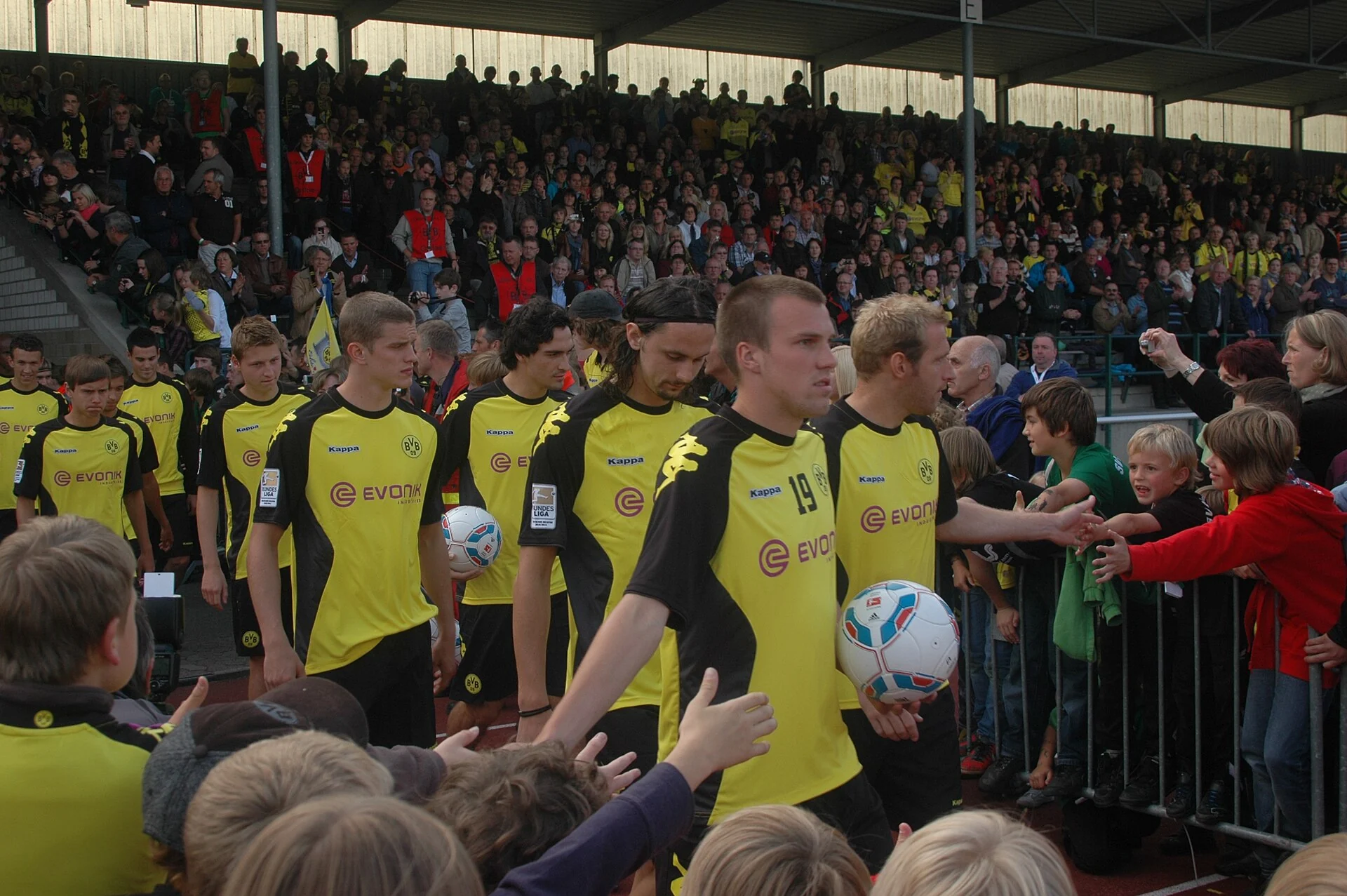
The final Federal Cartel Office assessment of the Bundesliga 50+1 rule in 2026 did not kill Germany’s member-control model. It gave the basic rule its clearest competition-law support yet: preserving the club character of professional football and public participation can justify a restriction on investor control. But the authority attached a crucial condition. The league has to apply that principle consistently, transparently and without discrimination.
That makes the August announcement both a victory and a repair order. Ordinary member-controlled clubs gained reassurance, while benefactor exemptions and structures that limit meaningful participation remain exposed. This guide explains the ruling in practical language, separates voting control from share ownership, and shows why Bayer Leverkusen, Wolfsburg, RB Leipzig and Hannover appear in different parts of the debate. It reflects public material available through ; the league’s detailed response was still to be negotiated with its 36 professional clubs.
The 2026 Decision in One Sentence
Germany’s Federal Cartel Office decided that the basic 50+1 rule can be permissible under competition law because it protects a legitimate model of member-shaped football—but that protection depends on the Bundesliga applying the rule consistently, transparently and without discrimination.
The positive half matters. A restriction on investor voting control is not automatically an unlawful cartel simply because it limits how clubs raise capital. The authority accepted that professional football has social and sporting characteristics beyond an ordinary market. Giving broad sections of the public a route to participate through club membership can justify special competition rules when the means are proportionate to that goal.
Legally Permissible Does Not Mean Unconditionally Approved
Headlines saying “50+1 is legal” compress a more careful conclusion. The August document was the authority’s final assessment in a procedure requested by the league in 2018. It closed that administrative review, but clubs directly affected described it accurately as a final, legally non-binding opinion. It was not a judgment from Germany’s highest court, nor a permanent shield against every future challenge.
More importantly, the Cartel Office did not approve every existing exception or licensing practice. A competition restriction defended as a way to preserve member influence becomes harder to justify if some participants escape the central obligation or if membership exists on paper without being genuinely accessible. The league’s own response therefore celebrated the absence of a fundamental objection while committing to negotiate a legally secure solution among all 36 Bundesliga and Bundesliga 2 clubs.
The practical reading
The principle survived. The exceptions, enforcement mechanisms and meaning of effective member control still require repair.
How the 50+1 Rule Actually Works
Traditional German clubs are registered member associations, commonly identified by the suffix e.V. Professional football, however, requires large budgets and specialist corporate structures. When a club places its licensed team into a separate company, the Bundesliga’s rule generally requires the parent members’ association to keep decisive influence: 50 percent of the voting rights plus at least one additional vote.
Control Matters More Than the Percentage of Capital
The most common misunderstanding is that fans must own 51 percent of every economic share. The decisive test is voting and management control, and the result depends on the legal form. An investor may buy a substantial capital stake without gaining the power to appoint management or dictate the professional team’s direction.
Borussia Dortmund shows why the distinction matters. Shares in Borussia Dortmund GmbH & Co. KGaA trade publicly, and the member association holds only a small direct capital percentage. Yet the entity entitled to manage the partnership is wholly controlled by the members’ club. That structure preserves ultimate governance influence while allowing external shareholders to provide capital. Bayern uses a simpler example: its members’ association owns 75 percent of the football AG, with three strategic partners holding minority stakes.
Neither model makes supporters managers of daily transfers or tactics. Members exercise influence through association structures—electing officers, voting on statutes and holding leadership accountable—which then control the professional entity. The strength of that chain, not a slogan printed on a share certificate, is what the 2026 assessment scrutinizes.
Why German Football Uses the Rule
Until the late 1990s, Bundesliga teams were operated within non-profit associations. Permitting corporate subsidiaries opened new ways to raise money, but it also created a takeover risk. The 50+1 compromise allowed equity investment while preventing an external party from buying the final vote and treating a club like an ordinary controlled asset.
The Cartel Office’s legal reasoning focuses on club character and participation. A member is more than a customer: in an open association, that person can help determine leadership and policy. German football argues that preserving this relationship is a legitimate social and sporting objective. The rule also limits one route by which a club could obtain a competitive advantage—selling control for more investor capital—although it cannot equalize sponsorship, commercial income, wealthy regions or sporting competence.
It is therefore safer to say 50+1 supports a member-centered culture than to claim it single-handedly causes affordable tickets, full terraces or financial stability. Those outcomes also depend on club choices, licensing, supporter pressure and the wider market. The rule protects who has the final institutional voice; it does not prescribe every decision that voice will make.
Why the Cartel Office Examined 50+1 for Eight Years
The investigation was not an enforcement raid imposed without warning. Bundesliga clubs themselves voted in March 2018 for a process that would improve legal certainty while retaining 50+1. In July, the league executive asked the Federal Cartel Office for an assessment under Section 32c of Germany’s Competition Act. The ambition was to resolve recurring claims that a league rule limiting investor control unlawfully restricted competition.
The answer developed in stages. In 2021, the authority said the basic rule could be justified by legitimate sporting and social aims, but it doubted whether the benefactor exemption allowed uniform enforcement. In 2023, the league offered to delete the possibility of new exemptions while preserving existing ones under stricter participation and compensation conditions. At that point, a binding commitments decision appeared possible.
The Competition-Law Test Changed Along the Way
Three Court of Justice of the European Union judgments in December 2023—concerning the European Super League, the International Skating Union and Royal Antwerp—forced another legal review. They did not decide the Bundesliga case. They clarified how competition law treats rules made by sporting bodies that both regulate a market and control access to it.
In 2024, the Cartel Office said those cases did not fundamentally alter its favorable view of the basic rule. It considered 50+1 not inherently so harmful to competition that justification was impossible. However, a sports association seeking an exemption for recognized social or ethical purposes must administer its rule through transparent, objective, consistent and non-discriminatory criteria. That shifted attention from the sentence “members retain control” to what Bundesliga licensing did in practice.
- 2018: clubs seek greater legal certainty without abandoning 50+1.
- 2021: the basic principle receives preliminary support; exemptions draw concern.
- 2023: the league proposes no new benefactor exemptions and conditions for existing cases.
- 2024: new European case law triggers a deeper review of licensing and consistency.
- 2026: the authority closes the procedure with conditional support and a reform agenda.
Eight years therefore reflects moving proposals, third-party participation and changing European law, not eight years spent deciding whether member clubs are culturally valuable. The final assessment validates the objective while warning that exceptions or hollow participation can weaken the legal logic supporting it.
The Clubs at the Center of the Consistency Problem
Four club names recur in coverage of the final assessment, but they do not share one legal structure. Bayer Leverkusen and VfL Wolfsburg have formal historic exemptions. RB Leipzig is generally treated as formally compliant while facing questions about access to meaningful membership. Hannover 96 illustrates whether a parent club’s democratic instruction remains effective when its representative acts within the league.
Bayer Leverkusen and VfL Wolfsburg
The benefactor exemption allowed a person or company that had substantially supported a club’s football activities for more than 20 years to assume control. Bayer AG controls Bayer 04’s professional company; Volkswagen controls Wolfsburg’s. TSG Hoffenheim previously joined that category after Dietmar Hopp’s long-term support, but majority voting rights were later transferred back to the member club, returning TSG to an ordinary 50+1 structure.
The legal problem is consistency. If member control justifies restricting every other club’s access to investor capital, permitting permanent corporate control at selected competitors can undercut that rationale. A 2023 league proposal would have barred new exemptions while protecting existing beneficiaries subject to stronger participation and a financial balancing mechanism. The later examination concluded that this proposed status-quo protection was not sufficient under the stricter consistency test.
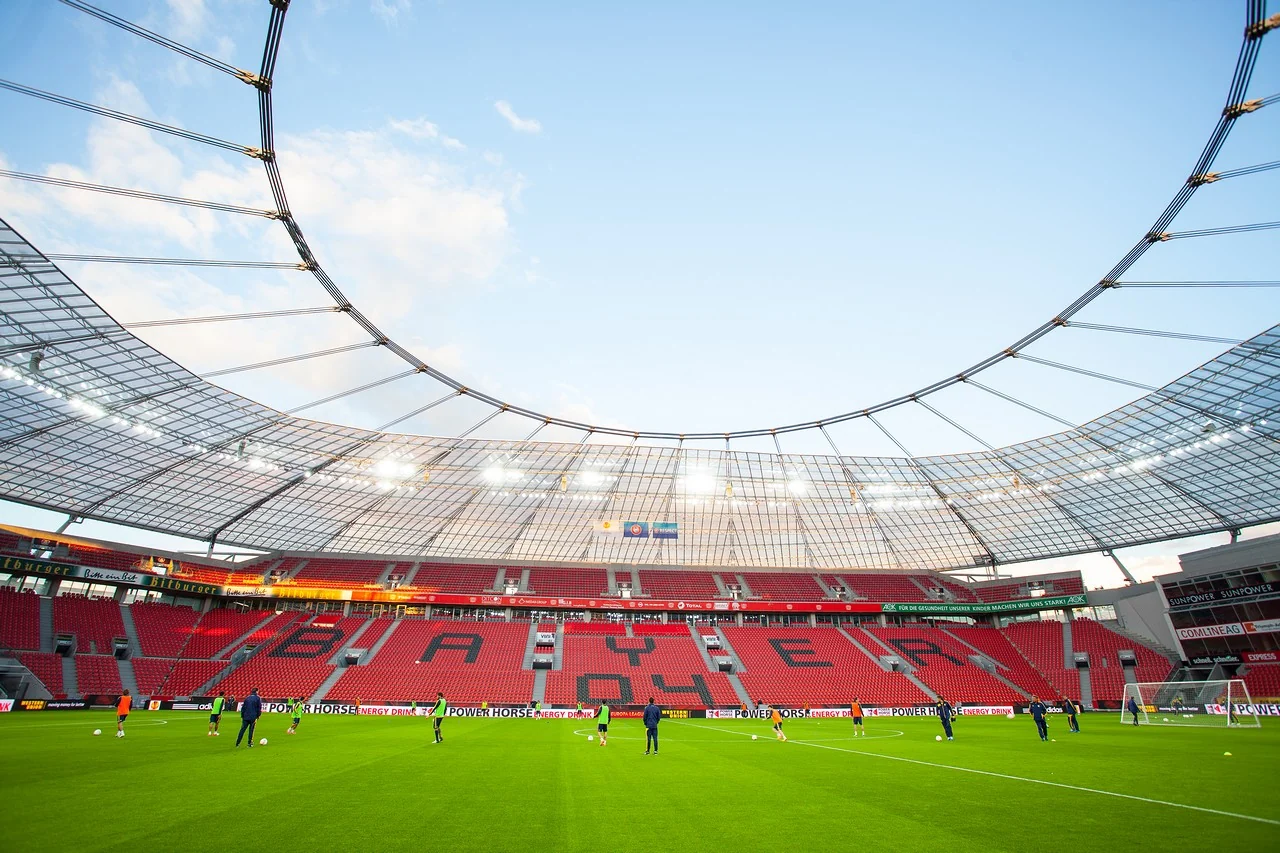
That does not mean Leverkusen and Wolfsburg lost their licenses on 12 August. The assessment points toward a generous transition and a structure in which an open parent association eventually has influence comparable to other clubs. The details remain for the league to negotiate. Both the clubs and their corporate backers stressed the opinion’s non-binding nature and the need to protect long-established rights, leaving litigation or a negotiated bespoke transition possible.

RB Leipzig, Hannover 96 and Effective Member Control
RB Leipzig poses a different question. Its parent association formally retains the required control, but critics point to a very small voting membership and high barriers to joining. If the competition-law justification rests on broad public participation, a closed or tightly filtered association may preserve the legal form while frustrating the rule’s purpose. The 2026 message is that a parent club should be genuinely open to new members, not merely exist as the controlling box on an organization chart.
Hannover’s issue concerns the strength of the control chain. During the league’s December 2023 vote on an outside investment process, public controversy centered on whether club representative Martin Kind followed an instruction from the member-controlled parent association. The ballot was secret, so claims about an individual vote require caution. The regulatory point is broader: league organizational rules cannot allow a representative to neutralize the influence that 50+1 is supposed to preserve.
| Club | Main 2026 issue | Likely policy focus |
|---|---|---|
| Leverkusen | Corporate benefactor control | Transition toward comparable parent-club influence |
| Wolfsburg | Corporate benefactor control | Transition and protection of established rights |
| RB Leipzig | Practical openness of membership | Accessible, meaningful participation |
| Hannover 96 | Effect of member instructions | Governance rules that preserve control |
Treating every case alike would repeat the consistency problem in another form. The league needs common principles strong enough to be non-discriminatory and transition arrangements precise enough to respect materially different histories.
What the Decision Means for Fans, Clubs and Investors
For supporters, the final assessment strengthens more than a sentimental tradition. It recognizes that public participation in a member association can be a legitimate reason to restrict the market for club control. For clubs, that recognition carries compliance duties. For investors, it confirms that German football remains open to capital but not generally to a conventional controlling takeover.
Member Participation Must Be Real
A club cannot rely on “member-owned” as a decorative label. The legal justification works because people have a realistic opportunity to join the parent association, vote under transparent statutes and influence the body that controls professional football. An association composed of a tiny, self-selecting circle creates a mismatch between the claimed public benefit and actual governance.
That does not require members to approve every transfer, sponsorship or coaching appointment. It requires an effective constitutional chain: members can elect and remove leadership; leadership can direct or supervise the entity holding control; representatives cannot simply ignore binding structures when acting in league bodies. The likely reform debate will concern minimum openness, rejection criteria, information rights and enforceable instructions. Those details determine whether participation is meaningful.
Fans should also avoid reading too much into the decision. It does not freeze ticket prices, stop unpopular commercial partnerships or guarantee that a board follows terrace opinion. Members still have to organize, attend meetings and win votes. The ruling protects an avenue for democratic influence rather than a guaranteed outcome.
Investment Is Still Possible Without Investor Control
For clubs seeking funds, 50+1 is a boundary, not a locked door. Bayern’s strategic shareholders, Dortmund’s listed partnership and minority holdings at other clubs demonstrate that sponsors and financial investors can acquire economic interests. Clubs can also borrow, issue shares within their structures, sell commercial rights and form long-term partnerships. What they generally cannot sell is the final institutional vote that makes the investor the controlling owner.
That distinction affects valuation and risk. A minority investor may receive dividends, board representation or negotiated protections, yet cannot assume the unilateral authority available in many English, French or Italian takeovers. Some investors will accept the model for brand association and long-term growth; others will demand a discount or choose another market. The rule deliberately accepts that trade-off.
The 2026 assessment could improve investment conditions if it produces clearer, uniform rules. Legal uncertainty is costly for both member clubs and outside capital. A transparent standard for membership, governance rights and transitional arrangements would tell an investor exactly what can be purchased—and reassure supporters about what cannot.
What the Bundesliga Must Do Next
The Cartel Office supplied a legal direction, not replacement statutes. Bundesliga e.V. must translate “consistent member control” into licensing rules that work across companies, partnerships and member associations. Its executive committee said it would study the final document and then discuss concrete options with all 36 clubs in the top two divisions.
At minimum, a credible package needs to define when a parent club is sufficiently open to members, how those members’ decisions remain effective through corporate and league bodies, and what happens to the benefactor exemption. It also needs an audit trail and consequences. A principle is not uniformly enforced if licensing officials lack the information or authority to test it.
A 36-Club Solution, Transitional Rules and Legal Risk
Agreement will be difficult because clubs enter the negotiation with different interests. A conventional member-controlled club wants competitors held to the same financing constraint. Leverkusen and Wolfsburg want recognition of structures built over decades. Their corporate backers want protection from an abrupt loss of rights. Clubs seeking new capital want rules flexible enough to remain commercially useful.
A sensible transition would set a defined end state, measurable milestones and enough time for corporate and association changes. It should not be an indefinite grandfathering label that recreates unequal treatment. The league must also distinguish a temporary bridge from a permanent new exception, publish the principles used in licensing and provide an appeal route.
As of 14 September 2026, the authority had not imposed a public deadline or written the exact compromise. That absence should not be mistaken for permission to do nothing. If the league maintains a restriction on control but applies it inconsistently, rival clubs or investors could test the arrangement in litigation. Conversely, a rushed change that disregards acquired rights could generate a different set of claims.
Four tests for the eventual reform
- Can an ordinary supporter realistically become a voting member?
- Does the member association exercise decisive professional control?
- Are the same objective criteria applied during every club’s licensing?
- Do transitional exceptions end on measurable terms?
For now, fans checking the Bundesliga clubs directory should treat 50+1 as intact but unfinished. The 2026 decision makes abolition less likely and coherent enforcement more urgent. Its long-term importance will depend on the rules the 36 clubs adopt after the headline has faded.
JOIN THE DISCUSSION
Comments
Sign in with Google to comment. Keep the discussion focused on Bundesliga football and respectful to other supporters. New comments are reviewed before publication.
Loading comments…