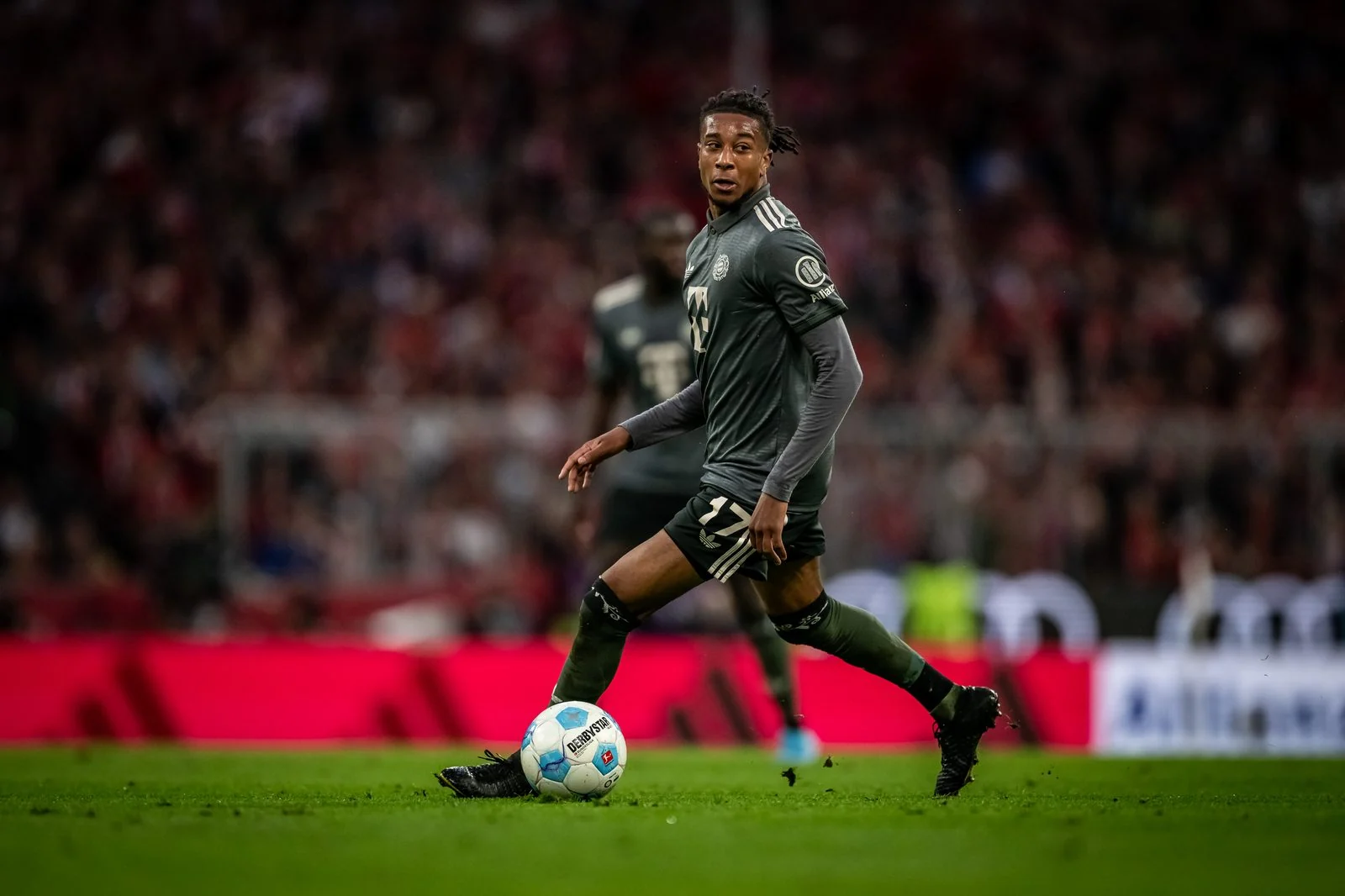
Michael Olise won Bundesliga Player of the Season for 2025/26. The official EA SPORTS award began in 2019/20: this guide lists every completed-season winner, explains the documented voting process and separates the prize from other German football honours.
Bundesliga Player of the Season winners, 2019/20–2025/26
The official Bundesliga Player of the Season award, organised with EA SPORTS, has seven completed editions from 2019/20 through 2025/26. Michael Olise is the latest winner in that sequence. The table below uses the club represented during the winning Bundesliga campaign, so a subsequent transfer does not change the historical entry. It also uses the full season rather than a calendar year, which is essential when comparing a summer announcement with a season that started the previous August.
| Season | Winner | Club in winning season |
|---|---|---|
| 2019/20 | Robert Lewandowski | Bayern Munich |
| 2020/21 | Erling Haaland | Borussia Dortmund |
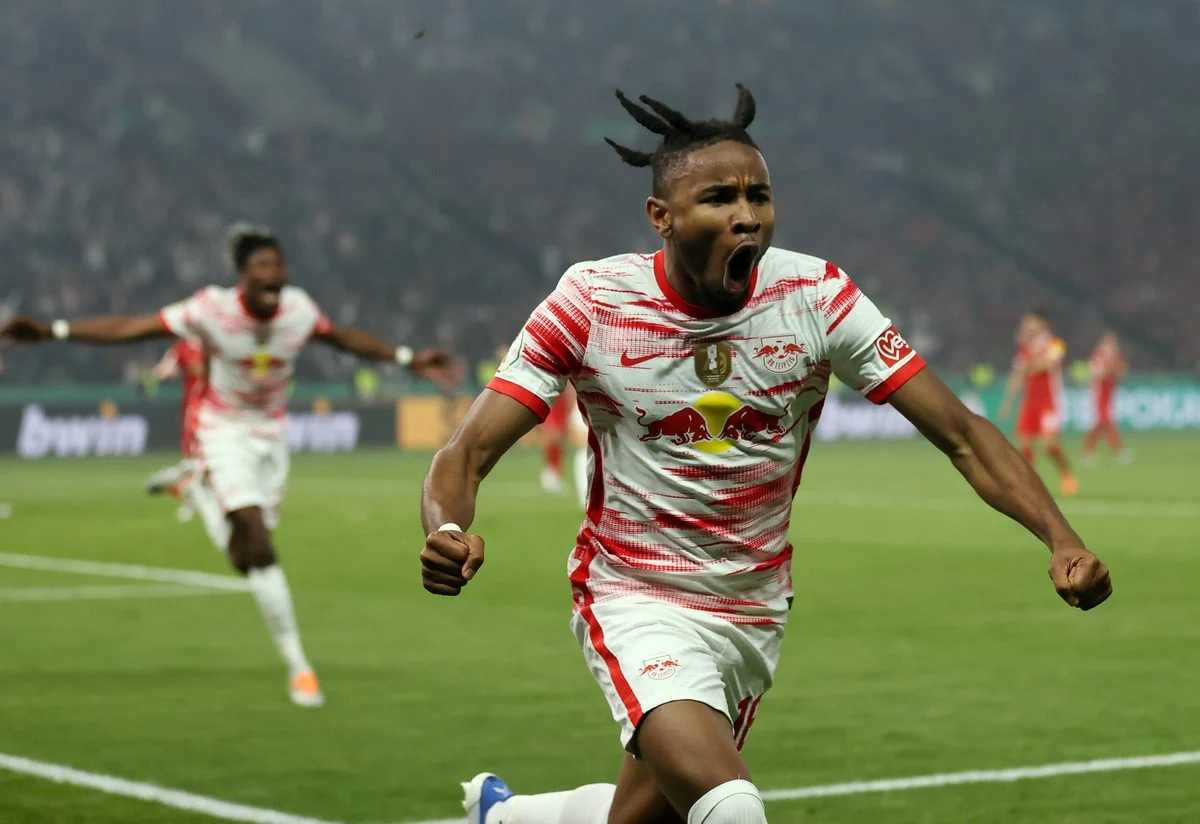
| 2021/22 | Christopher Nkunku | RB Leipzig |
| 2022/23 | Jude Bellingham | Borussia Dortmund |
| 2023/24 | Florian Wirtz | Bayer Leverkusen |
| 2024/25 | Harry Kane | Bayern Munich |
| 2025/26 | Michael Olise | Bayern Munich |
A search for the winner in “2026” should therefore lead to Olise if the intended question is the award for the season ending in May 2026. It should not be interpreted as a decision on the whole of the 2026 calendar year, or as an announcement for 2026/27. As of 20 October 2026, the latter campaign is in progress and has no completed-season winner. That distinction becomes particularly useful when a player has changed clubs or when a search result presents only the announcement date.
The geographical spread is interesting within this relatively short history. Bayern supplied three winners, Dortmund two, and Leipzig and Leverkusen one apiece. Those are counts from the seven entries here, rather than a claim about every player award ever handed out in German football. Each of the seven players won this particular prize once during the period covered. Older superstar seasons can still deserve enormous admiration without belonging to an award category that had not yet begun.
Read the list as a record of recognition within individual seasons. It cannot decide whether Bellingham was a better footballer than Lewandowski, or whether Olise's creativity should outrank Wirtz's work in a different tactical environment. Those comparisons need roles, minutes, team responsibilities and contemporary competition. The value of the table is that it fixes the factual starting point, allowing the football argument to begin with the correct player, club and campaign.
For a supporter browsing older footage, this also gives an efficient route into the league's recent history. Follow the winning season first, then look at the team's campaign and the player's role within it. A highlight reel from a later transfer destination can explain a career trajectory, but it does not explain why a Bundesliga electorate recognised that earlier body of work.
What this award recognises, and which prizes are different
“Best player in Germany” is a football argument; Player of the Season is the name of a particular award. The distinction matters because the same player can finish first in one vote, lead a statistical category and lose another ballot without any contradiction. Before comparing historical lists, identify the organiser, the period being assessed and the electorate. Those three details explain much more than a headline that simply calls someone player of the year.
German Footballer of the Year is a separate award
Germany's Footballer of the Year belongs to a different award tradition from the Bundesliga's EA SPORTS season prize. Kevin De Bruyne's recognition for 2014/15 is recorded by the DFB as Germany's Footballer of the Year. It does not add a 2014/15 entry to the seven-season official list above. When researching an older season, preserve the contemporary name of the honour instead of translating every variation into “Bundesliga Player of the Season”. Otherwise a perfectly accurate individual achievement becomes an inaccurate award chronology.
This is especially relevant to searches containing 2015, 2014/15 or a celebrated Wolfsburg player. De Bruyne's influence can be discussed through the football of that campaign, including the team's attacking play and cup success, while keeping the prize's identity clear. A club biography may list several personal honours together because it is describing the player. An award reference has a different job: it must separate those honours so that a reader can compare like with like.
Player of the Season is not the Golden Boot
The Torjägerkanone rewards the leading Bundesliga goalscorer. A season award involves judgement across a broader range of contributions. In 2020/21, Lewandowski scored a record 41 Bundesliga goals, yet Haaland won Player of the Season. In 2023/24, Kane led the scoring with 36 while Wirtz received the overall season award. Those examples immediately show why a goals table cannot be used to fill gaps in a winners list.
That does not make goals unimportant. It means goals answer one precise question, whereas evaluating a winger, midfielder, defender and striker together requires decisions about value. A midfielder may accelerate possession before the final pass; a forward may force defenders deeper without touching the ball. Neither action automatically supplies a trophy, and neither disappears because it is absent from the scoring column. Use the award as evidence of contemporary recognition, then examine the football rather than treating the result as a universal ranking formula.
How the 2025/26 voting process worked
The 2025/26 process combined three constituencies: supporters carried 40 percent of the weighting, clubs 30 percent, and selected experts 30 percent. The official announcement described this system when confirming Olise as the winner on 16 May 2026. A public vote therefore mattered, but it did not represent the entire decision. A player leading an informal online poll elsewhere could not be assumed to be leading the official award.
From the 40-player shortlist to the season winner
First, the Team of the Season was selected from a shortlist of 40 players. The Player of the Season was then chosen from that team using the same balance of fans, clubs and experts. This is a sequence with two distinct questions: which players belong in the season's outstanding XI, and which one merits the individual prize? Inclusion in the team is significant recognition, but it does not make every selected player a joint overall winner.
The weighting is best understood as a balance of perspectives rather than a way to count every supporter and every club as identical ballots. Fans watch the league from varied loyalties; clubs and experts contribute different judgements. The percentage assigned to each constituency determines its share of the combined decision. It does not tell us how many people participated, how each club reached its choice or what margin separated two players. Those details should only be reported when the organiser publishes them.
This also explains why there is no reliable shortcut from a social-media trend to an award forecast. A popular player may mobilise a large fan response while a less visible rival is admired by opponents. Equally, a widely praised performer can appeal across all three groups. Without disclosed results within each constituency, attributing a victory entirely to popularity or entirely to professional opinion would be guesswork. Supporters can debate the outcome while recognising what the available evidence actually establishes.
For historical comparisons, use these percentages as the documented 2025/26 arrangement. Award formats can develop, and an older announcement may describe a different nomination route. Do not work backwards from the latest rules and assume every previous winner faced an identical procedure. That is particularly important when comparing monthly awards with the annual prize: similar branding and overlapping players do not, by themselves, prove the same shortlist, electorate or weighting was used.
When the next vote opens, begin at the league's official awards page and read the season's announcement before submitting a choice. Check which stage is open and whether it selects an XI or one overall player. The football judgement belongs to the voter; knowing the ballot's purpose ensures that judgement is expressed in the right contest.
What the early winners tell us about the award
The first four winners show why there is no single statistical template for this award. Lewandowski's 2019/20 recognition came during a league campaign of 34 goals. His movement inside the penalty area made him an obvious finishing reference point for Bayern. Yet the following season's award went to Haaland, whose 27 league goals came in 28 appearances for Dortmund. The contrast encourages a useful distinction between recording a winning performance and claiming that one number mechanically determined a ballot.
Haaland's acceleration into space presented a different attacking problem from a striker continually operating in a crowded box. A defender deciding whether to follow him or protect the channel could create room for another attacker. That kind of threat helps explain why watching a player over full matches adds something to the goals total. It does not establish what any individual voter thought, but it gives supporters a better language for discussing the football they are judging.
Nkunku added another profile in 2021/22: an attacker contributing both as scorer and provider. His 20 goals and 13 assists in 34 league appearances captured that balance. His ability to occupy several attacking spaces made him difficult to reduce to a traditional centre-forward label. For a Leipzig follower, the season's story was about a player repeatedly finding ways to influence attacks, whether he supplied the finishing touch or created an opportunity for someone else.
Bellingham's 2022/23 award makes the positional point even clearer. His league record included eight goals and four assists, while the Bundesliga credited him with 482 duels won. An argument built only on scoring would miss the central-midfield responsibilities that made his season distinctive. Winning a challenge, carrying through pressure and arriving later in the box are different actions, but together they can shape whether an attacking team maintains control or repeatedly has to chase back.
These cases are better used as invitations to watch than as a ranking of playing styles. Look at the receiver's first touch, the defender a run pulls away, or the point at which a midfielder turns a loose ball into an attack. Then relate those actions to the team's demands. A forward may have more finishing opportunities because teammates dominate possession; a midfielder may spend more time repairing an unstable game. Recognising the context makes an awards debate richer while leaving room to disagree with a perfectly official result.
Wirtz, Kane and Olise: three routes to recent recognition
The three most recent winners all played for champions, but the football behind their awards differed. A title gives a season a powerful narrative; it does not make the most prolific scorer the automatic winner. Wirtz's combinations between lines, Kane's finishing and distribution, and Olise's right-sided creation offer three useful ways to explore what outstanding attacking influence can look like. Each should be understood within its own campaign.
Wirtz and Leverkusen’s unbeaten champions
Wirtz supplied 11 goals and 11 assists in Leverkusen's first Bundesliga championship season. His hat-trick from the bench in the 5-0 victory over Werder Bremen gave the title-clinching match an unforgettable individual signature. That moment belongs in any account of his award, but his broader value lay in the repeated ability to receive, turn and connect attacks. The celebration was spectacular because a sustained body of work had brought Leverkusen to that opportunity.
For a viewer, the most revealing question is often what happens just before the decisive action. When an attacking midfielder receives between an opponent's midfield and defence, someone must leave a position to confront him. That movement can open a passing lane or release a teammate. Wirtz's combination of carrying and distribution made those decisions uncomfortable. The goals and assists register some outcomes; the positional dilemma helps explain why his influence felt larger than a simple end-product tally.
Kane and Olise at Bayern Munich
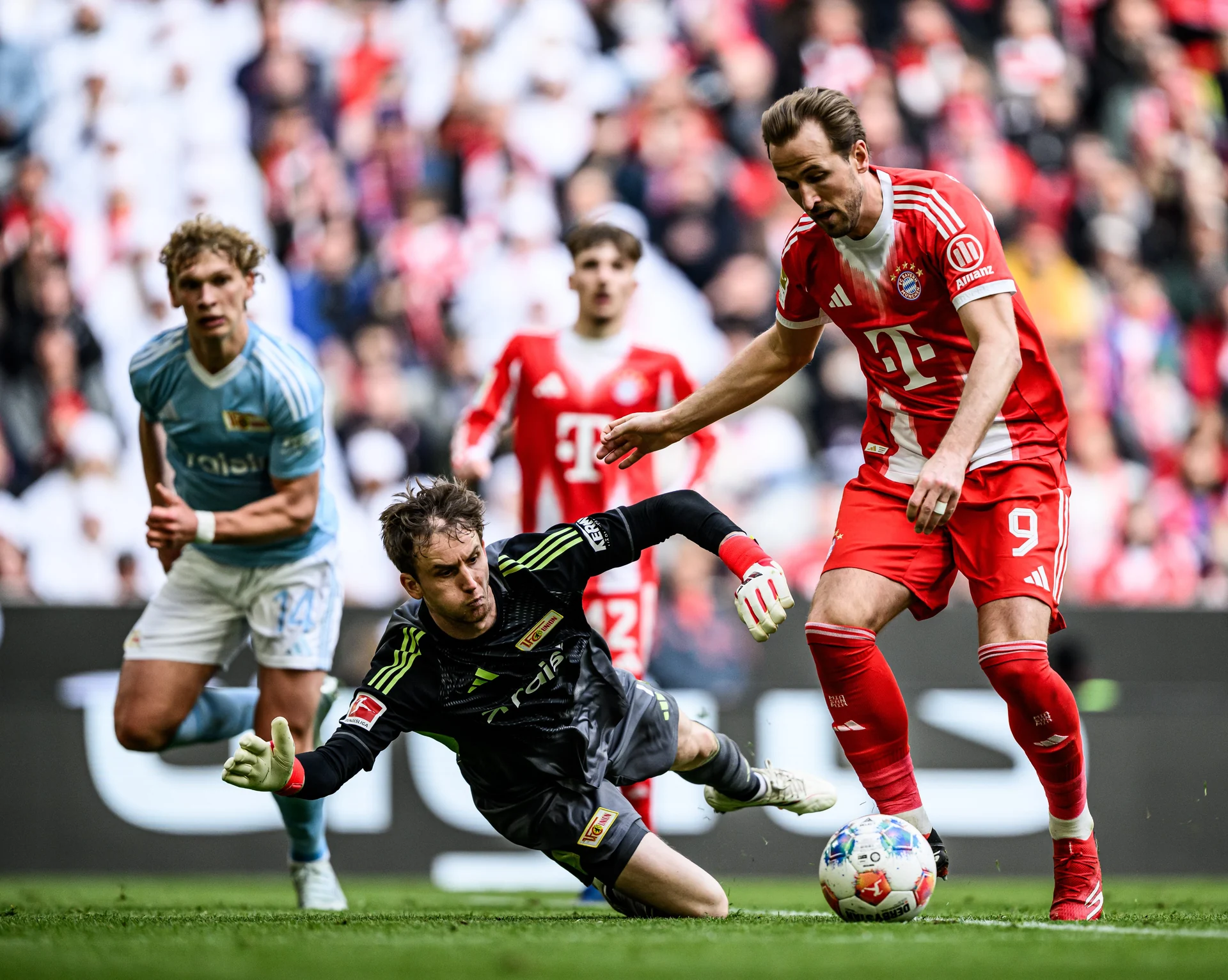
Kane's 2024/25 award accompanied 26 goals, eight assists and a Bundesliga title. The assist figure matters because a centre-forward can improve attacks by dropping towards possession and finding runners, as well as by finishing them. Assessing Kane only by whether a cross reached him in the box would overlook an important part of how he contributed. His case combines a familiar striker's responsibility with the ability to become a passing reference point for teammates.
Olise followed in 2025/26 with 15 goals and 19 assists. The balance shifts towards creation without removing a substantial scoring threat. A defender facing a player able to pass across the box or cut inside to shoot cannot simply close one obvious route. Bayern's right flank could therefore supply a different kind of decisive influence from the central striker. That makes the succession from Kane to Olise an interesting football comparison rather than an inconsistency in the award.
Neither result proves that their teammates were less important, or that a champion's attacker should always beat an outstanding player elsewhere. Awards recognise individuals inside collective systems. The rewarding way to revisit these campaigns is to compare responsibilities, the space each player used and the choices he forced opponents to make. That approach respects the winners while leaving space for a supporter to prefer another candidate on footballing grounds.
How to follow the next award without confusing the season
Start with the exact wording of the announcement. “Player of the Season so far” is an interim judgement, not the completed-season award. Luka Vušković won the Bundesliga's 2025/26 season-so-far fan vote, announced on 9 January 2026, while Olise later won the annual prize. The corresponding January 2025 poll went to Jamal Musiala; Kane became the 2024/25 season winner. Keeping those labels intact resolves an otherwise confusing pair of search results.
The difference is substantive. An interim poll evaluates a shorter portion of the schedule and may use a tournament-style public vote. The January 2026 contest began with 16 nominees and paired players against each other through successive rounds. That format answers which candidate advances in that particular ballot. It does not create a points advantage for the later season award, and its published final-round percentage cannot be transferred into a different vote held months afterwards.
Then check whether the article refers to the Bundesliga or 2. Bundesliga. Similar titles appear for both competitions, often in the same news search. A second-division winner deserves recognition on those terms, but should not be added to the top-flight chronology. The same principle applies to a World Cup poll involving Bundesliga players: club affiliation explains who can enter, while the international tournament supplies the performances being assessed. It is a separate sporting context.
As 2026/27 develops, use the current league table to place performances in the season's competitive setting. A decisive display in a relegation fight and a creative performance in a dominant attack may present very different challenges. Keep notes on the role, opposition and match situation rather than relying solely on whichever clip circulates most widely. Monthly prizes can identify sustained form, but the annual decision still needs its own official announcement.
Finally, preserve the full season when sharing a winner. “Olise, Bayern Munich, 2025/26” tells another supporter exactly which achievement is meant. Add the award organiser if a discussion includes journalists' prizes or player-union honours. Those small details make historical comparisons much easier and keep an excellent performance attached to the correct recognition. The latest completed entry here remains Olise; the next official annual winner will belong to 2026/27 once that season's process has actually concluded.
JOIN THE DISCUSSION
Comments
Sign in with Google to comment. Keep the discussion focused on Bundesliga football and respectful to other supporters. New comments are reviewed before publication.
Loading comments…