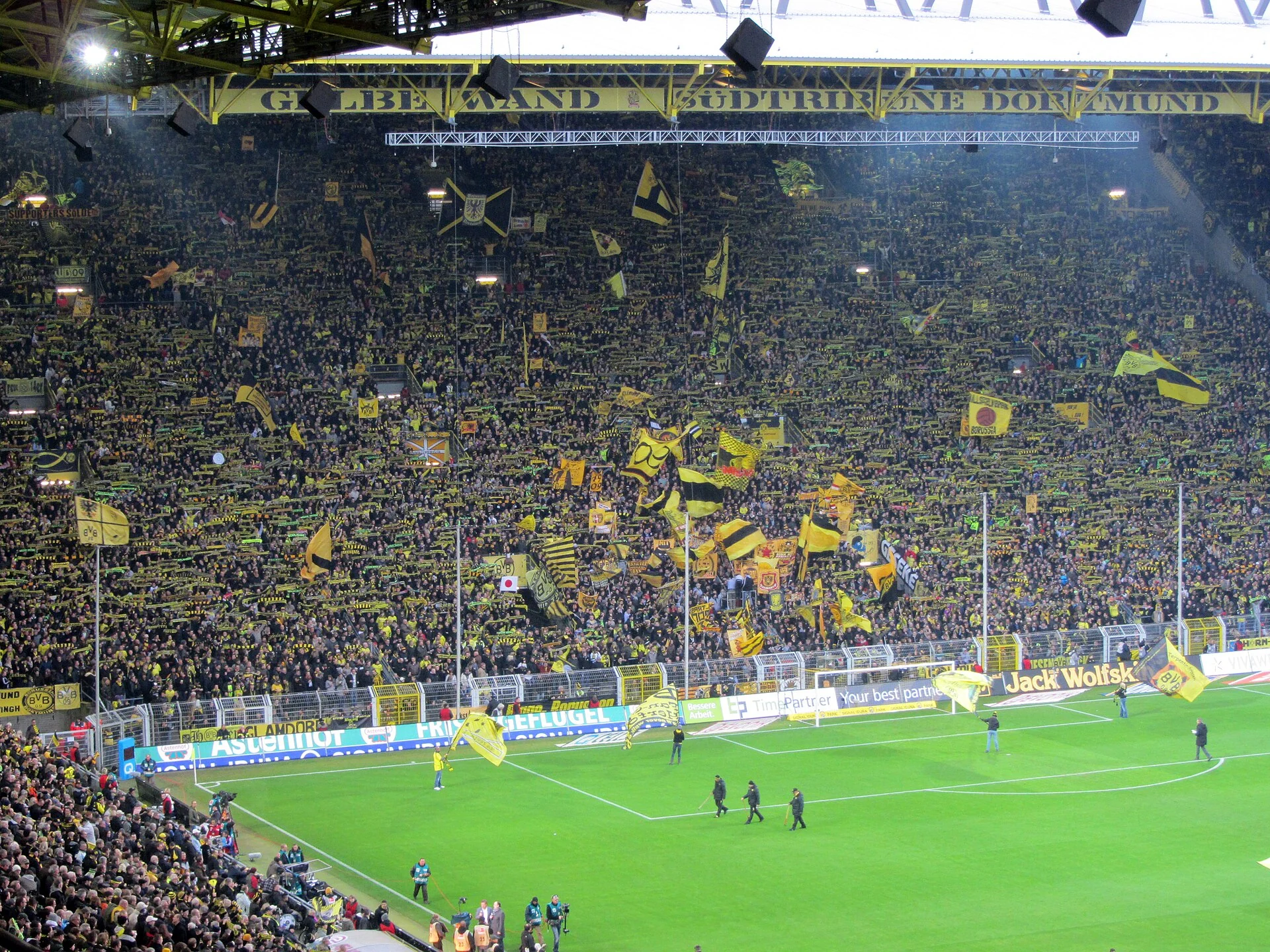
The Bundesliga VAR protest of 2026 is not simply another argument about whether one penalty was right or one offside line was drawn correctly. Organized supporter groups have turned a familiar complaint into a direct political demand: remove the video assistant from German professional football. Their case begins in the stands, where a goal is an event shared in one unrepeatable instant, and where a delayed review can change celebration into suspicion.
This guide explains what the campaign has actually asked for, why the first round of the DFB-Pokal became its showcase, and why reforms such as stadium announcements have not persuaded its most committed advocates. It also tests the abolition argument against the mistakes VAR does correct. The distinction matters: prominent active fan scenes have coordinated the action, but “Bundesliga fans” are not one voting bloc. The analysis below reflects confirmed statements and rules available through , not a claim of unanimous opinion.
What the 2026 Anti-VAR Campaign Is Asking For
The demand is unusually plain: organized fan groups want the Video Assistant Referee abolished in German football, not merely made a little faster. Their joint call framed the issue as a choice about the nature of the match rather than a technical repair project. In that view, a system intended to correct exceptional errors has become a routine second layer of refereeing. Checks now sit between the ball entering the net and supporters knowing whether the goal belongs to them.
From DFB-Pokal Action to a Bundesliga-Wide Message
The first round of the 2026/27 DFB-Pokal gave campaigners an effective demonstration. VAR is generally absent at the smaller grounds used in that phase, so supporters could point to matches decided solely by the on-field team. The call circulated before the August cup weekend and described that version of football as immediate, authentic and full of emotion. Banners and coordinated messages therefore did more than object to one disputed call; they used a competition-wide contrast to ask why the same experience should not continue in the Bundesliga.
That timing also carried the argument from cup terraces into the opening of the league season. A protest shared by scenes from different clubs is harder to dismiss as frustration after a defeat. Its central phrase—give us the moment back—turns the delayed goal celebration into a common experience across rivalries. The campaign is consequently best understood as a challenge to the system’s legitimacy, even when an individual review reaches the technically correct result.
Who Is Behind the Campaign—and Who Is Not
Active supporter scenes from numerous German clubs published or endorsed the call. Borussia Dortmund’s Fan- und Förderabteilung issued its own formal statement on 21 August, explicitly aligning itself with the previous day’s abolition demand and identifying the Südtribüne alliance with the participating fan groups. Reports also highlighted support from scenes associated with clubs including Freiburg, while FC Augsburg’s management publicly showed sympathy for the criticism. That combination gave the story reach beyond a single ultra group.
Important distinction
A coordinated campaign by influential matchgoing groups is evidence of organized opposition, not proof that every season-ticket holder, casual fan or television audience member wants abolition. No representative league-wide referendum accompanied the statements.
That qualification does not make the protest insignificant. German active scenes organize displays, preserve terrace rituals and negotiate with clubs; they exert cultural influence far beyond their numbers. It does mean the fairest description is “a broad cross-club supporter campaign,” rather than a settled verdict from the entire Bundesliga public.
Why VAR Feels Incompatible with German Fan Culture
Opposition to VAR exists across Europe, but German stadium culture gives the complaint a particular force. Bundesliga terraces are not passive backdrops. Standing sections, coordinated songs, flags and choreographies make supporters participants in the event. A system that asks that crowd to wait for a remote confirmation changes how participation works, even if the eventual verdict is defensible.
The Lost Goal Celebration
A goal is football’s rare release. Thousands see the same movement, hear the same contact and erupt before anyone has time to calculate. Research on elite goal celebrations describes how visible expressions of joy and pride pass between players and spectators. VAR inserts a conditional clause into that exchange. Was there an offside in the buildup? Did a challenge occur several passes earlier? Has the referee put a finger to the earpiece?
The result is not always silence. Fans still celebrate, and confirmation can produce another roar. Yet anticipation becomes part of the experience. The BVB fan department’s 2026 statement captured the behavioral change: supporters have learned to look toward the screen and referee first. Academic work on VAR and match flow reaches a similar conclusion, arguing that delays—and even the expectation of a possible reversal—erode the continuous experience of play. For abolition campaigners, a technically correct verdict cannot recreate the first spontaneous second once it has passed.
A Matchgoing Problem, Not Only an Accuracy Debate
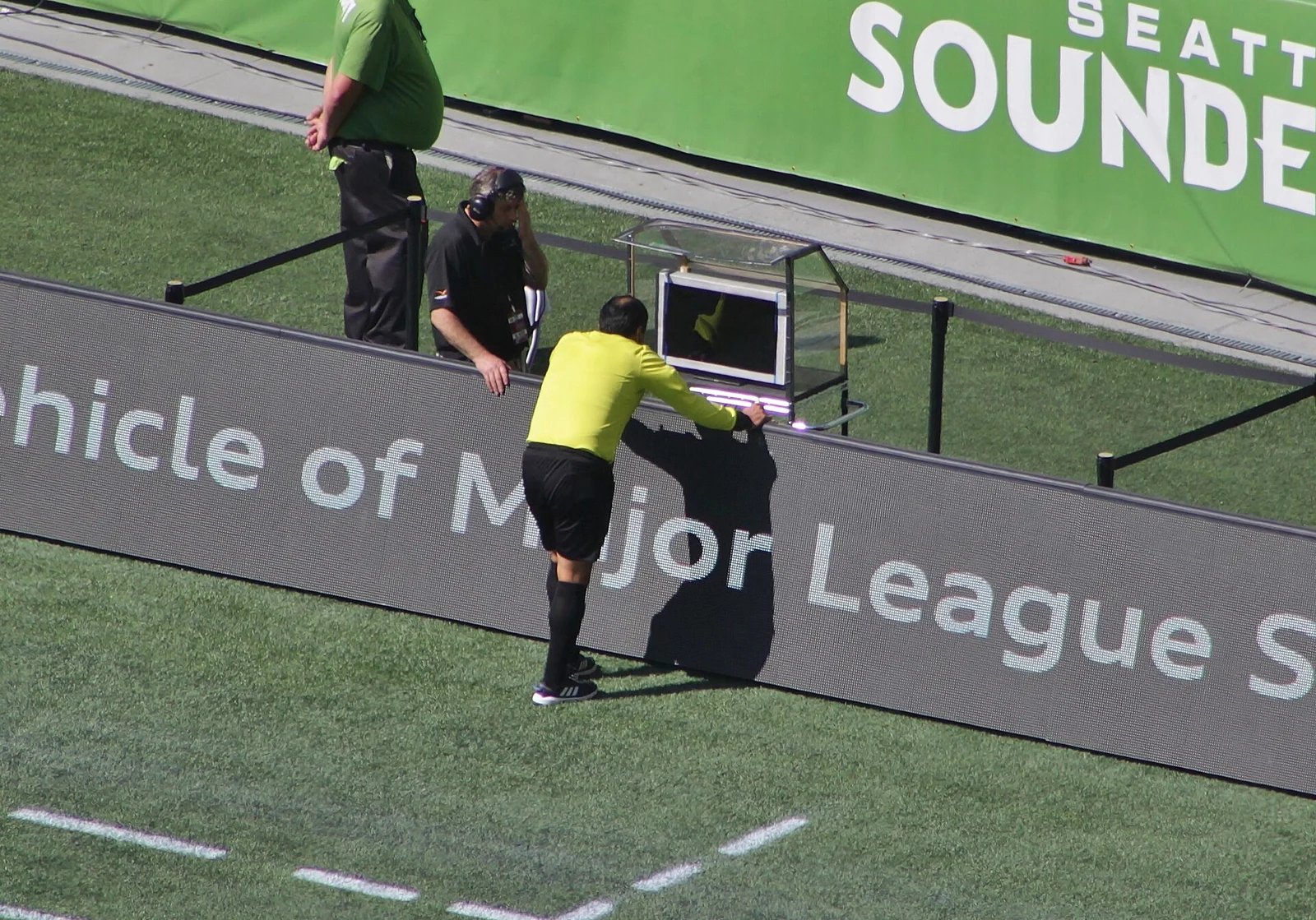
Television presents a review as an information sequence: replay, alternate angle, line, verdict. A supporter behind the opposite goal may initially receive only a pause and a symbol on the stadium screen. The DFB acknowledged this information gap when it introduced referee announcements, saying spectators did not always understand why the video assistant intervened or how the final decision was reached. That reform helps explain a verdict, but it also confirms the underlying asymmetry between the video room and the terrace.
This is why answering protesters with an accuracy statistic alone misses part of their case. They are measuring a different outcome: whether the match remains intelligible and emotionally immediate for the people physically present. Accuracy still matters—particularly when an obvious injustice could decide relegation or a title—but it is one value among several. Flow, authority, shared emotion and the ability to trust what one has just seen are also parts of sporting fairness.
Nor is the criticism a nostalgic belief that referees were once flawless. The campaign accepts human error as part of a live contest and argues that the pursuit of greater precision has imposed a disproportionate cultural price. Agree or disagree, that is a coherent trade-off, not resistance to technology for its own sake.
The Decisions That Turned Frustration into Protest
The campaign did not emerge because VAR never corrects anything. It grew because supporters repeatedly see a process that promises a higher standard while still producing debatable judgments. The camera can establish where a foot landed or whether a ball touched an arm. It cannot remove the need to interpret force, consequence, deliberate action or which phase of play is relevant. When the same technology appears exact in one incident and discretionary in the next, confidence is difficult to sustain.
Intervention, Delay and the Meaning of “Clear and Obvious”
Under the IFAB protocol, the referee’s original decision should not change unless video clearly demonstrates a “clear and obvious error” or reveals a serious missed incident. That restraint is essential: VAR was designed as a safety net for match-changing situations, not as a second referee searching every passage for a preferable decision. Its reviewable categories cover goals, penalty incidents, direct red cards and mistaken identity, with specific extensions defined by the current Laws.
The difficulty is that “clear and obvious” is a standard, not a measurement. An offside position may be established geometrically, but whether contact constitutes a foul remains evaluative. One video official may regard the on-field view as supportable; another may recommend a review. Once the referee reaches the pitch-side monitor, spectators often assume a reversal is inevitable even though the protocol formally leaves the final decision on the field.
| Stage | Purpose | Supporter concern |
|---|---|---|
| Check | VAR examines a reviewable incident | The crowd may not know what is being tested |
| Recommendation | Possible qualifying error is communicated | The intervention threshold can feel inconsistent |
| Review and verdict | Referee assesses footage and decides | Repeated angles prolong the suspended moment |
Delay magnifies every ambiguity. A long check suggests that the error cannot have been obvious; defenders respond that the officials need enough time to avoid a second mistake. Both reactions are understandable. The political problem for the DFB is cumulative: each contested threshold decision becomes evidence for critics that the system has not delivered the simple, limited correction tool they were promised. That loss of trust, more than any single weekend’s controversy, turned irritation into a coordinated abolition campaign.
What German Football Changed for 2026/27
German football has not ignored the stadium experience. Its response has combined faster technology, more public explanation and adjustments to the review protocol. Those changes address genuine weaknesses, but they also illustrate the widening disagreement: the authorities treat VAR as a permanent system to improve, while abolition campaigners question whether it should exist at all.
Referee Announcements and More Restrained Intervention
Referee announcements were piloted in nine grounds in early 2025 and expanded across all Bundesliga stadiums for 2025/26. The referee speaks after completing an on-field review or when VAR information causes a decision to change, identifying the incident, outcome and final ruling. Semi-automated offside technology also arrived to accelerate positional checks. Together, the measures aim to shorten uncertainty and tell the crowd what has happened.
The 2026/27 rules added another safety-net function: VAR can intervene when the second yellow card producing a dismissal was clearly wrong, as well as in cases of mistaken identity. However, Germany declined IFAB’s optional proposal to review whether a corner was awarded incorrectly. The latest DFB clarification is important because earlier season previews created confusion on that point. A distinct offence by the attacking team before a nearby free kick or corner is taken can still be reviewed if it directly leads to a goal, penalty or disciplinary incident; the corner award itself is not re-refereed.
Why Transparency Has Not Ended the Argument
Announcements answer “what was decided?” more effectively than a silent screen. They do not answer the protesters’ deeper question: why should a remote check suspend the moment in the first place? Dortmund’s fan department expressly acknowledged that stadium explanations are progress and that VAR corrects clear mistakes. It still concluded that the price was too high. This is evidence that transparency and acceptance are related but not interchangeable.
There is also a practical limit. An announcement occurs after the decisive process and slightly extends the stoppage. It cannot let supporters inspect every angle, and showing live contentious replays could create further operational and crowd-management questions. Better language may make the outcome intelligible without making the threshold feel consistent from one match to the next.
Reform can solve different problems
- Announcements improve explanation.
- Semi-automated offside can reduce processing time.
- A narrower intervention philosophy can protect on-field authority.
- None automatically restores an uninterrupted first celebration.
Would Abolishing VAR Actually Improve the Bundesliga?
Abolition would improve the qualities the campaign values most, but it would not create error-free football. The honest choice is between different imperfections. One model accepts more final decisions made at full speed in exchange for immediacy; the other uses replay to correct a portion of major mistakes in exchange for interruption and another layer of judgment.
The Case for Removal
Without VAR, the referee’s signal becomes final and immediately legible. A goal awarded on the pitch can be celebrated without waiting for a remote check. Players restart sooner, authority is located visibly inside the stadium, and supporters do not need to interpret the silence between officials. The early Pokal round offered campaigners a real, recent example rather than an imagined past.
Removal could also clarify responsibility. Instead of arguing about why the video assistant intervened in one subjective incident but not another, clubs would know that the on-field team had one view at match speed. Referees would still be criticized, sometimes fiercely, yet the standard would be comprehensible. The campaign’s philosophical claim is that an occasional human mistake openly made is easier for the sport to absorb than a prolonged process that still ends with disputed human interpretation.
The Costs of Returning Every Decision to the Pitch
The strongest counterargument is concrete. The DFB said VAR corrected 118 wrong decisions during the 2023/24 Bundesliga season—approximately one in every three matches. Some involved goals, penalties or dismissals with obvious competitive consequences. Abolition supporters may reasonably prefer the match experience without review, but they must own those missed corrections when a title, European place or relegation battle turns on one.
There is no guarantee controversy would shrink. Broadcast audiences would see decisive mistakes from several angles within seconds while the only official empowered to act could not use that evidence. Players and coaches who now complain about intervention might demand assistance after a blatant missed handball. The pressure on referees could become sharper, not gentler.
A middle route deserves serious attention. IFAB is continuing trials of Football Video Support, under which a team requests a limited review rather than a dedicated video official continuously checking play. A challenge model might reduce background suspicion and force teams to reserve reviews for high-value incidents. It would still create pauses and tactical disputes, so it is not a magical compromise—and it is not current Bundesliga policy. Other options include strict time expectations, publishing review audio after matches, or reserving video for more objectively verifiable incidents.
What Comes Next for Supporters, Referees and the DFB
The August action succeeded at its first objective: abolition is now a national football question rather than scattered anger after controversial matches. The VAR-free cup round also gave supporters a positive case to point toward. Yet banners do not themselves change a competition protocol. A durable change would need clubs and the league association to act with the DFB’s refereeing organization, inside the framework set by IFAB’s Laws.
That makes FC Augsburg’s sympathetic position significant. A club can carry an argument into league structures in a way a terrace group cannot, even though one club does not establish a majority. Campaigners’ next institutional test is whether more clubs move from acknowledging frustration to requesting a formal review, a vote or a time-limited alternative trial.
Authorities, meanwhile, need evidence that addresses both sides of the bargain. Publishing the number of correct, incorrect and missed interventions is useful. So are median and longest review times, the share of checks that become reviews, and supporter research separated between matchgoing and broadcast audiences. Consultation should ask not only whether fans “like VAR,” but which errors they want corrected and what delay they consider acceptable. That would turn competing slogans into choices officials can evaluate.
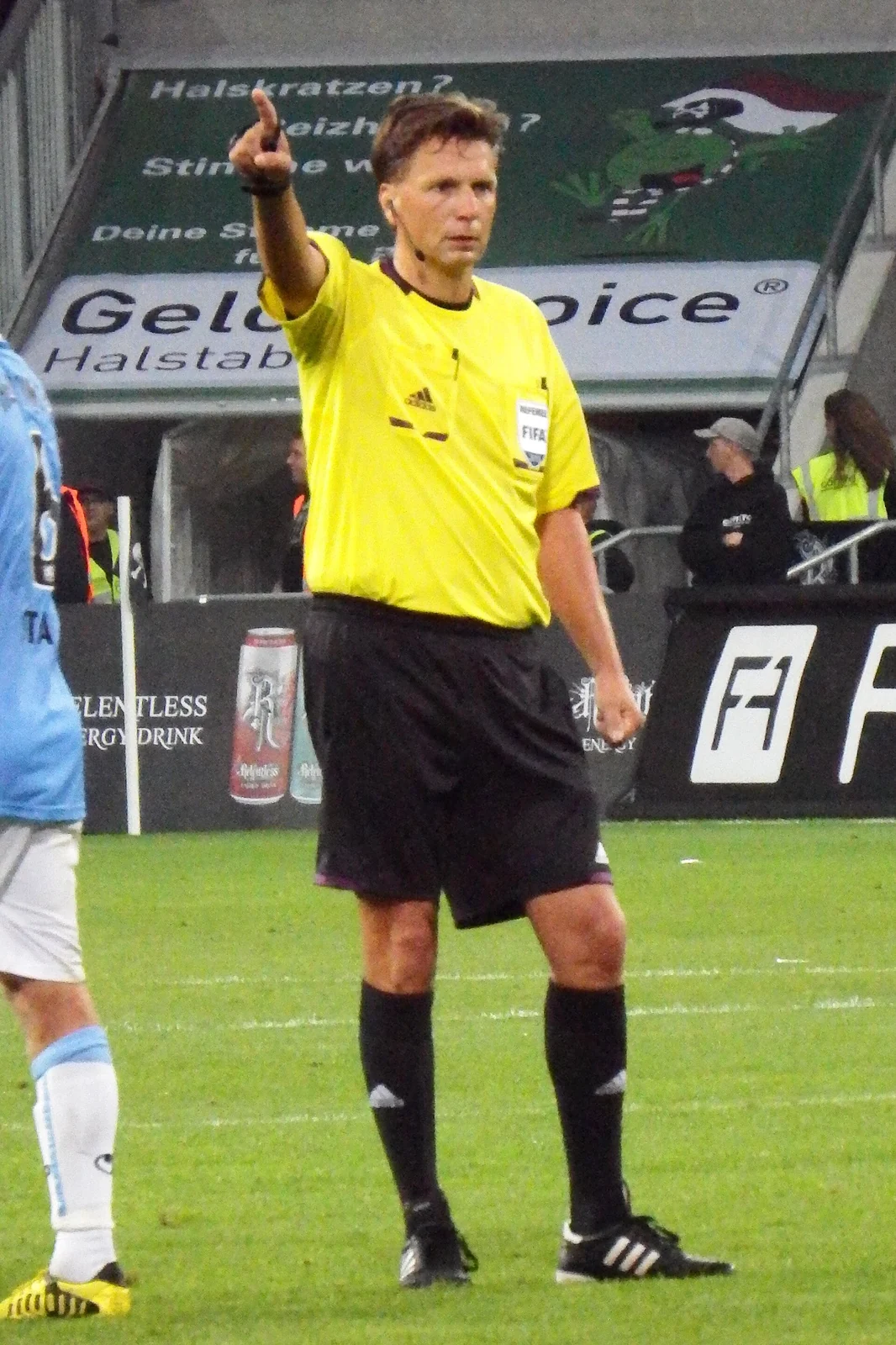
For referees, the immediate job is consistency: protect the clear-and-obvious threshold, communicate without defensive jargon and avoid treating the monitor as an automatic instruction to reverse. For supporters, continued coordinated action can keep the experience of the stands inside a debate too easily dominated by freeze-frames.
For readers following how the dispute affects actual matchdays, use the site’s Bundesliga TV schedule alongside the latest results. A clip of one decision rarely shows the full review sequence or its effect on stoppage time. As of 14 September 2026, VAR remains part of the Bundesliga. The protest has changed the pressure around it, not yet the rulebook.
JOIN THE DISCUSSION
Comments
Sign in with Google to comment. Keep the discussion focused on Bundesliga football and respectful to other supporters. New comments are reviewed before publication.
Loading comments…