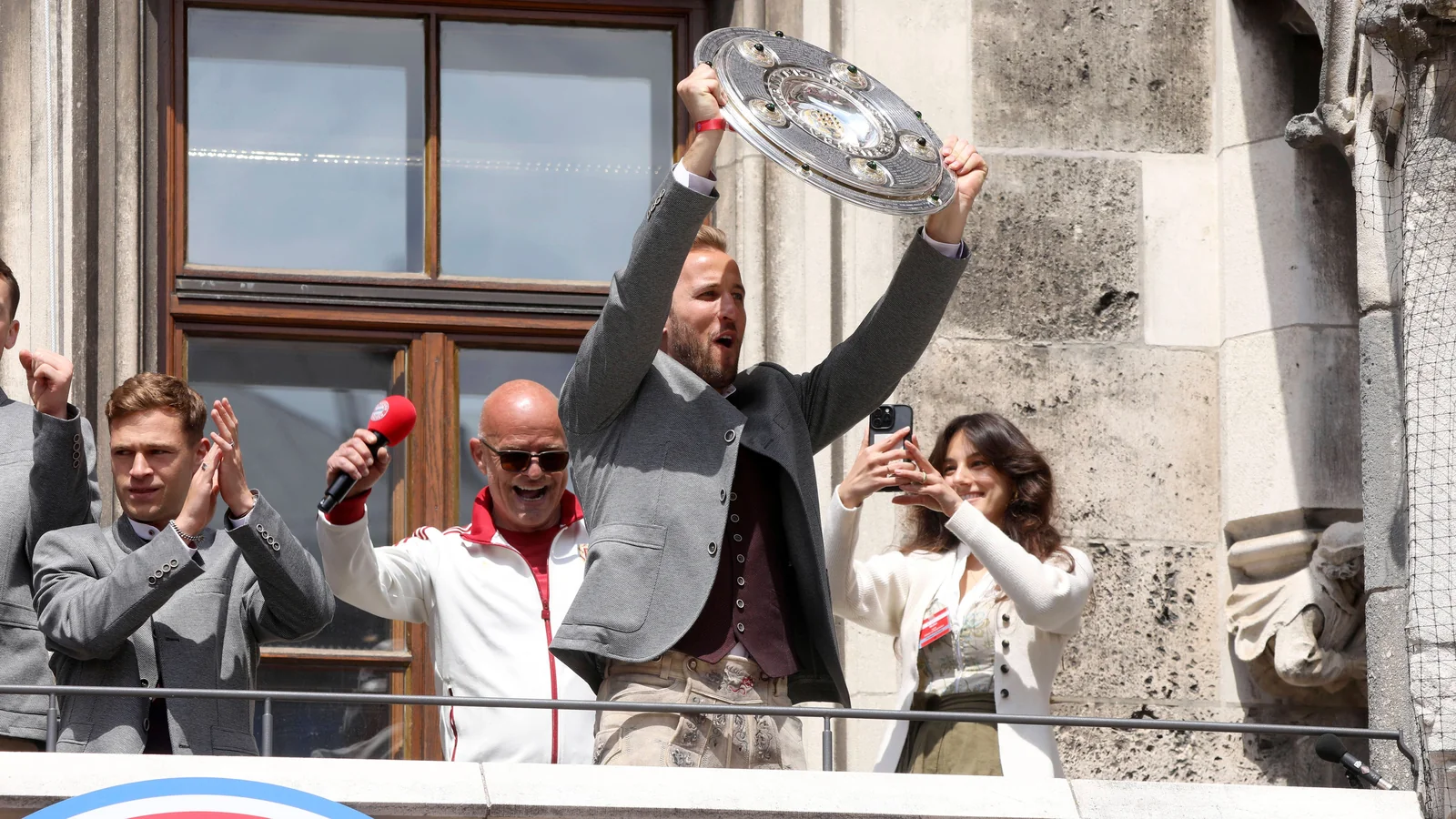
Has the Bundesliga become boring? At championship level, the criticism is justified: Bayern Munich have won 13 of the past 14 titles. Across the whole league, it is too blunt. Matches, European qualification, relegation and Germany's supporter culture continue to create uncertainty and consequence.
This analysis is current to September 14, 2026. It separates the title race from the wider competition, explains why Bayern's advantage persists, and tests whether championship playoffs would create genuine balance or merely a more dramatic ending.
First Decide What “Boring” Means
Calling a league boring sounds like one judgment, but it usually bundles together three different questions. Can the viewer predict Saturday's match? Can they predict where clubs will finish this season? Can they predict the champion before a ball is kicked? The Bundesliga can score poorly on the last test while remaining much less certain on the first two.
One predictable champion is not a predictable match
Sports economists distinguish short-term match uncertainty, medium-term uncertainty across one season and long-term domination over many seasons. A 2023 review of European football research uses exactly those levels. That distinction matters: Bayern can be the safest championship forecast while a trip to Frankfurt, Mainz or Dortmund still contains genuine risk.
No single statistic settles the issue. A peer-reviewed 60-year study of eight European leagues found that top-place competition, champions' domination and movement in the rankings relate to attendance in different ways. In plain English, supporters can care about who wins, who qualifies and how positions change—all at once.
Boredom depends on where a supporter looks
A neutral viewer choosing one European title race may switch off when Bayern build a lead. A St. Pauli supporter is watching a different story: survival, a derby, a new coach and whether the team is improving. A match-going fan may value affordable access, standing culture and the weekly ritual independently of the trophy odds. None of those perspectives cancels the others.
German survey research published in 2013 estimated that about 70 percent of fans cared about competitive balance, although the league was not then close to the study's demand “tipping point.” That finding is historical, not a 2026 opinion poll, but it exposes the false choice. Competitive balance matters, yet consumption and attachment are not controlled by one variable. Our verdict therefore uses separate tests: championship concentration, match and table-wide stakes, supporter demand, and whether a proposed reform fixes the underlying cause.
Bayern’s Title Dominance Is the Case for the Prosecution
The uncomfortable number is 13 titles in 14 seasons. Bayern won every Bundesliga from 2012/13 through 2022/23, lost the 2023/24 championship to Bayer Leverkusen, then reclaimed it in 2024/25 and retained it in 2025/26. The official 2025/26 review records Bayern's 35th German title overall—34 of them in the Bundesliga era—and says they secured it after Matchday 30.
That latest season was not a lucky escape. Bayern finished on 89 points, 16 ahead of second-placed Dortmund, suffered one defeat and led the table on every matchday. It followed a 2024/25 title won with two games remaining. If a neutral viewer's main pleasure is wondering which badge will appear on the Meisterschale, the complaint is plainly supported by evidence.
The honest verdict on the title race
Bayern's 11-title streak was the longest in Europe's five major leagues, and the two titles after Leverkusen's interruption make 2023/24 look like an exceptional break rather than a restored equilibrium.
Leverkusen's achievement still matters. Xabi Alonso's team went unbeaten, collected 90 points and finished 17 clear of Stuttgart. It disproved the fatalistic claim that nobody else can win. Dortmund also took the 2022/23 race to the final day and lost only on goal difference. The problem is frequency: an extraordinary challenger campaign or a Bayern wobble has been required to create suspense.
Nor should the opening weeks of 2026/27 be treated as a completed referendum. Early results can reveal contenders, but they cannot yet tell us whether a 34-match race will stay close. The defensible judgment as of September 14, 2026 is about the established pattern: long-run championship balance is weak, and anyone denying that is arguing against the clearest part of the record.
The Rest of the Bundesliga Is Not Scripted
A league table contains more than its first row. That observation should not be used to dodge Bayern's advantage, but it matters when answering whether the entire competition has become boring. The completed 2025/26 season provides unusually clear evidence: an unbalanced championship coexisted with volatile matches, a historic survival finale and exceptionally strong ticket demand.
Individual matches still create real uncertainty
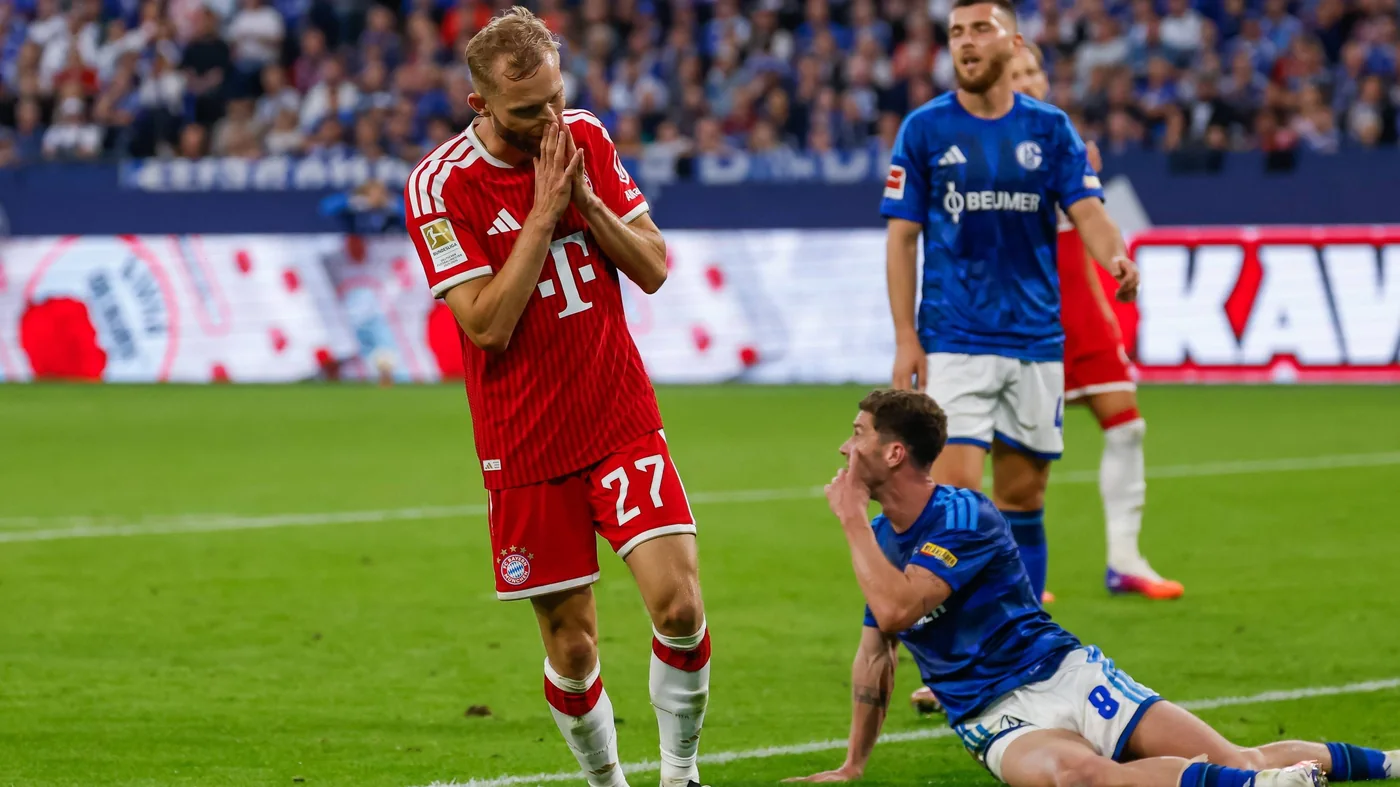
The league produced 990 goals in 2025/26, its highest total this millennium and the most in any 34-matchday campaign since 1986/87. Frankfurt won 6-4 at Gladbach, substitutes scored a record 180 goals, and Augsburg came from behind to inflict Bayern's only league defeat. In another useful warning against reading dominance as destiny, Leverkusen took 37 shots against Augsburg and still lost 2-1.
Goals are not synonymous with quality, and a high total says nothing by itself about who lifts the trophy. They do demonstrate incident and tactical risk. Check the latest Bundesliga results and judge games on their own terms: a league can be structurally imbalanced at the top without every weekend becoming a procession.
Europe and survival create separate races
On the final morning of 2025/26, Wolfsburg, Heidenheim and St. Pauli occupied the bottom three with 26 points each. It was the first time in 63 Bundesliga seasons that the bottom trio entered Matchday 34 level, and no club had yet been relegated. Wolfsburg ultimately reached 29 points and the relegation playoff; Heidenheim and St. Pauli went down on 26.
Elsewhere, the places behind Bayern determined Champions League, Europa League and Conference League access. Those outcomes shape budgets, recruitment and the next season's prospects. The live Bundesliga table is therefore several overlapping races, not one ladder whose only meaningful distinction is first versus second.
Full grounds measure attachment, not title suspense
Official DFL reporting says 12,718,097 Bundesliga tickets were distributed in 2025/26, an average of 41,562 per match. Occupancy by that measure reached 96.1 percent, and 16 of 18 clubs exceeded 90 percent. That is powerful evidence against the claim that supporters have collectively stopped caring.
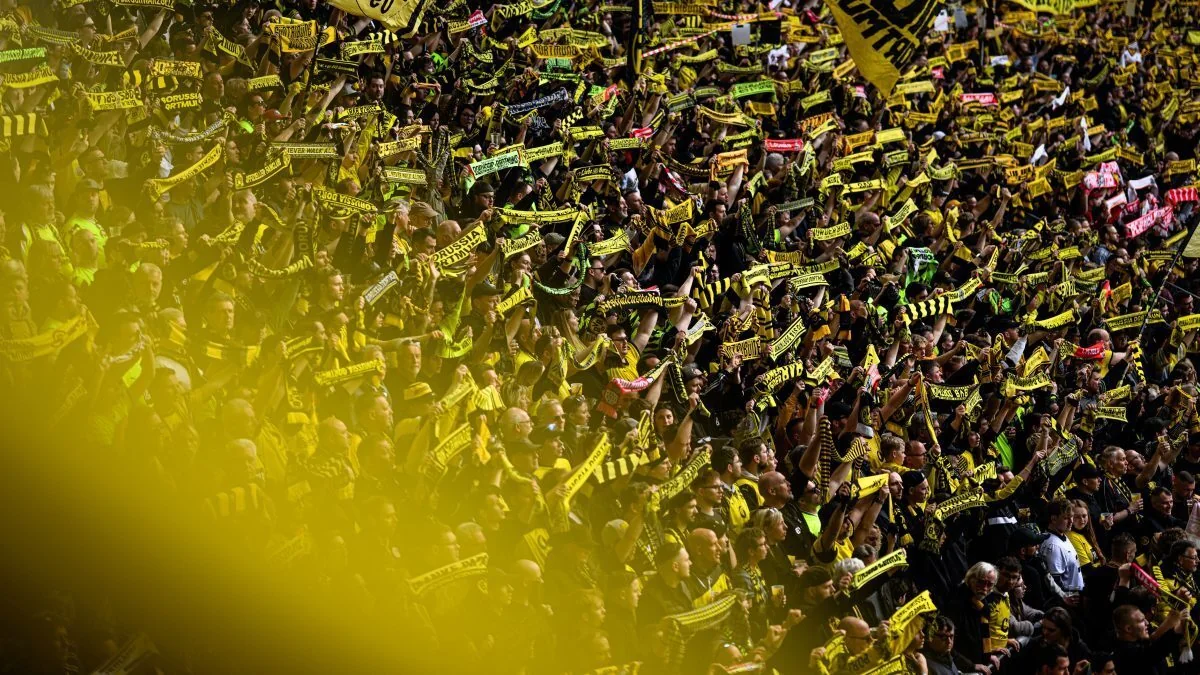
The interpretation needs restraint. Sold or distributed tickets are not identical to turnstile attendance, and packed stands do not prove that neutral television viewers love a one-sided championship. Support can persist through habit, identity, affordable standing areas and devotion to a club. Full grounds establish attachment; the 13-in-14 title record establishes imbalance. Both facts can be true.
Why Bayern’s Advantage Keeps Rebuilding
Dominance is not explained by a conspiracy or one transfer. It comes from a system in which past success increases the resources available to survive the next setback. Bayern still have to recruit, coach and play well; the difference is that one wrong decision is less likely to destroy their season than it is for a challenger.
Revenue and Champions League access form a flywheel
Bayern reported record group turnover of €978.3 million for 2024/25. The DFL's economic report put combined turnover for all 18 Bundesliga clubs at €5.123 billion. Those figures are not a like-for-like wage table, but they show the scale of Bayern's commercial engine inside a healthy league. Regular Champions League football then adds income, exposure and recruitment appeal.
Domestic broadcasting is not simply handed to the champion. The distribution formula for 2025/26 through 2028/29 retains four pillars: equal distribution, performance, supporter and media interest, and young-player development. It also directs €5 million a season to Bundesliga clubs outside European competition. Solidarity softens inequality, yet performance and interest still reward clubs that have already accumulated both.
That creates a flywheel rather than a guarantee. Stronger revenue supports squad depth; depth helps Bayern handle injuries and three competitions; results preserve European income and global attention. A challenger can outperform that cycle for a year. Repeating the feat while Bayern correct mistakes is much harder.
Challengers must survive success as well as failure
Leverkusen are the clearest case. Their unbeaten 2023/24 champions finished second the following year, then lost coach Xabi Alonso plus Florian Wirtz, Jeremie Frimpong and Jonathan Tah in summer 2025. More than 15 new players arrived, and Alonso's successor Erik ten Hag was dismissed after three competitive matches. The club did not suddenly forget how to operate; it had to rebuild the relationships that had made an exceptional side coherent.
Dortmund reached 73 points in 2025/26, their best total since 2018/19, but Bayern reached 89. Leipzig, Stuttgart and Leverkusen each face their own version of the same problem: develop elite talent, qualify for Europe, resist richer buyers, replace departures, and maintain coaching continuity. Bayern must also evolve, but they begin with a deeper financial and sporting buffer.
This is why blaming challengers for “not trying” misses the mechanism. Their excellent seasons advertise coaches and players to the richest clubs; their bad seasons threaten the European revenue required to keep them. A serious reform discussion should reduce that asymmetric risk, not merely punish Bayern for being well run.
Would Championship Playoffs Fix the Bundesliga?
There is no championship playoff in the 2026/27 Bundesliga format. The 18 clubs still play each other home and away across 34 matchdays, with the table leader becoming champion. The familiar proposal was an argument about a possible future, not an approved rule waiting to take effect.
The strongest argument is a meaningful finish
In February 2022, then-DFL chief executive Donata Hopfen said playoffs could be discussed if they improved competition at the top. Then-Bayern CEO Oliver Kahn floated semi-finals and a final. The attraction is obvious: four clubs could retain a route to the title in spring, the league could sell three marquee rounds, and an excellent challenger would need to beat Bayern in a short series rather than match their depth over eight months.
The question returned in September 2026. According to a report of a joint interview, Schalke president Axel Hefer said the format should be reconsidered because a generation of young fans had experienced only one non-Bayern champion. Bayern president Herbert Hainer answered that the team first after 34 games should win. That exchange captures the real disagreement: maximizing late suspense versus rewarding the largest, most representative sample.
A well-designed bracket could be seeded, give higher finishers home advantage or require a best-of-series final. Each choice would protect regular-season merit to a different degree. But the more protection awarded to first place, the less likely the playoff is to produce the fresh champion that advocates want.
The cost is weakening the 34-game test
The current system answers a clean question: which club was best against every opponent, home and away? A four-team playoff answers another: which qualified club handled a tiny knockout sample best? Cup football is compelling precisely because red cards, injuries, finishing variance and one tactical matchup can overturn the hierarchy. Importing that variance would manufacture title uncertainty, not necessarily improve competitive balance.
It would also leave the economic mechanism intact. Bayern could keep the deepest squad, strongest commercial base and regular Champions League access, then enter most playoffs as the favorite. Meanwhile, extra semi-final and final dates would intensify workload for clubs already playing expanded UEFA competitions and domestic cup ties.
| Test | 34-game table | Four-team playoff |
|---|---|---|
| Late title suspense | Depends on points gap | Guaranteed bracket stakes |
| Rewards consistency | Strongly | Only through seeding |
| Fixes revenue gap | No | No |
| Adds calendar dates | No | Yes |
Playoffs can make the finale less predictable. That is a legitimate entertainment goal, but it should not be sold as a structural cure. The Bundesliga would be changing how it selects a champion while leaving the conditions that repeatedly produce one dominant favorite largely untouched.
A Better Verdict Than “Boring” or “Fine”
The Bundesliga has become too predictable at championship level, but it has not become a boring football league. Bayern's 13 titles in 14 seasons are a genuine product weakness, especially for neutrals and international viewers choosing among title races. The same competition still produced 990 goals, a three-way survival showdown on the final day and 96.1 percent occupancy by tickets sold in 2025/26. A serious answer has to hold those facts together.
The best reforms attack the flywheel. The DFL can keep adjusting centralized revenue distribution toward solidarity without eliminating incentives for performance, supporter interest and youth development. UEFA's squad-cost rule now limits wages, transfers and agent costs to 70 percent of a club's revenue in its competitions, which helps sustainability. Because it is a percentage of each club's own revenue, however, it does not equalize the absolute euros Bayern and a smaller rival can spend.
Investment in academies, coaching and smart recruitment helps challengers, but retention matters just as much. Clubs need enough predictable revenue to keep a successful core for a second campaign rather than restart immediately after qualifying for Europe. More solidarity from the value created by UEFA participation is therefore more relevant to balance than a knockout finale alone.
Nor is abolishing 50+1 an automatic answer. The rule generally requires club members to retain a majority of voting rights. It protects a governance relationship valued by German supporters; it does not guarantee parity, but replacing member control with wealthy owners would merely create a new competition for outside capital, with no certainty that 18 clubs would benefit evenly.
What to watch next
Do not decide the 2026/27 title after three matchdays. Follow the full Bundesliga schedule, track whether challengers sustain points and availability through winter, and compare the gap after every club has played the same opponents.
A playoff would guarantee a dramatic event; it would not guarantee a healthier league. Keep the round-robin championship unless German football consciously decides that a short climax is more important than identifying its best 34-game team. In the meantime, describe the problem precisely: the title race is often boring, the Bundesliga is not.
JOIN THE DISCUSSION
Comments
Sign in with Google to comment. Keep the discussion focused on Bundesliga football and respectful to other supporters. New comments are reviewed before publication.
Loading comments…