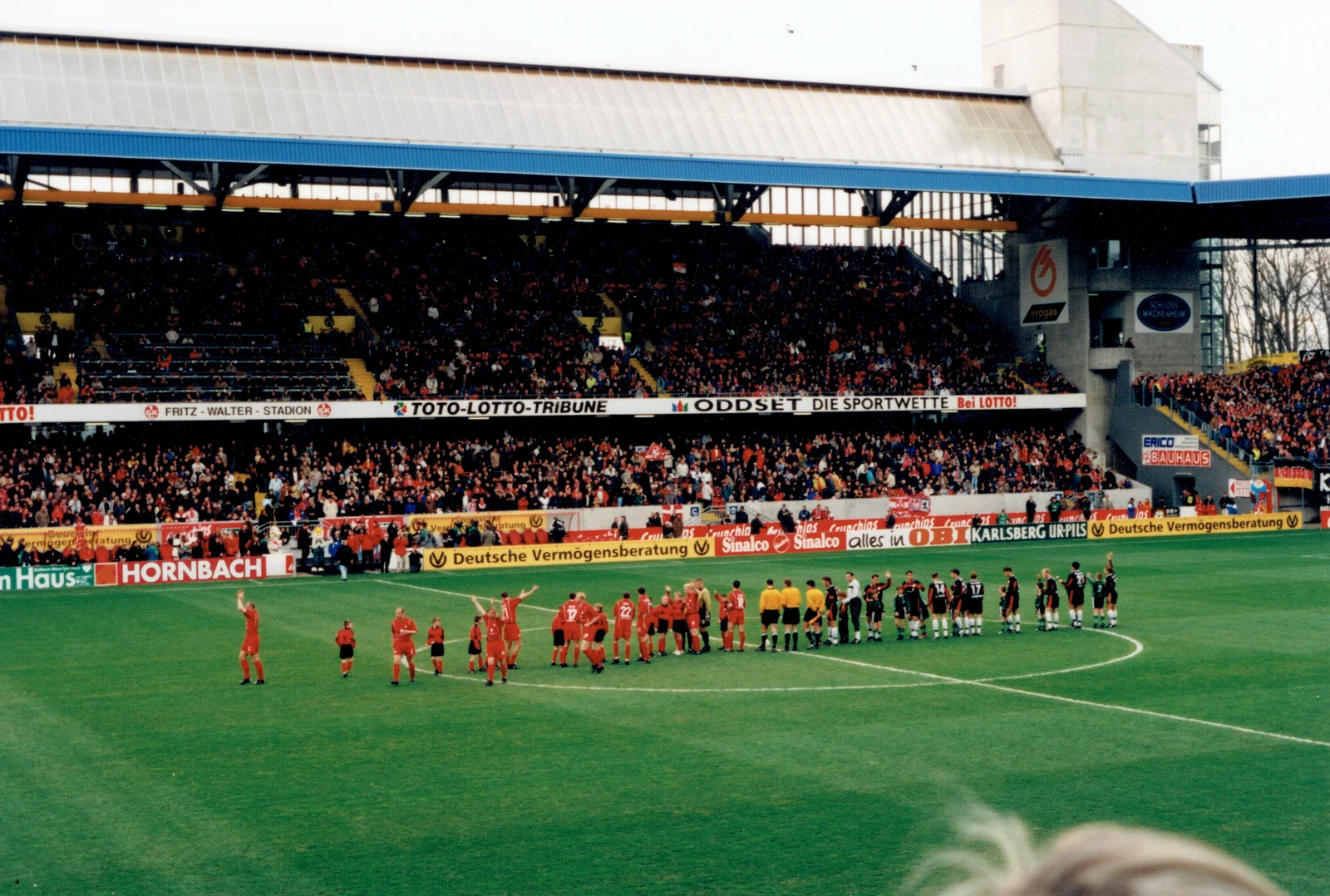
The 2026/27 2. Bundesliga map stretches from Kiel on the Baltic coast to Heidenheim in southern Germany and contains 18 clubs in 18 home cities. It is a wonderfully uneven football landscape: Hertha Berlin play in a 74,649-seat Olympic venue, while Heidenheim's compact Voith-Arena holds 15,000. Between them sit old industrial grounds, modern arenas, eastern strongholds and several journeys that are much longer than the map first suggests.
This guide gives you the complete club-city-stadium lookup first, then turns the dots into useful supporter information: which teams form practical travel clusters, which grounds are hardest to get into, and when it is sensible to book. Capacities and names are checked to 13 September 2026; sponsor-led venue names and match configurations can change, so use the numbers as a planning snapshot rather than a ticket guarantee.
The complete 2026/27 2. Bundesliga club and stadium map
The quickest way to read this season's map is as a list of 18 distinct destinations. Every club has its own home city; there is no same-city derby in the division, although several grounds sit within manageable regional trips. The capacities below are the Bundesliga's published 2026/27 figures, checked on 13 September 2026. They are valuable for comparing scale, but a club can sell fewer places for a particular match because of segregation, safety zones or construction.
| Club | City | Home stadium | Capacity |
|---|---|---|---|
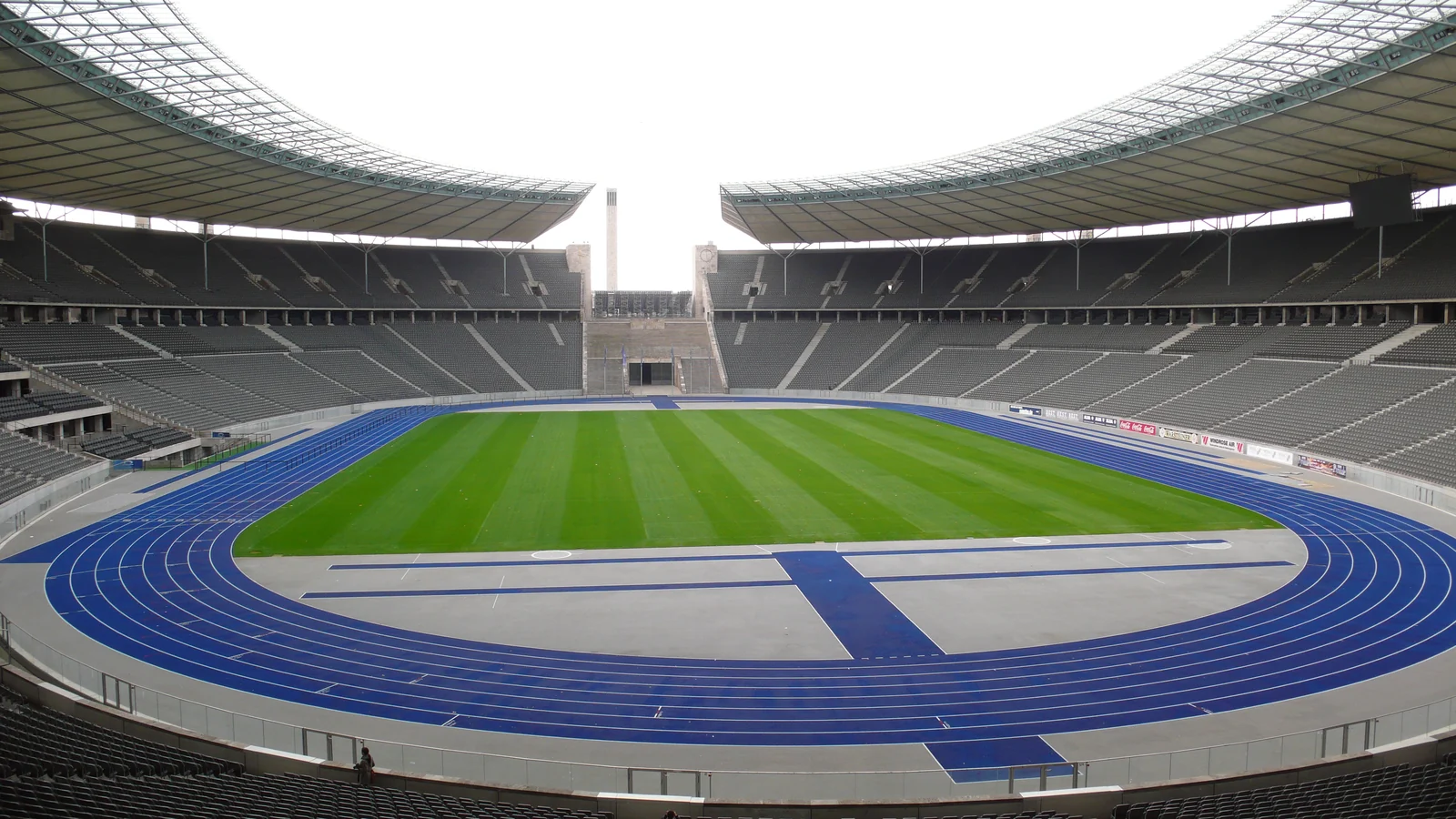
| Hertha Berlin | Berlin | Olympiastadion | 74,649 |
| 1. FC Nürnberg | Nuremberg | Max-Morlock-Stadion | 50,000 |
| 1. FC Kaiserslautern | Kaiserslautern | Fritz-Walter-Stadion | 49,350 |
| Hannover 96 | Hanover | Heinz von Heiden Arena | 49,000 |
| Karlsruher SC | Karlsruhe | BBBank Wildpark | 32,190 |
| Dynamo Dresden | Dresden | Rudolf-Harbig-Stadion | 32,085 |
| 1. FC Magdeburg | Magdeburg | Avnet Arena | 30,098 |
| FC St. Pauli | Hamburg | Millerntor-Stadion | 29,546 |
| VfL Wolfsburg | Wolfsburg | Volkswagen Arena | 28,917 |
| VfL Bochum | Bochum | Vonovia Ruhrstadion | 27,599 |
| Arminia Bielefeld | Bielefeld | SchücoArena | 27,332 |
| Eintracht Braunschweig | Braunschweig | Eintracht-Stadion | 23,325 |
| Energie Cottbus | Cottbus | LEAG Energie Stadion | 20,602 |
| SV Darmstadt 98 | Darmstadt | Merck-Stadion am Böllenfalltor | 17,810 |
| SpVgg Greuther Fürth | Fürth | Sportpark Ronhof | Thomas Sommer | 16,626 |
| VfL Osnabrück | Osnabrück | Bremer Brücke | 16,098 |
| Holstein Kiel | Kiel | Holstein-Stadion | 15,036 |
| 1. FC Heidenheim | Heidenheim | Voith-Arena | 15,000 |
Four grounds clear 49,000, yet eight are below 30,000. That contrast is part of the league's appeal and also a practical warning: “second division” does not describe one standard stadium experience. Berlin's running-track bowl, Kaiserslautern's steep hilltop ground, Hamburg's inner-city Millerntor and Kiel's coastal home each create a different arrival and sightline. A map pin therefore answers only where you are going; the venue tells you how early to arrive and how scarce an away allocation may be.
Read “city” as the practical destination rather than the postal end of the journey. Some grounds are walkable from a central district, whereas others require a local train, tram or uphill approach after the intercity leg. Start with the site's current club directory, then verify the host club's sale rules before treating any nominal capacity as available inventory.
How promotion and relegation redrew the map
Five destinations entered the 2. Bundesliga map for 2026/27, while five left it. From the Bundesliga came VfL Wolfsburg, 1. FC Heidenheim and FC St. Pauli. From 3. Liga came Energie Cottbus and VfL Osnabrück. Their arrival replaced promoted Schalke, Elversberg and Paderborn, plus Fortuna Düsseldorf and Preußen Münster, who were relegated to the third tier.
Added to the 2026/27 map
- Wolfsburg — from Bundesliga
- Heidenheim — from Bundesliga
- St. Pauli — from Bundesliga
- Cottbus — from 3. Liga
- Osnabrück — from 3. Liga
Removed from the second-tier map
- Schalke, Elversberg and Paderborn — to Bundesliga
- Düsseldorf and Münster — to 3. Liga
The changes matter beyond badges. St. Pauli brings Hamburg back into the division and Wolfsburg strengthens a northern-central band that already includes Hanover and Braunschweig. Cottbus restores a distinct Brandenburg destination after a 12-year second-tier absence; it is not simply another Berlin stop. At the opposite end of the country, Heidenheim adds the smallest venue and one of the most isolated southern journeys.
The exits altered the map just as sharply. Losing Düsseldorf and Schalke reduced the dense western cluster, while Elversberg's promotion removed a Saarland outlier. Paderborn's play-off success took away a useful east-west rail waypoint. The resulting league is still nationwide, but its centre of gravity feels more northern and eastern than the previous season.
For supporters, the lesson is to reset old travel assumptions. A familiar “away-day routine” from 2025/26 may now point to the wrong division, and promoted clubs often have different ticket processes or smaller allocations. Check the current 2. Bundesliga table before planning around a club's status, particularly when bookmarking season guides that may not have been updated after the May 2026 play-offs.
Where the league's regional clusters sit
The 18 pins make more sense when divided into three broad travel bands. These are not official regions and they do not promise direct trains. They are a supporter-friendly way to see where one base might unlock several fixtures and where a supposedly nearby ground still demands a separate journey.
Berlin, Brandenburg and the eastern corridor
Hertha Berlin, Energie Cottbus, Dynamo Dresden and Magdeburg form the obvious eastern quartet, but they should not be collapsed into one metro area. Berlin is the major gateway and the Olympiastadion lies on the capital's western side. Cottbus is a separate Brandenburg trip southeast of Berlin, with a 20,602-capacity ground and a fan culture shaped by Lusatia rather than the capital. Dresden lies farther south in Saxony; Magdeburg sits west of Berlin, with its Avnet Arena on the east bank of the Elbe.
That spread is precisely why the eastern cluster is interesting. A multi-day itinerary can combine cities, but a same-day double-header is normally unrealistic once stadium entry, local transport and variable kickoff slots are included. Treat Berlin as a transport anchor, not as shorthand for four “nearby” grounds. Cottbus's return after 12 years also makes demand harder to judge from older guides.
Hamburg, Lower Saxony and the northern routes
The north has the broadest chain of plausible rail connections. St. Pauli places a ground in central Hamburg, while Holstein Kiel extends the map to the Baltic and plays within roughly 2.5 kilometres of the city's harbour. Farther south, Hannover, Braunschweig and Wolfsburg create a compact Lower Saxony axis. Their stadiums range from Hannover's 49,000-seat arena to Braunschweig's 23,325-capacity ground, so ticket supply varies even when travel looks simple.
Osnabrück and Bielefeld sit to the west of that axis. They can be paired conceptually with northern travel, yet neither is a suburb of Hanover. A useful plan is to choose the main-line hub that fits the confirmed fixture, then add the local leg. Kiel and Hamburg may look like the natural two-city combination; Hannover, Braunschweig and Wolfsburg are another. Mixing both groups in one day invites missed connections.
Rhine-Ruhr, Rhine-Main and the southern arc
Bochum is the division's only Ruhr club in 2026/27 after Schalke's promotion and Düsseldorf's relegation, so the west is less dense than many familiar German football maps. Darmstadt, Kaiserslautern and Karlsruhe make a looser southwest arc. Frankfurt is a useful transport gateway for Darmstadt and some onward journeys, but it is not itself a second-tier destination this season.
Bavaria supplies the map's closest natural pairing: Nuremberg and Fürth belong to the same metropolitan region. That makes them attractive for one weekend base, although fixtures and ticket access still decide whether the pairing works. Heidenheim, east of Stuttgart and south of Nuremberg, is the real southern outlier. Its hilltop Voith-Arena is also Germany's highest professional ground at 555 metres, so geography shapes both the journey and the stadium's identity.
Planning rule: group destinations only after the DFL has fixed the kickoff slots. Use the current schedule to turn a promising cluster into a workable itinerary.
The biggest grounds and the most intimate away ends
Capacity changes the rhythm of an away day, but it does not rank atmosphere. The 2026/27 field ranges from 74,649 seats and standing places in Berlin to 15,000 at Heidenheim. At either extreme, the meaningful number is the allocation actually released for a match—not the maximum printed beside a stadium name.
The division's 40,000-plus stages
Hertha's Olympiastadion is in a class of its own at 74,649. Its scale, blue running track and history as a World Cup and European Championship final venue create a grand-day-out feel that is unlike a compact football-only ground. Nuremberg's Max-Morlock-Stadion follows at 50,000, with Kaiserslautern's Fritz-Walter-Stadion at 49,350 and Hannover's arena at 49,000.
Large does not mean empty. In 2025/26 Hertha averaged roughly 47,000, Kaiserslautern more than 46,000, Hannover just over 42,000 and Nuremberg more than 35,000. Kaiserslautern is the striking example: a town of just over 100,000 regularly sends a crowd approaching half that figure up the Betzenberg. Big inventory may improve the odds of a ticket, yet headline fixtures and away allocations can still sell rapidly.
Small grounds where demand matters most
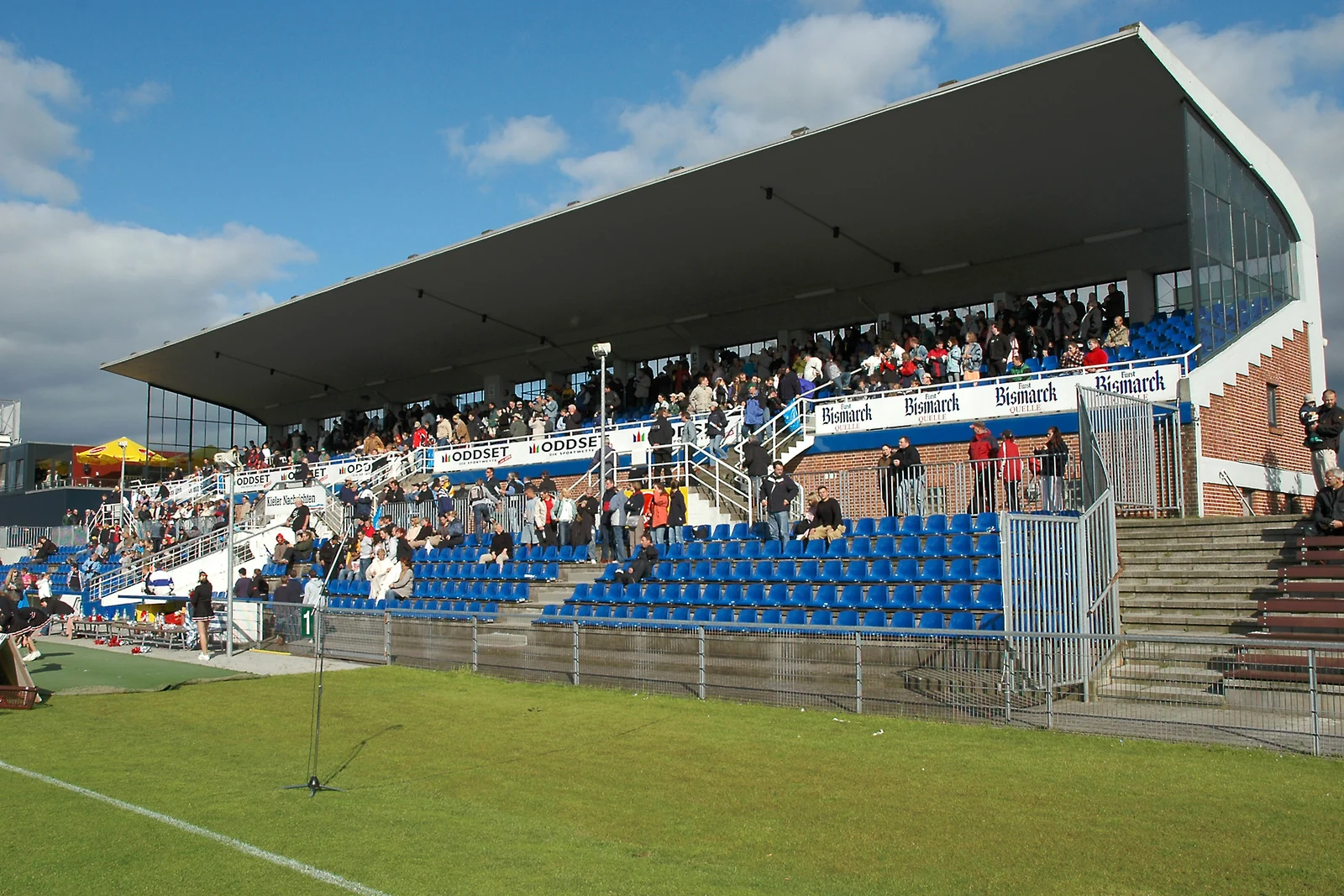
Heidenheim's Voith-Arena is smallest at 15,000, only 36 places below Kiel's Holstein-Stadion. Osnabrück's Bremer Brücke holds 16,098 and Fürth's Sportpark Ronhof 16,626. These are not lesser experiences. Heidenheim puts the nearest stands only six metres from the pitch and provides 9,000 standing places; Osnabrück's ground has occupied its neighbourhood since the early 1930s; Fürth has played on the same site since 1910.
Their intimacy produces a practical constraint. Kiel averaged more than 14,000 in 2025/26, close to its 15,036 nominal capacity, and Heidenheim arrives after three Bundesliga seasons with established demand. Away supporters should learn membership windows, loyalty-point rules and resale policies before arranging transport. A cheap train is not a bargain if no match ticket becomes available.
Germany's two professional divisions sold 21,404,258 tickets in 2025/26, a record, while the second tier averaged 28,386 distributed tickets per match. That context explains why neither a famous giant nor a small-town ground should be treated as a walk-up event.
How to plan a 2. Bundesliga away trip
A map is the beginning of a trip, not the booking screen. The safest order is match ticket, confirmed kickoff, rail or road itinerary, accommodation, then the stadium's local access instructions. Reversing that sequence can leave you with a beautifully priced journey to a match you cannot enter or cannot reach after a late schedule change.
Use rail hubs, not straight-line distance
Two pins can look close while requiring an awkward change; a farther city can be easier because it sits on a direct intercity route. Search the complete journey to the stadium district, not merely “central station to central station.” Berlin's Olympiastadion, Kaiserslautern's hilltop Betzenberg and Heidenheim's Voith-Arena all add different local legs after the long-distance train.
Build at least one robust connection into the plan and check engineering notices for the match date. If using one city as a weekend base, test the last realistic return after a night kickoff as well as the attractive midday option. Nuremberg and Fürth are a sensible metropolitan pairing; Kiel and Hamburg can form another itinerary; Hannover can anchor Braunschweig or Wolfsburg. None should be assumed workable until the actual timetable appears.
- 1. Identify the correct ground: sponsor names may differ across map and booking apps.
- 2. Route to the stadium district: include S-Bahn, tram, bus or walking time.
- 3. Test the return: allow for queues and supporter holds after full-time.
- 4. Keep a fallback: price a later service or an overnight stay before paying.
Wait for confirmed kickoff slots before booking
The season fixture list initially assigns opponents to matchdays; exact day and kickoff time are released in batches. On 10 September 2026, dates and times were confirmed for 2. Bundesliga Matchdays 7 through 13, taking detailed scheduling to the end of November. The next batch was expected in the week beginning 2 November, after the DFB Cup round-of-16 draw.
That distinction matters because one matchday can place games in different slots across Friday, Saturday and Sunday. Cup commitments, security needs, local events and broadcast planning can all influence the final assignment. A calendar that shows a weekend range is not proof of a Saturday afternoon match.
Before paying: confirm the fixture on the this-weekend page, save it through the calendar, and use refundable transport or accommodation when a kickoff is still provisional.
What this map tells us about the 2026/27 season
The map's clearest message is variety, not competitive hierarchy. A large catchment area or famous ground can strengthen revenues and matchday pressure, but it does not award points. The same division contains Wolfsburg, relegated after 29 consecutive Bundesliga seasons, and Cottbus, returning after 12 years outside the second tier. It contains Berlin's huge Olympic bowl and Heidenheim's 15,000-capacity hilltop ground.
3
clubs relegated from the Bundesliga: Wolfsburg, Heidenheim and St. Pauli.
2
clubs promoted from 3. Liga: Cottbus and Osnabrück.
36
second-tier seasons for Fürth, the division's enduring specialist.
History runs in different directions. Osnabrück's arrival is a record eighth promotion to the 2. Bundesliga, yet each of their previous six promotions ended in relegation within one or two seasons. Fürth begin a record 36th campaign at this level and approach a 500th second-tier win. Nuremberg, Hannover and Karlsruhe are each starting an eighth consecutive season in the division. Those records show why “newly arrived” and “established” mean more than a map symbol.
The geography also forecasts atmosphere. Eastern fixtures involving Dresden, Magdeburg and Cottbus can draw on strong regional identities; the northern axis supplies several short-notice travelling opportunities; the Nuremberg–Fürth pairing gives the south a concentrated rivalry footprint. Conversely, Heidenheim, Kiel and Cottbus force many visiting supporters into long journeys, which makes the away turnout itself part of the story.
Do not freeze that story on 13 September. Matchday 5 was still being completed when this guide was checked, and an early table is too small a sample to turn venue size into a promotion prediction. Use the map for context, then follow the live standings and latest results for what the clubs are actually doing.
JOIN THE DISCUSSION
Comments
Sign in with Google to comment. Keep the discussion focused on Bundesliga football and respectful to other supporters. New comments are reviewed before publication.
Loading comments…