Which clubs are in the 2026/27 3. Liga?
The 2026/27 3. Liga has 20 clubs, including Fortuna Düsseldorf and Preußen Münster from the second division, four promoted Regionalliga clubs and two reserve teams. This is Germany's national third tier. The field below identifies its participants as checked on November 12, 2026; the order is a club list, rather than the current standings.
| Clubs | Clubs |
|---|---|
| Alemannia Aachen | FC Ingolstadt 04 |
| Fortuna Düsseldorf | Fortuna Köln |
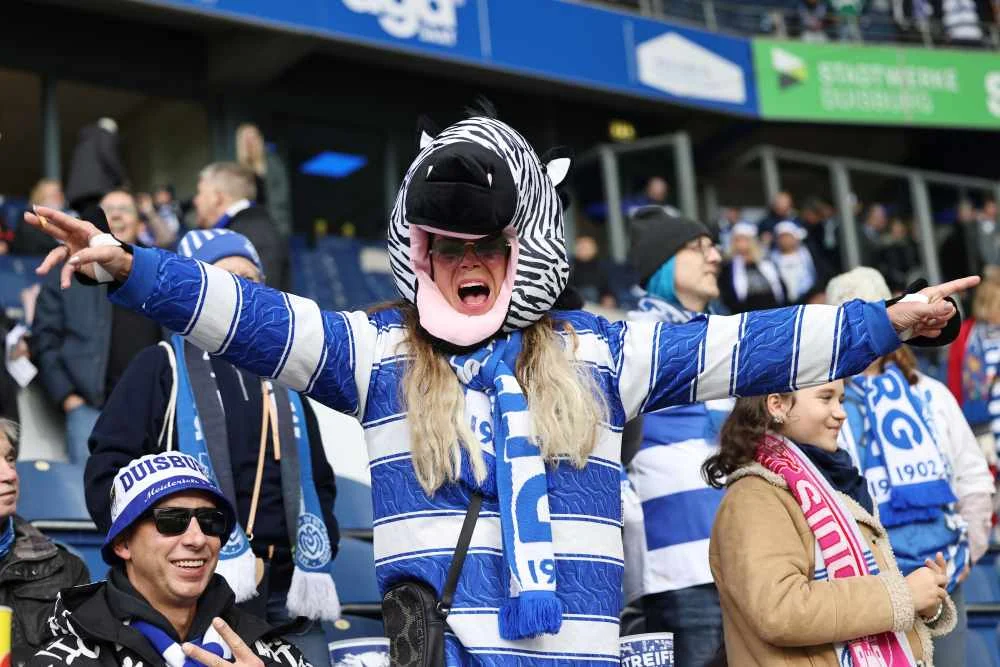
| Hansa Rostock | MSV Duisburg |
| Preußen Münster | Rot-Weiss Essen |
| 1. FC Saarbrücken | SG Sonnenhof Großaspach |
| SSV Jahn Regensburg | SV Meppen |
| SV Waldhof Mannheim | SV Wehen Wiesbaden |
| SC Verl | TSV Havelse |
| TSG Hoffenheim II | VfB Stuttgart II |
| Viktoria Köln | Würzburger Kickers |
The list makes the season easier to follow because several familiar names have changed competitions. Use the exact team identity when opening a fixture: Fortuna Düsseldorf and Fortuna Köln are different clubs, while Hoffenheim II and Stuttgart II are reserve sides. A large first-team badge on a search result can lead to a different schedule from the one intended. The season selector and the “II” suffix deserve the same attention as the opponent.
Two arrivals from the second division
Düsseldorf and Münster entered after relegation from the 2. Bundesliga. Their presence changes the set of opponents a supporter needs to track. Following last season's second-tier bookmark will therefore miss their current league games, even when the club name itself is unchanged. Our German football pyramid guide explains how those divisions connect; this page follows the actual third-tier field.
For a neutral, those arrivals are useful starting points rather than automatic title selections. Relegation brings a different competitive task: the club must earn points against this year's opponents, while supporters adapt to another fixture list and away itinerary. Judge the campaign by the games played in this division, rather than simply carrying a former league label forward.
Four promoted clubs and the Havelse exception
Meppen, Großaspach, Fortuna Köln and Würzburg arrived from the Regionalliga. Havelse's place followed a different route. The DFB's final participant announcement states that 1860 Munich failed an economic admission condition despite sporting qualification, and Havelse took the available place as the highest eligible sporting relegation finisher.
Havelse's own announcement describes the resulting need to revise its plans quickly. That is a concrete reason to use the final admitted field when studying a season: the last league table and the next competition's membership can answer different questions. It also keeps the four promoted clubs distinct from a club that retained its place through the admission process.
How the 38-match calendar fits around the breaks
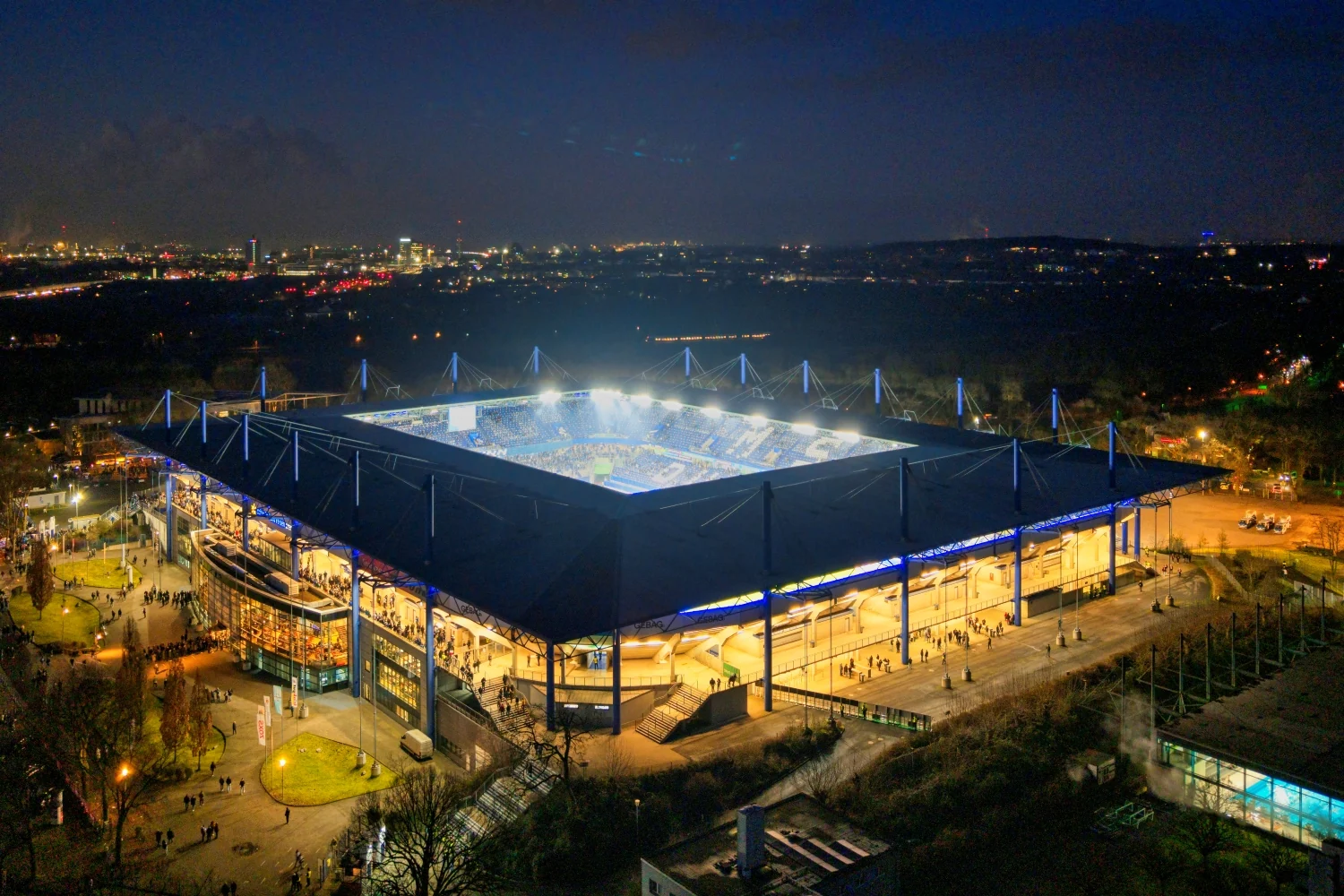
Each club plays 38 league matches: one home and one away game against each of its 19 opponents. Across the division that produces 380 fixtures. The 2026/27 campaign began on August 7, 2026 and ends on May 22, 2027. Those dates frame the season, but the breaks and midweek rounds explain how it actually fits into a supporter's diary.
Waldhof Mannheim hosted Düsseldorf in the opener. That was a specific Friday appointment; later rounds begin as broader calendar windows before individual games receive their final slots. Keep those two kinds of information separate when comparing a club's fixture list with a train timetable. The useful appointment is the named game's confirmed date, local kickoff and ground.
The winter break and January restart
The league stops after Matchday 18 in December and resumes with Matchday 19 on January 15–17. The first half therefore finishes after the winter pause. Matchday 20, on January 22–24, begins the return series. Calling the last December table the completed halfway table would put the dividing line one round too early.
| Stage | Dates |
|---|---|
| Opening game | August 7, 2026 |
| Last league games before winter | December 20, 2026; Matchday 18 |
| January restart | January 15–17, 2027; Matchday 19 |
| First return round | January 22–24; Matchday 20 |
| Spring midweek rounds | March 2/3, March 16/17, April 27/28 |
| Final league round | May 22, 2027; Matchday 38 |
The January distinction also matters when combining divisions. Bundesliga matches resume a week earlier, on January 8–10, while the third tier shares its restart weekend with the 2. Bundesliga. Someone planning a German football trip around the top flight's return should check whether the lower-tier match they want has restarted at all.
Autumn has two international interruptions: September 21–October 6 and November 9–17. As of this guide's November 12 check, the latter explains the pause in league play. It is a useful checkpoint for reviewing the season's progress before the next sequence, rather than treating an empty weekend as evidence that the competition has ended.
The spring run-in
The DFB's season calendar includes three spring midweek rounds. Their significance extends beyond the extra date: an away fixture on a Tuesday or Wednesday creates a different journey from a normal weekend visit, especially for supporters trying to return to work the following morning. Check those rounds before deciding which away match best fits a longer stay.
The weekend containing May 1 has no league round in Germany's three professional men's divisions under the calendar's security arrangements. An apparently convenient holiday weekend is therefore a poor assumption on which to base a league-only itinerary. The late-April midweek round is part of the resulting calendar pattern.
Finally, all ten matches in the closing round are scheduled simultaneously on May 22. That gives the promotion and survival races a shared final afternoon. It also makes a two-game third-tier visit that day impractical: choose the ground you most want to experience and follow the other decisive games alongside it.
Where to check the current table and confirmed fixtures
Start with the DFB's official 3. Liga hub, then follow the relevant match or scheduling announcement. Select the 2026/2027 season when using a results service: the calendar year 2026 contains parts of two different league campaigns. On German pages, Spieltag means matchday, Tabelle means standings and Ansetzungen refers to the scheduled appointments. Those distinctions help when the same search produces a season fixture list, a weekend preview and a completed result.
For a quick standings check, read matches played alongside points and goal difference. A team shown above another has not necessarily collected more points. After matchday 13, for example, the DFB's November 8 report placed Viktoria Köln ahead of Duisburg on goal difference, with Essen third, two points behind. That is a dated example of how to read the race; subsequent results can change the order. For a postponed game, also check whether the teams have played the same number of matches before comparing their positions.
For fixtures, open the individual game rather than relying on a search preview. Confirm the home club, away club, date, local kickoff and ground. The DFB's September announcement fixed rounds eight through 15, covering games through November 29. Within that block, Havelse–Viktoria Köln was scheduled for Friday, November 20 at 19:00, while Duisburg–Rostock was scheduled for Sunday, November 22 at 19:30. A supporter who kept only the original weekend label would miss that practical difference. Check the club's latest match information again before traveling.
A match-center page can also contain less live detail than its label suggests. The official entry for Viktoria's November 6 game against Saarbrücken lists the competition, round, kickoff and Sportpark Höhenberg, but its ticker panel says no live-ticker data are available. An empty commentary panel therefore does not establish that a match was canceled. Look at the result header and the league's report, and distinguish a final score from an in-progress display. Keep a full-time result separate from a predicted score or a broadcaster's pregame listing when comparing services.
How promotion, relegation and reserve eligibility work
The promotion and relegation lines
The normal sporting route gives the champion and runner-up automatic promotion to the 2. Bundesliga. The third-placed team plays a two-leg promotion/relegation tie against the second division's third-bottom club. Finishing third therefore offers a route upward, with a further opponent to beat after the 38-game league campaign. At the other end, the bottom four normally go down to the Regionalliga level, assigned according to their regional association.
These are the competition's standard lines, set out in sections 55 and 55a of the DFB's current playing regulations. Sporting position must be read alongside eligibility and admission decisions. A club seeking promotion needs the relevant license; a club remaining in the third tier needs DFB admission. The Havelse replacement described earlier shows why an admission decision can affect the following season's membership after the on-field standings are settled.
For supporters following the run-in, this creates two useful checks. First, establish the points gap to the relevant line and the games remaining. Then read any official decision affecting the clubs around that line. A projected table can illustrate a scenario, but the final classification and an admission ruling carry different authority. The rules also provide for exceptional changes to the number of sporting relegations when an otherwise qualified club loses or does not receive admission.
Why second teams need a separate check
VfB Stuttgart II and TSG Hoffenheim II are part of the 2026/27 field. Their results count in the league, but reserve teams of Bundesliga and 2. Bundesliga clubs are ineligible for promotion to the 2. Bundesliga. Section 55 excludes a club already represented in the following season's licensed leagues. When that affects a qualifying position, the regulations provide a route for the next eligible club. Check that rule before treating the top three rows as three available promotion candidates.
The first team's fortunes can matter at the opposite end too. The DFB's reserve-team explanation distinguishes two cases. A Bundesliga first team dropping into the 2. Bundesliga does not by itself remove its reserve team from the 3. Liga. A first team dropping from the second division into the third does: two teams from one club cannot share that division. Under the stated rules, its reserve would have to move down to the Oberliga because a third-division club's second team is not permitted in the Regionalliga. The relevant question is where the first team will play next season, alongside the reserve's own finish and admission.
Watching the 3. Liga in Germany
For viewers in Germany, MagentaSport carries all 380 league matches in 2026/27. The DFB's season information identifies 312 as exclusive to that service, with 68 also available live through ARD and its regional broadcasters. That gives a supporter of one particular club a clear starting point: the complete season is on MagentaSport, while free television offers selected games. The broadcaster for a specific fixture should be checked in that weekend's listings.
Live matches, highlights and replays
The MagentaSport 3. Liga service page describes individual match streams and a conference when games run in parallel. Choose the individual stream if your priority is following a team's shape, substitutions and full match. The conference is more useful when several games affect the promotion or relegation race at once. At the usual Saturday 14:00 slot, five games share a kickoff; the later Saturday game is a separate appointment. Check the schedule before expecting every weekend fixture to be part of one conference.
For a missed game, the same service offers highlights and full-length replays on demand. Those answer different needs. A highlights package gets you quickly to the decisive incidents; a replay preserves the buildup and quieter phases that explain how the result developed. If you want to watch without knowing the score, go directly to the video service rather than browsing the table or a results article first. A replay's availability should be checked on the actual match page when planning to watch later.
MagentaSport lists access through its app on phones and tablets, supported smart televisions and a computer browser. It offers monthly and annual subscriptions and says a Telekom contract is not required. Compare the current checkout terms with how long you intend to watch: a visitor following a short run of matches has a different need from a supporter watching the entire campaign. Check device support and account access before kickoff, particularly when moving from a laptop to a television.
For free coverage, look for the selected ARD or regional-broadcaster match, then confirm whether the listing is a live game, an audio service or a highlights program. The DFB also identifies DAZN, Sky and ZDF among the holders of highlights rights for this season. A clip appearing on one service does not establish that it carries the full live match. This is a Germany viewing guide; viewers elsewhere should check availability in their own territory before buying a subscription on the strength of a German listing.
Planning a 3. Liga ground visit
Choosing a Ruhr or Rhineland trip
The 2026/27 membership makes western Germany an appealing starting point for a football weekend. Duisburg and Essen offer two Ruhr clubs, Düsseldorf adds another nearby league destination, and Cologne has both Viktoria and Fortuna. Start by choosing the ground you most want to visit, then look at confirmed fixtures around it. Several clubs in one region give you options, but the Friday-to-Sunday schedule does not automatically produce a workable doubleheader.
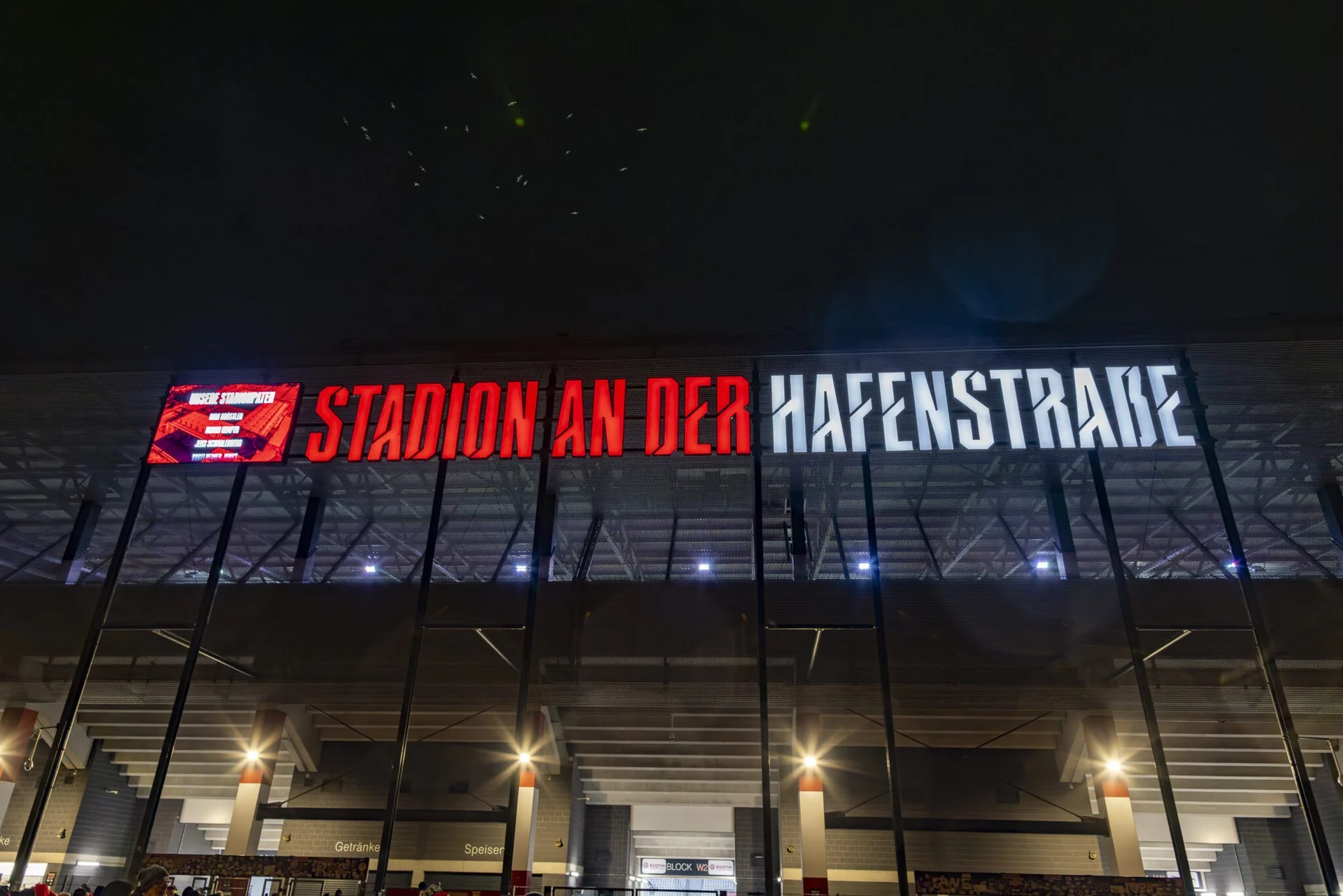
Use the club's own transport advice for the final part of the journey. The Essen arrival guide places Stadion an der Hafenstraße in the north of the city, around Bergeborbeck and Vogelheim. It lists a matchday shuttle from Essen Hauptbahnhof and the local station Essen-Bergeborbeck as another approach. Drivers need to read the current fan information: the club says access to the stadium on matchdays generally requires a valid parking permit. Reaching Essen's central station is only one part of the trip.
For Fortuna Köln, the club's Südstadion directions identify tram line 12 and the Pohligstraße stop beside the ground. That is a different destination from Viktoria's Sportpark Höhenberg. Keep the full club name in your itinerary and ticket order, particularly when searching simply for “Cologne football.” Check current local transport notices for your date and leave time for the stadium entrance, rather than treating arrival at the nearest stop as arrival in your seat.
Match the club, stadium and confirmed kickoff
Havelse provides the season's clearest example of why a club name is not enough to identify a destination. Its initial third-tier admission was based on the Heinz von Heiden Arena. On October 12, 2026, the DFB approved the Eilenriedestadion as an additional home venue after the necessary infrastructure evidence was supplied. An older article describing the earlier refusal would therefore give an incomplete picture. Read the venue attached to the individual fixture and the club's latest match notice.
Before paying for transport, match three pieces of information: the ticket's game and spectator area, the confirmed ground and kickoff, and the journey home after the final whistle. Buy through the club's official ticket route and read whether you are selecting a home or away allocation. For a second game that weekend, repeat those checks independently. A late Sunday appointment, a changed venue or a restricted allocation can shape the whole trip; the confirmed match information should drive the booking.
JOIN THE DISCUSSION
Comments
Sign in with Google to comment. Keep the discussion focused on Bundesliga football and respectful to other supporters. New comments are reviewed before publication.
Loading comments…