Updated 14 September 2026
The 2026/27 2. Bundesliga schedule is published in full. Exact dates and kickoff times are confirmed through Matchday 13; fixtures from Matchday 14 onward have fixed opponents but still need their final Friday-to-Sunday assignments.
The season opened on 7 August 2026 and ends on 23 May 2027, with a winter break after Matchday 16. This guide brings the key dates, standard kickoff windows and current confirmation status together so you can follow the season or plan an away trip without treating a provisional weekend as a guaranteed departure time.
The 2026/27 2. Bundesliga schedule at a glance
The complete 2026/27 2. Bundesliga fixture sequence is published, and exact dates and kickoff times are confirmed through Matchday 13 as of 14 September 2026. The season began on Friday, 7 August and the regular campaign ends on Sunday, 23 May 2027. That is the useful short answer; the crucial detail is that a pairing shown in a later round does not yet guarantee a particular Friday, Saturday or Sunday slot.
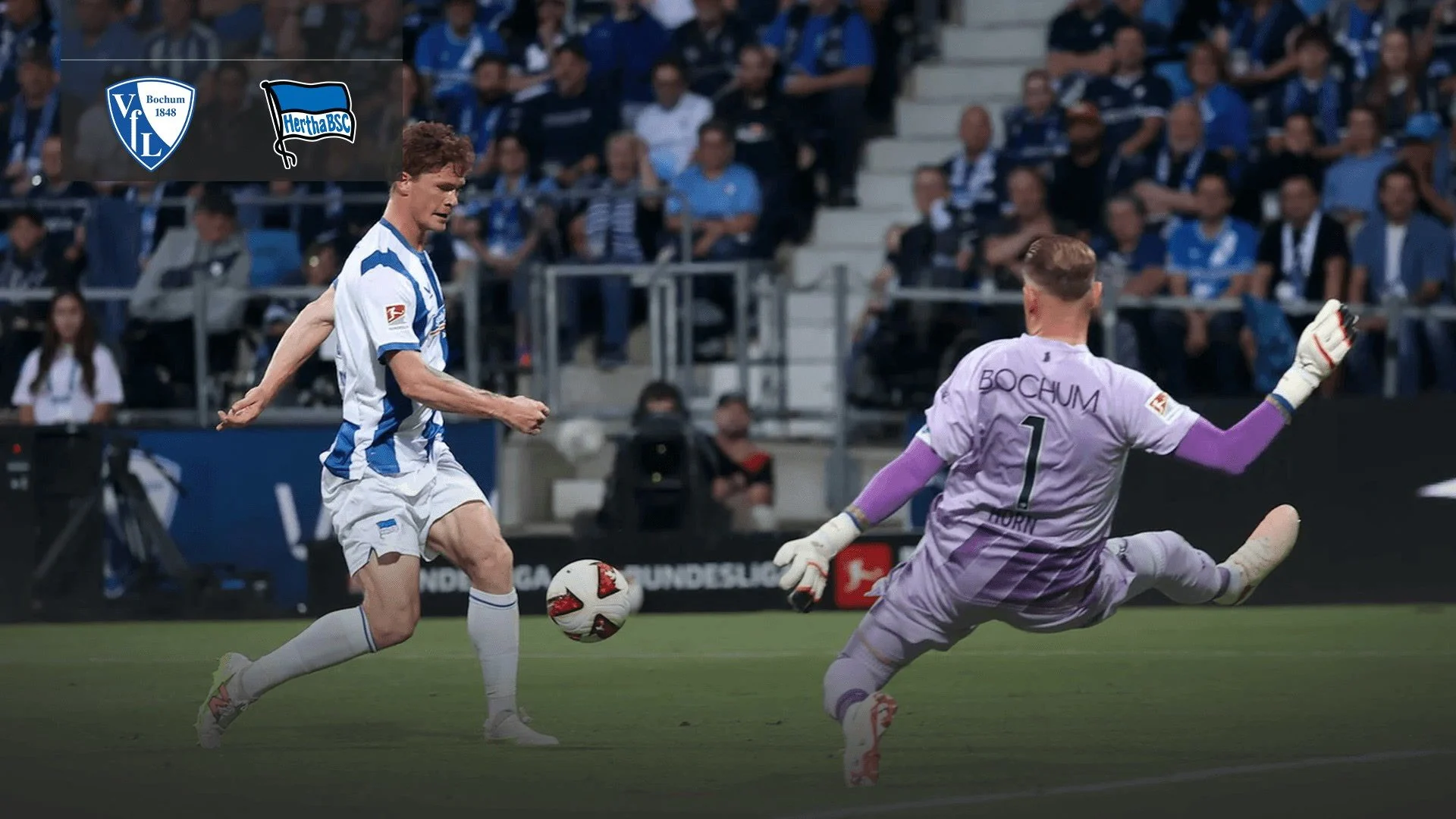
The DFL released the complete list on 2 July 2026, fixing who plays whom across all 34 matchdays. VfL Bochum and Hertha BSC then opened the division at 8:30pm CEST on 7 August. Exact timings have moved forward in separate batches: the latest announcement, made on 10 September, assigned Matchdays 7–13 and therefore gives supporters confirmed plans through the final weekend of November.
| Milestone | Date or range | What is settled |
|---|---|---|
| Fixture-list publication | 2 July 2026 | All 34 rounds and opponent pairings |
| Opening weekend | 7–9 August 2026 | Completed; Bochum–Hertha was the Friday opener |
| Exact-time horizon | Through Matchday 13 | Dates and local kickoff times confirmed through 27–29 November |
| Last round before winter break | 18–20 December 2026 | Matchday 16 framework |
| League restart | 15 January 2027 | First 2. Bundesliga weekend of the new year |
| Final matchday | 23 May 2027 | All Matchday 34 games played simultaneously |
| Promotion/relegation play-offs | 27/28 May and 31 May/1 June 2027 | Reserved first-leg and second-leg windows |
For context, the competition uses an 18-team, 34-match format: every club plays 17 home and 17 away league games. This guide concentrates on when those fixtures happen and when their exact slots become dependable. It deliberately does not duplicate a live results service; scores and late operational updates should always be checked against the official match entry.
What is confirmed now — and what is still provisional
A 2. Bundesliga fixture passes through two important stages. Publication fixes the opponent and matchday; detailed scheduling assigns the exact calendar date and local kickoff time. As of 14 September, Matchdays 1–13 are exactly scheduled, while Matchday 14 onward still needs a final weekend slot.
Fixed
The opponent, home team and matchday are in the published season list.
Confirmed
The official match entry also shows a precise date and Germany-local kickoff time.
Check again
A future pairing has no exact slot yet, or exceptional circumstances may still cause a change.
Matchdays 1–13 have exact dates and kickoff times
The latest official release on 10 September assigned every game from Matchday 7 through Matchday 13. It extended the earlier detailed schedule to the weekend of 27–29 November. The batch includes Nuremberg against Wolfsburg at 8:30pm CEST on Saturday, 10 October; Braunschweig against Hannover at 1:30pm CET on Sunday, 25 October; and Bochum against Darmstadt at 6:30pm CET on Friday, 27 November.
Those examples matter because they prove that “Matchday 9” alone is not a travel time. Nine matches can be distributed across several windows, and Germany changes from summer time to standard time on 25 October. Use the exact listing attached to the match, not a generic round label.
Later pairings are fixed, but their weekend slots are not
The 2 July fixture list established all home-and-away pairings for the 34-round season. For a later matchday, that is enough to know the opponent and broad place in the calendar. It is not enough to assume Friday evening, Saturday afternoon, Saturday night or Sunday lunchtime. The league deliberately holds back exact assignments while cup progress, broadcasting selections and local operational requirements become clearer.
That distinction is especially important for away supporters. A hotel covering the whole weekend may be sensible; a non-refundable train tied to one arrival hour is a greater risk until the official match entry carries a precise kickoff.
The next scheduling update is expected in early November
The league says its next exact scheduling batch is expected in the week beginning 2 November, after the DFB-Pokal round-of-16 draw. “Expected” is the operative word: it identifies the planning window, not a guaranteed announcement day or a promise about how many rounds will be included.
For now, treat 2–6 November as the next useful checkpoint. Once the announcement appears, verify your club on the official Bundesliga 2 matchday page and only then tighten travel plans for December and beyond. That small pause protects against the most common schedule mistake: reading a fixed pairing as a fixed kickoff.
How the 34-match season fits around breaks and cup dates
The 2026/27 calendar is unusually compressed in places: the second division starts on 7 August, pauses after only 16 rounds in December and adds a March midweek round before finishing on 23 May. International windows, the DFB-Pokal and a protected May Day weekend explain the shape.
Autumn has two international pauses and three early cup windows
Domestic league play is interrupted from 21 September to 6 October 2026 and again from 9 to 17 November. The first pause combines what had previously been two separate FIFA windows into one longer block. For a supporter scanning the calendar, the apparent empty weekends are therefore deliberate rather than missing fixtures.
Cup football creates another layer. The DFB-Pokal first round was scheduled for 21–24 August, with two delayed ties on 1/2 September for the Supercup participants. Round two follows on 27/28 October and the round of 16 on 1/2 December. A 2. Bundesliga club still in the cup can face a very different recovery and travel problem from one with a free midweek, which is one reason later league kickoff slots are not assigned all at once.
The winter break comes after Matchday 16
The last league window of 2026 is 18–20 December. Unlike a conventional halfway pause after 17 rounds, Bundesliga 2 stops after Matchday 16 and returns on Friday, 15 January 2027. Matchday 17 therefore belongs to the new calendar year. Fans planning festive travel should not search for a missing December round; the schedule intentionally carries the first half beyond the break.
That four-week gap is also an important update boundary. Exact January assignments may arrive before the break, but any ticket, rail or hotel plan still needs the official match entry rather than an assumed weekend pattern.
Spring includes a midweek round, a blank May Day weekend and the final-day sprint
The league schedules a weekday round from 2 to 4 March 2027. It helps compensate for the weekend around Saturday, 1 May, when Germany's three professional divisions will not play under the established arrangement with public-safety authorities. That matters for away followers: a March fixture can mean a Tuesday, Wednesday or Thursday trip rather than a normal weekend.
Matchday 34 is Sunday, 23 May, with all nine games starting together so promotion and relegation rivals cannot benefit from knowing another result. The season may then extend for clubs in the play-offs: first legs are reserved for 27/28 May and returns for 31 May/1 June. The promotion and relegation format explains which finishing positions enter those ties.
The kickoff windows supporters will see most often
A normal 2. Bundesliga weekend is spread across Friday at 18:30, Saturday at 13:00 and 20:30, and Sunday at 13:30, all in Germany's local time. These windows are the league's familiar weekly frame. They are useful for understanding how a round works, but they do not assign an unconfirmed match to a particular day.
Friday, Saturday and Sunday follow a familiar weekly shape
Friday
18:30
Usually two evening matches
Saturday
13:00
Usually three early matches
Saturday top match
20:30
One standalone evening fixture
Sunday
13:30
Usually three lunchtime matches
That typical two-plus-four-plus-three distribution accounts for nine matches. It also explains why the Saturday evening selection attracts attention: it stands alone rather than competing with three simultaneous early games. The September scheduling release illustrates the range. Nuremberg–Wolfsburg was placed at 20:30 on a Saturday, Braunschweig–Hannover at 13:30 on a Sunday and Bochum–Darmstadt at 18:30 on a Friday.
Cup draws, broadcasters and operations can move the final assignment
The DFL has more to balance than television preference. Its published explanation names local authorities, security bodies, the Central Information Point for Sports Operations, clubs and stadium operators. It also tries to avoid neighbouring clubs hosting at the same time and must account for public holidays, major events and DFB-Pokal participation. Rest around international or cup matches can narrow the viable slots further.
For that reason, the slot grid is a decoder, not a prediction engine. If a December pairing appears under “Matchday 14” without a specific time, do not decide that it “must” be Saturday afternoon. Wait for detailed scheduling, then read the official match entry. Exceptional rearrangements are uncommon, but even a confirmed fixture should be rechecked close to departure.
Confirmed fixtures that mark the early 2026/27 route
The most useful way to read the schedule is selectively: note the confirmed games that shape a trip or a major weekend, then use the official matchday grid for the complete list. The examples below are not all 306 league fixtures. They show the spread of slots and journeys already fixed through November.
| Matchday | Fixture | Date and local time | Planning note |
|---|---|---|---|
| 1 | Bochum vs Hertha BSC | Fri 7 Aug, 20:30 CEST | Completed opener; Hertha won 1–0 |
| 7 | Nuremberg vs Wolfsburg | Sat 10 Oct, 20:30 CEST | Standalone Saturday-night match |
| 8 | Arminia Bielefeld vs Osnabrück | Sun 18 Oct, 13:30 CEST | Regional Sunday journey |
| 9 | Braunschweig vs Hannover 96 | Sun 25 Oct, 13:30 CET | Lower Saxony derby; clocks change that day |
| 11 | Hertha BSC vs Wolfsburg | Sat 7 Nov, 20:30 CET | Berlin trip in the evening slot |
| 12 | Kaiserslautern vs Dynamo Dresden | Sun 22 Nov, 13:30 CET | Long-distance away day |
| 13 | Bochum vs Darmstadt | Fri 27 Nov, 18:30 CET | Friday start to the last November round |
The Bochum–Hertha curtain-raiser demonstrated the pull of this division: an official match report recorded a sold-out Ruhrstadion for a meeting of two clubs with recent Bundesliga history. Later, the Braunschweig–Hannover fixture brings the Lower Saxony derby back on 25 October. The cities are only about 55 kilometres apart, but derby operations still make the confirmed Sunday slot more valuable than any early guess.

The other examples reveal the practical variety: Nuremberg and Hertha receive Saturday-night showcases, Kaiserslautern–Dresden creates a demanding Sunday journey, and Bochum–Darmstadt begins a weekend on Friday evening. Supporters mapping those trips can use the site's 2. Bundesliga teams map for geographic context. Always return to the official match entry before departure, because the table records the status at this article's 14 September cutoff.
How to follow the schedule and book travel safely
Book non-refundable travel only after the official Bundesliga 2 match entry shows an exact date and kickoff time. A matchday number and opponent pairing are enough for following the season, but not enough for choosing a train home on Friday night or Sunday afternoon.
Verify the official match entry before paying for fixed travel
- Open the official Bundesliga 2 matchday page and select the correct 2026/27 round.
- Confirm the home club, away club, calendar date and Germany-local kickoff time on the same match card.
- Compare that entry with the club's ticket information, especially if sales began before detailed scheduling.
- Keep rail and hotel bookings flexible when a future round still has only a broad weekend window.
The official calendar subscription is helpful because entries update when precise scheduling is published. It is not instantaneous in every app: the league warns that Google Calendar updates may take up to 72 hours. When the calendar and match page disagree, refresh the subscription and rely on the current official match listing before making a purchase.
Read every kickoff in Germany's local time
Published league times are local to Germany. Central European Summer Time is UTC+2, while Central European Time is UTC+1. In 2026, the clocks return to standard time on Sunday, 25 October. That is why Bielefeld–Osnabrück on 18 October is labelled 13:30 CEST, while Braunschweig–Hannover one week later is 13:30 CET.
International viewers should first verify the German date and only then convert it for their city. This order avoids a subtle error around clock-change weekends: the local kickoff can stay at 13:30 while the gap to another country changes by an hour.
Recheck after cup draws and before departure
Use a two-stage reminder. First, check after a known scheduling trigger; the next one is expected in the week of 2–6 November, following the DFB-Pokal round-of-16 draw. Second, recheck 48–72 hours before leaving, even when the kickoff was previously confirmed. The later check covers exceptional operational changes and ensures the venue and ticket instructions are current.
In practical terms: Matchdays 1–13 are safe to plan from exact listings at this article's cutoff, while later rounds need another confirmation pass. That distinction turns the 2 Bundesliga schedule from a static list into a reliable travel tool—without mistaking a provisional weekend for a promise.
JOIN THE DISCUSSION
Comments
Sign in with Google to comment. Keep the discussion focused on Bundesliga football and respectful to other supporters. New comments are reviewed before publication.
Loading comments…