The short answer — checked 4 September 2026
The full 2026/27 Bundesliga fixture list was released on 2 July. Exact days and kick-off times for Matchdays 1–4 followed on 15 July. The next block was scheduled to be announced in the week beginning 7 September, after the DFB Cup second-round draw.
Every later pairing is real, but most are still shown inside a weekend or midweek range. For supporters, “Bayern vs Dortmund, 30 October–1 November” does not yet mean a Saturday game. Wait until the listing carries one weekday and one German local kick-off before treating flights, trains or a same-day return as safe.
The confusion comes from two different meanings of “fixtures confirmed.” In July, the league confirmed who plays whom, where and in which matchday window. It did not assign all 306 matches to precise broadcast slots. Those exact times arrive in batches because UEFA games, DFB Cup ties and operational requirements must be known first. The guide below shows what is fixed now, how the 2026/27 release sequence works and what a fan should check before spending money.
What is already confirmed for the 2026/27 Bundesliga season?
As of 4 September 2026, every Bundesliga pairing has a matchday window, but only Matchdays 1–4 have an exact day and kick-off time. That distinction is the key to reading the schedule correctly. The league published the complete opponent order on 2 July, then fixed the opening four rounds on 15 July. The next scheduling block was announced for the week beginning 7 September, after the second-round DFB Cup draw.
Confirmed exactly
Matchdays 1–4: the day, local kick-off time, home side and away side are fixed.
Confirmed provisionally
Matchday 5 onward: the opponents and weekend or midweek window are known, but the individual slot can still move within it.
Next update
A further batch was planned for the week starting 7 September. “Week starting” is a publication window, not a promised Monday release.
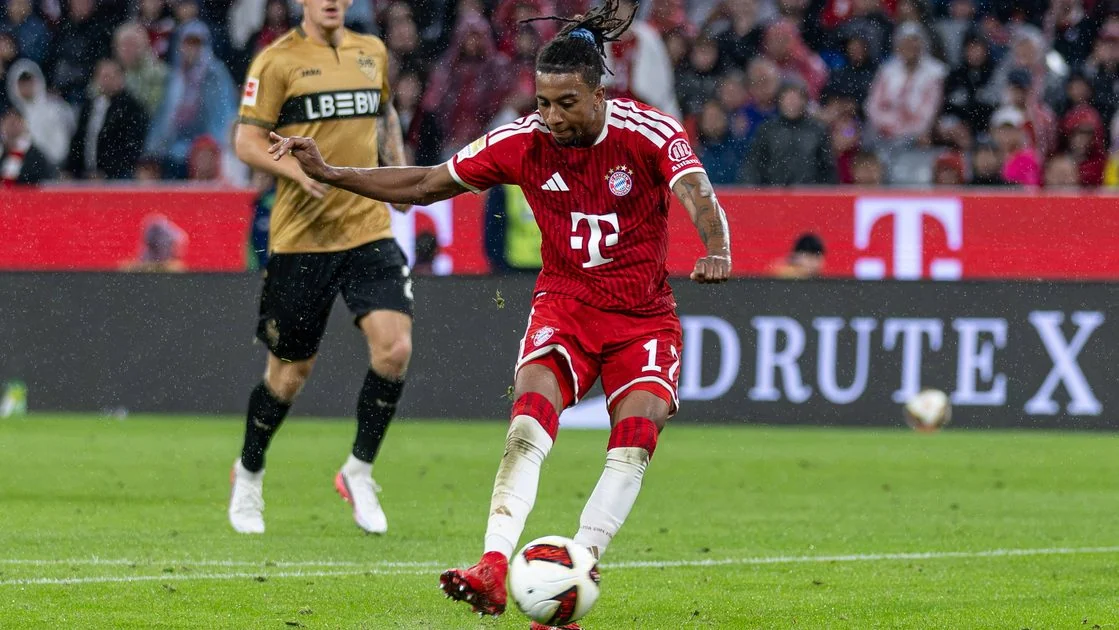
The opening game is a useful example of a genuinely fixed fixture. Bayern Munich hosted VfB Stuttgart at the Allianz Arena on Friday 28 August at 20:30 CEST. That listing supplied all four details a travelling or television viewer needs: venue, calendar date, weekday and kick-off time. Borussia Dortmund’s opening four also show the change clearly. Dortmund’s July 2 list initially placed its games in broad windows; the July 15 update fixed Hamburg at home for Saturday 29 August at 18:30, Hoffenheim away for Saturday 5 September at 15:30, Paderborn at home for Saturday 12 September at 15:30 and Stuttgart away for Saturday 19 September at 18:30.
For Matchday 5 and beyond, a label such as “9–11 October” is useful planning information, but it is not yet a Friday booking. The game may ultimately sit on Friday, Saturday or Sunday, subject to the competition calendar and the DFL’s announcement. Treat the opponent and home venue as settled, but treat the day and hour as provisional until both appear as one exact entry. Our full Bundesliga schedule is the quickest place to recheck the current status before making a non-refundable commitment.
The 2026/27 fixture-confirmation timeline
The Bundesliga schedule is not one announcement; it is a sequence of increasingly precise announcements. For 2026/27, the process began almost ten months before the opening game and will continue during the season. The framework sets competition weekends, the fixture list assigns opponents, and the later blocks assign exact days and hours.
| Date or window | What was decided | What a supporter could do |
|---|---|---|
| 6 November 2025 | Season framework: opening weekend, winter pause, cup windows and final day. | Reserve broad travel periods, but not match-specific transport. |
| 1 July 2026 | Selected headline fixtures, including the exact Bayern–Stuttgart opener, were revealed. | Plan around only those specifically confirmed games. |
| 2 July 2026 | All 34 matchdays and every home/away pairing were released. | Identify a preferred matchday weekend and accommodation area. |
| 15 July 2026 | Exact days and kick-off times for Matchdays 1–4 were confirmed. | Book precise travel for those rounds after checking ticket terms. |
| Week beginning 7 September | The next Bundesliga and Bundesliga 2 scheduling batch was planned after the DFB Cup draw. | Wait for the actual announcement before treating later games as fixed. |
| During the season | Remaining matchdays will be assigned in blocks as cup and European obligations become clear. | Recheck before every non-refundable purchase. |
The first stage arrived on 6 November 2025. It established that the Bundesliga would begin on 28 August 2026—one week later than the previous campaign because of the FIFA World Cup—and finish on Saturday 22 May 2027. It also marked a winter pause after Matchday 14 and the restart from 8 January. Those dates describe the season’s skeleton, not each club’s route through it.
The July releases added the next two layers. Selected marquee games appeared on 1 July, followed by the complete 306-match pairing list on 2 July. On 15 July, the first four rounds became fully usable diary entries. The September announcement is the next layer, not a redraw: opponents do not change merely because their Friday-to-Sunday position is being assigned.
There is no responsible basis for inventing a complete season-long confirmation calendar when the league has not published one. The DFB framework shows why later decisions remain dependent: it includes cup rounds on 27–28 October and 1–2 December, a long international window from 21 September to 6 October, and a Bundesliga midweek round immediately after the January restart. Once a new exact block is issued, add it through the Bundesliga calendar tools; until then, keep the broader matchday window visible in your plans.
Why the DFL confirms kick-offs in blocks
Exact Bundesliga kick-offs wait because the domestic schedule has to fit around competitions whose participants and dates become clear later. The DFL specifically identifies European club competitions and the DFB Cup as dependencies. Confirming several rounds at once gives supporters useful certainty without pretending that the whole season can be locked before those calendars exist.
European nights change the weekend equation
Seven German top-flight clubs entered UEFA league phases in 2026/27. Bayern Munich, Borussia Dortmund, RB Leipzig and VfB Stuttgart are in the Champions League; Hoffenheim and Bayer Leverkusen are in the Europa League; Freiburg is in the Conference League. UEFA fixed the Champions League league phase from 8 September through 27 January, with games on Tuesday and Wednesday. Europa League and Conference League fixtures also occupy separate midweeks, commonly including Thursdays.
That information matters before a domestic weekend receives individual slots. A club playing in Europe on Thursday cannot simply be treated like one whose midweek was free, while a Tuesday Champions League game creates a different preparation pattern from a Wednesday trip abroad. This does not mean a supporter should predict a Sunday match from one clue alone. It means the DFL can make a better-informed assignment after UEFA opponents, venues and dates are known.

The cup draw removes another unknown
The September timing provides a real example. The next Bundesliga confirmation was scheduled for the week beginning 7 September, after the DFB Cup second-round draw. The cup’s second round is played on 27 and 28 October, so the draw reveals which clubs must absorb another competitive match and where they must travel. The DFB explains that exact cup assignments are coordinated with clubs, security authorities, the national football-information unit and television partners. Domestic league decisions then have a firmer set of constraints.
Broadcasting needs certainty too
Once sporting and operational constraints are visible, matches can be distributed across television windows rather than piled into one time. That produces the familiar rhythm of a Bundesliga weekend and lets broadcasters publish usable listings. It also protects the fan from false precision: a provisional “Saturday” guessed months early is less helpful than an honest three-day window followed by a reliable announcement. Check the Bundesliga TV schedule only after the exact slot is attached; channel and viewing details make sense once the match itself has stopped moving.
How to read a provisional Bundesliga fixture correctly
A date range tells you the matchday window, not the day on which your team will play. “9–11 October 2026” means the game belongs somewhere inside that Bundesliga weekend. It does not mean Friday, and it certainly does not mean that a 20:30 kick-off has been chosen. Only an entry with one weekday, one date and one time is fully scheduled.
| What you see | What it means | Booking status |
|---|---|---|
| 9–11 October | Opponent and matchday weekend are known; exact slot is open. | Use flexible arrangements only. |
| Saturday 10 October, 15:30 CEST | Exact German local date and kick-off are confirmed. | Precise travel can be planned, subject to ticket certainty. |
| TBA / time not set | The listing is waiting for a future DFL scheduling block. | Do not infer a slot from another website. |
Know the familiar weekend windows—but do not guess
A regular Bundesliga weekend is usually spread across Friday at 20:30, Saturday’s group of 15:30 matches and the 18:30 top match, then Sunday at 15:30 and 17:30. The current domestic broadcast cycle also includes a limited number of Sunday 19:30 games—15 across the season. Those windows explain the range of possibilities. They are not permission to assign an unconfirmed match yourself. Midweek rounds and the simultaneous final matchday follow different patterns.
Read every time as German local time first
Listings use the time at the stadium. Germany observes Central European Summer Time, UTC+2, until the clocks go back on 25 October 2026; winter fixtures use Central European Time, UTC+1. The offset changes again when summer time returns. For an overseas viewer, that makes “15:30” incomplete without both the match date and the CET/CEST label. Convert after the exact slot is confirmed, preferably with a calendar that handles daylight-saving changes automatically.
The practical test is simple: can you name the weekday, calendar date, local time and venue from the listing? If one is missing, keep the plan provisional. Use the Bundesliga fixtures this weekend page for the immediate round, or choose a club through the team schedule directory before converting the confirmed German time for your location.
When should travelling supporters book tickets, trains and hotels?
Wait for both an exact kick-off and a realistic route to a match ticket before buying travel that cannot be changed. A published matchday window is enough to shortlist a weekend; it is not enough to gamble on the last train home. Confirmation removes the largest scheduling uncertainty, but it does not create stadium availability.
A supporter-first booking order
- 1.Check how the home club sells tickets and whether you are eligible for its member sale, ballot or official exchange.
- 2.Confirm that the fixture has one weekday and one kick-off time—not merely a Friday-to-Sunday range.
- 3.Hold accommodation with cancellation covering the whole provisional weekend if you must reserve early.
- 4.Buy fixed trains or flights only when the match and ticket position support the itinerary.
- 5.Recheck the match during the week of travel for exceptional changes and stadium information.
Ticket timing belongs to the club
There is no single Bundesliga-wide on-sale day. Bayern accepts requests and says its ticket ballot normally allocates places about four to six weeks before the game. Dortmund provides a more specific 2026/27 example: member presale for the away match at Stuttgart on Saturday 19 September opened on 20 August. Both demonstrate why the fixture announcement and ticket confirmation are separate checkpoints. Popular matches can be oversubscribed even when the date has been fixed for months; use only official club sales and authorised exchanges.
Pay for flexibility when the slot is not fixed
If an international trip requires an early hotel reservation, cover Friday evening through Sunday night and choose a cancellation deadline after the expected scheduling block. For rail, compare the conditions, not just the headline price. Deutsche Bahn’s Flexpreis is not tied to one particular train, whereas cheaper train-specific offers can remove the flexibility a football weekend demands; cancellation rules still depend on the exact product and travel date.
Build margin around the match. A Sunday 17:30 finish is not compatible with the same return plan as Saturday 15:30, and post-match crowds can lengthen the trip from the stadium. Start with the Bundesliga club schedule directory, check the exact listing, then place it in your football calendar. The best-value booking is the one that still works when the real kick-off—not the hoped-for one—arrives.
How to track every new fixture confirmation without missing a change
Use a live calendar subscription for convenience, but verify the exact fixture on a current schedule before you travel. A sensible system has three layers: an automatically updating calendar, a check when each new scheduling block is announced, and one final check during matchweek. No single screenshot or printed July list can do all three jobs.
Subscribe once
Choose a live calendar
Add the league or your club to Google Calendar, Apple Calendar or Outlook so newly assigned times can replace broad windows.
Check each block
Look for one exact slot
After a DFL announcement, confirm that your match now shows a weekday, date and German local time instead of a three-day range.
Verify before departure
Reopen the current listing
During matchweek, recheck venue, time and club supporter information rather than relying on an old notification.
Calendar subscriptions are especially useful because the league’s fixture product is designed to update when exact dates and times are added. Bayern likewise offers club-specific subscriptions for Apple iCal, Microsoft Outlook and Google Calendar. However, automatic does not always mean immediate: Bundesliga’s own calendar guidance says a Google Calendar update may take up to 72 hours. If a new scheduling notice has just appeared, compare the calendar entry with the current fixture page before booking.
A download and a subscription are not the same thing. A static PDF or printable list is an excellent season overview, but it freezes what was known when the file was created. A subscribed feed can change an entry. Use our Bundesliga calendar hub for live calendar options, the schedule download for an offline copy, and the printable schedule when you want a paper overview. Label a printout “provisional” wherever an exact time is absent.
Finally, separate fixture confirmation from television confirmation. The day and time may be settled before every market’s broadcaster listing is visible; the Bundesliga electronic programme guide adds match-specific broadcasters by Wednesday before the round, while international rights vary. First confirm when and where the football happens. Then use the relevant viewing guide. On matchday, the Bundesliga games today page should be the last practical check—not a months-old fixture graphic saved to your phone.
JOIN THE DISCUSSION
Comments
Sign in with Google to comment. Keep the discussion focused on Bundesliga football and respectful to other supporters. New comments are reviewed before publication.
Loading comments…