The 2026/27 Bundesliga began on Friday, 28 August 2026 and ends on Saturday, 22 May 2027. The league pauses after Matchday 14 on 18–20 December, resumes on 8–10 January, and stages its relegation play-offs between 27 May and 1 June. One unusual detail shapes the spring: there is no professional league matchday in Germany over the 1 May weekend, so Matchday 24 moves into midweek on 2–4 March.
Those dates are fixed framework points, but most individual fixtures are assigned an exact Friday, Saturday or Sunday kick-off in later batches. This guide separates confirmed dates from matchday windows and explains what each pressure point means for a supporter planning tickets, trains, flights or a weekend around German football.
Bundesliga 2026/27 key dates at a glance
The Bundesliga’s 64th season began with Matchday 1 across 28–30 August 2026 and finishes with all nine Matchday 34 games on Saturday, 22 May 2027. The last league weekend before Christmas is 18–20 December, play resumes on 8–10 January, and the promotion/relegation decisions extend beyond the regular season into 1 June. Those are the anchor points. The important wrinkle for anyone buying a train ticket or booking a hotel is that an official matchday window is not always an exact appointment.
| Milestone | Date | What is fixed? |
|---|---|---|
| Franz Beckenbauer Supercup | 22 August 2026 | Single match date |
| Bundesliga Matchday 1 | 28–30 August 2026 | Weekend window; opener fixed for Friday |
| Last round of 2026 | 18–20 December 2026 | Matchday 14 window |
| Bundesliga restart | 8–10 January 2027 | Matchday 15 window |
| Midweek round | 2–4 March 2027 | Matchday 24 window |
| Bundesliga Matchday 34 | 22 May 2027 | Fixed Saturday finale; exact kick-off follows |
| Relegation play-offs | 27 May–1 June 2027 | Two first-leg dates and two second-leg dates |
Think of the framework calendar as the skeleton and the detailed appointments as the muscle added during the season. The pairing list tells you which opponent your club meets on each matchday. The DFL then assigns a Friday, Saturday or Sunday slot in batches, once European and DFB-Pokal commitments are clearer. The opening rounds are already more precise, but later weekends can still move within their published windows.
The practical supporter rule
Save the window now; make inflexible travel plans only after the individual fixture is confirmed. Use the full Bundesliga schedule to check current appointments, or add fixtures through the calendar options so later changes reach the same calendar you actually use.
Why the Bundesliga season starts on 28 August 2026
The late start was deliberate. The DFL moved the Bundesliga opener back by one week compared with 2025/26 because the 2026 World Cup ran deep into the summer, ending with the final on Sunday, 19 July. A competition with players returning from national-team duty across North America could not sensibly snap straight into its usual domestic rhythm. Starting on 28 August gave clubs a little more runway to reintegrate internationals, rebuild training loads and play a shortened pre-season.
That does not mean August was quiet. Germany’s competitive curtain-raiser, the Franz Beckenbauer Supercup, took place on Saturday, 22 August. The first round of the DFB-Pokal occupied the same 21–24 August weekend. To prevent the Supercup participants being asked to play two competitions at once, their first-round cup ties were moved to 1 and 2 September. In calendar terms, that created two lanes: most clubs played cup football before the Bundesliga began; the Supercup sides went from a trophy match into the league opener and then returned to cup duty.
19 July
World Cup final
The global tournament ended only 40 days before the Bundesliga opener.
22 August
Supercup
Bayern and Dortmund played for the first domestic trophy.
28 August
League opener
Bayern hosted Stuttgart at 20:30 CEST in Munich.
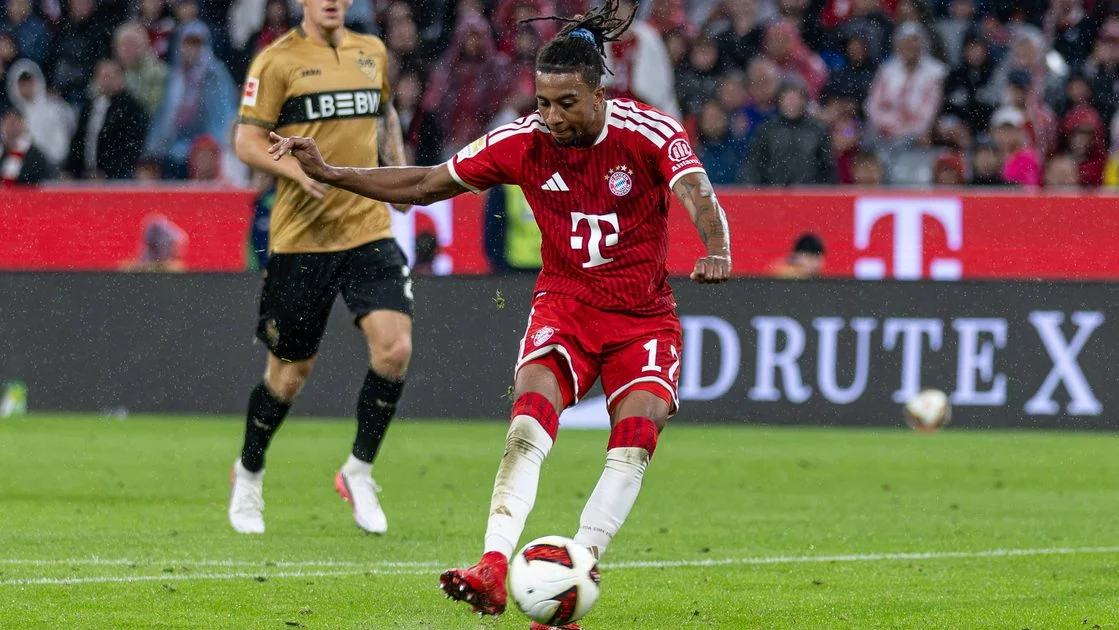
The opening fixture itself was no ceremonial soft launch. Defending champions Bayern Munich faced VfB Stuttgart at the Allianz Arena, a repeat of the previous season’s DFB-Pokal final pairing, and won 5–1. It placed a high-profile southern rivalry under the Friday-night lights and immediately tested Stuttgart against the benchmark of the division. The rest of Matchday 1 followed on Saturday and Sunday, completing the 28–30 August window.
For supporters, the takeaway reaches beyond the first weekend: the World Cup delayed the start, but it did not remove matches from Germany’s compact 34-round format. Those rounds are packed between late August and 22 May, with the winter pause and one extra spring midweek round doing important work. The Matchday 1 page is the useful next stop for the complete opening-round scores rather than treating the headline date as the whole story.
The autumn rhythm: international breaks and exact kick-off times
The first four Bundesliga rounds arrive in four consecutive weekends, then the league disappears for almost three weeks. Matchday 4 ends on 20 September and Matchday 5 does not begin until Friday, 9 October. That gap reflects FIFA’s new combined autumn window: instead of separate September and October interruptions, national teams can play four matches across one longer release period. A second pause follows from 9 to 17 November, between Bundesliga Matchdays 9 and 10.
For clubs, the first interruption is a tactical reset with a catch. Coaches can work intensively with the players left at home, but squads supplying several national teams return in waves, often after long-distance travel and very different workloads. For supporters, it produces a simpler warning: there is no Bundesliga during the weekend of 25–27 September or 2–4 October. A search result that labels either weekend “Bundesliga” is mixing the domestic calendar with international football.
Why many fixture dates still appear as ranges
The DFL released all 34 rounds as pairings in July, but confirmed the exact days and times of Matchdays 1–4 in a later batch on 15 July. The next batch, covering Matchday 5 onward, was held until the week beginning 7 September, after the second-round DFB-Pokal draw. The logic is football rather than paperwork: the scheduler needs to know which German clubs play in Europe on Tuesday, Wednesday or Thursday and which remain in the cup before assigning a Friday, Saturday or Sunday league slot. The standard planning principle allows at least two clear days around international fixtures.
What can you safely book?
- Exact day and kick-off shown: book around that appointment, while retaining normal cancellation protection.
- Only “Friday–Sunday” shown: reserve flexible accommodation, but wait before buying a fixed train or flight.
- Club also in Europe or the DFB-Pokal: expect its league slot to depend on recovery time and the cup draw.
- International-break weekend: do not expect a Bundesliga round, even if your travel search defaults to a Saturday.
The most reliable habit is to follow the schedule for your club and use a subscribed Bundesliga calendar. That keeps “who plays whom” separate from the later, travel-critical question of precisely when they play.
How the winter break and January restart work
The Bundesliga stops for Christmas after Matchday 14, played from 18 to 20 December 2026, and returns with Matchday 15 from 8 to 10 January 2027. That sounds familiar until you count the rounds: an 18-club league needs 17 matchdays to complete its first half. In 2026/27, therefore, the winter break arrives before the Hinrunde is finished. January must accommodate the three remaining steps in quick succession.
8–10 January
Matchday 15
League football returns after the festive pause.
12–14 January
Matchday 16
The first Bundesliga midweek round of the season.
15–17 January
Matchday 17
The Hinrunde closes before the return fixtures begin.
Bayern’s published sequence illustrates the demand: an away trip to Borussia Mönchengladbach, a midweek home game against Bayer Leverkusen, then another away match at Eintracht Frankfurt. That is travel, recovery and tactical preparation compressed into little more than a week. Stuttgart, meanwhile, restart at home to Augsburg before facing their own midweek and weekend assignments. Every club gets the same three-round structure, but the difficulty varies sharply with distance, opponent strength and squad depth.
Supporters should also notice that Bundesliga 2 follows a different restart. The second tier returns on 15 January, one week after the top flight. That matters when planning a groundhopping weekend or following a club in the promotion race: the calendars do not mirror each other across the first January weekend.
The most useful way to follow the transition is round by round: check the final matchday of 2026, then the January restart and the midweek round. Exact dates and times are more important than ever when three fixtures are this tightly packed.
The spring pressure points: midweek football and a blank May Day weekend
The oddest feature of the spring calendar is a Bundesliga weekend with no Bundesliga. Labour Day falls on Saturday, 1 May 2027, and Germany’s agreement with the security authorities keeps that day free of matchdays across the Bundesliga, Bundesliga 2 and 3. Liga. Rather than pushing the season a week deeper into May, the calendar relocates the missing league capacity to 2–4 March, when Matchday 24 is played from Tuesday to Thursday.
That trade matters. The May pause separates Matchday 31 on 23–25 April from Matchday 32 on 7–9 May, giving most domestic squads a rare late-season reset. Yet clubs still alive in Europe may not rest: the Champions League semi-final legs are scheduled for 27/28 April and 4/5 May. A title contender could therefore have a continental match on each side of the supposedly free domestic weekend, while another Bundesliga club gets nearly two clear weeks between league games.
The run-in’s pressure map
- 2–4 March: Bundesliga Matchday 24 moves into midweek.
- 9–17 March: Champions League round-of-16 legs overlap the league rhythm for qualifying clubs.
- 22–30 March: the only FIFA international window of the second half interrupts the run-in.
- 20–21 April: the DFB-Pokal semi-finals introduce another elimination match.
- 1 May weekend: no professional men’s league matchday in Germany.
The March round is the harder date for travelling league supporters. A Tuesday or Wednesday away match can demand annual leave and a late return, while Thursday is possible within the published window until individual appointments are fixed. Consult the Matchday 24 schedule before committing to travel rather than assuming the familiar Saturday slot.
From a football perspective, this is where squad depth becomes visible. A team eliminated from the cup and Europe can train through the week; a rival may be managing knockout football, league position and international call-ups in the same six-week span. When judging form, count recovery days as well as points. For the immediate slate, the weekend fixture view is more useful than reading the whole framework calendar as if every club faces the same workload.
What makes the 22 May final day different
Matchday 34 is not a Friday-to-Sunday window. All nine Bundesliga fixtures are scheduled for Saturday, 22 May 2027 at 15:30 CEST. Simultaneous kick-offs protect the integrity of races that may depend on results elsewhere: no title contender, European hopeful or relegation candidate gets to play after seeing a direct rival’s final score.
The fixture list has already supplied the stage. Bayern host Eintracht Frankfurt, Freiburg welcome Borussia Dortmund, Schalke face Bayer Leverkusen and RB Leipzig meet Hoffenheim, while five other games unfold at exactly the same time. What no honest preview can provide this far out is the set of stakes. Injuries, European runs and 33 rounds of points must happen first. The right promise is a synchronized finale, not a manufactured title decider.
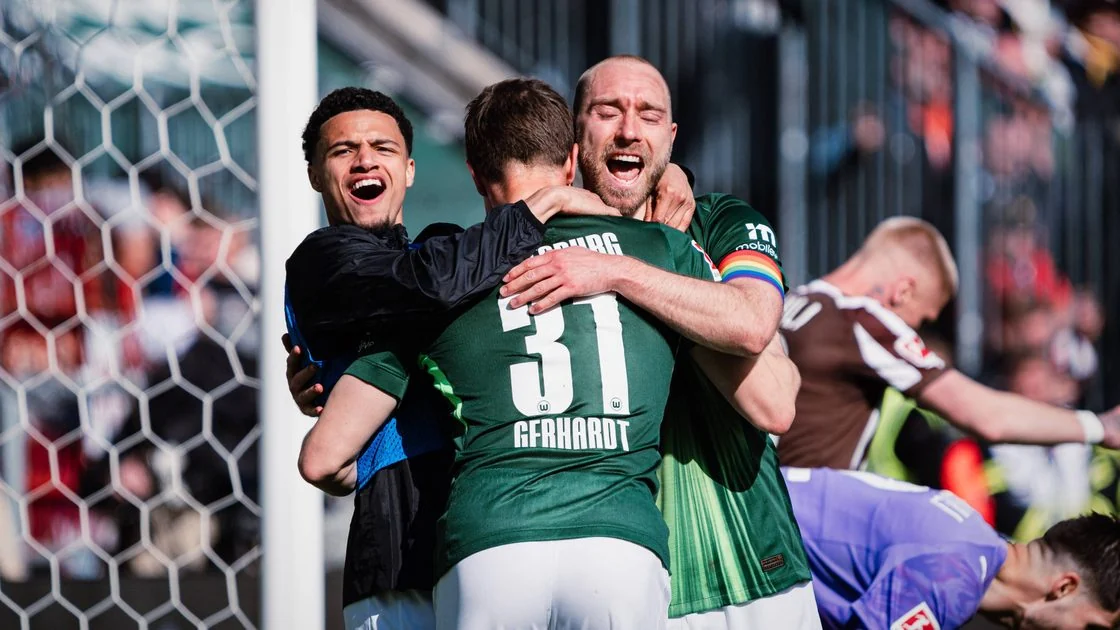
Recent history shows why that distinction matters. On the last day of 2025/26, Wolfsburg, St. Pauli and Heidenheim entered level on 26 points at the bottom. St. Pauli hosted Wolfsburg while Heidenheim played Mainz, meaning the live table could turn with a goal in either stadium. That kind of cross-ground jeopardy is the essence of the German Konferenz experience: one match gives you a story; all nine scorelines give it consequences.
How to follow Matchday 34 like a supporter
- Open the full final-day fixture board before kick-off.
- Keep the live league table beside your main match.
- Watch goal difference when clubs are level on points.
- Check the results view at full time before reading permutations.
One final calendar correction is worth underlining: 22 May is the Bundesliga final day. The match at Berlin’s Olympiastadion on 29 May is the DFB-Pokal final, a separate knockout final one week later. Confusing those dates can turn a useful travel plan into a trip for the wrong competition.
Bundesliga relegation play-offs: dates, format and travel planning
The regular season ends on 22 May, but 16th place does not mean automatic relegation. That club faces the team finishing third in Bundesliga 2 over two legs for the final place in the 2027/28 top flight. First legs are reserved for 27 and 28 May 2027; return legs follow on 31 May and 1 June. The paired dates exist because Germany stages another tie at the same time between 16th in Bundesliga 2 and third in 3. Liga.
This is not a four-team bracket with semi-finals and a Wembley-style final. Each division boundary gets one home-and-away contest. Goals are added across the two matches. If the aggregate score is level after 180 minutes, the second leg proceeds to two 15-minute periods of extra time and then penalties if required. The away-goals rule has not applied since 2021/22, so a 1–1 away draw has no special value against a 1–1 home draw.
One top-flight place, two matches
Participant A
16th in Bundesliga
Avoids direct relegation but must defend top-flight status.
Participant B
3rd in Bundesliga 2
Misses automatic promotion but earns another route upward.
Decision
Two-leg aggregate
Extra time and penalties settle a level tie after the return.
What remains unknown is as important as what is fixed. The framework does not yet assign the top-flight tie to 27 or 28 May, attach a kick-off time, identify the participants or confirm the venues. Those details depend on the final Bundesliga and Bundesliga 2 tables and the detailed announcement. A supporter can protect the overall 27 May–1 June period now, but should not buy non-refundable transport for one of the four days.
Follow the Bundesliga table first: 17th and 18th go down automatically, while 16th enters the tie. Once the clubs and appointments are known, the dedicated relegation play-off guide is the place to check both legs. By 1 June, the DFB intends every domestic promotion and relegation decision to be complete, before the next FIFA release period begins on 7 June.
JOIN THE DISCUSSION
Comments
Sign in with Google to comment. Keep the discussion focused on Bundesliga football and respectful to other supporters. New comments are reviewed before publication.
Loading comments…