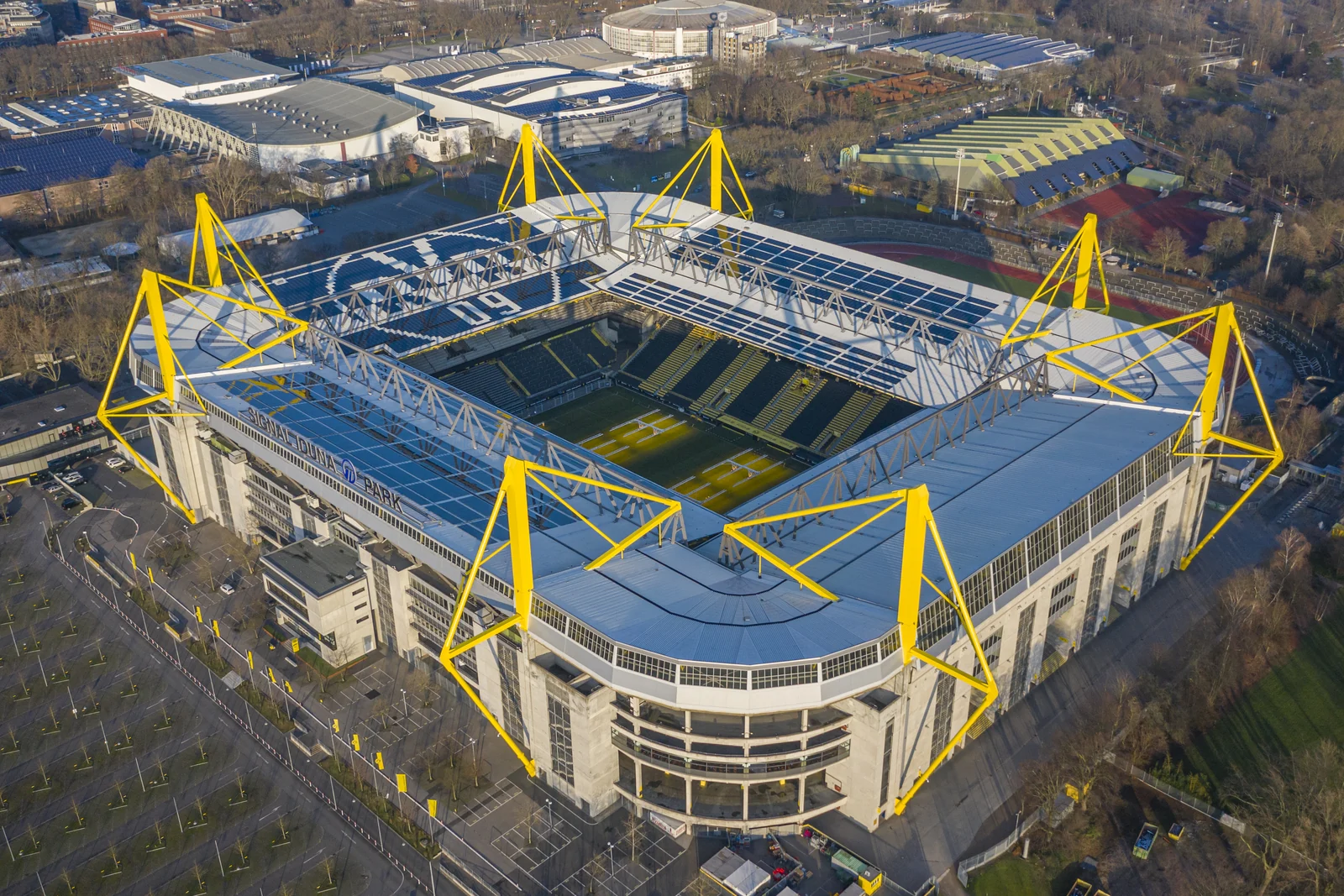
The 2026/27 Bundesliga has 18 teams, from defending champions Bayern Munich to first-time top-flight club Elversberg. This guide names at least one player who best explains every side after the summer window closed on 1 September 2026. “Key” means role, not fame: sometimes it is an elite scorer, sometimes a new ball-winner, a goalkeeper replacing a starter or a veteran carrying a promoted squad.
The clubs are grouped by the questions they face rather than presented as a rigid predicted table. Player roles and availability were checked to 13 September; early-season numbers remain a small sample and injuries can change quickly. Use the analysis as a viewing guide, then check current fixtures, line-ups and results before each match.
The champions and their closest challengers
Bayern begin as the reference point; Dortmund, Leverkusen and Leipzig supply different forms of resistance. The useful comparison is not simply squad value. It is whether each attack has a dependable finisher and enough creativity around him when opponents defend deep.
Bayern Munich: Harry Kane and Michael Olise
Harry Kane remains Bayern's penalty-box guarantee and Michael Olise the right-sided creator who can also move inside. Together with Luis Díaz, they produced 66 Bundesliga goals and 38 assists in 2025/26. Those totals explain the defending champions' floor: Vincent Kompany can alter spacing behind Kane without replacing the central source of goals.
Ismael Saibari adds a new variable. The Morocco international arrived after 19 goals in 37 PSV appearances across all competitions and can operate as a No.10, deeper midfielder or false nine. His two debut assists against Stuttgart showed immediate value, but Kane and Olise remain the best weekly indicators. If Kane pins centre-backs and Olise receives facing goal, Bayern's territorial control becomes end product.
Borussia Dortmund and Bayer Leverkusen: Guirassy, Karetsas and Diaby
Dortmund's clearest reference is Serhou Guirassy: occupy the box, attack deliveries and convert pressure. Konstantinos Karetsas was recruited to improve the supply line and assisted Guirassy on Matchday 1, but Dortmund reported on 10 September that the 18-year-old would miss at least that week's match while undergoing checks after circulatory problems. That makes his availability a live issue, not a return date to guess.
Leverkusen's reset has a familiar face. Moussa Diaby returned at 27 after scoring 49 goals and delivering almost as many assists in 172 appearances during his first spell. His speed restores depth and transition threat, while Malik Tillman and the surrounding creators can connect midfield to the front. Watch whether Diaby receives into space; if every touch comes against a set block, the return alone has not solved Leverkusen's attacking problem.
RB Leipzig: Christopher Nkunku returns to lead the reset
Leipzig finished third in 2025/26 but changed coach and lost important attacking talent. Christopher Nkunku's season-long loan from AC Milan is therefore more than nostalgia. In his first Leipzig spell he recorded 47 goals and 43 assists in 119 Bundesliga appearances and could play across the final third. Under Martín Demichelis, that versatility can connect Antonio Nusa's dribbling, David Raum's left-foot delivery and the centre-forward line.
Nkunku assisted on his league return against Gladbach, yet captain Raum may be just as important to the structure. Leipzig need a stable rest-defence and repeatable width if their attackers are to play quickly. Nkunku is the creative headline; Raum is the positional reference that lets the headline work.
Follow the live Bundesliga table to see whether these attacking advantages survive the first short sample.
The clubs chasing Europe
Frankfurt, Stuttgart, Freiburg, Mainz and Hoffenheim do not share one tactical model. They do share a question: can one or two decisive roles turn a good structure into European qualification while schedules and injuries stretch the squad?
Eintracht Frankfurt and Stuttgart: Onyedika and Pejčinović refresh strong cores
Frankfurt's key balance is Raphael Onyedika behind Jonathan Burkardt. Returning coach Adi Hütter wants greater attacking intensity, and Burkardt remains the guaranteed runner and finisher after a team-high 13 league goals in an injury-limited 2025/26. Onyedika gives those forward movements a platform. At Club Brugge he completed 90 percent of passes and won 56 percent of attempted tackles, combining circulation with ball recovery.
Stuttgart's strength is almost the reverse: attacking depth is already established. Deniz Undav and Ermedin Demirović remain proven reference points after a fourth-place finish, while 21-year-old Dženan Pejčinović arrived from Wolfsburg and scored a hat-trick on his DFB Cup debut. His key value may be workload distribution rather than immediate ownership of the No.9 shirt. Champions League weeks are easier if Sebastian Hoeneß can protect one forward without losing penalty-box presence.
Freiburg, Mainz and Hoffenheim: Backhaus, Gruber and De Cat accept major roles
Freiburg entrusted the goal to Mio Backhaus after Noah Atubolu moved on. Backhaus made 32 Bundesliga appearances and kept five clean sheets for Bremen last season, so this is succession with evidence rather than a blind gamble. Matthias Ginter still organises the back line and Vincenzo Grifo supplies set-piece quality, but the new goalkeeper's calm distribution will determine whether Freiburg can repeat their build-up under pressure.
Mainz made Fabio Gruber the new defensive connector. The 23-year-old won 61 percent of his duels and completed 84 percent of passes for Nuremberg in 2025/26. Those figures fit Urs Fischer's desire for controlled progression, while Nadiem Amiri remains the attacking compass after 12 league goals from midfield. Gruber's passing matters because it should let Amiri receive higher rather than retreat to start every attack.
Hoffenheim's responsibility falls unusually early on Nathan De Cat. The 18-year-old deep midfielder arrived from Anderlecht with senior international experience and the range to dictate tempo or break up play. He joins a side that returned to the Europa League and retained Fisnik Asllani, while Andrej Kramarić still supplies experience between the lines. The test is not whether De Cat looks talented; it is whether Hoffenheim can protect a teenager through the physical and positional demands of two competitions.
Use the latest results to judge these roles across several matches, especially after midweek European fixtures.
The middle class trying to move up
These five clubs are difficult to rank because each is changing something fundamental: the focal striker, chief creator, defensive organiser or attacking style. Their key players are the quickest way to tell whether the change is working.
Werder Bremen and Hamburg: Füllkrug and Fábio Vieira return
Niclas Füllkrug is back at Bremen on loan for a third spell, carrying 49 goals from 124 previous Werder appearances and the memory of a 16-goal Bundesliga Golden Boot season. His task is broader than finishing. Daniel Thioune's young, remodelled side need a target who can secure direct passes and organise the first line of pressure, especially with 10-goal midfielder Jens Stage ruled out until 2027.
Hamburg solved their largest creative uncertainty on deadline day by signing Fábio Vieira permanently from Arsenal. The Portuguese had led HSV with seven goals and added six assists in 31 competitive appearances during his loan. Patson Daka now leads the line after Robert Glatzel's departure, but Vieira is the player who must make the pressing-and-transition model productive rather than merely energetic. His final pass connects recovery to shot.
Gladbach, Union Berlin and Augsburg: Itakura, Latte Lath and Gregoritsch
Gladbach's Ko Itakura is a key player because the Foals lost Nico Elvedi after 11 years. The Japan international returned from Ajax after 80 appearances in his first Gladbach spell and should give Kevin Diks an experienced partner. Tim Kleindienst remains the penalty-box target, but a more aggressive team cannot attack consistently unless Itakura controls the space left behind.
Union Berlin hired Mauro Lustrinelli to introduce more dynamism and open-play threat. Emmanuel Latte Lath, on loan from Atlanta United, gives them speed and depth after scoring 27 goals in 59 Championship appearances for Middlesbrough. Rani Khedira remains the tactical anchor: he protects distances, triggers pressure and allows the new striker to stay higher. Latte Lath is the outcome player; Khedira makes the structural bet credible.
Augsburg's reference is Michael Gregoritsch. Six goals and three assists in 17 league games during his 2026 loan justified a permanent one-year contract. He fits Manuel Baum's direct game as a target, connector and first presser, while Anton Kade supplies running around him. That makes Gregoritsch valuable even on days when he does not score.
Open the this-weekend fixtures and watch these relationships, not just the scorer column.
The promoted teams and the survival fight
Schalke, Elversberg and Paderborn came up in 2026; Cologne stayed by finishing 14th. Grouping them together does not predict the bottom four. It highlights the clubs for whom points, squad resilience and proven Bundesliga decisions carry immediate pressure.
Cologne and Schalke: Dallinga's momentum meets Džeko's authority
Cologne's Saïd El Mala remains the creative cornerstone after renewing his contract, while Thijs Dallinga gives René Wagner a sharper box option. The loanee from Bologna scored twice from the bench on his league debut against Hoffenheim. That burst should not automatically make him the entire attack; it gives Cologne competition and a finisher for El Mala's carries and deliveries.
Schalke return as second-tier champions with a different kind of authority. Edin Džeko, 40, extended after six goals and three assists in 11 league appearances helped complete promotion. His hold-up play can release faster runners, but Nikola Katić is equally central after leading the compact defence. Survival will depend on keeping distances short enough that Džeko's experience is used near goal rather than as an emergency outlet 50 metres away.
Elversberg: Noel Futkeu is the attacking reference
Elversberg are playing Bundesliga football for the first time, only four years after competing in the fourth tier. Their model remains development-heavy: young loans, technical coaching and roles that raise a player's value. Noel Futkeu arrives on loan from Frankfurt after a division-best 19 goals and five assists for Fürth. He supplies physical finishing for a team that cannot expect to dominate territory every week.
Lukas Petkov is the continuity player around him. The winger produced 13 goals and six assists in the promotion campaign and understands Vincent Wagner's rotations. Futkeu is the new reference; Petkov is the evidence that the system can turn movement into output.
Paderborn: Marvin Pieringer brings top-flight know-how
Paderborn won the play-off against Wolfsburg with one of the youngest squads in the field. Their Matchday 1 XI averaged 24.1 years and contained eight Bundesliga debutants. Marvin Pieringer accounted for 89 of that XI's combined 98 previous top-flight appearances and had scored 14 Bundesliga goals for Heidenheim. That makes him the reference for occupation, duels and emotional control.
Gabriel Vidović adds creativity after 12 combined goals and assists in Croatia, while Laurin Curda carries leadership from the promotion side. Pieringer's job is to make those younger qualities playable under pressure. Browse all Bundesliga club pages for their current schedules.
How to use this club-by-club guide during the season
Treat each named player as a role hypothesis to test, not a frozen ranking. A key striker can go three matches without scoring while still creating value through aerial duels, pressing and space for runners. A defensive midfielder can transform a team without appearing in the goal contributions. Start with what the club needs, then select evidence that measures that job.
| Role | Useful checks | What to watch live |
|---|---|---|
| Finisher | Shots, shots on target, touches in the box | Quality of service and near-post movement |
| Creator | Assists, chances and progressive receptions | Where the player receives and how quickly he turns |
| Midfield anchor | Pass completion, duels, recoveries and distance | Spacing when full-backs or No.8s advance |
| Defensive leader | Aerial duels, clearances and team shot prevention | Line height, communication and second balls |
Official leaderboards already offer goals, assists, shots, passing, duels, speed, sprints, distance and saves. On 13 September, however, those lists still reflected a tiny and sometimes unequal match sample. Use three-to-five match blocks, adjust for minutes played and separate league form from DFB Cup or European output.
Pair every headline metric with one contextual question. If Futkeu has few shots, ask whether Elversberg are reaching the final third before blaming his finishing. If Onyedika completes nearly every pass, check whether those passes break pressure or simply recycle possession. If Itakura wins many duels, see whether Gladbach's higher line is exposing him too often. Numbers become useful when they test the role described in this guide; without context, volume can reward a team for being under pressure.
Availability matters just as much. Probable-team pages label players as out or doubtful, but only the official match sheet confirms the XI. Karetsas and Stage are clear examples of why a key-player guide must name the surrounding alternative rather than pretend the role disappears with one absence.
Finally, choose informative fixtures. The league's 10 September scheduling batch fixed Matchdays 5–11, including Bayern-Dortmund, Bremen-Hamburg and Stuttgart-Frankfurt. Compare similar roles head-to-head, then return to the full schedule, table and results as the evidence changes.
JOIN THE DISCUSSION
Comments
Sign in with Google to comment. Keep the discussion focused on Bundesliga football and respectful to other supporters. New comments are reviewed before publication.
Loading comments…