
The official Bundesliga Player of the Month combines a performance-based shortlist with voting by supporters, clubs and experts. As of 20 October 2026, Michael Olise is the latest confirmed winner, for September 2026. Here is how the award works, where to vote and how to read recent winner lists without confusing them with club honours.
What is the Bundesliga Player of the Month award?
The Bundesliga Player of the Month is the league's official monthly individual award, run with EA SPORTS. It recognises a defined block of Bundesliga performances through a combination of statistical selection and voting. The DFL introduced this version in the 2018/19 season. It is therefore a specific competition with its own shortlist, rather than a label that every newspaper, broadcaster or club uses in exactly the same way.
As of 20 October 2026, the latest winner confirmed on the official awards page is Michael Olise for September 2026. The Bayern Munich attacker scored three goals and supplied one assist during the assessment period. Those four direct contributions came in the 7-0 victory over Union Berlin, including his first Bundesliga hat-trick. September's award covered Matchdays 2 to 4; it did not assess his entire career or everything Bayern played in every competition.
That distinction makes a monthly award useful for following the league. A player can enjoy a spectacular three-game spell without leading the scoring chart across a whole season. Equally, an established star can be absent from one shortlist because his strongest performances fell outside its matchday window. Treat the result as recognition of a particular period, then return to the matches to understand the performance behind it.
For a supporter discovering a new name, the award offers a manageable starting point: six shortlisted players are much easier to investigate than the entire league. Watch how each contributes in his actual role, check the opposition, and compare the player's opportunities with those available to teammates. A forward's finishing and a midfielder's control can both influence results, even though their most visible numbers look different.
The official title also helps you separate confirmed results from predictions. A shortlist article means voting is approaching or active; it does not identify the eventual winner. A fan poll on social media may describe public enthusiasm without carrying any weight in the official process. Use the dated winner announcement for the final outcome, and use our Bundesliga results to revisit the league matches that shaped the discussion.

How nominees are chosen and the winner is decided
The process has two separate decisions: who deserves a place on the shortlist, and who wins from that shortlist. Keeping those stages apart prevents two common misunderstandings. The public does not simply nominate any Bundesliga player it likes, and the statistical leader is not automatically handed the trophy. Performance measures narrow the field; the subsequent vote decides the award.
Performance data creates the shortlist
The DFL's explanation of the award describes six nominees selected using official match information. At launch, it referred to roughly 20 assessment criteria, including goals, assists and tackling success, supported by the match data collected by Sportec Solutions. The point is broader than selecting the six players who scored most often. Different contributions enter the assessment before supporters are asked to choose a winner.
That does not make every position directly interchangeable. A striker's shot can be counted clearly, while a defender's positioning may prevent a chance without creating a spectacular clip. Read the nomination profiles with those roles in mind. They are useful explanations of what a player did during the relevant games, rather than evidence that one isolated number captures every quality in football. The official announcement remains the place to check the actual six names for a particular month.
Fans, captains and experts have different voting shares
The published DFL model gives supporters 40 percent of the overall vote. The captains of the Bundesliga clubs account for 30 percent, while a selected expert group has the remaining 30 percent. Fans therefore hold the largest single share, but the other two groups together account for a majority. A popular choice in an online discussion is not necessarily the winner once all parts of the official vote are combined.
For an ordinary voter, this is a reason to participate without treating social-media campaigning as a live scoreboard. You can help recognise an excellent month, but you cannot infer the completed result from likes, reposts or a poll on another website. The nomination period also encourages a more interesting comparison: who performed best in those league games, rather than who has the biggest reputation or the most followers.
The practical conclusion is simple. First confirm the official nominees and assessment window. Then consider their performances, cast your selection while the campaign is open, and wait for the dated winner announcement. The shortlist, supporter ballot and final result are related steps, each answering a different question. None should be substituted for another when discussing who actually won.
Recent Bundesliga Player of the Month winners
For a recent completed-season reference, the official 2025/26 archive records the following monthly awards from September through April. Keep the month and year together when using this list: November 2025 belongs to the 2025/26 campaign, while January 2026 is a later stage of that same season. The season label does not mean every award was decided during one calendar year.
| Award month | Winner | Club at the time |
|---|---|---|
| September 2025 | Harry Kane | Bayern Munich |
| October 2025 | Jonathan Burkardt | Eintracht Frankfurt |
| November 2025 | Michael Olise | Bayern Munich |
| December 2025 | Harry Kane | Bayern Munich |
| January 2026 | Michael Olise | Bayern Munich |
| February 2026 | Harry Kane | Bayern Munich |
| March 2026 | Deniz Undav | VfB Stuttgart |
| April 2026 | Yan Diomande | RB Leipzig |
Bayern's repeat winners make one feature of the award clear: an earlier success does not remove a player from later consideration. Kane and Olise could build another case when a new assessment period began. The list also shows why the monthly competition remains worth following beyond the title favourites, with Frankfurt, Stuttgart and Leipzig represented across the season. A short run of outstanding form can earn recognition even without deciding the championship.
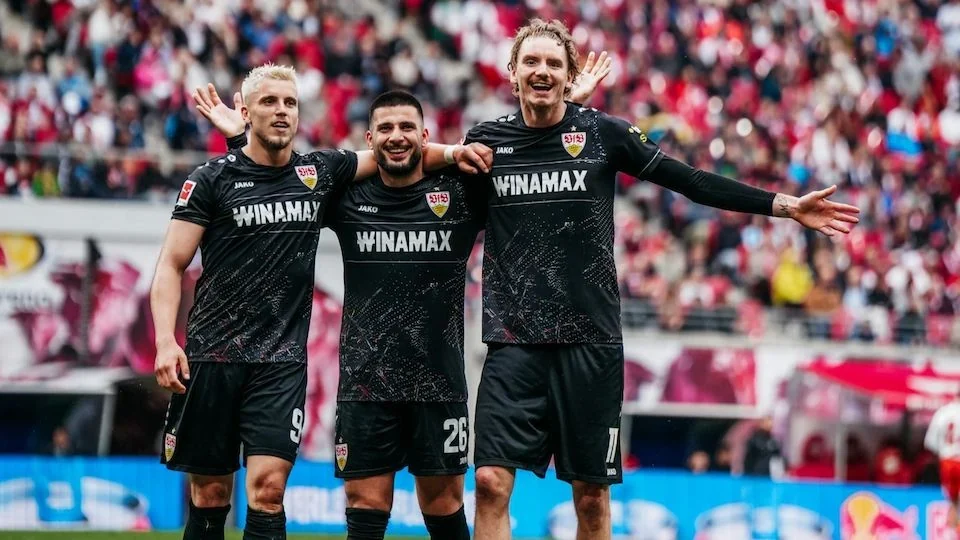
Undav's March award is a useful example of reading a winner through the games. Stuttgart confirmed that he scored in all four Bundesliga fixtures that month. That is a pattern across several opponents, rather than a reputation carried from a previous campaign. His club's announcement also mentioned his international contribution, but the league award should be understood through the relevant Bundesliga performances. A club report can celebrate more than the official award period itself measures.
A compact archive is most valuable when it starts a better football question. Did the winner change his team's attacking options? Did a productive spell continue into the following month? Was a decisive contribution spread across difficult fixtures or concentrated in one exceptional match? Those comparisons explain the rhythm of a season more clearly than treating the number of trophies as a definitive career ranking.
This table is a dated recent-season guide, not a claim to contain every monthly winner since the award began. Older searches need their own year and campaign, and a current-season article can change as new votes close. If you are checking a particular August or November result, first identify its season and then look for the original announcement. That small step prevents a previous winner, club poll or prediction from being mistaken for a newly confirmed Bundesliga award.
How to vote in an official monthly campaign
Start from the official Bundesliga awards page or a dated monthly nomination announcement, then follow its EA SPORTS voting link. This gives you a clear chain from the league to the active campaign. A search result can point to an old season, a completed ballot or an unofficial discussion, so checking the campaign heading is part of casting a meaningful vote rather than an optional extra.
Follow the current Bundesliga and EA SPORTS links
Open the official Bundesliga awards page, choose the Player of the Month information and inspect the linked campaign. Confirm the league, assessment month and listed nominees before making a selection. Follow the instructions actually displayed for that ballot. If it shows a winner rather than a choice of nominees, the vote you wanted may already be closed; an archive result is not an invitation to vote retrospectively.
Do not reuse a deadline from an earlier announcement. Stuttgart, for example, published a specific closing time of 23:59 CEST on 29 March for its March 2026 nomination campaign. That was a deadline for that vote, not a standing rule that every future ballot ends on the same date or weekday. The relevant time zone also matters if you are taking part from outside central Europe.
A useful personal routine is to read the nomination announcement when it appears, review the relevant league performances and vote before the published closing time. You can then check the result later without confusing your own selection with the final outcome. If the campaign is not open, the practical answer is to follow the next official announcement; there is no need to seek an alternative ballot that merely imitates the award.
EA SPORTS also gives the topic a gaming audience, but football voting and game content answer different questions. A report about a special player item, a challenge or a past edition of the game does not establish the current Bundesliga ballot deadline. Check the current game itself for any associated reward and its conditions. Avoid assuming that casting a vote grants an item, that an old challenge remains available or that a previous edition uses the same requirements.
The essential action is therefore modest: use the current official link, read the current campaign and complete the choice it offers. You do not need an unofficial list of supposed voting shortcuts. When discussing the result afterwards, retain the full month and year so other supporters can distinguish the campaign from a club poll or a vote from a different season.
Why August, November and season labels need a year
A search for Bundesliga Player of the Month November is incomplete until it includes a year. November 2025 and November 2026 belong to different seasons and different award cycles. At this guide's 20 October 2026 checkpoint, November 2026 has not happened. A result naming a November winner must therefore be checked for its actual year before it can answer that search.
A club award is a separate competition
The same player can win different awards with similar names, and different players can win the club and league awards in the same month. In November 2025, Olise was the official Bundesliga monthly winner, while Bayern supporters chose Luis Diaz for their club award. Both statements can be correct because the ballots have different fields and purposes. Combining the two lists would create a misleading history.
August 2026 provides another useful warning. Bayern announced Olise as their own Player of the Month and discussed his contributions in both the Supercup and the Bundesliga opener. That is evidence of a club honour, not proof of an August league-wide award. Always read the organisation named in the title and the competitions described in the report. A prominent club crest or a familiar player does not settle the identity of the prize.
Player of the Month is different from Player of the Season
A monthly trophy recognises one defined spell, while a seasonal award considers a campaign. Olise's 2025/26 Bundesliga Player of the Season honour is therefore separate from his November and January monthly wins. Those awards can support a story about sustained quality, but one is not simply a renamed version of the other. The seasonal competition also has its own selection procedure and final announcement.
Nor should a scorer award, Rookie of the Month or Man of the Match be folded into a Player of the Month list. Each asks a distinct football question: most goals, qualifying newcomer, best player in one fixture, or strongest monthly performance. When a player receives several, keep their names and assessment periods intact. That preserves what the achievement actually says instead of turning every accolade into the same statistic.
The quickest verification habit is to read three things together: the full award name, its month or season, and the issuing organisation. If any element is missing, pause before sharing the result as a Bundesliga fact. This is especially helpful when old articles remain high in search results or when a club reposts a celebration months later. The publication date helps, but the performance period named inside the announcement is the stronger guide.
How to judge a monthly performance beyond the headline
The most useful comparison begins with a player's job. A striker should threaten the goal, but the route to that threat matters: finding space, combining with teammates and making repeated good decisions are more informative than a single replay. A midfielder may shape a match by moving possession through pressure. A defender can influence both protection and progression. Judge the contribution before deciding which headline number deserves the most attention.
Undav's March 2026 nomination illustrates how individual output and team results can reinforce each other. Stuttgart reported five goals and two assists alongside 10 points from a possible 12. The meaningful question is how those contributions helped the team: were they creating an advantage, securing a close game or extending an already comfortable lead? The same numerical total can describe very different sequences of football.
For a creative winger such as Olise, look beyond the last touch. His dribbling can draw an extra defender, opening a lane for someone else. A pass before the assist can be central to breaking a defensive line even though it does not appear in the simplest goals-plus-assists tally. The league's October 2026 analysis discussed those broader contributions, demonstrating why the best way to understand a candidate combines numbers with watching the possession that produced them.
Minutes provide another essential piece of context. Three starts and three short substitute appearances are different opportunities to accumulate actions. So are playing against a deep defence and attacking open space during a stretched second half. You do not need to invent a complex personal formula to recognise those differences. Read the nomination profile, inspect the match circumstances and use comparable categories when weighing players in different roles.
Finally, separate a compelling football case from a promise about the future. A monthly award does not guarantee that a player will remain fit, keep the same role or repeat a finishing streak. It is a reason to follow his next games more closely. Check the current Bundesliga table for the team's wider situation, then watch whether the same strengths continue to influence its results.
That approach makes participation worthwhile even when your preferred nominee does not win. The process introduces performances you might otherwise miss, gives a clear period to compare and encourages discussion grounded in actual games. Keep the official result accurate, keep the award date attached and enjoy debating the football behind it. Those habits are more useful than treating every monthly trophy as a final verdict on who the league's best player must be.
JOIN THE DISCUSSION
Comments
Sign in with Google to comment. Keep the discussion focused on Bundesliga football and respectful to other supporters. New comments are reviewed before publication.
Loading comments…