
Bundesliga season tickets are still remarkably affordable in 2026/27, but the cheapest prices are usually the hardest to buy. The lowest publicly reported adult standing ticket is Hoffenheim at €158 for 17 league home matches. Bayern follows at €180 and Eintracht Frankfurt at €190. Those figures work out below €12 per Bundesliga match, yet they describe value for a holder—not open stock for a new customer.
Waiting lists, automatic renewals and official resale therefore matter as much as the price table. Frankfurt offered no new men's Bundesliga season tickets for 2026/27. Dortmund's long-closed queue received only around 600 newly available tickets, despite a stadium that averaged almost 80,000 spectators last season. Bayern explicitly warns fans to ignore supposed permanent transfers advertised online.
This guide compares like with like: full-price adult standing access, 17 guaranteed league games and club-confirmed inclusions. It then explains renewal scarcity, the Bayern and Dortmund models, no-show rules and the official Zweitmarkt route. Prices and policies were checked on September 14, 2026; availability remains live and club-controlled.
Read the Price Table Before You Trust the Ranking
A Bundesliga season-ticket ranking is useful only when every row measures the same product. The cleanest baseline is the lowest full-price adult ticket covering the club's 17 league home matches. Concessions, wheelchair places, youth products and optional cup or European packages answer different questions and should be shown separately.
Standing and seated minimums answer different questions
Germany's standing terraces keep the headline entry price low, but they are not a substitute for the cheapest seat. Bayern's 2026/27 adult annual-ticket table runs from €180 in standing Category 5 to €420 for the lowest listed seated Category 4 and €910 at the top. A graphic quoting only €180 correctly identifies the cheapest adult access but says nothing about what an older supporter, a family or anyone needing a fixed seat would pay.
The market-wide contrast is substantial. Bundesliga.com reported that the average 2025/26 matchday standing ticket cost €12.27 while the average seat cost €37.14. Season tickets apply a different pricing model, yet the gap explains why a terrace-heavy comparison and a seat-only comparison can produce different “cheapest” clubs. Always label the category before comparing the number.
Included matches can change the per-game value
Bayern states that its normal Jahreskarte covers all 17 Bundesliga home matches, with UEFA and DFB-Pokal home games available as optional additions. Dortmund publishes two columns: 17 Bundesliga matches and a 21-match package including four Champions League league-phase home fixtures. Its 2026/27 adult standing prices are €265.20 and €311.10 respectively.
Dividing those totals by the promised matches gives roughly €15.60 per league match for Dortmund's base standing product and about €14.81 per match for the 21-game package. That does not automatically make the bundle better: knockout qualification and later home ties may be handled separately, and a supporter who cannot attend Europe gains no value from compulsory or selected add-ons. Compare what is guaranteed, what is optional and when further charges arise.
Comparable price = full-price adult category ÷ guaranteed home matches.
Then record standing or seated, renewal eligibility and any additional competition package beside the result.
The Cheapest 2026/27 Season Tickets in Context
The clearest published 2026/27 comparison puts Hoffenheim's adult standing season ticket first at €158, with Bayern second at €180 and Eintracht Frankfurt third at €190. The gap then widens: Stuttgart is reported at €260, Dortmund at €265.20 and promoted Paderborn at €265.60. These are standing minimums, not promises that inventory remains for new buyers.
| Club | Reported adult standing season ticket | Approx. per league home match |
|---|---|---|
| TSG Hoffenheim | €158 | €9.29 |
| Bayern Munich | €180 | €10.59 |
| Eintracht Frankfurt | €190 | €11.18 |
| VfB Stuttgart | €260 | €15.29 |
| Borussia Dortmund | €265.20 | €15.60 |
| SC Paderborn | €265.60 | €15.62 |
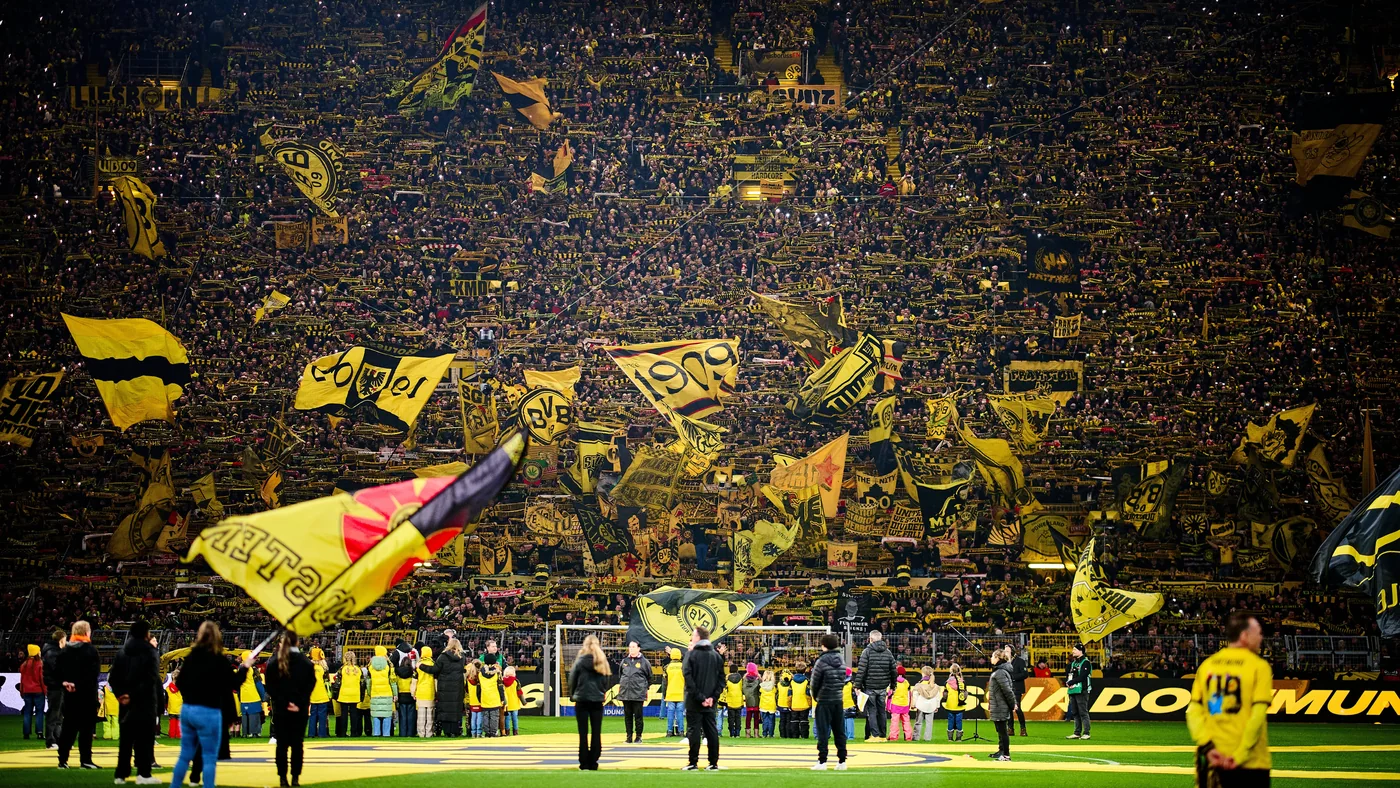
The table is deliberately a verified shortlist rather than a false 1-to-18 ranking. The accessible 90PLUS comparison supplies those six values, while the ONE8Y/Stadionwelt survey says it covered all 18 clubs on July 7, 2026. The latter identifies the overall span from Hoffenheim's €158 entry product to Köln's €1,023 top tier, but those two endpoints are different category questions.
Club economics do not map neatly onto price. Hoffenheim reportedly increased its season tickets by about ten percent and still offered the lowest entry price. Bayern applied a 2.2 percent cost-of-living adjustment yet remained second-cheapest for standing. Paderborn's increase followed promotion and the removal of a second-division discount. Stadium configuration matters too: clubs with more standing capacity can preserve a lower headline tier.
For a supporter, the correct conclusion is modest but useful. Hoffenheim, Bayern and Frankfurt form the cheapest verified adult-standing group in the published comparison. That says nothing about the cheapest available seat, concessions or whether a non-holder can buy. Check the live club tariff and sales rules before treating any ranking as a shopping list.
Cheap Does Not Mean Available
The hardest Bundesliga season ticket to buy can also be one of the cheapest. Clubs normally give existing holders first claim, so the public sees only cancellations, capacity additions or tickets recovered under attendance rules. Price measures affordability for the holder; it does not measure the probability that a new applicant succeeds.
Renewal rates lock most inventory in place
Eintracht Frankfurt gives the clearest 2026/27 example. The club says existing men's Bundesliga subscriptions renewed automatically and that no new season tickets were offered for sale. A reported €190 standing price is excellent value for an incumbent, but there was no corresponding €190 public buying window.
Dortmund also told holders that their subscription would extend automatically if they wanted no changes. Only tickets released by voluntary cancellation, no-show enforcement or terms violations could return to the allocation pool. That creates a small yearly flow rather than a normal open sale. A club can publish thousands of affordable season tickets while offering only hundreds to its queue.
Membership and waiting lists are pathways, not guarantees
A membership can unlock advance match-ticket sales, ballots or eligibility, but it should not be bought on the assumption that a season ticket follows. Dortmund says the volume of requests forced it to close its season-ticket waiting list years ago. Fans already registered remained in sequence; new supporters could not simply join during the 2026 summer.
BVB's August update quantifies the bottleneck. Around 600 tickets became available for 2026/27. Seat offers reached waiting-list position 474 and standing offers position 136, with selected fans contacted directly. Even in an 81,000-capacity stadium, turnover was tiny relative to demand. The practical lesson is to preserve account details and respond to official contact, not to pay a stranger claiming to transfer a permanent right.
Renewal
Existing holder keeps priority.
Churn
Cancellation or enforcement frees stock.
Allocation
Club contacts eligible fans in order.
Bayern and Dortmund Show Two Versions of Scarcity
Bayern and Dortmund prove that supporter-friendly pricing and easy access are separate policy choices. One keeps a remarkably low minimum inside a permanently full modern arena; the other sells an enormous number of season tickets inside Germany's largest league ground. Neither model produces much new supply.
Bayern keeps entry prices low behind extreme demand
Bayern's €180 adult standing annual ticket works out at about €10.59 for each of 17 Bundesliga home games. That is less than many clubs charge despite the team's commercial strength and repeated title contention. The club applied a 2.2 percent adjustment for 2026/27, matching its stated cost-of-living basis, rather than pricing the terrace at the maximum demand might bear.
The bargain belongs mainly to existing holders. Bayern's annual-ticket information focuses on account confirmation, digital delivery and use of individual games, not an open season-ticket sale. It also warns supporters to ignore purported permanent transfers advertised on social platforms or marketplaces. A legitimate right cannot be created because a seller knows the correct face value.
Dortmund combines a huge allocation with very limited churn
Dortmund's scale is different. Bundesliga.com recorded average attendance of almost 80,000 in 2025/26, the league's highest. Its €265.20 standing season ticket costs more than Bayern's but still averages only €15.60 per league match. Large capacity lets BVB maintain an immense base of regular supporters while retaining matchday inventory.
Scale does not create turnover. BVB reallocated only around 600 tickets for 2026/27 after cancellations and enforcement, and its waiting list remains closed. That is less than one percent of Signal Iduna Park's matchday capacity. For a fan outside the queue, the useful alternative is not a dubious “season-ticket transfer”; it is member presales, returned match tickets and the club's official secondary market.
Use the site's Bundesliga clubs directory to reach the right team context, then follow the club's own ticket account and notices. Demand turns minutes and eligibility into part of the price, even when the euro figure remains low.
Official Resale Makes a Season Ticket More Useful
An official ticket exchange turns one unavailable season-ticket place into a legitimate match ticket when the holder cannot attend. It protects the buyer from invalid codes, returns controlled value to the holder and gives the club a reliable attendance record. That is fundamentally different from selling screenshots or a permanent card through social media.
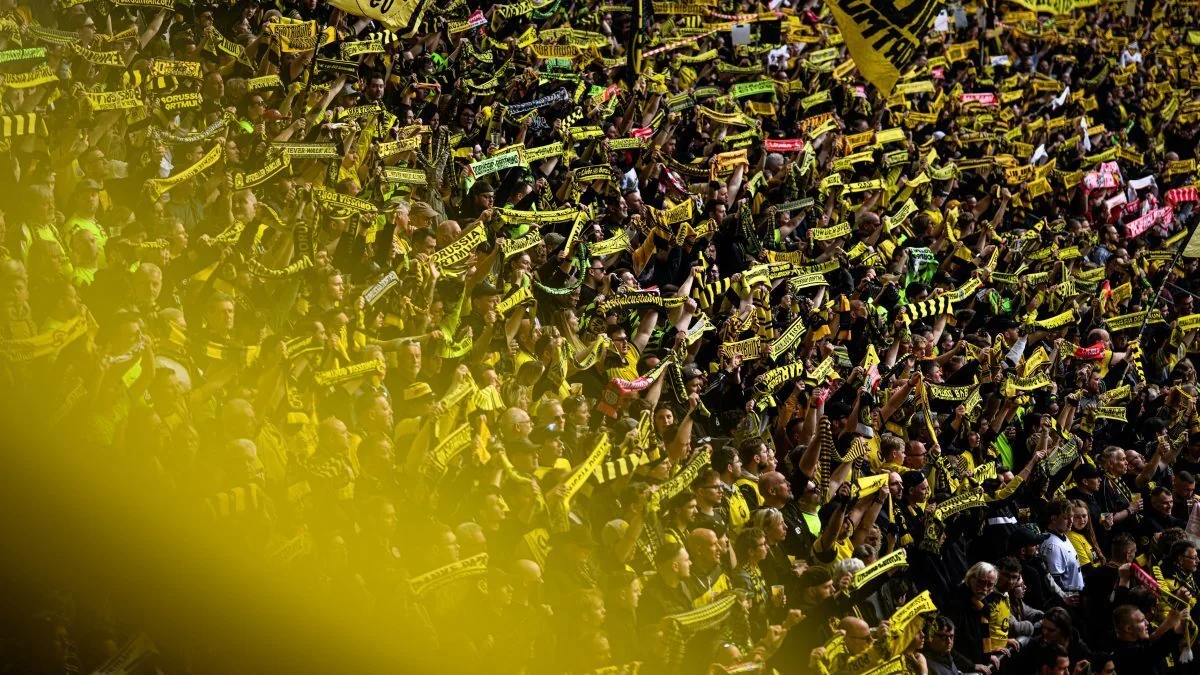
The club ticket exchange protects both sides
Bayern says exchange buyers contract with the club rather than directly with the holder. After a successful sale, the original ticket is blocked and the annual-ticket holder receives the proportional price for that match. Availability depends entirely on when holders list inventory, so repeated checking is useful for a sold-out fixture but never guarantees a pair together.
Dortmund uses the same essential safety architecture: the holder keeps the physical or digital season card while the match entitlement is electronically disabled and reissued through the BVB shop. The buyer receives a valid club ticket at controlled terms; the seller avoids prohibited commercial resale. Use only the official link reached from the club site, because a page calling itself a “secondary market” is not necessarily the authorized Zweitmarkt.
Attendance rules discourage empty-seat ownership
Scarcity makes non-use a governance issue. Dortmund's 2026/27 rule requires a season ticket to be used for 14 of 17 league home matches, but a lawful transfer or listing on the official exchange counts, even if the listed ticket does not sell. The policy frees holders from attending every week while requiring them to make the place available.
Bayern's 2026/27 standing-area rule requires 10 of 17 matches. Its definition differs: personal entry or a digital transfer followed by entry counts, while simply listing the standing ticket on the exchange does not. Special accessible blocks have a separate 12-match rule and recognize a successfully sold exchange listing. These details show why one club's no-show advice cannot be copied to another.
For buyers, the benefit is immediate: monitor the club shop after fixture confirmation and again near matchday, when plans change. Check our Bundesliga schedule this weekend before targeting returns, then complete every purchase inside the official account.
Choose the Right Route for Your Situation
A season ticket is the best-value product only for someone who can obtain and responsibly use it. The realistic buying route depends on where you live, how often you attend and whether the club currently accepts new names. Start with the official account and treat every third-party claim as unverified until the club confirms it.
| Supporter | Best route | Reason |
|---|---|---|
| Existing holder | Renew, verify payment and learn the exchange rule | Protects the scarce right and satisfies use requirements. |
| Local regular without a ticket | Membership, eligible queue and repeated official resale | Builds access without paying an unauthorized premium. |
| Occasional visitor | Match-ticket presale or club exchange | Avoids buying 17 games that cannot be used. |
| International fan | Plan several fixtures and wait for confirmed scheduling | Reduces travel risk and improves the chance of a lawful return. |
For a local supporter, membership can still be worthwhile even when the season-ticket list is closed: clubs may reserve match-ticket windows or allocations for members. But read the benefit as written. A BVB membership does not jump a closed Dauerkarte queue, and a Bayern account does not guarantee exchange stock. Set alerts and keep payment data current so that a legitimate opportunity is not lost to administration.
An occasional visitor should normally prefer a single match. Select several possible home dates on the Bundesliga schedule, then wait until the DFL and club confirm the exact kickoff before making non-refundable travel plans. Official exchange returns often appear close to matchday, but pairs and specific blocks are harder to find.
- 1. Find the club: use the teams directory and follow its official ticket link.
- 2. Create one verified account: match personal details and delivery method before the sale.
- 3. Read eligibility: note membership, queue, ballot, ticket limit and renewal language.
- 4. Use only official resale: never buy a screenshot or supposed permanent transfer in a direct message.
- 5. Recheck the fixture: date and kickoff changes can destroy the value of a cheap ticket.
The bottom line: 2026/27 Bundesliga season tickets remain cheap by elite-football standards, led by a €158 reported standing ticket at Hoffenheim. For most new buyers, however, the decisive number is not the face value—it is how many legitimate tickets reach the queue or official exchange.
JOIN THE DISCUSSION
Comments
Sign in with Google to comment. Keep the discussion focused on Bundesliga football and respectful to other supporters. New comments are reviewed before publication.
Loading comments…