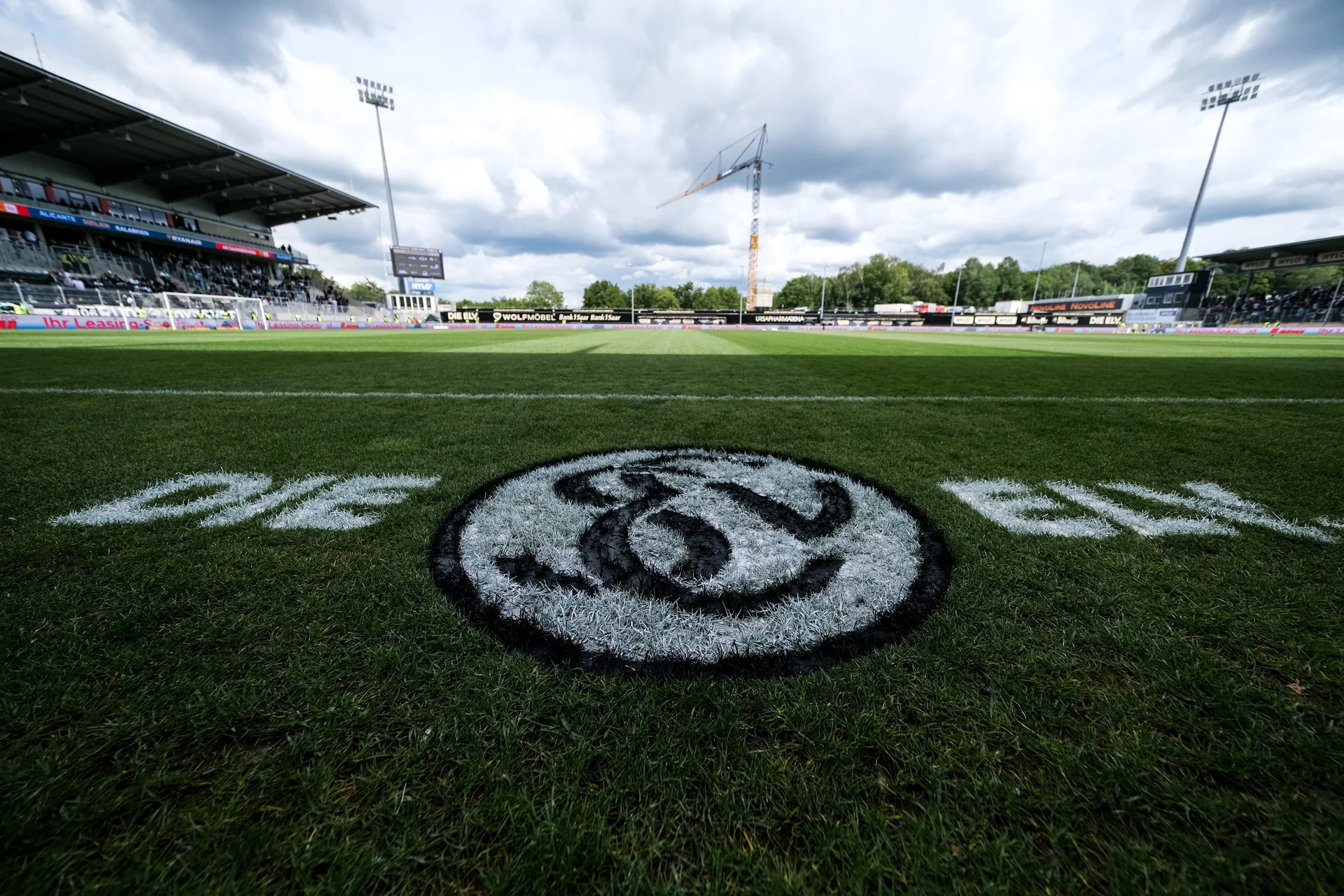
Bundesliga club crests combine letters, local symbols and institutional history. Bayern's diamonds point to Bavaria, Stuttgart's antlers to Württemberg and Cologne's goat to Hennes. This guide identifies all 18 clubs for 2026/27, then explains how to read their names, dates and championship stars.
Recognizing all 18 Bundesliga clubs in 2026/27
A current Bundesliga logo list needs a season attached to it. These are the 18 clubs in Germany's men's top division for 2026/27, checked on 14 October 2026. The table below gives a quick recognition cue rather than an exhaustive description of every historical version. A club can change its visual treatment without changing its identity, while promotion and relegation change which identities belong in the league.
| Club name | Recognizable feature |
|---|---|
| FC Bayern München | Red circular name ring and blue-and-white diamonds |
| Borussia Dortmund | Yellow circle, BVB and 09 |
| RB Leipzig | Two red bulls facing a football |
| VfB Stuttgart | Red stylized VfB lettering and three antlers |
| TSG Hoffenheim | Blue-and-white shield with TSG and 1899 |
| Bayer 04 Leverkusen | Bayer cross between red lions |
| SC Freiburg | Black-and-white oval with a bird motif |
| Eintracht Frankfurt | Eagle in a circular badge |
| FC Augsburg | FCA lettering, 1907 and a pine-cone motif |
| 1. FSV Mainz 05 | Interlocking red initials and 05 |
| 1. FC Union Berlin | Red Union lettering with yellow detail |
| Borussia Mönchengladbach | Black-and-white diamond enclosing a B |
| Hamburger SV | Nested white and black diamonds on blue |
| 1. FC Köln | Goat above the cathedral-and-name badge |
| SV Werder Bremen | White W in a green diamond |
| FC Schalke 04 | Blue circular mark with S04 lettering |
| SV Elversberg | Black-and-white SVE identity and 07 |
| SC Paderborn 07 | Blue-and-black circular SCP identity |
Use the lettering as well as the shape. Werder and Mönchengladbach both use a diamond, but the W, the B and the different colors separate them immediately. Hamburg's white diamond is another distinct design. A monochrome shirt can remove the familiar color cue, so recognizing the central letter or symbol is more reliable than assuming that every green, red or blue shirt belongs to one club.
The three promoted members are Schalke, Elversberg and Paderborn. An attractive old graphic featuring Wolfsburg or St. Pauli may still be useful as a historical collection, but it should not be labelled the current 2026/27 set. Equally, a crest disappearing from this season's league graphic does not mean the club has changed its name or ceased to exist. It has simply moved outside the current top-flight field.
The Bundesliga's red kicking-player silhouette is a separate competition mark. It can appear on a sleeve or a broadcast graphic alongside the club badge, but it does not identify a particular team. The official account of that league design also rejects the idea that its player silhouette represents one named footballer. Distinguishing the competition mark from the club crest is especially useful when reading small television graphics.
For fixtures, select the recognizable club in the team directory. This historical guide explains identity; the directory provides the practical route to following that identity on the pitch.
What German club names and abbreviations mean
German club names often retain the language of a sporting association rather than using a city followed by a modern nickname. Letters on a crest can tell you what kind of association was formed; the next word may preserve a place, an ideal or a particular founding story. They should be read together. Two clubs sharing FC or Borussia are not branches of the same organization.
FC, SV, SC, VfB and TSG
FC means Fußballclub, or football club. SV means Sportverein, and SC means Sportclub: both describe a sports club. VfB, familiar from Stuttgart, expands to Verein für Bewegungsspiele, an association for physical games. TSG in Hoffenheim is Turn- und Sportgemeinschaft, a gymnastics and sports community. The names help explain why a football club's institution can include sports beyond its most visible professional team.
Dortmund's BVB is another specific example: Ballspielverein Borussia. The first part describes a ball-games club, and Borussia supplies the traditional name. Reading the full expansion connects the letters on the yellow badge to the association behind the professional team. The small 09 below them supplies a further clue to the club's founding history.
There is also a difference between these historical abbreviations and the short identifiers used on scoreboards. A broadcast may compress Stuttgart into three capitals, while the familiar crest preserves the stylized VfB. Do not assume that every on-screen abbreviation is a literal transcription of the badge. When buying a shirt or searching a fixture list, use the club name and city together so a generic abbreviation does not lead you to another sporting association.
Borussia, Eintracht and Werder
Borussia is the Latin name for Prussia. That broad meaning explains its presence in more than one German club name, but Dortmund's particular story runs through a local brewery whose name the founders adopted. Mönchengladbach sharing the word does not make the two Borussias institutionally connected. Their separate colors, cities and crests remain essential.
Eintracht conveys harmony or concord. Frankfurt's museum history places the adoption of the name in the 1920 merger between footballers and gymnasts; it was intended to express their coming together. Some supporters initially disliked losing the previous football-club name. That detail makes the modern eagle-and-name identity more interesting: what now feels inseparable from the club was once a contested change.
Werder is geographical rather than a mascot. Bremen's club explanation connects it to the river land where the founders played, with the word describing an island or land formed along a river. Read the green W as a compact reminder of that identity. It is a different naming tradition from a royal, industrial or animal reference, even though all can occupy the same small space on a football shirt.
The city and region inside the crest
A Bundesliga crest often carries a place into the stadium. The connection may be to a region's heraldry, a city's emblem or a local story that became a club tradition. Those are different kinds of origin. An animal is not automatically a mascot, and a striking color pattern does not automatically come from the home shirt.
Bayern Munich and the Bavarian diamonds
Bayern's blue-and-white diamonds refer to Bavaria, the region named by the club itself. The official logo history explains that blue survived through the Bavarian pattern as a symbol of the club's homeland. That gives the center of the badge a meaning independent of the red ring around it: the design combines the club's name with a recognizable regional identity.
The diamonds are particularly useful when a television shot catches only the central patch. They also explain why blue remains part of Bayern's identity even when supporters associate the team most strongly with red shirts. The relationship runs through the crest, not a rule that every home kit must use all the badge's colors. A regional symbol can remain stable while a season's shirt changes its emphasis.
Stuttgart's antlers and Frankfurt's eagle
Stuttgart's three antlers come from the heraldry of Württemberg. The club dates their presence in the VfB crest to the 1912 merger of FV Stuttgart and Kronen-Klub Cannstatt. This is not a randomly selected deer graphic. The antlers anchor the institution in a regional tradition, beneath the distinctive red lettering.
Stuttgart also distinguishes the badge from its red chest ring. The latter is a shirt feature with its own history and emotional importance, rather than a component that must be squeezed into the crest. A supporter can recognize the team from the stripe during open play and from the antlers in a close-up. The two signals reinforce one another without being identical.
Frankfurt's eagle has a civic connection. The club museum's account explains the role of the Frankfurt city eagle in the club's identity; earlier local sporting institutions also used the city symbol. The modern football badge is a particular treatment of that tradition, not evidence that every eagle badge belongs to Eintracht. Check the surrounding circle, the letter detail and the name before identifying a small image.
Cologne's cathedral and Hennes the goat
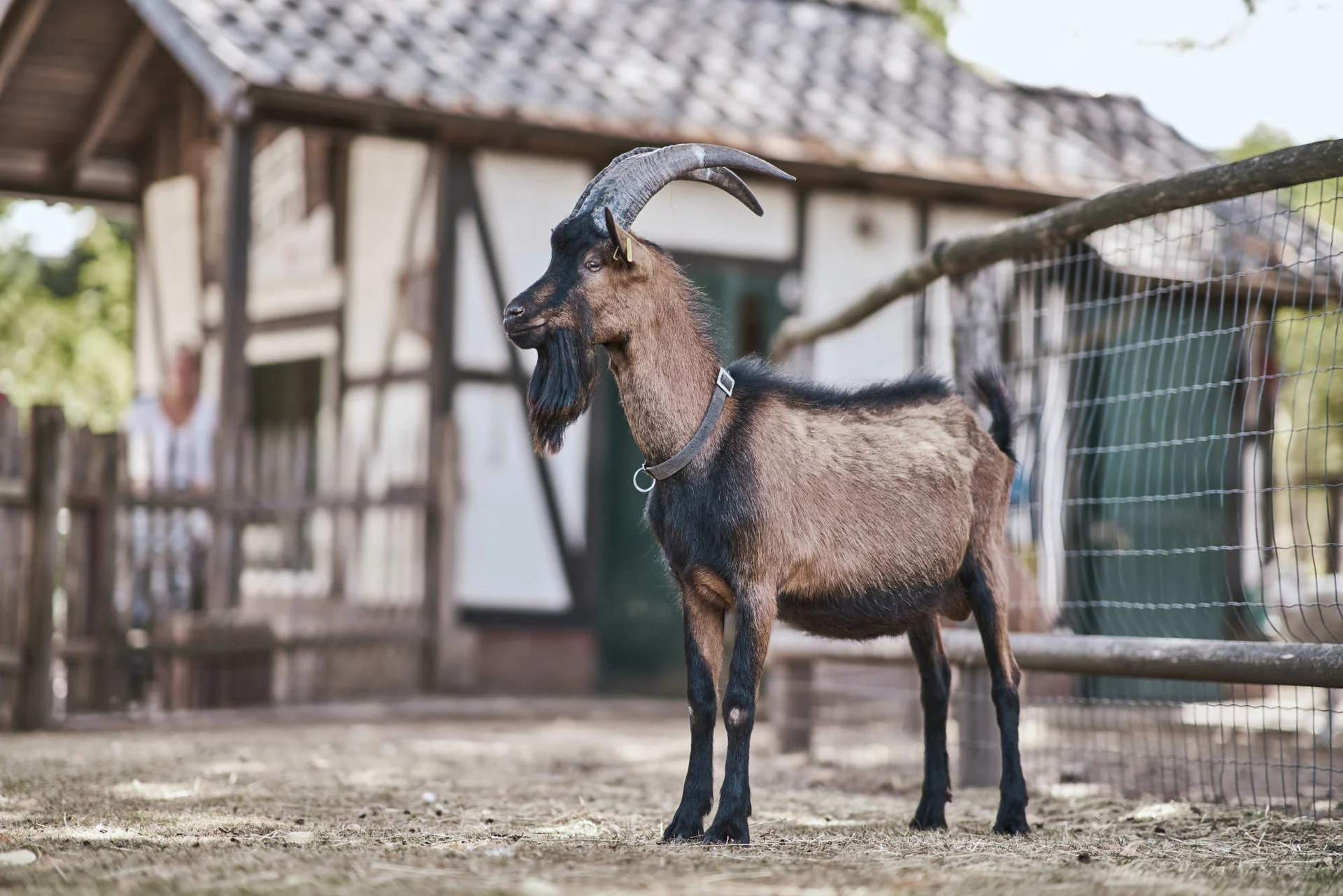
Cologne's crest brings a city landmark and a much more personal club story together. The cathedral makes the location immediately legible. Above it stands the goat associated with Hennes, the living mascot whose original arrival is dated precisely by the club: 13 February 1950, at a carnival event.
The goat was named after Hennes Weisweiler, then the club's player-coach. That is why a goat can be central to Cologne's football identity even though it is not simply the animal from the city's coat of arms. The mascot tradition became so familiar that the crest itself helps explain the nickname Geißböcke, the Billy Goats.
These examples give a useful way to read an unfamiliar design. First ask whether the motif is regional heraldry, a civic emblem or a specific club tradition. Then check the story. Bayern's diamonds, Stuttgart's antlers, Frankfurt's eagle and Cologne's goat may occupy similarly sized shirt patches, but treating them all as interchangeable “team mascots” erases the most interesting part of their meaning.
When a club badge also tells an industrial story
Some German football identities have an explicit connection to a business. The useful question is how that connection entered the institution, rather than whether the design happens to resemble an advertisement. Leverkusen and Leipzig offer two very different timelines. Neither can be explained accurately by treating the club crest as just another interchangeable shirt sponsor.
Bayer Leverkusen and the works-team connection
Bayer Leverkusen's roots lead back to the sports association established for Bayer employees in 1904. The company's name is part of the club's name, and the Bayer cross sits inside its badge. The nickname Werkself, the works team, preserves that institutional connection in everyday football language.
The club's own visual history traces the lion through earlier company-associated designs and explains the later return of lions to the football identity. The badge therefore carries more than a contemporary marketing choice. Its red lions, company cross and club name combine pieces of the organization's historical story. The fact that the cross is a recognizable business trademark does not make its role in the crest identical to a temporary logo printed across the chest.
For a supporter comparing old shirts, that distinction matters. A different chest sponsor or manufacturer can identify a particular season, while the Bayer element points to a much longer relationship. The design is also why confusing Bayer Leverkusen with Bayern Munich is more than a spelling mistake: Bayer refers to the industrial name, Bayern to Bavaria. Their similar-looking English search terms conceal quite separate institutions.
RB Leipzig and the letters on the badge
RB Leipzig's official name is RasenBallsport Leipzig. The RB letters are conventionally used as the shortened club name; spelling them out as Red Bull Leipzig does not reproduce the formal German name. The association with Red Bull is nevertheless visible in the facing red bulls and is central to the club's founding story.
Leipzig began in 2009, using the fifth-tier playing rights of SSV Markranstädt. That is a much more recent route into professional football than Leverkusen's works-sport history. It is also separate from the histories of older Leipzig football institutions. A city can have a long football tradition while one current club in that city has a short institutional timeline.
When reading a shirt, separate three layers: the club identity over the heart, a shirt sponsor, and a manufacturer mark. A commercial connection inside the first layer requires historical explanation; the other two can change under ordinary kit agreements. This approach lets you recognize what you are seeing without pretending that a badge alone proves the club's entire ownership structure or explains every argument about German football governance.
The numbers on crests are not always the same kind of date
The numbers in Schalke 04, Mainz 05 and Paderborn 07 refer to historical years, not league position, squad size or the number of championships. But the full explanation needs a second question: which moment in the club's development does that year preserve? Founding an early institution, merging predecessors and adopting the current name can happen decades apart.
Schalke's 04 points to 1904, when the founders established Westfalia Schalke. The name FC Schalke 04 arrived later, in 1924. The modern blue-and-white identity should therefore not be read as a photographically exact description of how the first group looked. The club's founding account records different original colors, red and yellow. The date keeps a line of continuity through subsequent changes.
Mainz's 05 similarly directs you to 1905. Its chronicle sets out the early Hassia identity and the later changes that produced the familiar football-and-sports association. A television graphic can compress the story into “Mainz 05,” but that small suffix carries more historical information than a plain city name. The year is a recognition clue, not a complete account of the club's development.
Hoffenheim's 1899 is particularly instructive because the early institution was a gymnastics club. It does not mean the modern Bundesliga football team was already competing in anything resembling today's professional league in 1899. The TSG name and the number together preserve the older sporting roots. Reading the date without the abbreviation loses that distinction.
Paderborn provides an even clearer merger example. The club's own chronicle traces an early line to Arminia Neuhaus in 1907. The combination of TuS Schloß Neuhaus and FC Paderborn in 1985 produced TuS Paderborn/Neuhaus, and the present SC Paderborn 07 name followed in 1997. All three years can appear in accurate descriptions because they answer different questions.
For a collector, those distinctions prevent an easy mistake. A commemorative shirt marking the roots of a predecessor does not have to celebrate the anniversary of the present legal name. Likewise, a “first Bundesliga season” is a sporting milestone rather than a founding date. Before using a number to explain a crest, match it to the event the club actually commemorates.
The practical reading order is name, letters, date and historical context. That is more dependable than guessing the century from two digits or treating a prominent anniversary number as permanent badge artwork. German football has long institutional memories, and its crests often keep those memories visible even after the teams, leagues and organizational names have changed.
Championship stars and alternate designs need context
A shirt can show more than the club's basic crest. Championship stars, a league sleeve mark, a manufacturer emblem and a season-specific badge treatment can all occupy nearby space. To read them correctly, start with the institution's central identity and then identify what has been added around it. A photograph of a shirt is an excellent historical object, but it is not automatically a specification of the permanent club logo.
Why one star does not always mean one title
The Bundesliga championship-star system uses thresholds. Three Bundesliga titles qualify a club for one star; five for two; ten for three; twenty for four; and thirty for five. The count concerns titles in the Bundesliga era, beginning in 1963. It is therefore neither one star per title nor a count of every national championship won under earlier formats.
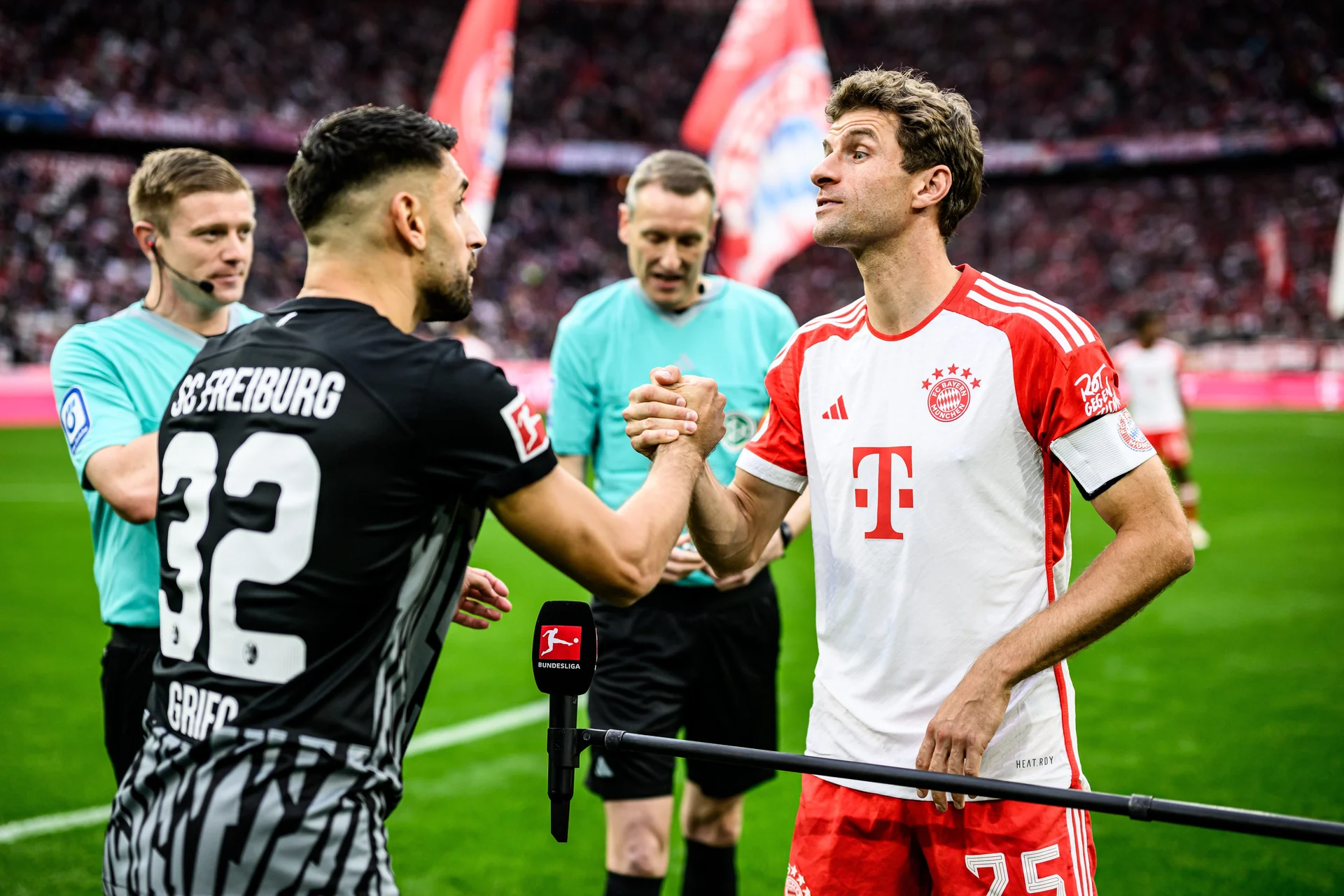
Bayern added the fifth star for 2021/22 after reaching 30 Bundesliga championships in 2020/21. The star recorded that threshold, rather than suggesting the club had won only five titles. Conversely, the absence of one of these stars does not establish that a club has never been German champion. A club's honours may include pre-Bundesliga national titles, and the threshold system does not summarize every era.
The safest comparison uses a club's historical honours alongside the rule. A trophy count in a museum and a star count on the current shirt may both be correct while measuring different things. If you are comparing teams across countries, check the local convention again: there is no universal football law making a decorative star equal the same number of titles everywhere.
Alternate crest treatments deserve the same care. A monochrome away-shirt badge may retain the club's outlines and letters while dropping its familiar colors. A retro shirt may deliberately revive an older design. Check the official product description and the stated season before deciding that an unfamiliar patch is an error or that the club has permanently redesigned its identity.
Permanent redesigns can have deeper significance. Stuttgart's members voted in 2013 to restore a traditional crest, with the change introduced for 2014/15. That is an institutional decision about identity, separate from simply recoloring a badge on an away shirt. It shows why supporters care about small letter shapes and details that a casual observer might dismiss as cosmetic.
When checking an image, read the club name, identify the main symbol, place the design in its season and finally interpret stars or added marks. Then use the club directory to follow the team itself. That sequence keeps the useful history intact: the badge tells you who the supporters are following, while its changing surroundings reveal how a particular football season chose to present that identity.
JOIN THE DISCUSSION
Comments
Sign in with Google to comment. Keep the discussion focused on Bundesliga football and respectful to other supporters. New comments are reviewed before publication.
Loading comments…