Legal-status check: September 14, 2026
The Bundesliga’s 2026 court victory against Viagogo restricts three misleading practices: ticket offers before authorized sales begin, vague guarantee advertising and artificial scarcity designed to rush buyers. It does not ban every private resale, create a nationwide resale-price cap or guarantee that a third-party ticket will work at the stadium.
For fans, the safest response is practical rather than celebratory: identify the home club, use its official ticket shop or authorized exchange, read its transfer rules and compare the full cost before paying. The Munich Higher Regional Court order is the verified current outcome; public reporting differed on whether a further attempt to reach the Federal Court of Justice remained possible, and no filing or resolution was confirmed by this article’s cutoff. This guide explains the published ruling and risk checks in general terms, not individual legal advice.
What the 2026 Bundesliga–Viagogo ruling actually says
The ruling is a targeted order against misleading ticket-market practices, not a ban on Viagogo or on every resale. According to the Bundesliga’s 20 August 2026 announcement, the Munich Higher Regional Court upheld the league’s claim and required buyers to receive clear information about actual ticket availability, the scope of any guarantee and the seller behind an offer.
No listings before authorized sales begin
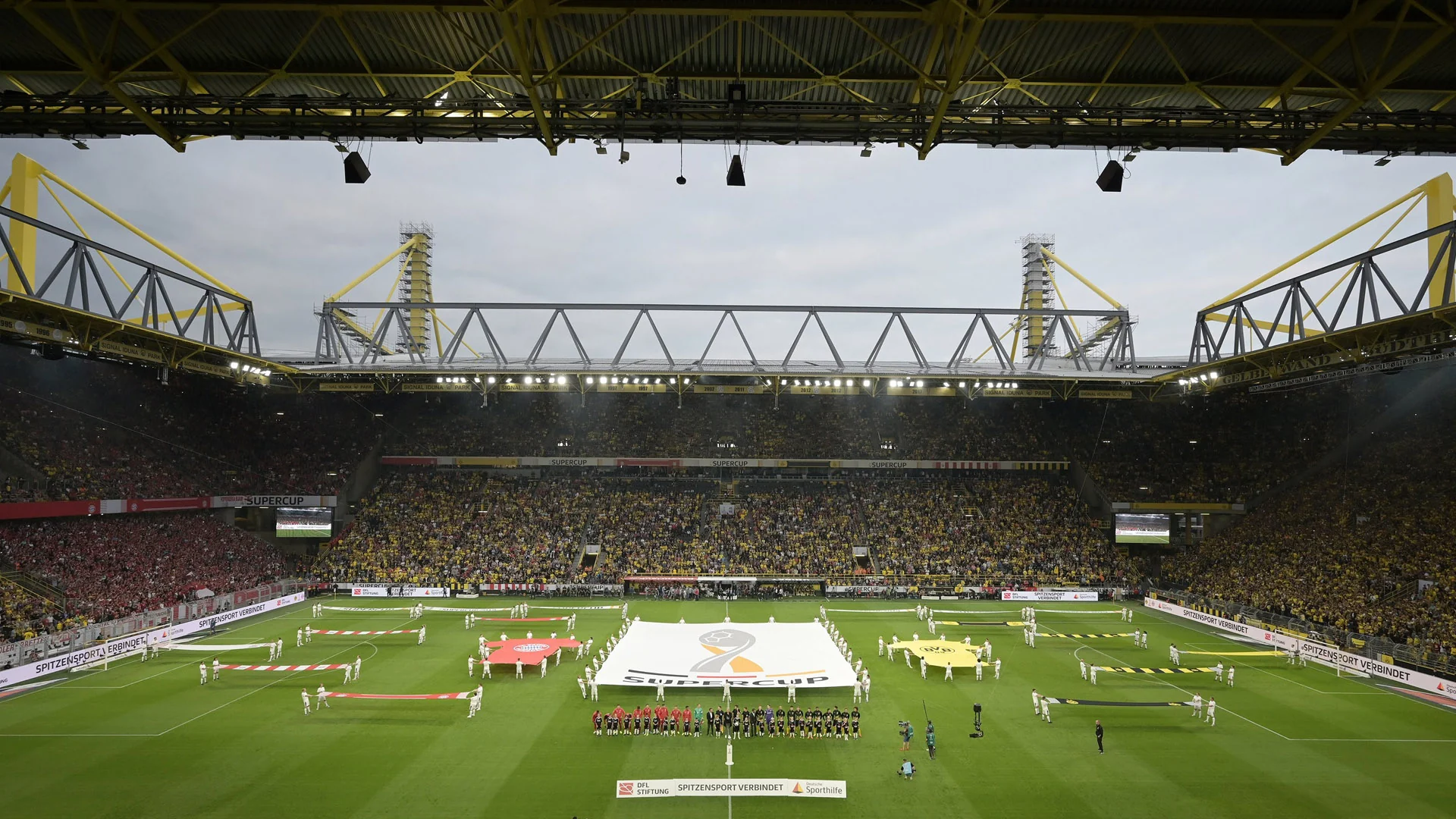
The dispute began with an awkward proposition: tickets for the 2019 DFL-Supercup were advertised on Viagogo before the authorized sale had opened. The Bundesliga had a test purchase made on 14 June; Borussia Dortmund and Bayern München played the match on 3 August. A buyer seeing a seat offered as available could reasonably think a seller already controlled a ticket, when delivery still depended on later obtaining one.
The reported order prevents Viagogo from enabling that type of early offer for Bundesliga or club events before the organizer or an authorized seller has put tickets on sale. For a supporter, the practical test is simple: if the home club has not announced an onsale, a third-party listing is not evidence that a ticket exists. It may describe hoped-for inventory rather than a secured seat.
No vague ticket-guarantee advertising
The court also objected to how a ticket guarantee was promoted. The earlier trial record shows prominent statements promising valid tickets in time for the event, while detailed terms contemplated replacement tickets or a refund at the platform’s discretion. Those are materially different outcomes: reimbursement after failure does not put a travelling fan inside the stadium.
The point is transparency, not a judicial promise that every future transaction will fail or succeed. A platform must make clear what its guarantee actually covers. Fans should read whether the protection concerns delivery, validity, replacement, refund or admission—and when a claim must be filed—before treating a guarantee badge as a reason to book transport or a hotel.
No artificial scarcity designed to rush the buyer
Finally, a marketplace must not manufacture scarcity to force a hasty choice. The 2021 case record lists messages such as percentages of tickets supposedly remaining, recently sold seats, near-sellout warnings and a ten-minute purchase countdown. The 2026 Bundesliga summary says buyers cannot be pressured by a false impression of limited supply.
Fan takeaway
A clock on a checkout page may measure a reservation session; it does not prove that the event itself is nearly sold out. Confirm availability through the home club’s official channel before allowing an urgency cue to make the decision for you.
Together, the three points demand a more honest purchase picture: does the ticket exist, who is offering it, what protection is real, and is the urgency genuine? They do not answer every question about price, transferability or stadium admission; those limits matter just as much as the victory headline.
How a 2019 Supercup listing became a 2026 appellate ruling
The July 2026 result was the latest decision in one DFL-Supercup case that had already moved through three courts. It should not be confused with FC Bayern’s separate 2024 victory over Viagogo or with consumer-association cases elsewhere in Germany.
14 June–3 August 2019
The Bundesliga arranged a test purchase on 14 June for the DFL-Supercup between Borussia Dortmund and Bayern München. Official ticket allocations had not yet entered sale; the match itself took place in Dortmund on 3 August. The league challenged early listings, guarantee advertising, availability messages and missing seller information.
15 December 2021
Munich Regional Court I largely granted the requested injunction in case 37 O 6538/20. Its published reasons treated pre-onsale availability claims and the prominent guarantee language as misleading and imposed seller-information duties.
20 July 2023
On Viagogo’s appeal, the 29th Civil Senate of the Munich Higher Regional Court dismissed the claim in 29 U 174/22. The decisive issue was legal standing: the court did not regard the Bundesliga as a competitor entitled to bring these unfair-competition claims against the platform.
21 November 2024
Germany’s Federal Court of Justice set the 2023 decision aside in I ZR 107/23 and sent the case back. Its important legal point was that an organizer and fee-earning platform can stand in a concrete competitive relationship even if they supply different services, when the platform’s promotion can damage the organizer’s reputation and ticket activity.
30 July–20 August 2026
After remand, the OLG Munich ruled again on 30 July, according to contemporaneous reporting. The Bundesliga announced on 20 August that its claims had been upheld in full and described the outcome as a comprehensive victory.
Procedural status deserves one qualification. The league’s announcement says the path through the courts ended with the new OLG ruling; Die Zeit and specialist analysis reported that Viagogo could still ask the Federal Court of Justice to admit a further appeal. As of 14 September 2026, no public source reviewed for this article confirmed that such a complaint had been filed or decided. The safe formulation is therefore: the OLG order is the verified current outcome, while any further step remains unconfirmed.
What changes for ticket buyers — and what does not
Fans should expect clearer selling information in the practices covered by the order, but the decision does not make third-party tickets risk-free. It narrows how Viagogo can present certain German football offers. It does not convert the platform into an authorized club seller, validate every listed ticket or settle every rule governing resale.
| Reported court effect | Not established by this decision |
|---|---|
| No covered offers before an authorized onsale begins | A blanket ban on every private transfer |
| Guarantee scope must be clear to the buyer | A promise that every buyer enters the stadium |
| No manufactured scarcity used to rush checkout | A national numerical cap on the resale price |
| Clearer seller and availability information | Official-club status for Viagogo |
The order targets three selling practices, not every private resale
A supporter who cannot attend may still have a legitimate way to pass on a ticket, most commonly through the club’s authorized fan-to-fan exchange. The judgment does not announce that every private resale in Germany is unlawful. But that does not mean every transfer method complies with the ticket contract. A club can restrict public listing, commercial dealing, excessive markups or transfers outside its designated exchange.
This distinction matters because “allowed by criminal law,” “permitted by the purchase terms” and “valid for admission” are three different questions. The Munich order answers a competition-law question about how Viagogo presented offers. It does not give an individual seller immunity from club rules or give a buyer an admission guarantee.
It creates no universal price cap or automatic entry right
The Bundesliga’s release criticizes excessive prices and supports further regulation, including greater original-price transparency and safeguards against exploitative markups. That policy position is broader than the reported court order. German lawmakers were still discussing new secondary-market rules during 2026; the OLG ruling itself did not set a percentage or euro ceiling for all ticket resales.
Nor does clearer guarantee language settle the turnstile question. A guarantee may offer a replacement or money back after specified problems, while a club may still treat a ticket as transferred contrary to its conditions. For fans travelling from abroad, that timing gap is the central risk: a later refund cannot recover a missed match, train fare or hotel night unless the relevant terms expressly cover them.
The sensible conclusion is narrower than either side’s slogan. The ruling reduces specific forms of misleading presentation. It does not replace the due diligence required for the exact match and home club.
Why the home club’s ticket rules still matter
The Viagogo order regulates marketplace presentation; the home club still controls its ticket contract and stadium admission process. A listing can contain clearer seller, guarantee and availability information yet still offer a ticket that was transferred through a channel the club does not authorize.
Personalization and transfer restrictions remain fixture-specific
There is no single Bundesliga checkout shared by all 18 clubs. Each home club publishes its own sale windows, membership priorities, mobile-ticket process, transfer rules and authorized resale exchange. Restrictions can cover commercial dealing, public internet listings, markups, season-ticket use, supporter segregation or changing the named holder. A cup match or away allocation can also operate under different terms from a normal home league fixture.
Borussia Dortmund, for example, tells a holder who cannot attend to place the day or season ticket on BVB’s official secondary market. The club describes that route as the legal resale option, prohibits commercial resale under its ticket terms and warns that the original buyer remains responsible if the ticket appears on the black market. Another club may use a different exchange, permit a limited private transfer or impose a different price rule.
Start with the exact home side. The Bundesliga club directory helps identify it, but the final authority is the club’s current ticket shop and terms. Check both the purchase route and the transfer procedure; possession of a PDF, QR code or wallet pass alone does not prove that the transfer complies.
Other club cases add warnings, but they are separate judgments
The 2026 league announcement mentions victories involving Karlsruher SC, FC St. Pauli, Union Berlin and Bayern München. They reinforce the broader push for transparent resale, but they are not paragraphs of one nationwide ruling. Each case has its own parties, pleadings, ticket conditions and procedural status.
In the separate Bayern case 37 O 2100/22, Munich Regional Court I held in July 2024 that the club had a legitimate interest in maintaining a socially moderated price structure. Its press release said Bayern’s terms could allow a holder of a ticket obtained through the unauthorized platform to be refused entry. The court also rejected other allegations as unproven, and that judgment was not final when announced.
A January 2026 St. Pauli ruling addressed another precise problem: the marketplace had to warn clearly that unauthorized transfer could make a ticket invalid under the club’s conditions. The useful inference is not “every resale ticket will be cancelled.” It is that club-level transfer restrictions are a live admission risk that a platform guarantee cannot erase.
Platform
Presents the listing and any marketplace remedy.
Seller
Must actually hold and validly transfer the promised ticket.
Home club
Sets the applicable ticket terms and controls admission.
A safer way to buy or resell a Bundesliga ticket
The lowest-risk route starts with the home club, even when the match is shown as sold out. Official club exchanges recycle genuine inventory: the old credential is cancelled or blocked and the club issues the successful buyer a new ticket. That removes the uncertainty of buying the same PDF or QR code from an unknown seller.
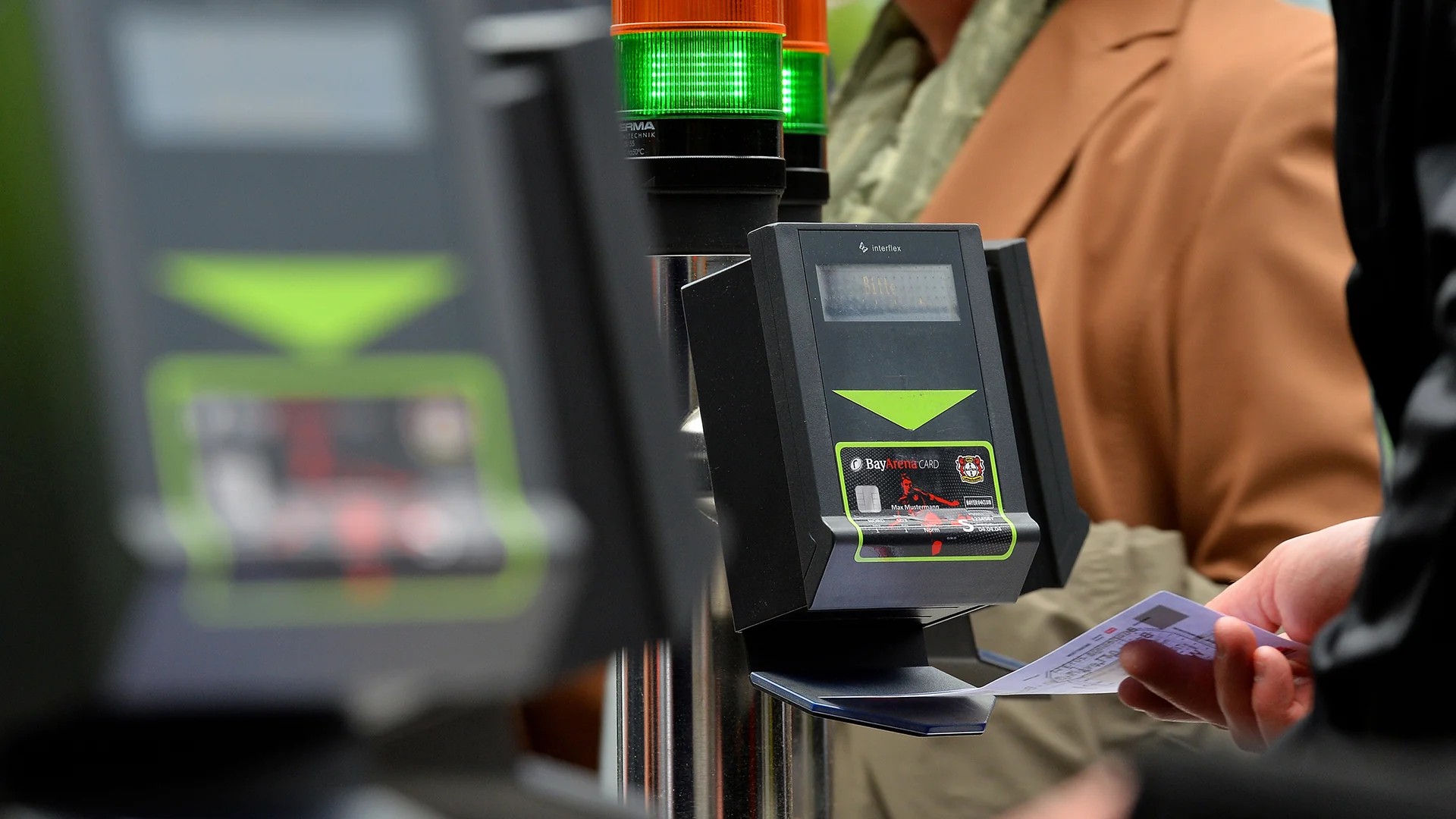
Start with the fixture and the home club’s authorized channels
- 1. Confirm the match. Use the current Bundesliga schedule to identify the date, competition and home team. Do not infer an onsale from a provisional fixture date or an unofficial listing.
- 2. Open the club’s own ticket page. Navigate from the club’s official website, not a sponsored search advertisement. Look for its ticket shop, Zweitmarkt, ticket exchange or explicitly named authorized partner.
- 3. Read the access rules. Check whether the sale is members-only, whether the exchange is open, which ticket types qualify and when it closes. BVB and Bayern demonstrate why assumptions fail: their current exchange fees, eligibility and closing times are not identical.
- 4. Keep checking the authorized exchange. Inventory can appear when a season-ticket holder becomes unavailable. “Sold out” in the initial sale does not necessarily mean the club exchange will remain empty.
If you are the holder who cannot attend, use the same club account through which you bought. Confirm the refund amount, service fee, deadline and whether a successful resale automatically invalidates your original ticket. Never promise the same seat privately while it is also active on an exchange.
Check seller identity, face value and the complete checkout cost
If you still consider an unauthorised marketplace, slow the process down. Record whether the seller is identified as a business or private person and whether contact details are supplied when required. Compare the original face value with the resale price, then carry the transaction through to the final review screen before judging cost. Service, handling, delivery, tax or currency-conversion charges can change the apparent bargain.
- Ask what exact section, row and seat the offer covers and when the ticket will be delivered.
- Read whether the “guarantee” provides admission, replacement, refund or only a claim process with deadlines.
- Check the club’s rules for naming, mobile-wallet transfer, discounts and home/away segregation.
- Pay only through a method whose dispute process you understand; do not move the conversation or payment off-platform.
- Do not book non-refundable travel around a ticket the home club has not verified.
These checks cannot make an unauthorized transfer official. They can expose the riskiest proposition before money leaves your account—and help you recognize why waiting for club resale inventory is often the better matchday plan.
What to do if you already bought through Viagogo
The 2026 ruling does not automatically cancel your order or create an automatic refund. Treat the purchase as a transaction that needs verification. Work out whether the issue is delivery, transfer, seat description, validity, admission or payment, because each problem produces different evidence and a different first contact.
Verify the ticket before making non-refundable travel plans
- Recheck the fixture date and status. A league match can have its kickoff confirmed after the basic schedule is released; a ticket does not protect you from changes to separate travel bookings.
- Read the home club’s current ticket and transfer guidance. Ask its ticket office whether the stated transfer method is recognized, but do not assume the club will authenticate a third-party ticket in advance.
- Compare the delivered credential with the listing: competition, teams, date, stand, block, row, seat, price category and any concession must match.
- Follow an official mobile-transfer invitation through the club or its named ticket provider. A screenshot of a QR code is not equivalent to a controlled account transfer.
- Do not post the barcode or QR code while seeking help; another person may copy and use it.
If delivery is promised only shortly before kickoff, that timing itself affects your travel risk. Keep hotel and transport flexible where possible, and know the platform’s deadline for reporting nondelivery. A marketplace remedy after the event cannot recreate the match or necessarily reimburse costs booked elsewhere.
Preserve evidence and escalate the right problem
Save the original listing, order confirmation, full price and fee breakdown, seller status, guarantee wording, the version of the terms shown at purchase, delivery messages and support chats. Keep the ticket file intact. If the venue refuses entry, ask calmly for written confirmation or another record of the scan result if staff can provide it, and contact the platform from the stadium as its published terms suggest.
| Problem | First evidence to preserve | First channel to try |
|---|---|---|
| Ticket not delivered | Promised delivery time and account status | Marketplace support before its deadline |
| Wrong seat or category | Listing against delivered ticket | Marketplace claim process |
| Transfer or name problem | Club rule and transfer messages | Home-club ticket office, then platform |
| Entry refused | Scan/venue record, time and support log | Platform claim, then payment/consumer channel if needed |
If the seller or platform does not resolve the issue, ask your payment provider what dispute route and time limit apply, or use a recognized consumer-advice service such as Verbraucherzentrale’s ticket tool. Cross-border buyers may need advice in their country of residence. This is a documentation plan, not a prediction that a bank, platform or court will grant a particular remedy. Individual rights depend on the contract, seller, payment method and jurisdiction.
JOIN THE DISCUSSION
Comments
Sign in with Google to comment. Keep the discussion focused on Bundesliga football and respectful to other supporters. New comments are reviewed before publication.
Loading comments…