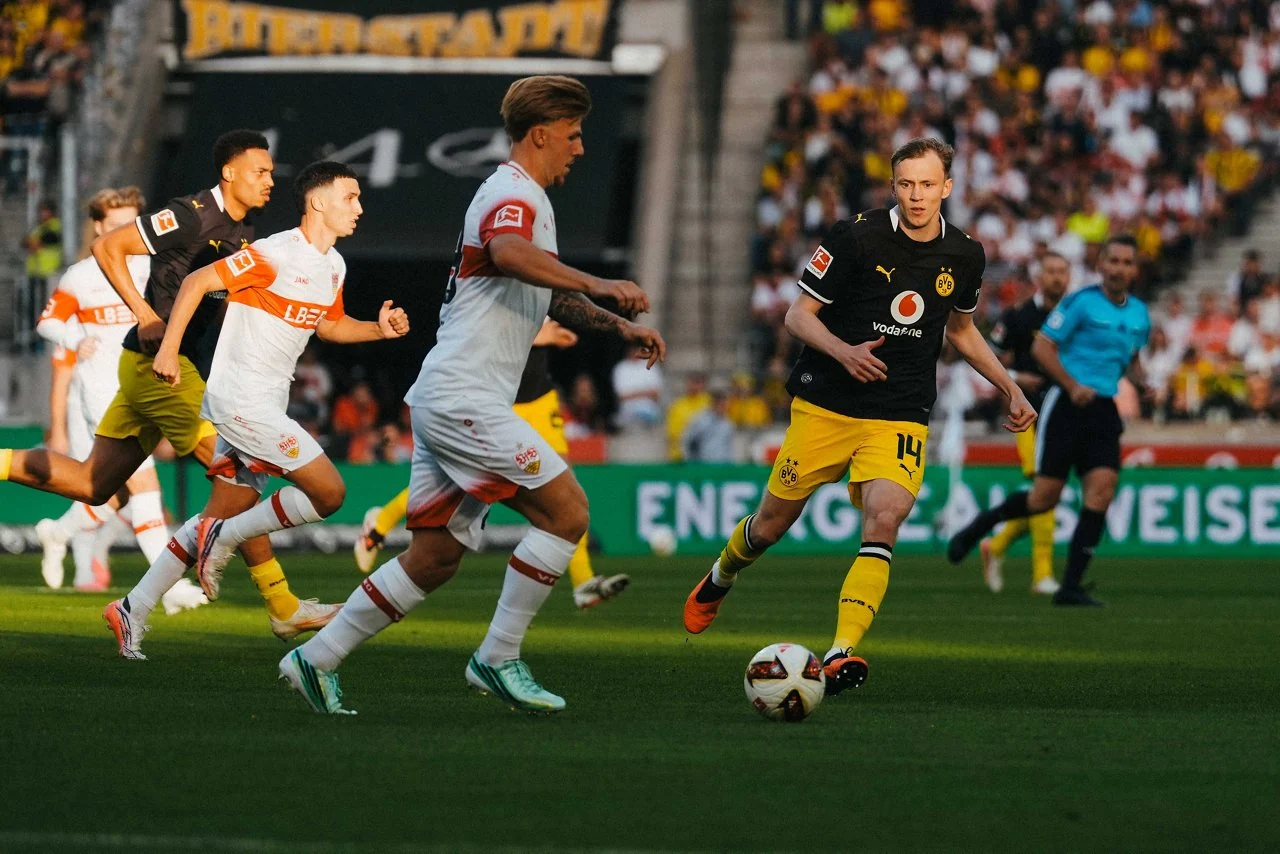
As of 30 September 2026, Dortmund have a credible claim to be Bayern's main Bundesliga title challenger—but four wins are an opening argument, not a forecast. Niko Kovač's team lead the table with 12 points from 12, nine goals scored and only two conceded. Three clean sheets and victories in different game states offer evidence of progress. Bayern remain two points behind, and Dortmund's October schedule will reveal whether their defence, attacking variety and squad depth can withstand sustained pressure. Here is what the first four matchdays actually show, and which tests matter next.
What Dortmund’s four wins actually prove
Dortmund have earned the right to be discussed as a potential challenger. As of the September international break, they are the only Bundesliga side with four wins from four in 2026/27. They have scored nine times, conceded twice and kept three clean sheets. That record is meaningful because the wins did not all require the same script: Niko Kovač's team handled an opening-day favorite's role, overturned a two-goal deficit and protected a narrow away lead. It establishes a strong start, not a season-long title prediction.
The four matches, one line at a time
| Matchday | Result | What decided it |
|---|---|---|
| 1 · 29 Aug | Dortmund 2–0 Hamburg | Guirassy struck early; the side finished with ten men. |
| 2 · 5 Sep | Hoffenheim 2–3 Dortmund | BVB came back from 2–0 down; an 86th-minute own goal settled it. |
| 3 · 12 Sep | Dortmund 3–0 Paderborn | A one-goal lead became comfortable only after Nmecha's late brace. |
| 4 · 19 Sep | Stuttgart 0–1 Dortmund | Beier's 70th-minute finish held up under late pressure. |
The Stuttgart trip carries particular weight. It was a tight away match rather than a procession: Stuttgart pressed high, forced Gregor Kobel into saves and still could not find an equaliser after Beier scored. Dortmund created the better quality chances according to the league's match model, 1.72 expected goals to Stuttgart's 0.87. The number is useful as a description of that game, not a promise that future one-goal leads will survive.
Why four games remain a limited sample
There are already reasons to resist a neat “four convincing wins” story. Hoffenheim led 2–0 after 54 minutes and, on the Bundesliga's figures, the teams generated almost identical expected goals: 1.15 and 1.14. Paderborn stayed within one goal until the 80th minute. Two games could have produced a very different points picture with one changed finish or defensive error. Equally, Dortmund found late solutions in both. That is an encouraging trait; it is not a repeatable formula by itself.
The league notes that this is BVB's first 12-point start through four games since 2015. That is a marker of how unusual the opening has been, but it says nothing automatic about May. A title contender has to repeat good decisions against teams of different quality, in home and away settings, after injuries and European midweeks. For the moving picture, check the latest results beside the current table; the four-game record is the starting evidence for this assessment, not the final verdict.
Why the defence is the strongest evidence of change
For a title challenge, Dortmund's three clean sheets may matter more than their nine goals. A side can enjoy a burst of finishing form and still lose ground when matches tighten. BVB have already kept Hamburg, Paderborn and Stuttgart scoreless, conceding only in the 3–2 win at Hoffenheim. The defensive record is an especially useful test because Kovač did not begin with every senior defender available. It suggests some structure beyond simply asking Gregor Kobel to rescue chaotic games, although four fixtures cannot prove that structure is permanent.
Anton’s leadership through an unsettled back line
Waldemar Anton had to anchor the line while Nico Schlotterbeck and Emre Can were missing at the beginning of the campaign. Joane Gadou and Filippo Mané were among the younger players used alongside him. The club described Anton as the captain and driving force in that period; Kovač praised him for setting the standard through his own work. That does not make Anton solely responsible for every shutout. It does, however, explain why a changing group has not looked like a different defence every week.
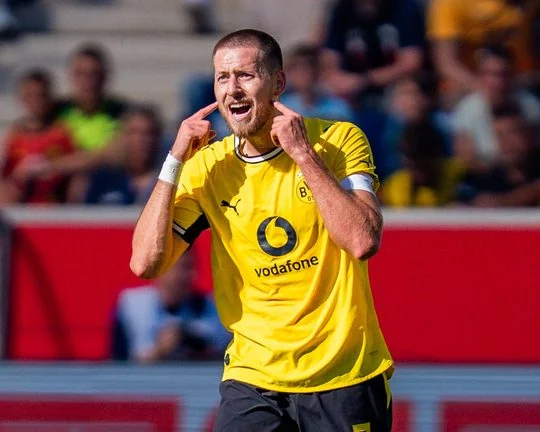
The sequence of personnel matters. Schlotterbeck returned to the starting XI against Paderborn on 12 September and played in the Stuttgart win. It would overstate the injury story to suggest Dortmund achieved all four wins without him. Instead, the positive sign is that BVB recorded clean sheets with different combinations before and after his return. A sustainable title bid needs that adaptability, especially when European games and international duty force changes that a single preferred XI cannot cover.
Hoffenheim shows the margin for error
The counterexample is too important to hide. Hoffenheim were the better team for about an hour and deserved their 2–0 advantage, according to Dortmund's own post-match account. On the second goal, Tim Lemperle dispossessed Gadou close to the box before his shot deflected off Anton. For a young defender asked to take risks in possession, that is exactly the type of turnover an organised opponent will target. A future title opponent may not surrender a two-goal lead as Hoffenheim did.
Yet the same game also offered a useful response: Anton won possession high up the pitch and supplied Serhou Guirassy for 2–1, starting the comeback. It shows a leader able to turn defensive aggression into an attacking moment, not merely a player who avoids errors. The question for October is whether Dortmund can keep that assertiveness while limiting the space and mistakes that put them behind in Sinsheim. If the clean-sheet rate continues against stronger attacks, this defensive start will look like a foundation; if repeated early concessions return, the current record will look more fragile than the points total suggests.
How Dortmund are creating enough goals without one scorer carrying them
Dortmund's early attack is promising because it has several ways to win a game when Serhou Guirassy does not score. He remains central to it, but the nine league goals have not come from one hot finisher: Guirassy, Fábio Silva and Felix Nmecha have two apiece; Giannis Konstantelias and Maximilian Beier have one each; the ninth was an Hoffenheim own goal. Those figures are a four-match snapshot, not proof of depth across a full season. Still, the pattern makes BVB less dependent on a single opponent failing to contain Guirassy.
Consider the combinations rather than just the scorer list. In Sinsheim, Guirassy brought Dortmund back into the match with a finish after Anton won the ball high, then played Silva through for the equaliser. Against Paderborn, the roles reversed: Guirassy's pass released Silva for a fifth-minute opener. The pair give Kovač a choice between a lone centre-forward and a two-striker look, an option the coach discussed after the Champions League match with Villarreal. It would be premature to say either shape is fixed, but it matters that Silva can add a different movement pattern rather than simply replace Guirassy like for like.
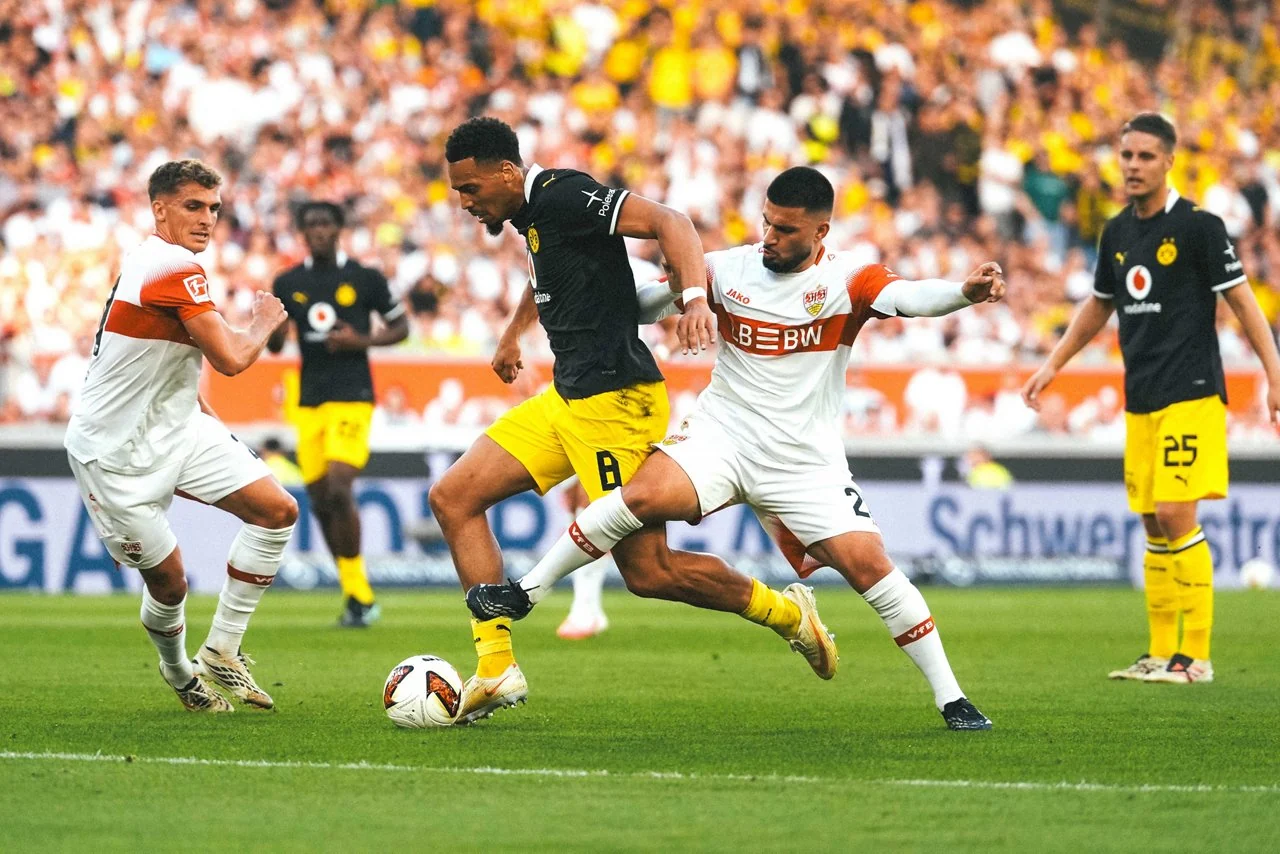
The Paderborn match shows the value of options outside the front pair. BVB were still just 1–0 ahead with ten minutes left when substitute Nmecha made room for a finish, then added an acrobatic second from a Marcel Sabitzer cross. Against Stuttgart, substitute Jobe Bellingham delivered the low pass for Beier's 70th-minute winner. In both matches, the bench changed how Dortmund could attack a stubborn game. For a supporter, that is more informative than treating the final 3–0 or 1–0 scores as if they were straightforward from the first whistle.
There is a caution inside the good news. Hoffenheim's decisive own goal came from pressure and a dangerous delivery, but it was still an opponent's touch. Two Paderborn goals arrived late, after the newly promoted side had kept the margin at one. A challenger needs repeatable chance creation before it needs a high highlight-reel total. In the next run of fixtures, watch whether the Guirassy–Silva link continues to produce clear chances, whether Nmecha and Beier keep contributing when rotated, and whether BVB can take control before the final ten minutes. The opening evidence points to useful attacking variety; those tests will show how durable it is.
The Bayern benchmark: two points ahead is not a cushion
A Dortmund title argument must be measured against Bayern, not against a generic four-win opening. Bayern were held to a 0–0 draw by newly promoted Schalke on Matchday 2, but won their other three league games. Through Matchday 4, that puts them only two points behind BVB: 10 to 12. Their 14 goals are five more than Dortmund's nine, while both sides have conceded twice. If Dortmund draw one game and Bayern win theirs, the lead disappears immediately. The present table is exciting precisely because the margin is so narrow.
| After four league games | Dortmund | Bayern |
|---|---|---|
| Points | 12 | 10 |
| Goals scored | 9 | 14 |
| Goals conceded | 2 | 2 |
| Dropped points | 0 | 2, both at Schalke |
Bayern's scoring pattern warns against reading too much into that Schalke draw. Vincent Kompany's side opened 5–1 against Stuttgart, beat Elversberg 2–1 and then routed Union Berlin 7–0. The big win exaggerates a four-game average, but it also demonstrates how quickly Bayern can build goal difference and restore momentum. Dortmund's case is built more on finding ways through different game states and on early defensive consistency. Those are genuine strengths; they do not erase the attacking standard set by a rival that can score seven in one evening.
The recent history sharpens the comparison without deciding it. Bayern finished 2025/26 with 89 points; Dortmund were second with 73. That was a 16-point gap, alongside a 122-to-70 difference in goals scored. The squads and circumstances are different now, so copying those totals forward would be poor analysis. What the old table does show is that staying above Bayern usually requires a long run of results, not an eye-catching September. Bayern also won August's Supercup meeting 2–1, although a one-off cup game does not count toward the league race.
For BVB supporters, the practical measure is whether Dortmund keep earning points when Bayern answer a setback with an emphatic win. Look at the live league table after each matchday, especially the gap and games played, rather than treating the September lead as protection. Dortmund are ahead on merit; they are still being chased by a team with the recent record and scoring range to punish even a brief lapse.
The October and winter tests that will settle the argument
The next stretch will answer more than September's four games can. Dortmund return from the long international window against Werder Bremen on 9 October, then visit Union Berlin, host Eintracht Frankfurt and travel to Bayern before the month is over, according to the league's schedule as listed on 30 September. That sequence mixes the need to restart cleanly with difficult away conditions and a direct meeting with the defending champions. A title challenge becomes credible when a club takes points through a run like this, rather than relying on one headline win.
The first league tests after the break
- 9 October, Bremen at home: how quickly do international players reconnect with the club's pressing and defensive distances?
- 17 October, Union away: can Dortmund produce enough chances without surrendering control to a stubborn home side?
- 24 October, Frankfurt at home: does the attack still find multiple contributors against another side with European ambitions?
- 31 October, Bayern away: the most direct check on whether the two-point September lead reflected a comparable level.
The Bayern game will attract the loudest verdict, but it should not be the only one. If BVB drop points to Bremen or Union, a strong Klassiker performance may merely repair the standings. If they handle the first three fixtures well, even an away defeat in Munich would not erase the bigger pattern. Later, a home match with Leverkusen on 29 November and a trip to RB Leipzig in the 18–20 December window offer another tier of opposition. The exact placement of later games can change; supporters should use the current fixture list before planning around a date or kickoff.
Can the squad absorb a crowded calendar?
The workload is as revealing as the opponents. Dortmund's own match report says the Bremen game opens a spell of nine competitive matches in 30 days. The club also listed 20 first-team players called up during the combined September–October international window, which includes national-team fixtures through 6 October. That gives Kovač little normal preparation time before Bundesliga play resumes. It does not guarantee tired legs or injuries, but it makes rotation, recovery and clear assignments more than background concerns.
This is where the earlier evidence will be tested. Anton's organisation has to survive changes around him; the Guirassy–Silva link has to work when one starts or both are needed; Nmecha, Beier and Bellingham must keep affecting matches even if their minutes vary. Watch whether BVB protect the centre after losing the ball, whether a narrow lead can be managed without emergency defending, and whether substitutes change a game without the team losing its shape. Those observations will tell supporters more than a raw October win-loss line. A genuine contender can win several ways and recover quickly when the schedule allows almost no reset.
Verdict: what would make this a sustainable title race?
Dortmund are a credible early contender, but the title challenge remains unproven. Four wins have put them ahead of Bayern and shown resilience, a more stable back line and several goal sources. The case is stronger than a simple “they are top” claim. It is still based on four league games, with Bayern only two points away and a demanding October ahead. Calling BVB certain champions now would confuse a useful early signal with a season-long conclusion.
History gives that distinction a concrete edge. The Bundesliga identifies this as only Dortmund's fourth four-win league start, the first since 2015/16. That earlier side was excellent across the season, collecting 78 points, yet Bayern finished on 88 and took the title. The lesson is not that this campaign must follow the same path. It is that an exceptional opening can coexist with a rival that sets an even higher standard. BVB's current two-point advantage is a reason to pay attention to the race, not evidence that the race is already won.
The club has reasons to believe something useful has changed. After the Stuttgart win, managing director Lars Ricken highlighted the defensive work of Gadou, Anton and Schlotterbeck and described the team's resilience under Kovač. The match itself backed part of that assessment: Dortmund held a narrow lead away from home after an evenly contested first half and late Stuttgart pressure. The Hoffenheim escape offers the necessary counterweight. Both games belong in the verdict; one illustrates controlled defending, the other the cost of losing concentration near the box.
Three checks will make the answer clearer by winter:
- Quality of defensive control: can BVB keep denying clear chances when opponents press their build-up and when the back three changes?
- Points under stronger pressure: do they take a good share from the Union, Frankfurt, Bayern, Leverkusen and Leipzig stretch, rather than relying on home wins against weaker teams?
- Repeatable squad contribution: can substitutes and alternative attacking pairings keep producing during the nine-match block without making the team porous?
None of these requires an arbitrary “must win every game” rule. The objective is to see whether Dortmund's points, performances and depth remain connected when the schedule becomes harder. A side can lose at Bayern and still be a genuine challenger if it stays close and recovers; it can also beat Bayern once and fade elsewhere. Track the table by matchday alongside the games themselves. For now, Dortmund have supplied the opening chapter of a real race. October and the run toward winter will tell us whether they can sustain it.
JOIN THE DISCUSSION
Comments
Sign in with Google to comment. Keep the discussion focused on Bundesliga football and respectful to other supporters. New comments are reviewed before publication.
Loading comments…