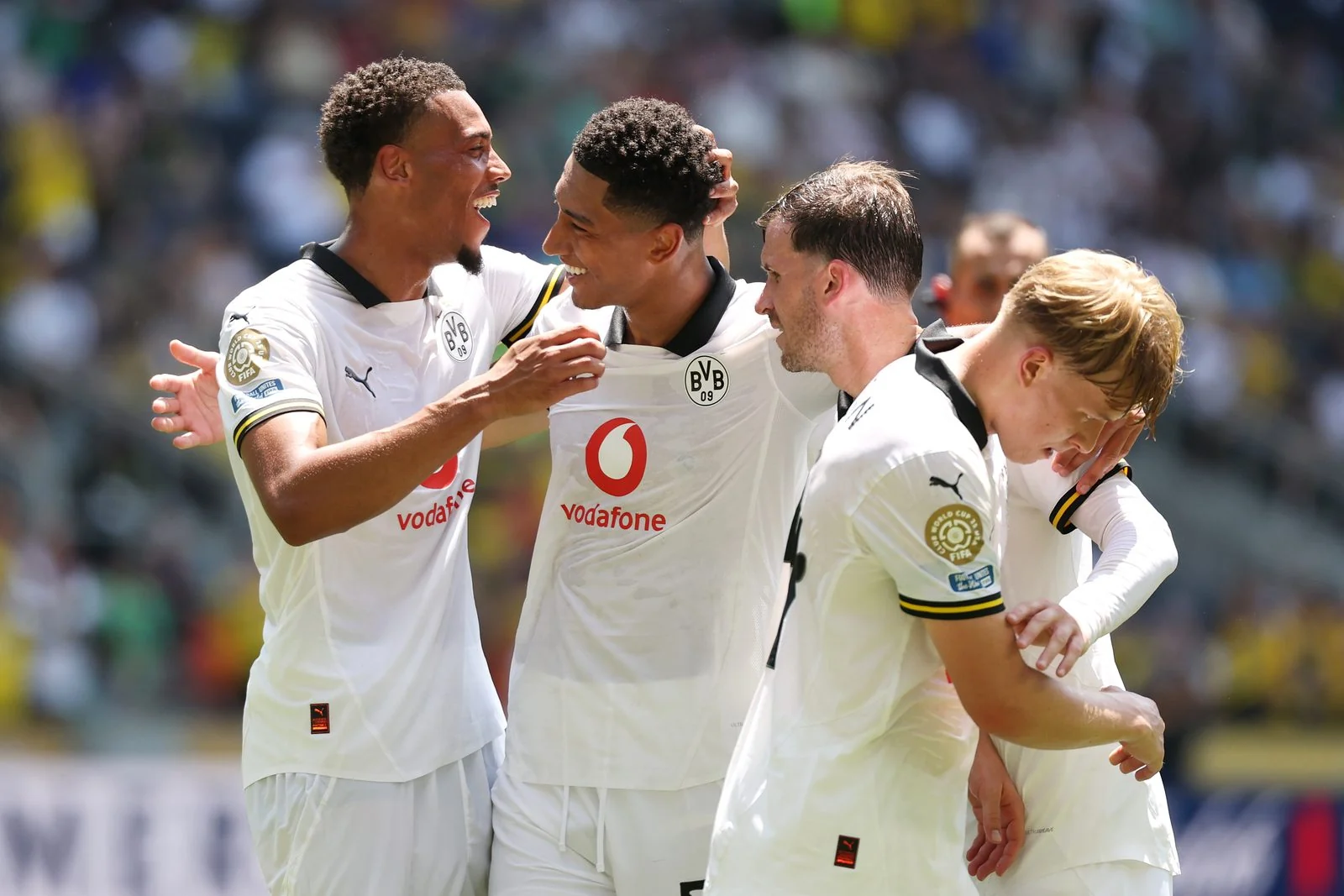
Jobe Bellingham is a central midfielder for Borussia Dortmund. He can support the build-up from a deeper position or carry the ball and arrive higher up the pitch, so his role is better understood through responsibilities than a single number on a formation graphic. This guide explains what Sunderland prepared him for, what his first Dortmund tests revealed and how to judge his development on his own football.
What position does Jobe Bellingham play?
Bellingham is a midfielder who works predominantly in central areas. He wears number 7 for Dortmund, but that shirt number should not be read as a promise of a wide attacking role. His experience includes attacking midfield, a number-eight assignment and deeper work alongside another central player. The common thread is involvement in the congested middle of the pitch, where receiving under pressure and recognising the next passing route are essential.
Born on 23 September 2005, he turned 21 in September 2026. His age gives context to the development story, but it does not excuse every mistake or make every appearance a breakthrough. Dortmund are asking him to perform a senior job. The useful question is which responsibilities he has been given in a particular game and how consistently he carries them out.
The difference between a number eight and a holding role
A number eight usually has greater scope to connect the deeper build-up with the attack. That can involve carrying through midfield, supporting a winger or arriving near the box. A holding assignment places more emphasis on protecting the space in front of the defence and offering a secure route out. The same player can perform elements of both jobs, but the balance changes where he should be when possession is lost.
The Coaches' Voice study of his Sunderland football documents central and deeper roles. Those examples show the range of tasks he has encountered; they do not establish Dortmund's next formation. Read the announced team alongside his opening positions. Does he receive close to the centre-backs? Does a teammate remain behind him when he moves forward? The answers explain what a generic midfield label leaves unclear.
The distinction also changes how to read goals. A player asked to secure the first phase may contribute to a good attack without entering the box. One encouraged to arrive higher will have different opportunities. Start with the task, then assess the execution. The Bundesliga club directory provides Dortmund's team context; the match shows which midfield relationships are doing the work.
What Sunderland prepared him for
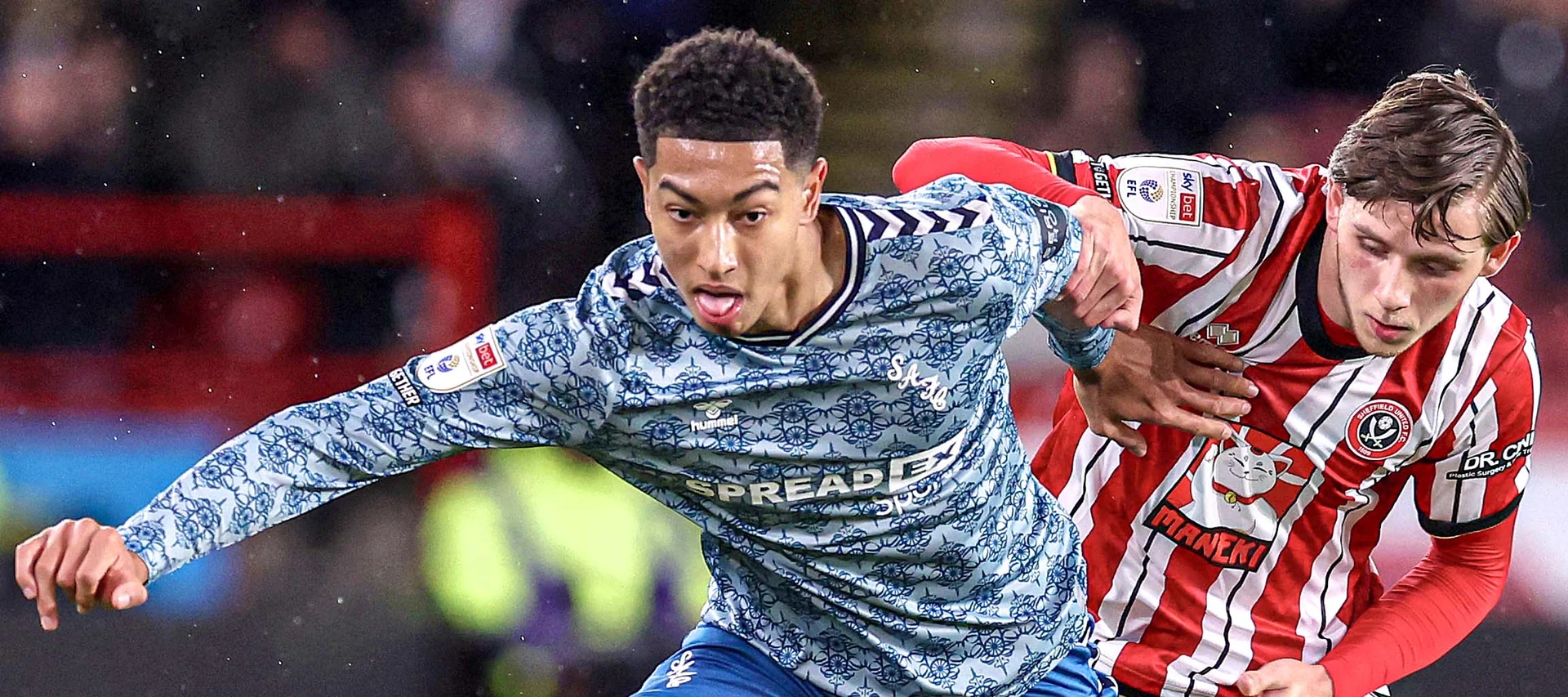
Bellingham reached Dortmund after a substantial period of senior football. He moved from Birmingham City to Sunderland in 2023 and made 90 appearances across two seasons. FIFA's signing account gives 86 starts, which is a particularly useful number: his experience was largely built through sustained responsibility rather than a collection of brief introductions from the bench.
That responsibility included a promotion campaign. He started the play-off final in May 2025 as Sunderland beat Sheffield United to return to the Premier League. A decisive match asks a midfielder to manage pressure, physical demands and the changing state of the game at the same time. The achievement belongs to the team, but being trusted in that setting gives context to Dortmund's assessment of his maturity.
The transfer was announced on 10 June 2025, with a contract running to 30 June 2030. Dortmund's announcement emphasised his intelligence and the qualities they believed could develop further. The move was therefore an investment in a player who had already dealt with adult football but still had room to expand his game. Those ideas can coexist; a young player does not have to be either untested or finished.
Sunderland also exposed him to different central tasks. Learning to receive deeper changes the view of the pitch and the consequences of a lost ball. Playing higher asks for different timing around forwards and wide players. Such experience can help adaptation because the player has encountered several problems already. It cannot remove the work needed to learn a new coach's instructions and new teammates' habits.
The Bundesliga brings a new opponent pool, a different club environment and European football. An action that previously worked may need to happen earlier; a carry that opened space may be closed by a faster second defender. The useful assessment is whether his existing habits adapt to those pressures. Ninety Sunderland appearances explain why he was ready for the next opportunity, while his Dortmund matches show how successfully he is using it.
The qualities Dortmund want in their midfield
Dortmund's interest in Bellingham makes sense through a combination of security and progression. A central midfielder must be available when a teammate is under pressure, but simply returning every pass can leave the team trapped. The value comes from recognising when to protect possession and when to change the direction or speed of an attack.
Carrying the ball through pressure
His Sunderland footage, analysed by Coaches' Voice, shows a player comfortable using his body to protect a reception before turning. That first action can be decisive. If an opponent commits to the wrong side, a controlled turn can remove the immediate pressure and allow the ball to travel forward. A midfielder who can carry then asks the next defender to choose between stepping out and protecting the runner behind.
The carry is useful when it changes the opposition's shape. Running a few metres into a closed area can merely relocate the problem; moving past a pressing player can create a new passing angle for the whole team. Watch whether Bellingham releases the ball before the second opponent arrives. The decision to pass can be as impressive as the turn, especially when it lets a teammate receive facing goal.
Arriving in attack without abandoning the team
A deeper starting position can make a midfielder harder to track when he moves towards the box. He arrives after defenders have focused on the striker and wide players, rather than waiting beside them throughout the move. The Sunderland study identifies that kind of late arrival as part of his number-eight game. It explains a possible source of attacking value without claiming Dortmund always ask him to make the same run.
The permission to go forward depends on the protection behind him. If a midfield partner remains available and the defence can control the next transition, an arrival may be well supported. If several teammates have already advanced, staying in a connecting position can be the more useful choice. This is why an apparently cautious pass should be judged within the team arrangement rather than automatically treated as a lack of ambition.
His first BVB interview presented versatility as part of his appeal. To turn that range into influence, he needs to make the right choice for the current phase. A successful central player does not perform every possible role at once. He helps the side advance while preserving a workable response if the next touch loses possession.
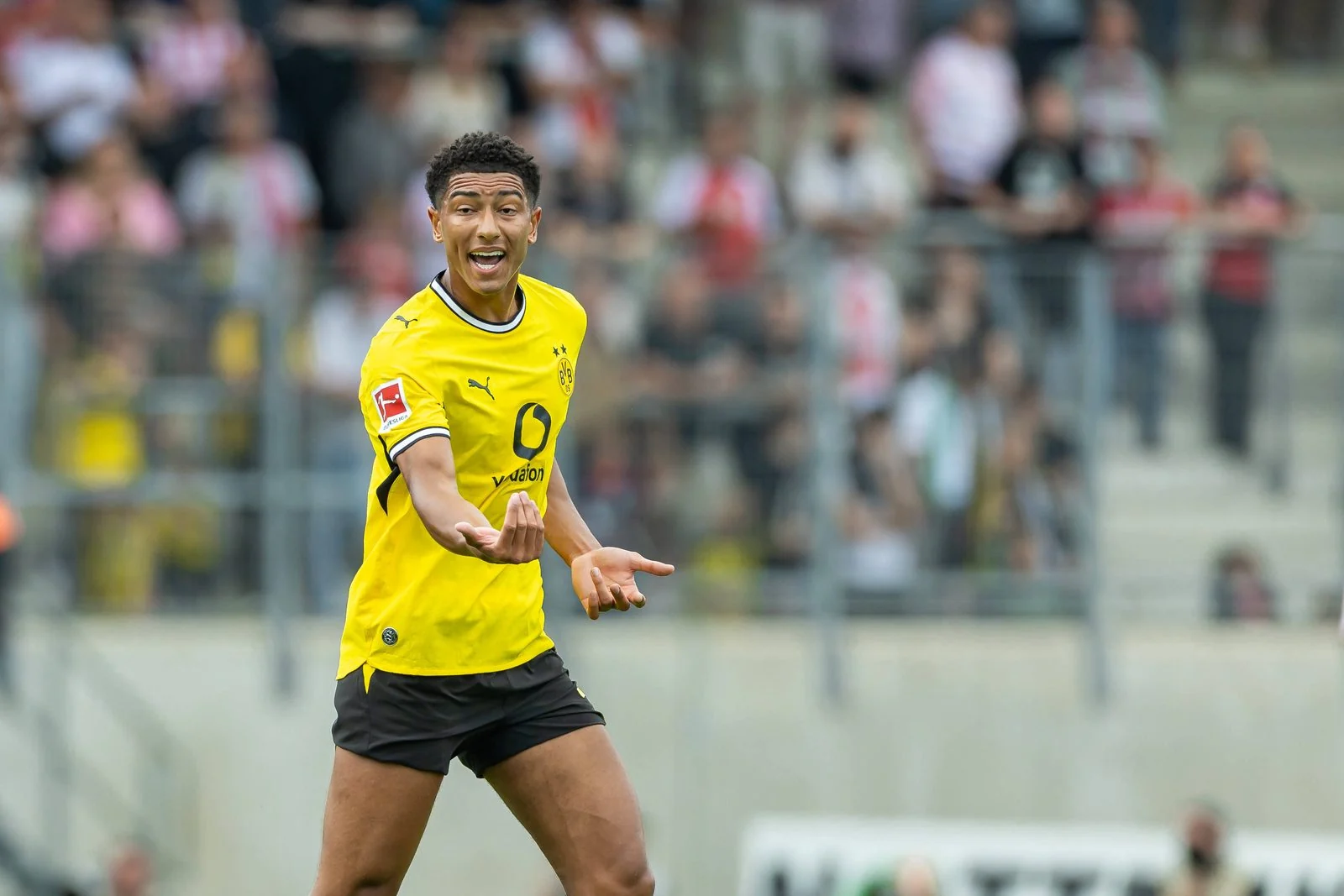
What his first Dortmund tests revealed
Bellingham's first competitive Dortmund appearances came in the 2025 FIFA Club World Cup. He made his debut from the bench in the goalless opener against Fluminense, then started against Mamelodi Sundowns on 21 June. A transfer completed earlier that month was already becoming a practical introduction to new teammates, instructions and match situations.
He scored in the 4-3 win over Sundowns, helping Dortmund reach half-time with a 3-1 lead. That was an encouraging early contribution, particularly for a midfielder joining an established group. The wider result also matters: a four-goal team performance ended in a narrow victory, so the game offered defensive and structural questions alongside the attacking moments.
A Club World Cup goal was a beginning, not a league verdict
The goal belongs to the Club World Cup, not his Bundesliga scoring record. Keeping the competition label clear avoids a common mistake when early highlights become part of a season narrative. It showed that he could arrive in a scoring position and contribute immediately. It did not establish how he would perform across a German league campaign against opponents preparing for Dortmund every week.
A first appearance at a new club tests several kinds of understanding at once. Where does the teammate want the pass? Which player covers when the midfielder advances? How quickly should he react when the opposition change direction? A good finish answers one question, while the rest require further matches. That is why an exciting opening should increase interest without replacing analysis.
For supporters, the useful lesson is to preserve both the milestone and its limits. The first goal made the move tangible; the ongoing adaptation made it a development story. Bellingham arrived with Sunderland experience, but Dortmund's combinations and expectations were new. His progress needed to be assessed through how those relationships developed, including the less visible work between the memorable actions.
Why setbacks belong in the development story
A useful account of Bellingham's adaptation includes difficult moments. On 14 December 2025, he was sent off in the 53rd minute of Dortmund's 1-1 draw at Freiburg. A short pass from Gregor Kobel put him under pressure, Philipp Treu intervened and the resulting challenge brought a red card. Dortmund's lead no longer offered the same control once they had to play with ten men.
The club subsequently confirmed a two-match Bundesliga suspension. That consequence is part of the assessment: the incident affected the current match and removed him from the next league opportunities. It would be misleading to discuss development only through goals and praise while leaving out a moment that changed the team's available options.
It would also be unfair to reduce the sequence to an isolated character judgment. The passing choice, the receiver's pressure and the opponent's intervention all belong to the action. Recognising that context does not remove Bellingham's responsibility for the challenge. It explains the football problem more accurately than assigning the whole episode to a vague idea about maturity.
For a central midfielder, these situations highlight the cost of receiving close to goal. A lost ball in the attacking third may simply end a chance; one near the back line can leave an opponent running directly towards the goalkeeper. The available time and the acceptable risk are different. A player developing deeper responsibilities has to learn when to turn, when to release immediately and when to choose a safer angle before receiving.
The response over subsequent training and matches matters more than repeatedly replaying the error. Does the receiving position become clearer? Do the midfielder and goalkeeper recognise the same pressure? Does the player avoid turning a bad situation into a worse one? Those are observable football questions. A setback can reveal work that needs doing without becoming the final label attached to a career.
How his second season changes the questions
By summer 2026, Bellingham was speaking about a different stage of his Dortmund career. During the club's Japan tour, he described the previous season as preparation for taking on greater responsibility. The change is meaningful: a second campaign brings more familiarity with the environment, but it also gives the team stronger reasons to expect consistent execution.
His first visit to Japan illustrated the club's reach beyond Germany. For the player, the tour also belonged to an intensive pre-season rather than a separate promotional story. Training with the group supplies opportunities to refine combinations and understand what a teammate will do before the pass arrives. Those details become more valuable when competitive matches compress the time available for discussion.
The new question is not simply whether he can produce an impressive moment. Dortmund already have evidence that he can. The more demanding issue is whether the secure reception, useful progression and sensible recovery position occur reliably across different opponents. A midfielder's influence grows when teammates can predict the support he will provide without having to direct every movement.
That does not make selection automatic. Midfield balance, opponents, availability and the coach's plan can change the role from one fixture to another. The player's stated ambition is evidence of his approach, not a confirmed starting place. A second-season assessment should therefore consider how he handles different assignments and substitutions, alongside any increase in responsibility.
It is also the right point to stop making the family comparison the main measurement. His brother's Dortmund history explains why the name attracts attention, but it cannot define the task Jobe has been given. Judge the midfielder Dortmund actually have: his relationships, decisions and contribution to the current side. That keeps a developing player's own football at the centre of the story.
How to assess Jobe when Dortmund play
The best assessment begins with the role visible in the game. Is Bellingham supporting the first pass out, helping the team move through midfield or arriving closer to the striker? A player can perform well without producing a goal, particularly when the assignment emphasises connection and protection. Start by identifying the job before deciding which statistic should measure it.
Follow the positioning before counting the goals
Watch his position before a teammate receives under pressure. A useful supporting angle gives that player a way to escape. Standing behind the opponent's cover shadow can make the midfielder technically available but practically unreachable. This small distinction often separates a side that keeps moving from one forced to play backwards. It is visible without needing a complicated statistical dashboard.
Then watch his movement after releasing the ball. Does he make another angle for a return, continue into space or remain to protect the next phase? A good first pass can lose value if the next supporting action never arrives. The Sunderland analysis raised this secondary movement as a development point; Dortmund's matches provide a new setting in which to assess it.
The third question concerns risk. When he carries forward, does a teammate cover the space he leaves? When the opposition break, does he respond towards the dangerous lane or simply chase the ball? A midfielder's athletic work is most useful when it fits the team's arrangement. Distance covered alone cannot answer whether the positioning made the next action easier for a teammate.
As checked on 14 October 2026, the league profile showed five 2026/27 appearances, no goals and one assist. That is a dated opening sample, not a verdict on the campaign or a count of all competitions. Use it as context, then examine the actual football. His role may involve helping attacks reach their decisive stage without owning the last touch.
The Bundesliga schedule helps locate Dortmund's next fixture, and the results page places performances in sequence. Over several matches, look for clarity of decisions and reliability of support. Those qualities explain whether his growing experience is turning into a stronger first-team contribution.
JOIN THE DISCUSSION
Comments
Sign in with Google to comment. Keep the discussion focused on Bundesliga football and respectful to other supporters. New comments are reviewed before publication.
Loading comments…