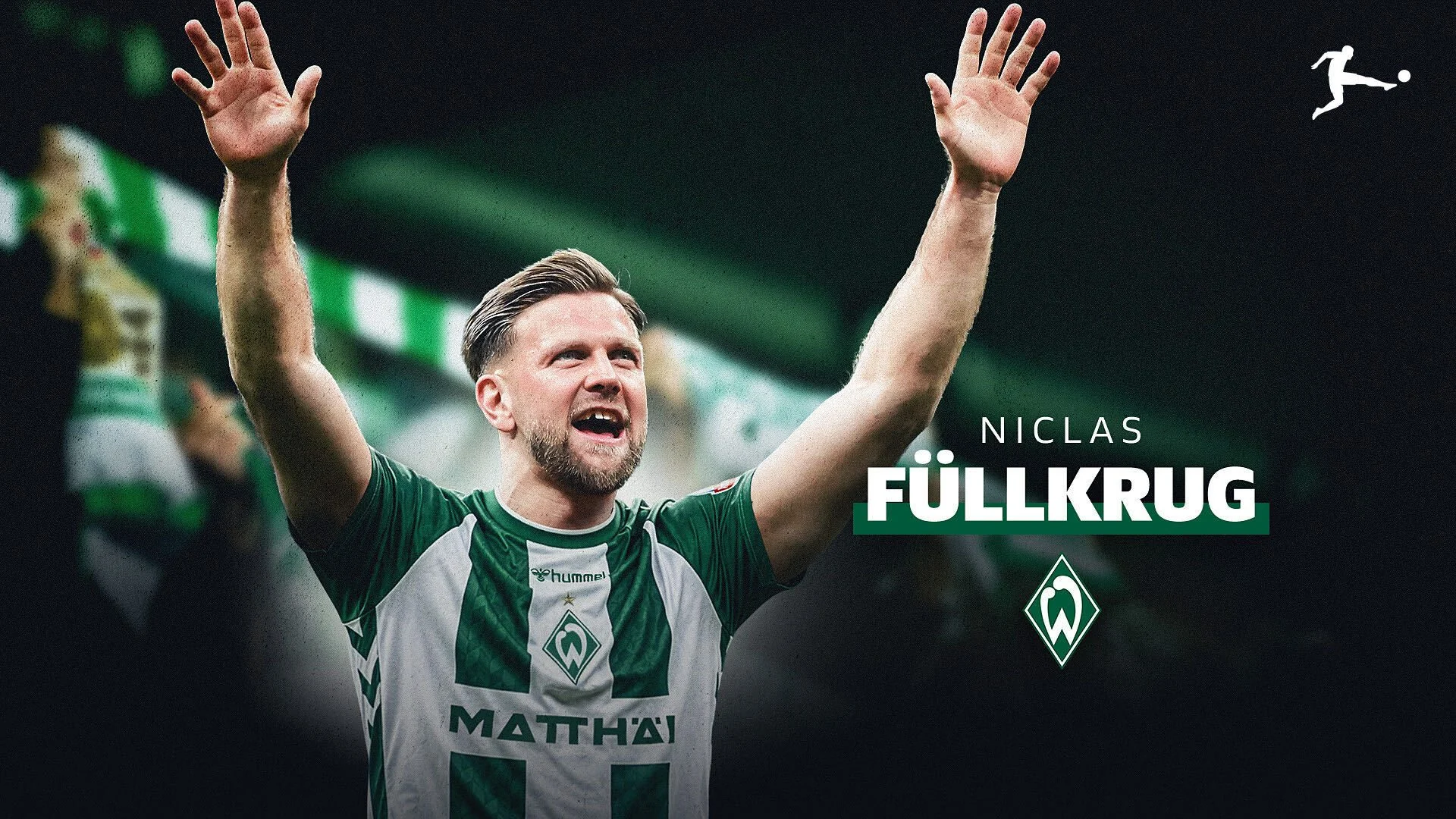
Niclas Füllkrug returned to Werder Bremen in August 2026 on a one-year loan from West Ham United. His third spell at the club brings a familiar centre-forward back to the Weserstadion, but the football question is what his finishing, aerial presence and link play can contribute now. This guide separates the confirmed move, the relevant history and the early evidence from the expectations attached to an emotional return.
What does Füllkrug's 2026 return to Werder mean?
Werder's move for Füllkrug was confirmed on 18 August 2026. He returned from West Ham on a one-year loan, beginning a third spell at the club where his senior career started. At 33, he brings substantial Bundesliga and international experience into an environment he already knows. The familiarity explains the attraction, while the loan defines the transaction.
Calling it a third spell is more precise than treating every return as the same event. His first Werder period began as a young player, his second followed time elsewhere in Germany, and the 2026 move came after Dortmund, West Ham and a Milan loan. Those stages gave him different experiences. The current team is also different from the one he left, so the sporting relationship still has to be rebuilt.
A season-long loan is different from a permanent transfer
The confirmed arrangement covers 2026/27. West Ham remain the parent club, and their official profile identifies him as being on loan. That distinction matters when discussing a future beyond the current season. A return to a familiar club does not, by itself, confirm a permanent contract there. No purchase option, fee or salary is necessary to explain the football, and unverified financial terms should not be treated as settled facts.
For Werder, the immediate value lies in adding an experienced reference point to the attack. The return announcement relayed the coach's assessment of a physically strong striker who can contribute in the air and hold up the ball. Those are identifiable functions rather than a general promise that nostalgia will improve the side. They can help teammates know where to deliver and which attacking movements may receive support.
For the player, the familiar surroundings can reduce some of the off-pitch adjustment. It does not remove the competitive demands. New combinations require training, the coach has to balance the attack, and opponents will test whether the forward can repeat his useful actions. A loan can provide a clear short-term opportunity without answering every longer-term question.
The supporter response is part of the story because Füllkrug's earlier contributions gave the return emotional weight. The practical assessment should still begin with the present role. Where does he receive? How does his movement change a defender's decision? Does Werder create better chances with him as the central target? Those questions turn the welcome into an evaluation of the football the move was designed to improve.
Why his earlier Werder years still matter
Füllkrug's previous Werder record gives the return substance. Across his first two spells, he scored 49 goals in 124 competitive appearances. Those are all-competition figures and should not be presented as a Bundesliga-only total. They explain why supporters recognise him as someone who has already contributed significantly, rather than a familiar name whose connection rests only on a few early appearances.
Promotion and the 2022/23 scoring title
The promotion season of 2021/22 supplied one of the clearest examples of his value. He scored 19 goals in 33 second-division appearances as Werder returned to the Bundesliga. The level must remain attached to the figure: it was a Bundesliga 2 campaign, with a different objective from the seasons in the top flight. For supporters, the significance lay in helping restore the club's place among Germany's leading teams.
He then scored 16 goals in 28 Bundesliga appearances in 2022/23, sharing the league's scoring title with Christopher Nkunku. That season is sometimes mislabeled in later summaries, but the achievement belongs to 2022/23. It showed that his finishing could survive the step back up. Promotion output and a top-flight scoring title are distinct pieces of evidence, and keeping them separate makes the development clearer.
Neither record creates a guaranteed total for 2026/27. A team supplies chances in different ways from one season to another, while the player's age, minutes and attacking partners also change. The earlier numbers establish proven capability. The current matches determine whether that capability is receiving the conditions and support needed to influence this Werder side.
The experience he brings back from Dortmund and abroad
His time at Dortmund added another setting. In 2023/24, he scored 12 Bundesliga goals and three in the Champions League as BVB reached the European final. A 2-0 defeat to Real Madrid ended that run, but the campaign exposed him to knockout football and a different set of attacking relationships. Experience at that level is relevant without turning a final appearance into proof that every later match will be manageable.
West Ham followed in August 2024, then a loan at Milan in the second half of 2025/26. His September 2026 Bundesliga interview described the Milan period positively even though the goal count was modest. That distinction is useful: a player can value sustained training and match involvement while accepting that the finishing output could have been better. The return should not erase those chapters simply because Bremen feels more familiar.
The resulting profile is an experienced forward who has played in different leagues and tactical environments. What matters for Werder is whether he uses that experience to make decisions clearer for the attack: positioning for a delivery, protecting possession or helping a younger teammate recognise the next movement. His history supplies credibility; his present actions have to supply the points.
How Füllkrug can change Werder's attacking play
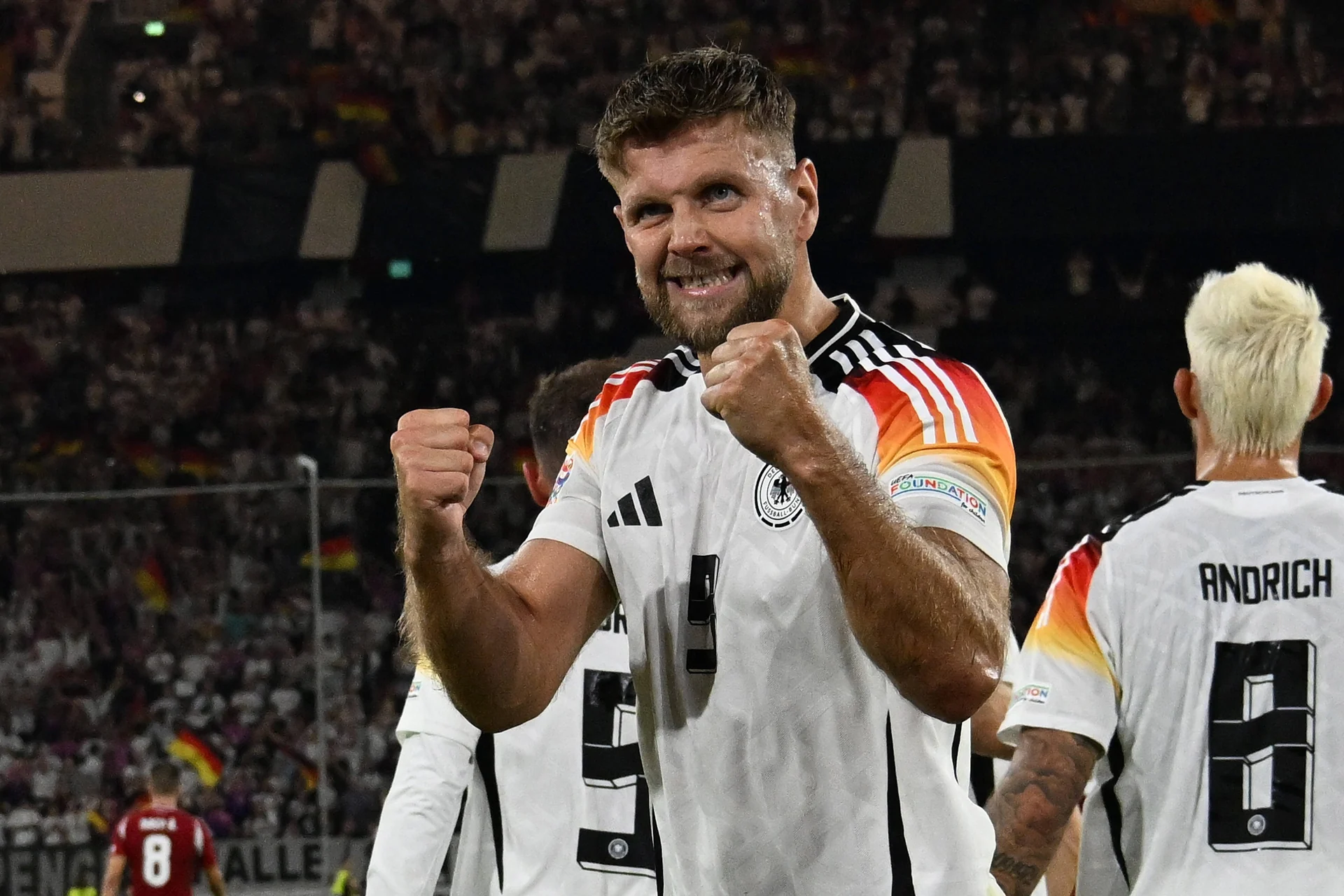
Füllkrug gives Werder a central target who can influence both the delivery and the move before it. The return announcement's description of aerial ability, physical strength and hold-up play identifies complementary qualities. A forward who occupies defenders can create a clearer target for a cross, while one who secures a pass into feet can help the team reach a better crossing position.
A reference point for deliveries into the box
A cross becomes more useful when the delivery and the striker's movement answer the same question. Is he attacking the near-post lane, holding a central position or arriving behind a defender? If the passer recognises that movement, the ball can reach a player who has already created separation. Simply sending more high balls into the area does not reproduce the advantage.
His late equaliser for Germany against Switzerland at EURO 2024 illustrates the capability. On 23 June, he headed David Raum's delivery into the net in added time to make it 1-1. The international example is not a description of Werder's current formation. It shows the finishing option a central striker can provide when a teammate finds the right service and the forward wins the decisive space.
That threat also affects defenders before the ball arrives. A centre-back who stays close to Füllkrug may be less able to step towards another runner. A second defender coming across can open a different lane. The striker's value can therefore appear in a teammate's chance as well as his own header. Watch which defender his movement occupies, rather than judging every delivery only by whether he touches it.
Link play gives teammates another route forward
When Werder play into his feet, the first task may be to keep the ball available. A controlled lay-off can let a midfielder receive facing goal, while a protected touch can give a wide player time to run beyond. The forward does not have to turn every reception into a personal shot. Sometimes his most useful contribution is preventing the attack from ending under pressure.
The quality of the support matters. If nobody approaches at a useful angle, holding up the ball can become an isolated wrestling match. If several teammates make the same forward run, the short connection may disappear. An experienced striker can help make those relationships clearer, but the team's spacing has to support the action. This is a tactical explanation of the role, not an invented passing or duel success rate.
There are limits too. Opponents can deny the delivery, crowd the central area or press the player supplying the pass. Füllkrug's presence does not eliminate those problems. It gives Werder another way to solve them, especially if they vary between passes into feet and balls towards the box. The more credible both routes become, the harder it is for a defence to prepare for only one.
For supporters, the key is to watch the entire sequence. A chance might begin with a lay-off several passes before the eventual finish. A dangerous delivery might become possible because the striker has pulled a centre-back away from the passer. Those contributions explain how a centre-forward can change the attack even on a day when his own scoring total stays still.
What his first matches back have shown
The return had produced meaningful match evidence by 14 October 2026. Füllkrug scored in Werder's early league win over Leipzig and later supplied a dramatic equaliser at Dortmund. Those completed results provide a stronger basis for discussion than the reception at his unveiling. They show a striker contributing in different game states, while remaining only an opening sample of the campaign.
The first matches also turned a familiar name into a current attacking relationship. A goal at the Weserstadion can carry emotional weight for both player and supporters, but its sporting value still comes from the chance and the scoreline. The useful analysis is what Werder did to create the opportunity and how the finish changed the next phase of the game.
Leipzig and Dortmund offer different kinds of evidence
On 5 September, Werder beat RB Leipzig 3-1. Eren Dinkçi opened the scoring early, Füllkrug made it 2-0 in the 68th minute from Marco Grüll's assist, and Grüll added the third before Leipzig's late consolation. The striker's goal expanded a narrow advantage at a point when the outcome still needed work. It belonged to a collective attacking performance, not a solo rescue story.
That game is useful when thinking about service. Füllkrug was the scorer, while a teammate supplied the assist and others contributed to the scoreline. A central target can become more dangerous when the attack has several credible outlets. Defenders cannot simply plan to remove one player and assume the problem is solved. The sequence illustrates why the return's value depends on the players working around him.
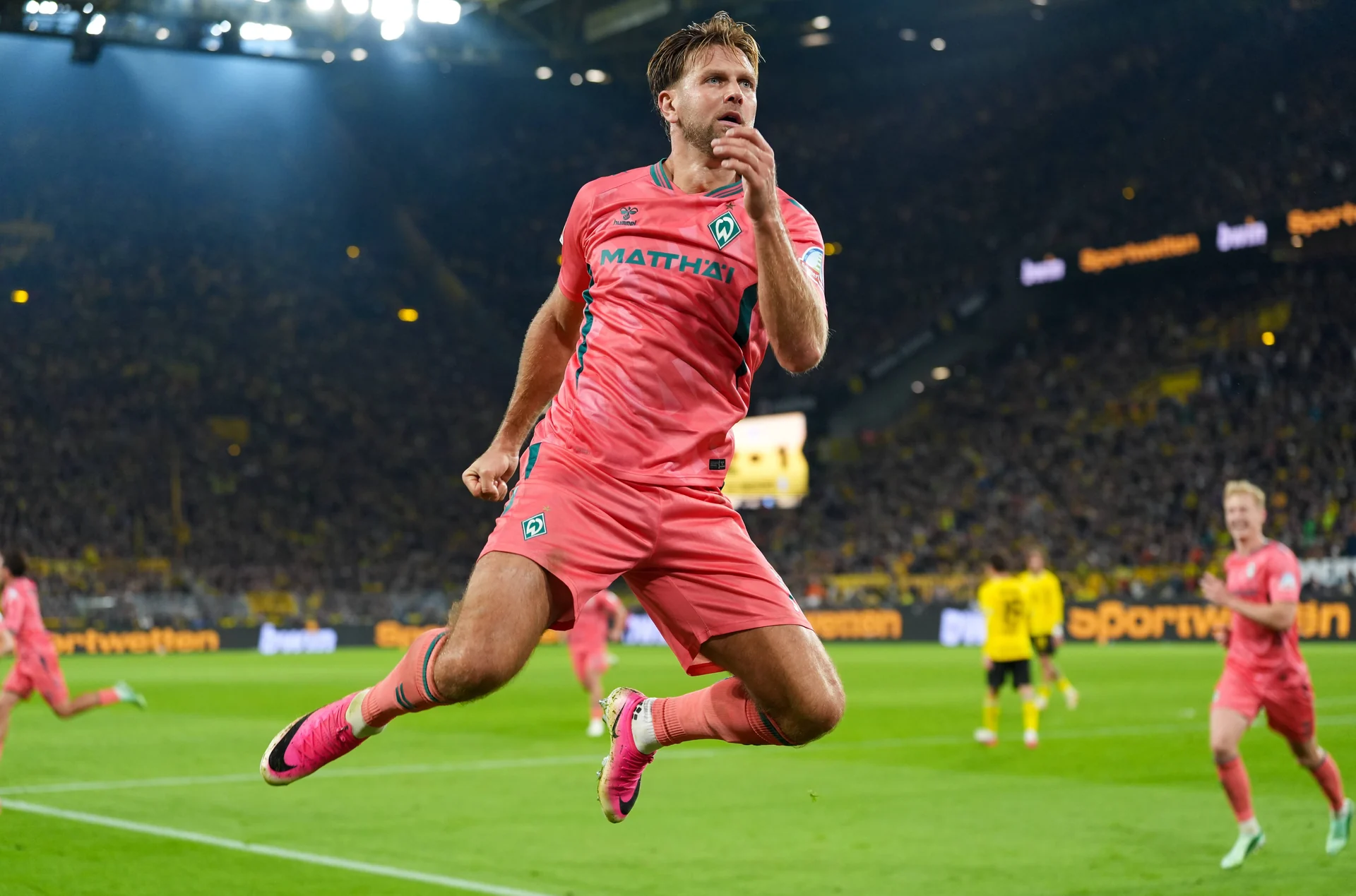
The Dortmund match on 9 October asked a different question. Werder were 2-0 behind late in the game, then Ludovit Reis pulled one back before Füllkrug equalised in added time. The 2-2 result turned a likely defeat into a point against his former club. Here, the decisive contribution came during a comeback, when the side needed to keep attacking after much of the match had gone against them.
The personal connection made the equaliser memorable, but the table values it as a goal that changed the result. That is the right balance for assessing the story. His earlier Dortmund experience explains the extra resonance; the timing and scoreline explain the sporting importance. A supporter can appreciate the occasion without allowing it to replace the match analysis.
Neither performance tells us exactly how the rest of the season will unfold. Opponents can respond, teammates' availability can change and the quality of chances will vary. Use the Bundesliga results to follow the sequence rather than assuming every fixture will recreate the previous emotional moment. The early evidence is encouraging because it involves real points and identifiable contributions.
How to judge the return over a full season
The useful measure of Füllkrug's return is whether Werder repeatedly create better attacking situations and turn them into results. His early goals deserve recognition. The league's October follow-up noted that he had scored in four successive Bundesliga appearances for the first time in his career. That is an identifiable run, but it remains a run within the campaign rather than a final-season outcome.
Begin with the opportunities he receives. Are deliveries arriving at a useful height and angle? Can he meet the ball without being crowded by two defenders? Does the team offer support when he receives with his back to goal? A striker's goal count reflects his finishing and the situations the team supplies. Separating those elements helps explain both productive afternoons and quieter ones.
Next, watch the contribution before the chance. A protected reception can give Werder time to advance. A lay-off can let a midfielder face goal. A central run can draw a defender away from a teammate. These actions should not be used to invent an assist total, but they can explain why the attack functions more clearly. The last touch is only one part of the forward's job.
Minutes also provide context. A start against an organised defence and a late introduction during a comeback ask different things of the player. The coach's decisions may reflect the opponent, the match state and the balance of the side. Do not turn a substitution into an unsupported medical conclusion, or assume that an early scoring streak settles the question of physical management for the whole season.
The collective result should remain visible. A goal in a win, a late equaliser and a consolation in defeat all count towards a player's tally, but they tell different stories about the team. Tracking those situations over time is more useful than treating every score as an identical sign of progress. The return can be successful through clearer attacking relationships as well as through an impressive personal total.
Use the Bundesliga fixture list to find the next test and the results page to follow Werder's sequence. When watching, ask whether his movement gives the passer a target, whether his touch keeps teammates involved and whether the side remains balanced after an attack. Those are concrete ways to judge what the experience is adding.
Füllkrug's connection to Bremen makes the story distinctive, and his earlier record explains the supporters' confidence. The confirmed loan gives him the opportunity to contribute again. The season's football will determine the sporting verdict: not through a replay of an old achievement, but through the chances, decisions and points that this Werder team produces around him.
JOIN THE DISCUSSION
Comments
Sign in with Google to comment. Keep the discussion focused on Bundesliga football and respectful to other supporters. New comments are reviewed before publication.
Loading comments…