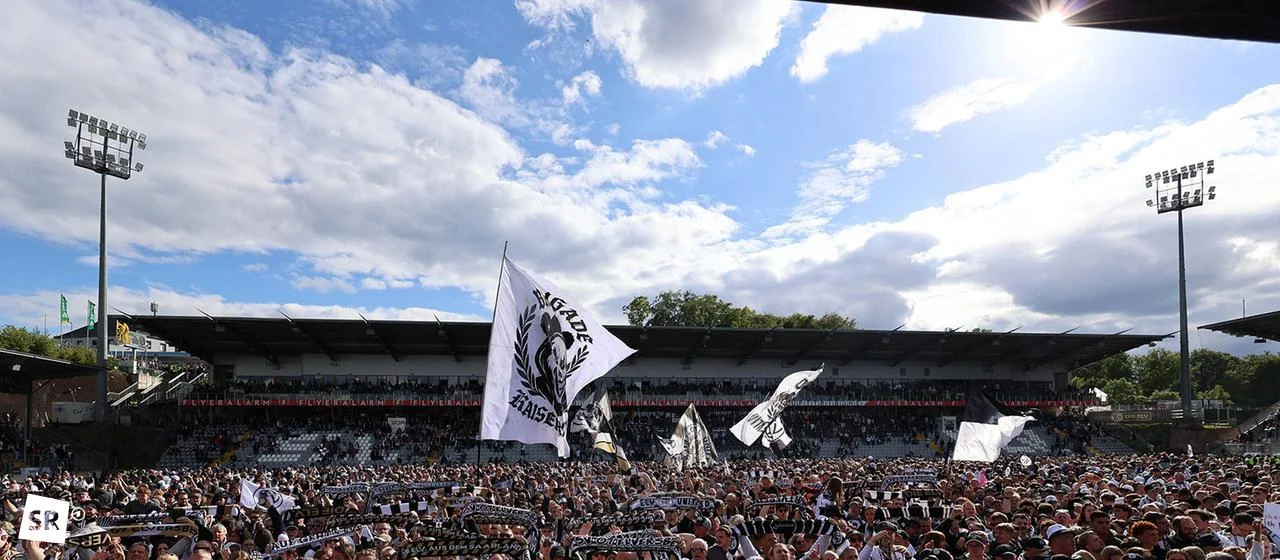
SV Elversberg reached the Bundesliga by turning long-term local backing, lean recruitment and an attacking club identity into three promotions across the five seasons from 2021/22 to 2025/26. The final ascent was spectacular; the platform beneath it was built over decades.
The famous “town of 13,000” description is broadly right only when it refers to the whole municipality of Spiesen-Elversberg. The Elversberg locality itself is smaller. That distinction makes the story more accurate without making it less extraordinary: a club playing fourth-tier football in 2022 won the 3. Liga a year later, learned quickly in Bundesliga 2, recovered from a devastating 2025 play-off loss and secured direct promotion on May 17, 2026.
This is how the rise happened, why Horst Steffen’s departure did not end it, what Vincent Wagner preserved, and why survival is only one part of Elversberg’s Bundesliga test.
The 13,000-Person Claim, Correctly Explained
The headline is broadly right, but the geography matters. Roughly 13,000 people live in the municipality of Spiesen-Elversberg, which combines two localities in Saarland. Elversberg—the locality that gives the club its name—is smaller. Deutsche Welle put it at about 7,000 residents in May 2026, while describing the combined municipality as about 12,800.
Even the official total depends on the register used. Spiesen-Elversberg’s latest municipal annual report located for this research records 12,819 residents in Saarland’s state statistics and 13,160 in the municipal register on December 31, 2023. That is why “a town of 13,000” is fair shorthand, but not a census claim about the Elversberg locality alone. The Bundesliga’s own 2026/27 overview uses the municipality as its unit and calls it the smallest host community in league history.
Elversberg locality
About 7,000
DW estimate, May 2026
Municipality
12,819–13,160
Two official 2023 registers
Stadium target
15,500
Planned during 2026/27
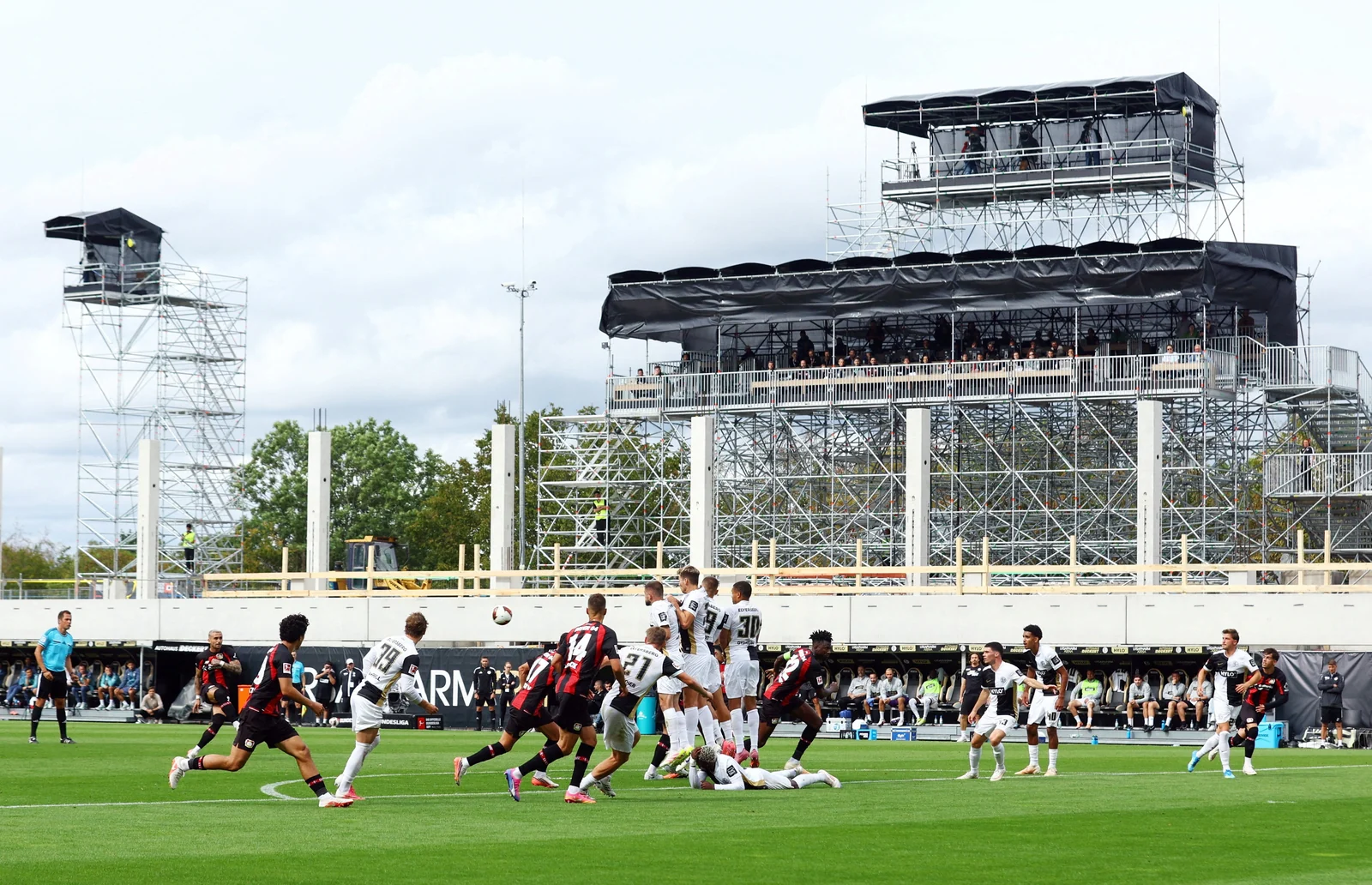
The ground makes the contrast tangible. Bundesliga’s venue guide listed the Ursapharm-Arena an der Kaiserlinde at 10,000 places, with work under way toward 15,500 during the 2026/27 season. Contemporary reports put usable capacity closer to 9,000 while the north stand was rebuilt. The numbers are therefore a moving construction snapshot, not a contradiction.
Smallest address does not mean smallest operation. SVE draws beyond one locality, sells scarce tickets and presents itself as a Saarland club. The remarkable part is not simply that a municipality could almost fit inside its future stadium. It is that a club from that setting built a professional structure capable of reaching the same 34-match competition as Bayern Munich and Borussia Dortmund. The Elversberg schedule shows the new scale of the fixtures; the rest of this story explains the structure behind them.
The Long Road Before the Rapid Rise
Elversberg’s final three promotions came quickly, but the runway took more than a century to build. The club’s official history is full of renamed competitions, restructurings and failed exits from regional football. Read that record and 2022 looks less like a sudden beginning than the moment years of near misses finally stopped repeating.
From 1907 to a One-Season Stay in 3. Liga
Founded in 1907 as FC Germania Elversberg, the club spent most of its early life inside Saarland’s football system. It first reached an interregional level with promotion to the Oberliga Südwest in 1980. A further step followed in 1996, when an Oberliga title took SVE into the Regionalliga West/Südwest—then the third tier—although immediate relegation showed how fragile each upward move could be.
The first breakthrough into the nationwide 3. Liga came in June 2013. Elversberg beat 1860 Munich II 3–2 at home, then trailed the return leg at the Allianz Arena until Abedin Krasniqi scored in the 84th minute. The 1–1 draw completed a 4–3 aggregate win in front of 14,500 spectators. It was a dramatic entry into fully national competition, but not yet a durable one: SVE finished 18th in 2013/14 and went straight back to Regionalliga Südwest.
Eight Regionalliga Seasons Built the Launchpad
The next eight seasons explain the club’s resilience better than the later “rocket” metaphor. Elversberg finished second in 2016 and lost a promotion tie to FSV Zwickau. In 2017 they won the regional title but fell to Unterhaching in another play-off. The format was unforgiving: winning or nearly winning a regional league did not always deliver promotion.
| Season point | What happened | What it added |
|---|---|---|
| 2013/14 | Immediate 3. Liga relegation | A first view of national-level demands |
| 2015/16–2016/17 | Two failed promotion play-offs | Proof that strong seasons needed stronger margins |
| 2019/20–2020/21 | Two more second-place finishes | Continuity through a disrupted era |
| 2021/22 | 80 points and the title | A direct, decisive exit from the fourth tier |
Horst Steffen arrived on October 29, 2018 with Elversberg sitting 11th and produced what the club called its best second half of a season. The pandemic interrupted 2019/20; another second-place finish followed in 2020/21. By the time SVE won Regionalliga Südwest with 80 points in 2021/22, the organization had rehearsed promotion pressure repeatedly. The later acceleration was spectacular, but its launchpad was persistence.
Three Promotions in Five Seasons
From the 2021/22 campaign through 2025/26, Elversberg climbed three divisions in five seasons. The speed is extraordinary, but the sequence matters: two championships built competitive confidence, an 11th-place consolidation created breathing room, and a devastating play-off defeat was followed by automatic promotion rather than retreat.
Back-to-Back Titles Changed Elversberg’s Level
The first lift-off came in May 2022. SVE finished the Regionalliga Südwest season with 80 points, beat local rival FC Homburg 2–0 in the final home match and added the Saarland Cup to complete the first double in club history. This promotion differed from 2013 because Elversberg returned to 3. Liga with a settled coach, an established style and a team accustomed to carrying title expectations.
Instead of aiming merely to survive, the newcomer led the 2022/23 third tier for most of the campaign. A 1–1 draw with Wehen Wiesbaden effectively secured promotion on the penultimate weekend; a 2–1 victory at Ingolstadt then confirmed the 3. Liga championship. For the first time, Elversberg had reached Bundesliga 2. The two titles also changed its recruiting pitch: young players were no longer joining a regional contender but a club that had proved its football could travel up a level.
The five-season staircase
- 2021/22: Regionalliga Südwest champions and promoted.
- 2022/23: 3. Liga champions and promoted.
- 2023/24: 11th in the club’s first Bundesliga 2 season.
- 2024/25: third, then beaten in the promotion play-off.
- 2025/26: second and automatically promoted to the Bundesliga.
The 2025 Heartbreak Made the 2026 Breakthrough Sharper
An 11th-place debut season established SVE in the second tier. One year later, Horst Steffen’s side finished third and met Heidenheim in the two-legged promotion/relegation play-off. Elversberg led the first leg 2–0 before drawing 2–2. The return was 1–1 until Léo Scienza scored for Heidenheim in the fifth minute of stoppage time, completing a 4–3 aggregate defeat on May 26, 2025.
That could have ended the run. Steffen left, important loans expired and Vincent Wagner inherited a reshaped squad. Instead, SVE scored a Bundesliga 2-best 64 goals in 2025/26, conceded 39 and entered the final day level on 59 points with Paderborn. Against Preußen Münster on May 17, Bambasé Conté struck after ten minutes and David Mokwa scored twice in a 3–0 win. Second place on 62 points removed the play-off risk and made Elversberg the Bundesliga’s 59th club. For a comparison with the other newcomers, see the 2026/27 promoted teams guide.
The Sporting Model: Backing, Small Staff and Player Pathways
Elversberg’s model is neither a penniless fairy tale nor a conventional spending project. It combines patient local backing, unusually short decision lines and a clear promise to players: if your qualities fit the football, you will receive responsibility. That combination let SVE compete for talent without matching the wages or scouting departments of Germany’s giants.
Holzer and Ursapharm Supplied a Long-Term Platform
Frank Holzer, a former professional footballer and a leader of Saarbrücken-based pharmaceutical company Ursapharm, had supported SVE financially since the late 1980s, according to a club-published retrospective. He served as president and even coached the team before operating responsibility moved to his son Dominik. The family-company relationship helped sustain facilities and ambition long before the recent promotions.
That support should be acknowledged without inventing a number. The checked sources do not publish a complete season-by-season subsidy or prove that money alone explains results. What backing clearly supplied was time: Elversberg could survive failed promotion campaigns, professionalize gradually and keep investing in a defined path. Capital created the platform; recruitment and coaching converted it into league places.
Recruitment Prioritized Fit Before Reputation
A revealing milestone arrived in September 2017, when former midfielder Ole Book became Elversberg’s first full-time scout. The job was explicitly designed to identify young players beyond Saarland’s borders. Book became sporting director in 2018 and later sporting executive, pairing recruitment with Horst Steffen’s football rather than collecting recognizable names.
The structure has already outgrown its architect. Book left for Borussia Dortmund in March 2026. By April, Christian Weber was sporting director with responsibility for recruitment and transfers, while technical director Josef Welzmüller guarded the playing philosophy, analysis and development method. For supporters, that division is crucial: Elversberg tried to replace a key individual with complementary roles, not abandon the system he helped build.
Loans Worked Because Development Was the Product
Loans were not simply cheap bodies. Nick Woltemade helped the 2022/23 promotion; Bayern’s Paul Wanner received a full second-tier season in 2023/24; Hoffenheim prospects Muhammed Damar and Fisnik Asllani became major 2024/25 contributors. Each arrived with talent but needed senior minutes, tactical responsibility and permission to make mistakes. Elversberg could offer all three.
1. Stable platform
Local backing and patient leadership absorb the risk of near misses.
2. Specific profiles
A lean staff recruits pace, intelligence and intensity for one game idea.
3. Real responsibility
Minutes and demanding roles turn potential into value and results.
The trade-off is churn: successful loans leave and developed players attract richer clubs. SVE’s competitive advantage is therefore the process, not possession of one golden generation. Browse the wider Bundesliga club list and almost every rival has more scale. Elversberg must keep being clearer about fit.
Two Coaches, One Recognizable Identity
The clearest evidence that Elversberg built a club idea—not merely one coach’s team—came in 2025. Horst Steffen departed after almost seven years and a near-promotion. Rather than hire a defensive firefighter, SVE chose Vincent Wagner because his creative, brave football could preserve the direction while adding fresh detail.
Horst Steffen Made Front-Foot Football Non-Negotiable
Steffen took charge on October 29, 2018, when Elversberg were 11th in Regionalliga Südwest and promotion already looked distant. The immediate result was the best second half of a season in the club’s history to that point. More important was what followed: SVE kept pursuing an active game through pandemic disruption and repeated near misses instead of changing identity with every disappointment.
By January 2023, Steffen had overseen 161 competitive matches at a club-reported 2.22 points per game. That is a dated snapshot rather than his final record, but it captures the sustained performance behind promotion. His teams wanted the ball, pressed high and accepted the risk of attacking with numbers. The reward was the 2022 Regionalliga title, the 2023 3. Liga title and, eventually, a third-place Bundesliga 2 finish. Steffen left for Werder Bremen after the 2025 play-off defeat, but the selection criteria he helped establish remained.
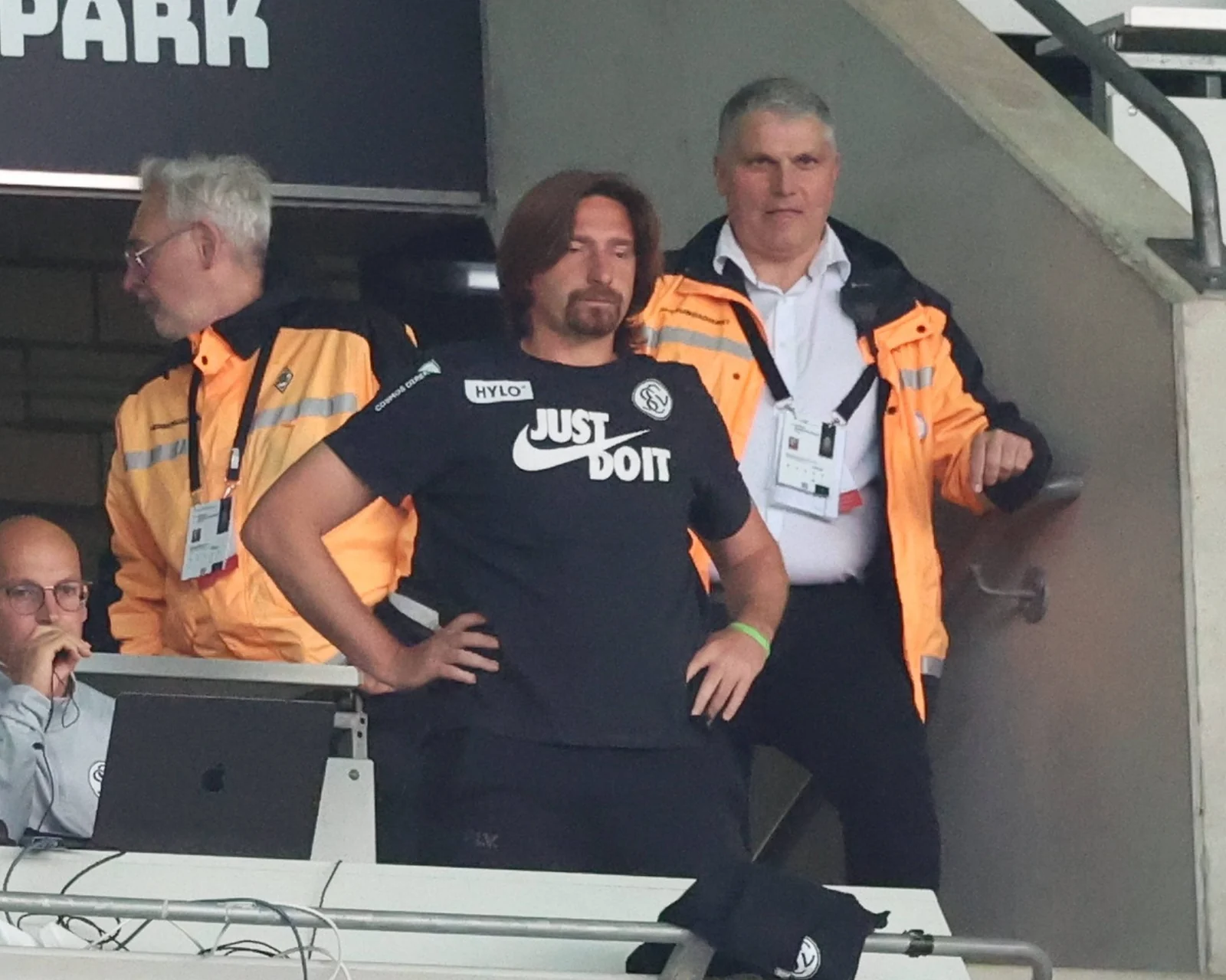
Vincent Wagner Preserved the Language and Added New Energy
Wagner was 39 when appointed on June 6, 2025, with a contract through 2028. His senior-head-coach experience came at Hoffenheim II, whom he had just led from Regionalliga to 3. Liga. SVE’s announcement did not disguise the succession plan: sporting chief Ole Book praised Wagner’s expertise, creative ideas and “mutigen Spielstil”—brave playing style—and said he should continue and enrich the existing path.
There was practical continuity, too. Assistant Mike Frantz had spent 2024/25 inside the club as head of development, while Wagner added staff he trusted. The handover still involved real change: top scorer Fisnik Asllani’s loan ended, several starters left and the play-off defeat could have lingered. Wagner’s new group instead won seven of its first nine league games and finished with a division-best 64 goals.
Continuity did not mean copying Steffen’s formation. It meant retaining the values that governed recruitment and risk: attack with purpose, improve young players and avoid fear as a default setting. Wagner remained head coach at the September 14, 2026 research cutoff, now applying that language to the club’s first Bundesliga schedule.
How Elversberg Play—and Why They Refused to Retreat
Elversberg entered the Bundesliga with a choice: protect themselves with longer, lower-risk football or trust the game that had taken them there. Their own analysis suggested fewer short build-ups and more long balls could reduce damaging mistakes. The club rejected that recommendation because changing the style would also undermine the logic behind its coach, recruitment and squad.
Brave, Intense and Clever Is More Than a Slogan
Vincent Wagner describes SVE through three pillars: brave, intense and clever. Brave means inviting pressure by trying to progress from the back and continuing to commit players forward. Intense appears when possession changes: forwards close defenders, nearby midfielders compress the next pass, and the team looks to regain the ball before the opponent can escape. Clever is the necessary qualifier. Pressing is coordinated around triggers and player distances; it is not eleven players simply running at once.
Brave
Accept pressure, keep passing options open and attack space with numbers.
Intense
Close the ball quickly, counterpress after losses and make opponents rush exits.
Clever
Choose profiles and pressing moments that make the risk collectively manageable.
The point is not aesthetic purity. Elversberg cannot pay for a large group of proven Bundesliga specialists, so they recruit high-energy players for a shared idea and offer them responsibility. A survival system that demanded a different type of player would waste the club’s strongest competitive advantage. The “Elversberg way” is therefore an operating decision expressed as football.
The First Bundesliga Weeks Tested the Idea Immediately
The 3–2 home win over Bayer Leverkusen on August 29, 2026 provided the cleanest early example. In the eighth minute David Mokwa took the ball from Edmond Tapsoba inside the box before Lukas Petkov finished. Less than a minute later, Tapsoba’s loose build-up pass fell to Cole Campbell for 2–0. Elversberg kept pressing, then made it 3–0 straight after half-time through a fast switch, low cross and Mokwa finish.
Yet the same match warns against romantic conclusions. Leverkusen led expected goals 2.18 to 1.35, scored in the 77th and 91st minutes, and forced a final save. SVE’s courage created the upset; it did not give them control of every phase.
A week later at Borussia Mönchengladbach, they trailed 3–1 after 56 minutes. Substitute Maurice Krattenmacher scored twice, Felix Keidel curled in a free-kick, and Elversberg won 4–3 in stoppage time. The expected-goals totals were almost level—2.65 to 2.56—and five goals conceded across two games revealed the cost of openness as clearly as seven scored showed its upside. Supporters should read the first two wins as evidence that the identity survives pressure, not as a survival certificate. The useful next checks are the latest Bundesliga results and whether those performances keep SVE above the danger line in the current table.
What Bundesliga Promotion Means for the Club and Saarland
Promotion made Elversberg the fourth Saarland club to enter the Bundesliga, after 1. FC Saarbrücken, Borussia Neunkirchen and FC Homburg, and returned the state to the top flight after 33 years. That regional meaning is larger than the municipality population: SVE now give Saarland a weekly place in Germany’s most visible football conversation. It does not mean every supporter in the state has changed allegiance, but it does make the club a new national reference point for the region.
The demand surge was immediate. SVE’s own 2024 sustainability report recorded 4,407 members and 5,454 season tickets. Before promotion in May 2026, membership had already risen to a reported 9,150; more than 3,000 additional applications arrived in the next four days. Applications are not the same as accepted members, but the scale of interest explains why access became so difficult. Almost every eligible season-ticket holder renewed for 2026/27, no further season tickets were released, and only a small member-only allocation was retained for individual home games.
| Promotion effect | What it changes | What remains constrained |
|---|---|---|
| National visibility | Saarland returns to the Bundesliga after 33 years | Regional attention must be retained beyond one historic season |
| Ticket demand | Membership and renewal pressure increase | Construction keeps public matchday inventory very small |
| Commercial reach | A larger broadcast platform can attract partners | Revenue growth cannot justify breaking the wage structure |
The stadium captures both opportunity and friction. The Bundesliga venue guide lists the Ursapharm-Arena at 10,000 places with a 15,500 target during 2026/27, but the north-stand works mean the target is not current usable capacity. For local supporters, promotion can therefore feel both intimate and exclusionary: elite football has arrived at the Kaiserlinde, while many people cannot get inside. Better transport, ticket resale and matchday operations matter almost as much as adding seats.
The Sustainability Test Is Bigger Than Staying Up
Avoiding relegation would be a major sporting achievement, but it is not the only measure of a healthy first Bundesliga season. Elversberg’s harder test is whether growth leaves a stronger club even if results eventually send the team down. The 2024 report’s 174 employees and 389 partners or sponsors show that a real organization already existed behind the small-town image. The next step is to expand capacity and expertise without replacing the short decision lines that helped SVE move quickly.
A supporter’s sustainability scorecard
- Protect wages: technical director Josef Welzmüller warned that even one or two established Bundesliga signings could distort the structure.
- Keep the pathway open: prospects must still receive meaningful minutes after the squad becomes more expensive and scrutinized.
- Replace people, not principles: the club has already absorbed the exits of Horst Steffen and Ole Book; repeatable succession is essential.
- Finish useful infrastructure: more permanent seats and smoother access should serve supporters in either the first or second tier.
That is why abandoning the playing identity after a difficult run could be more damaging than relegation itself. The model creates value through clear profiles, development and collective courage; panic buying would weaken all three. Over the full campaign, supporters can judge the sporting part through the SV Elversberg schedule, the Bundesliga table and recent results. The deeper verdict will be whether the club that emerges is still recognizably Elversberg—and better equipped for the next climb.
JOIN THE DISCUSSION
Comments
Sign in with Google to comment. Keep the discussion focused on Bundesliga football and respectful to other supporters. New comments are reviewed before publication.
Loading comments…