Bundesliga record explained
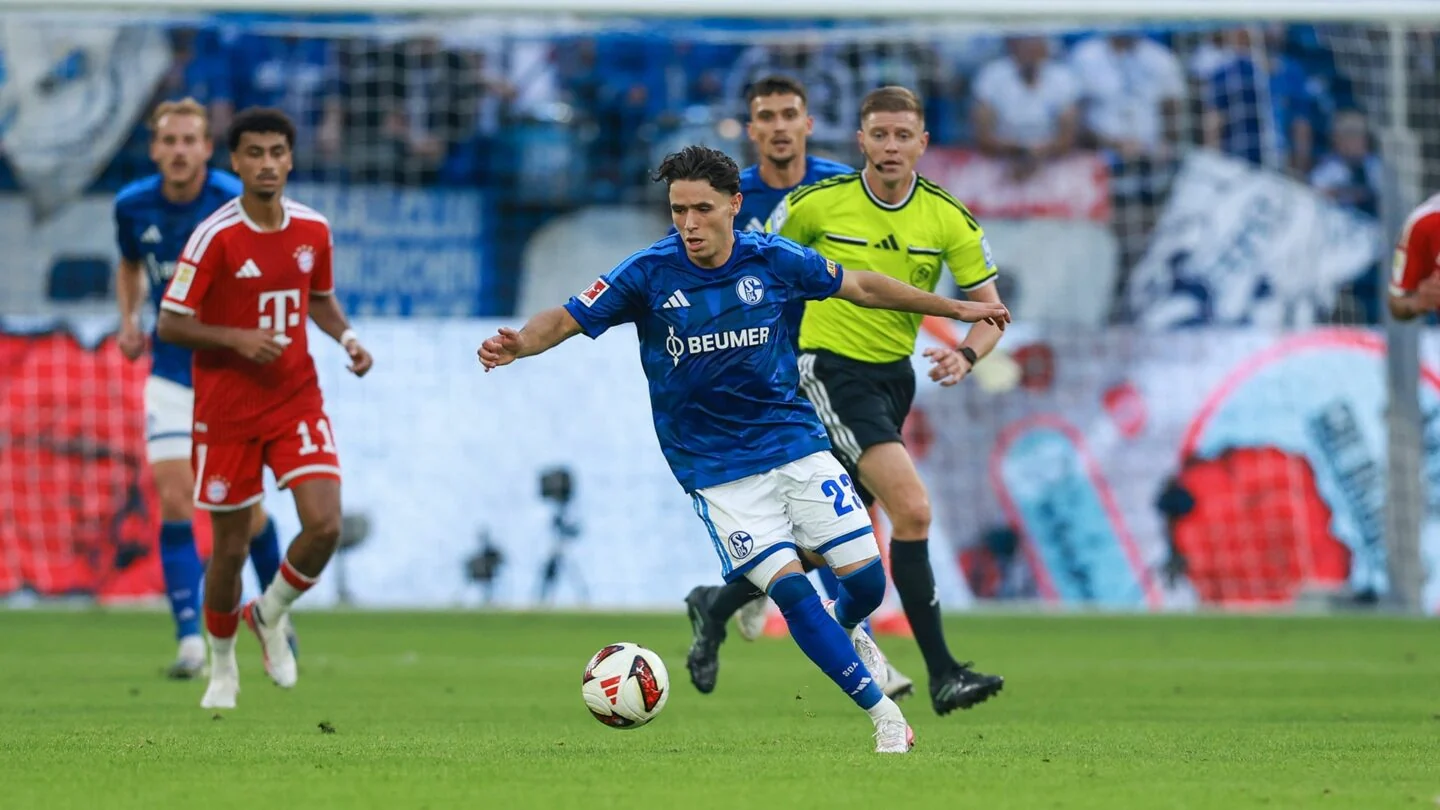
Bayern Munich's 0-0 draw at Schalke on 5 September 2026 ended their unprecedented run of finishing 67 consecutive Bundesliga matchdays in first place. Augsburg moved above them after Matchday 2 because two wins and a +6 goal difference beat Bayern's four points and +4.
The statistic needs careful language. Bayern did not lose a 67-game winning or unbeaten run, and they did not lose the championship. They lost an early-season table position after one draw, with 32 league games still to play. The record itself stretched from the end of Matchday 3 in 2024/25 through Matchday 1 in 2026/27, covering two title-winning campaigns and one opening-round win.
Result
Schalke 0-0 Bayern
Run ended
67 matchday leads
Immediate leader
Augsburg
What Bayern's 67-matchday streak actually measured
The 67 was a run of table positions, not a run of results. Bayern Munich finished 67 consecutive Bundesliga matchdays in first place. They did not win 67 league games in a row, go unbeaten for 67 matches or spend 67 literal days at the summit. Each completed round supplied one snapshot; Bayern occupied No. 1 in every one of those snapshots.
That distinction matters because a team can preserve a leadership streak while drawing or losing. Its rivals may also drop points, or an existing cushion may absorb the setback. Bayern lost Bundesliga matches during this span and still remained top. The achievement was therefore sustained table control: over almost two years, no completed round ended with another club above them.
32
Rounds from Matchday 3 through 34 in 2024/25
34
Every matchday of the 2025/26 season
1
The opening round of 2026/27
32 + 34 + 1 = 67 completed Bundesliga matchdays in first place.
From the Kiel breakthrough to the Schalke stop
The sequence began on 14 September 2024. Bayern arrived at promoted Holstein Kiel for Matchday 3 under a new coach, Vincent Kompany, and won 6-1. Jamal Musiala scored after only 15 seconds and Harry Kane completed a hat-trick. The size of that victory pushed Bayern to first place at the end of the round, supplying snapshot No. 1.
They stayed there through the remaining 31 rounds of 2024/25 and won the championship. They then led after every round of 2025/26, another title-winning campaign. By Matchday 12 that season, the run had reached 44 and passed the old Bundesliga benchmark: the 43 consecutive matchdays at the top recorded by Udo Lattek's Bayern between 1972 and 1973.
Bayern opened 2026/27 by beating Stuttgart 5-1, so the counter advanced to 67. It stopped one week later. The 0-0 at Schalke on 5 September 2026 did not erase the two titles or the record; it simply meant the Matchday 2 snapshot showed a different leader. That is the exact beginning and end of the statistic—and why “lost top spot” is accurate while “lost their crown” is not.
How Schalke held Bayern to a goalless draw
Schalke did not take the ball away from Bayern; they took away enough clean finishes. In a sold-out Veltins-Arena hosting Bundesliga football for the first time since May 2023, the promoted side accepted long periods without possession, defended its box in layers and trusted goalkeeper Loris Karius. Bayern controlled the match but could not supply the one event the table streak needed: a goal.
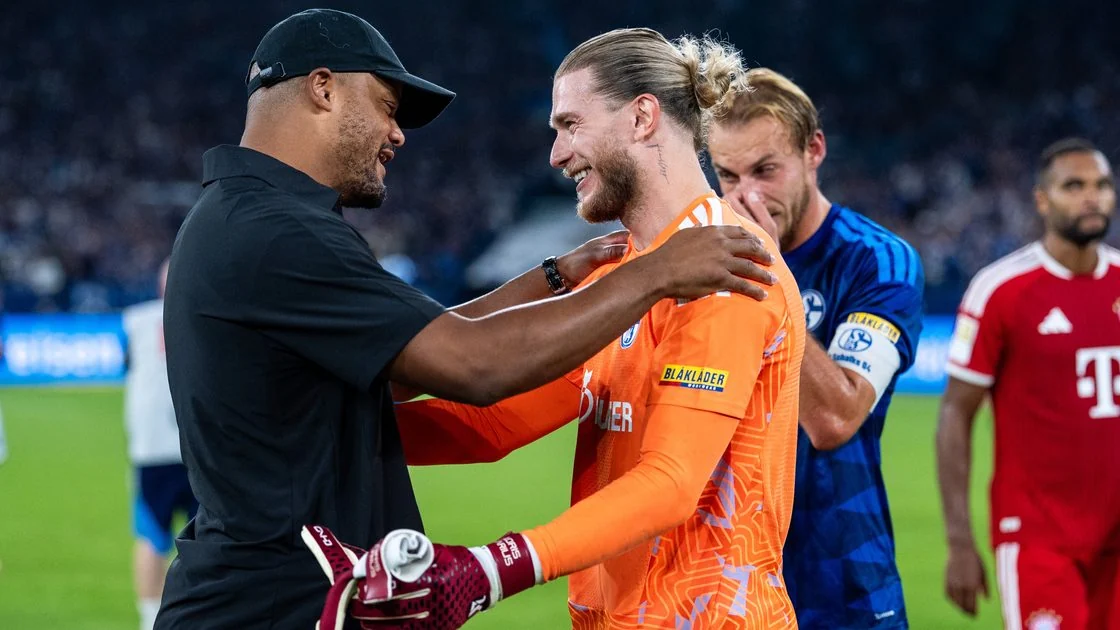
The pattern formed early. Karius denied Nathaniel Brown after a neat Joshua Kimmich and Aleksandar Pavlović combination. Luis Díaz later went through and missed under pressure. Schalke offered little sustained attack, yet Adil Aouchiche's curling free-kick still forced Manuel Neuer to intervene. That small counter-threat prevented the match from becoming a completely consequence-free Bayern exercise.
Kompany's rotation delayed Bayern's strongest attack
Vincent Kompany began without Harry Kane and Michael Olise, using Ismael Saibari as the central attacker and Lennart Karl on the right. Jamal Musiala was also among the substitutes. Rotation was understandable in a compressed opening spell, but it changed the first-half relationships: Bayern had plenty of the ball without their most established scorer or their most productive right-sided creator on the field.
Kane replaced Brown at half-time. Olise and Musiala followed for Karl and Saibari in the 57th minute, leaving more than half an hour for a near full-strength attack to decide the contest. The tempo sharpened and Schalke spent longer near their own area. That sequence makes rotation part of the explanation, not a complete excuse. The preferred attackers received time and chances; Schalke still managed the decisive actions.
Karius made Schalke's resistance count
Karius stopped Olise from a tight angle soon after the changes and later reached a powerful long-range Kane effort heading toward the top corner. Hasan Kuruçay cleared a lifted Díaz finish, defenders repeatedly put bodies in shooting lanes and Konrad Laimer sent another opening wide. Karius won 68 percent of the official Man of the Match vote, but even he emphasized how much the players in front of him removed.
Robin Gosens described Schalke doubling—and sometimes almost tripling—Bayern's dangerous wide players. The important word is collective. A goalkeeper can save the shots that reach him; the block must first narrow the angles, contest cutbacks and keep recovering after Bayern recycle possession. Schalke sustained that work deep into added time.
The final whistle ended a second, separate sequence: Bayern had scored in 59 consecutive competitive matches. That number should not be folded into the 67-round leadership record. One measured attacking output; the other measured league position. Both stopped on the same night because Schalke protected 0-0 all the way through.
Why Bayern's pressure did not produce a goal
Bayern reached Schalke's defensive third often enough to win; they did not execute often enough to guarantee it. Their own analysis counted 83 percent possession, 914 passes, 383 passes in the final third and 52 touches inside the penalty area. The shot count was 15-4, and all 11 corners belonged to Bayern. Those numbers rule out a story in which Schalke controlled the territory.
They do not, however, turn dominance into a goal retroactively. Ball possession includes safe circulation. A penalty-area touch can be made under pressure. A corner only becomes dangerous if the delivery, movement and contact align. Bayern's 11 produced no decisive moment, while several open-play attacks ended with a blocked attempt, an imprecise final pass or a finish Karius could reach.
Possession
83%
Passes
914
Box touches
52
Corners
11
Even the expected-goals evidence needs a label. Bundesliga Match Facts calculated the chances at 1.70 xG for Bayern and 0.10 for Schalke. Bayern's own provider returned 2.10 and 0.21. Expected goals are model estimates, so different inputs and definitions produce different totals. Both versions tell the same useful story—Bayern created far more—but neither says a goal was certain.
Manuel Neuer supplied the more revealing diagnosis. He identified roughly 15 minutes in which Bayern's positioning was less precise and the speed of passing was too low to hurt the block. Faster circulation is not valuable merely because the ball travels quicker; it shifts defenders before their cover can reset. Schalke's compact distances meant Bayern needed the next pass or run to arrive at exactly that moment.
This leaves a balanced conclusion. The system produced territory and several high-value openings, so the 0-0 was not evidence of total tactical failure. Yet the champions also allowed a disciplined opponent to keep the contest alive, wasted their best finishes and found no set-piece solution. Variance explains part of the blank. Schalke's execution—and Bayern's lack of it at the final action—explains the rest.
How Augsburg moved above Bayern
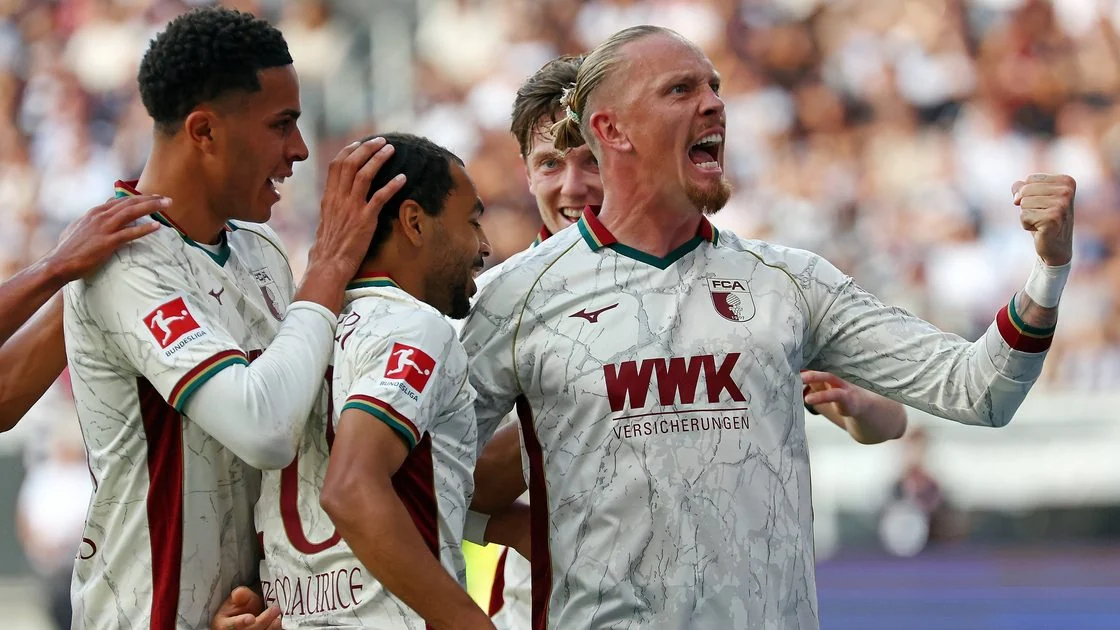
Augsburg replaced Bayern because they won twice and owned the best goal difference among four perfect starters. Manuel Baum's side beat Schalke 3-0, then won 4-1 at Eintracht Frankfurt. Six points and a 7-1 goals record put them above Freiburg, Borussia Dortmund and Elversberg, who also began two from two.
Bayern's opening 5-1 win over Stuttgart had created a four-goal cushion. The Schalke draw lifted them to four points but left the goal difference at +4. Mainz also had four points and were placed fifth on +5, so Bayern landed sixth. That looked like a fall of five positions; in competitive terms, the distance to Augsburg was only two points.
The Matchday 2 table was compressed, not decisive
| Place | Club | Points | Goal difference |
|---|---|---|---|
| 1 | Augsburg | 6 | +6 |
| 2 | Freiburg | 6 | +4 |
| 3 | Borussia Dortmund | 6 | +3 |
| 4 | Elversberg | 6 | +2 |
| 5 | Mainz | 4 | +5 |
| 6 | Bayern Munich | 4 | +4 |
The table did not award Augsburg a symbolic lead; they earned it through the league's normal ordering rules. It also did not forecast the final standings. Thirty-two Bayern matches remained immediately after the draw, enough for dozens of changes in momentum. Early goal difference magnified every large win because the sample contained only 180 minutes per club.
What changed again after Matchday 3
One round later, the lead had already moved. Freiburg's 5-0 win over Mönchengladbach and Dortmund's 3-0 win over Paderborn carried both to nine points, with Freiburg first on goal difference. Augsburg drew 2-2 with Leverkusen and dropped to third. Bayern won 2-1 at Elversberg, reaching seven points but sitting fourth because Augsburg's +6 goal difference was one better than Bayern's +5.
Those positions are correct at the end of Matchday 3 on 13 September 2026. They will age as soon as more matches are played. Use the current Bundesliga table for the latest order; use this snapshot only to understand how quickly the post-Schalke headline changed.
What the result says about Bayern's title defence
Schalke exposed a problem worth monitoring, not a verdict on the champion. Bayern could face many opponents who defend lower, protect the centre and ask them to create under severe spatial pressure. The relevant question is whether the same friction keeps returning—not whether one goalkeeper-inspired draw erased the strongest body of evidence in Germany.
The useful warning for Bayern
Future opponents now have a visible reference. Schalke supported the wide defender, crowded the next passing lane and trusted teammates to recover when Bayern switched play. They accepted that the champions would enter the final third, then competed furiously over where the next action could happen. That plan demands exceptional concentration and a goalkeeper capable of repairing the breaches, but it is more transferable than trying to dominate Bayern with the ball.
For Kompany, the warning concerns rhythm and variety. A rotated front line needs relationships sharp enough to move a settled block before it resets. If circulation slows, another attacker must threaten behind, arrive for a cutback or turn a set piece into a clean first contact. Bayern had 11 corners at Schalke and did not make one count. They cannot assume that introducing Kane, Olise and Musiala later will always produce a goal on demand.
The test is repeatability. If several opponents suppress central access, force low-quality wide delivery and hold Bayern below their normal chance conversion, the draw becomes a tactical trend. If Bayern resume creating and finishing at their established rate, Schalke remains an outstanding defensive night rather than a blueprint anyone can photocopy.
Why one draw is not a crisis
The recent baseline is extraordinary. Bayern lost only once in the 2025/26 league, scored a Bundesliga-record 122 goals, finished with a record +86 goal difference and secured the title on Matchday 30. No sensible analysis should project that entire level forward unchanged, but it provides far more evidence about Kompany's team than one September stalemate.
The response also matters. Bayern beat Bodø/Glimt 5-0 in the Champions League four days after Schalke, despite another goalless first half against a compact opponent. They then won 2-1 at Elversberg in the Bundesliga. Those were different tests, so neither “proves” the Schalke issue solved. They do show the champions did not enter a sequence of defeats or stop creating altogether.
Reason to watch
Deep blocks can reduce Bayern's central combinations, and an inefficient set-piece night removes an important alternative route.
Reason for proportion
Bayern were still unbeaten with seven points after three league matches and had immediately won their next two games in all competitions.
The 2026/27 Bundesliga season guide supplies the wider contender and calendar context. The narrow conclusion here is simpler: Bayern briefly lost first place; nobody took away a trophy that will only be decided after a full season.
The record ended, but the season opened up
The cleanest verdict gives credit in the right order. Schalke earned the draw through collective defending and Karius's saves. Augsburg earned the immediate lead through two wins and the best goal difference. Bayern lost a record table sequence because those events occurred in the same round—not because anyone had won the 2026/27 title in September.
The next round illustrated the danger of overinterpreting an early table. Freiburg replaced Augsburg at No. 1; Bayern beat Elversberg and moved from sixth to fourth. A headline about being “dethroned” may describe the Matchday 2 ordering, but it cannot carry a season-long conclusion when the leader changes again within days.
What to monitor next
- 1.Low-block repeatability: do other teams reproduce Schalke's compact support without conceding better chances?
- 2.Bayern's finishing response: do box entries and corners become cleaner shots rather than merely larger totals?
- 3.Rivals' staying power: can Freiburg, Dortmund and Augsburg sustain results once the opening sample grows?
- 4.Direct tests: Bayern's Matchdays 5–8 bring Augsburg, Leipzig, Freiburg and Dortmund in succession.
That October run will supply better evidence than one draw. It includes the club that first displaced Bayern and the two clubs who led after Matchday 3, plus Leipzig. Results there can reveal whether Bayern's brief loss of first place was harmless noise or the beginning of a tighter race. Even then, the conclusion should track points and performances, not crisis vocabulary.
For the moving picture, check the latest Bundesliga table. For the wider competitive field and calendar, use the 2026/27 season guide. The fixed historical fact will remain: 67 consecutive matchday leads ended in Gelsenkirchen. What follows is still being played.
JOIN THE DISCUSSION
Comments
Sign in with Google to comment. Keep the discussion focused on Bundesliga football and respectful to other supporters. New comments are reviewed before publication.
Loading comments…