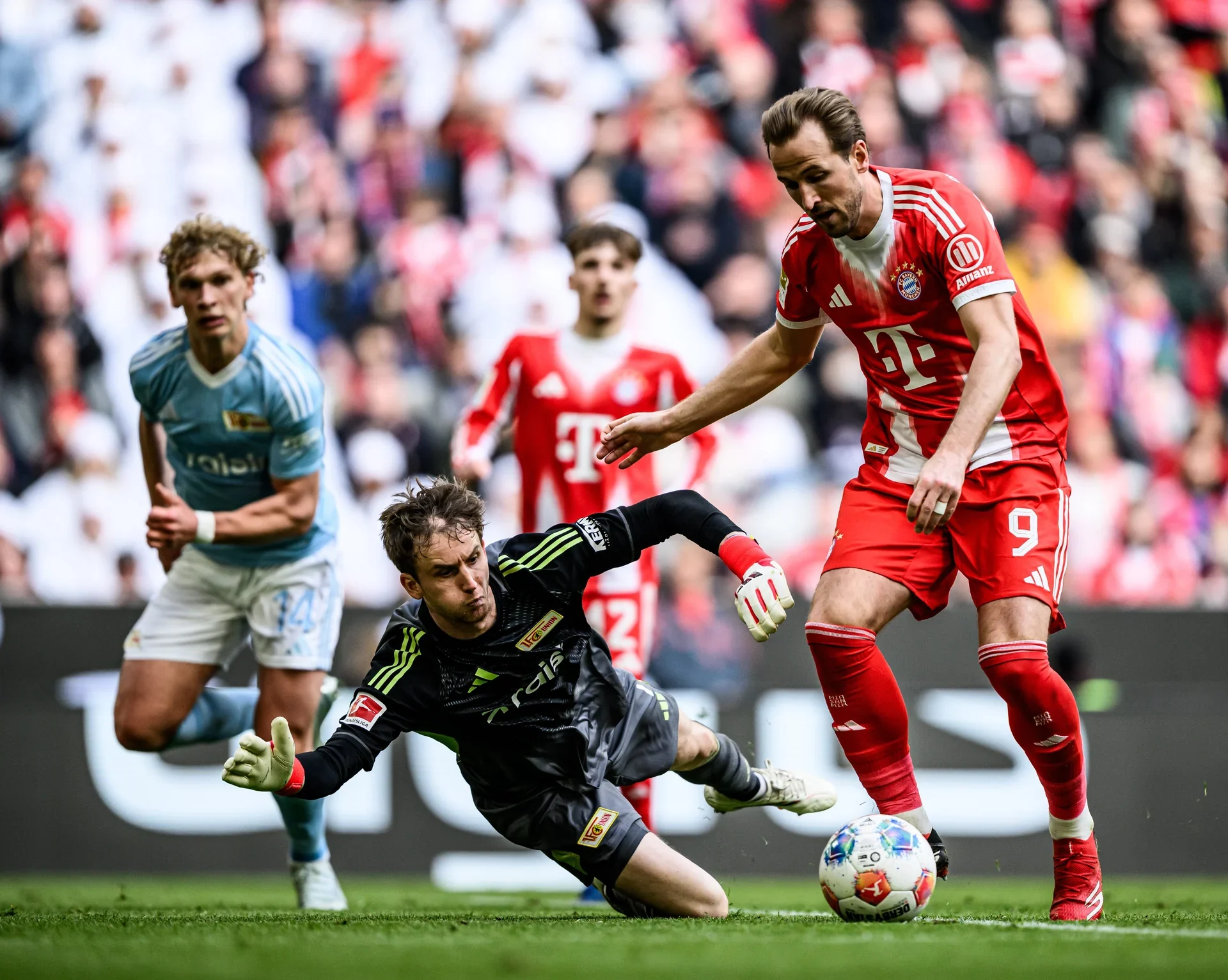
Seven Bayern Munich players lead the official Bundesliga Team of the Season for 2025/26, joined by two from Borussia Dortmund and one each from Hamburg and Stuttgart. Here is the confirmed eleven, with the voting process and football context needed to distinguish the award from an editorial team or a game-card list.
The official Bundesliga Team of the Season 2025/26
The official EA SPORTS FC 26 Bundesliga Team of the Season for 2025/26 contains the eleven players below. Bayern Munich supply seven, Borussia Dortmund two, and Hamburg and VfB Stuttgart one each. These are the clubs represented in the award announcement, so the table describes the 2025/26 selection rather than promising that every player has the same employer in a later season.
| Award group | Selected player | 2025/26 club |
|---|---|---|
| Goalkeeper | Gregor Kobel | Borussia Dortmund |
| Defender | Nico Schlotterbeck | Borussia Dortmund |
| Defender | Jonathan Tah | Bayern Munich |
| Defender | Dayot Upamecano | Bayern Munich |
| Defender | Luka Vušković | Hamburg |
| Midfielder | Joshua Kimmich | Bayern Munich |
| Midfielder | Aleksandar Pavlović | Bayern Munich |
| Midfielder | Angelo Stiller | VfB Stuttgart |
| Attacker | Luis Díaz | Bayern Munich |
| Attacker | Harry Kane | Bayern Munich |
| Attacker | Michael Olise | Bayern Munich |
The league published the confirmed team on 30 April 2026, before the final matchday. That timing matters when reading its original player profiles: phrases about chasing a record or pushing for a European place describe the season at announcement time. In this guide, the selection itself remains the confirmed award result, while any completed-season figures are identified separately. A forecast in April should not be silently converted into an achievement in May.
The positional groups also need a careful reading. The four selected defenders are principally centre-backs. Listing them together recognises their campaigns; it does not establish that the league asked one to play right-back and another left-back in an actual match. An award team is a way of honouring performances across positions, and its diagram need not solve every tactical problem a coach would face when selecting a competitive side.
For the same reason, this roster should not be merged with every other team labelled TOTS. A broadcaster, newspaper or statistics provider can produce its own eleven, and EA's wider game promotion can contain additional special items. The names here answer the real-football question about the official announced Bundesliga XI. The following sections explain the contributions that make that selection useful for understanding the season, rather than turning it into a list of card ratings.
Gregor Kobel and the value of a dependable goalkeeper
Kobel's selection reflects the importance of Dortmund's defensive foundation. In the completed 2025/26 season, he kept a league-leading 15 clean sheets, while BVB conceded only 34 goals, the lowest total in the division. Dortmund finished second on 73 points. Those final figures support the original April award announcement without requiring its earlier clean-sheet snapshot to be presented as a full-season total.
A clean sheet is a shared result, not a goalkeeper's private possession. Defenders affect the quality and location of shots, midfielders protect passing lanes, and the whole team can reduce the number of dangerous transitions. Kobel still had to make the saves that remained available to opponents. The league's retrospective recorded a 72.4 percent save rate, adding another perspective to a season that should not be described through scorelines alone.
For a supporter, the useful distinction is between spectacular goalkeeping and dependable goalkeeping. A difficult reaction save can dominate a highlights package, but positioning, communication and handling can prevent danger from developing into an equally dramatic scene. A keeper who repeatedly provides that security lets teammates defend with a clearer understanding of the space behind them. The value accumulates over games even when one intervention does not become a widely shared clip.
This also explains why raw save totals need context. A goalkeeper facing many attempts can accumulate more stops than one protected by a side that controls possession. That does not automatically make either better. Compare the difficulty of the shots, the keeper's decisions and his contribution to the defensive structure. Kobel's place in the official eleven should be read as recognition of an excellent campaign within that broader context, not as proof that one statistic settles every goalkeeping debate.
The Dortmund representation is important to the story of a Bayern-heavy team. The champion supplied a dominant attacking group, but the selected goalkeeper came from the runner-up with the strongest defensive record. That gives the award more texture than a simple list of title winners. It recognises that a season can contain different kinds of team excellence, and that keeping matches under control at one end is as much a football contribution as producing goals at the other.
Four defenders recognised for more than defending
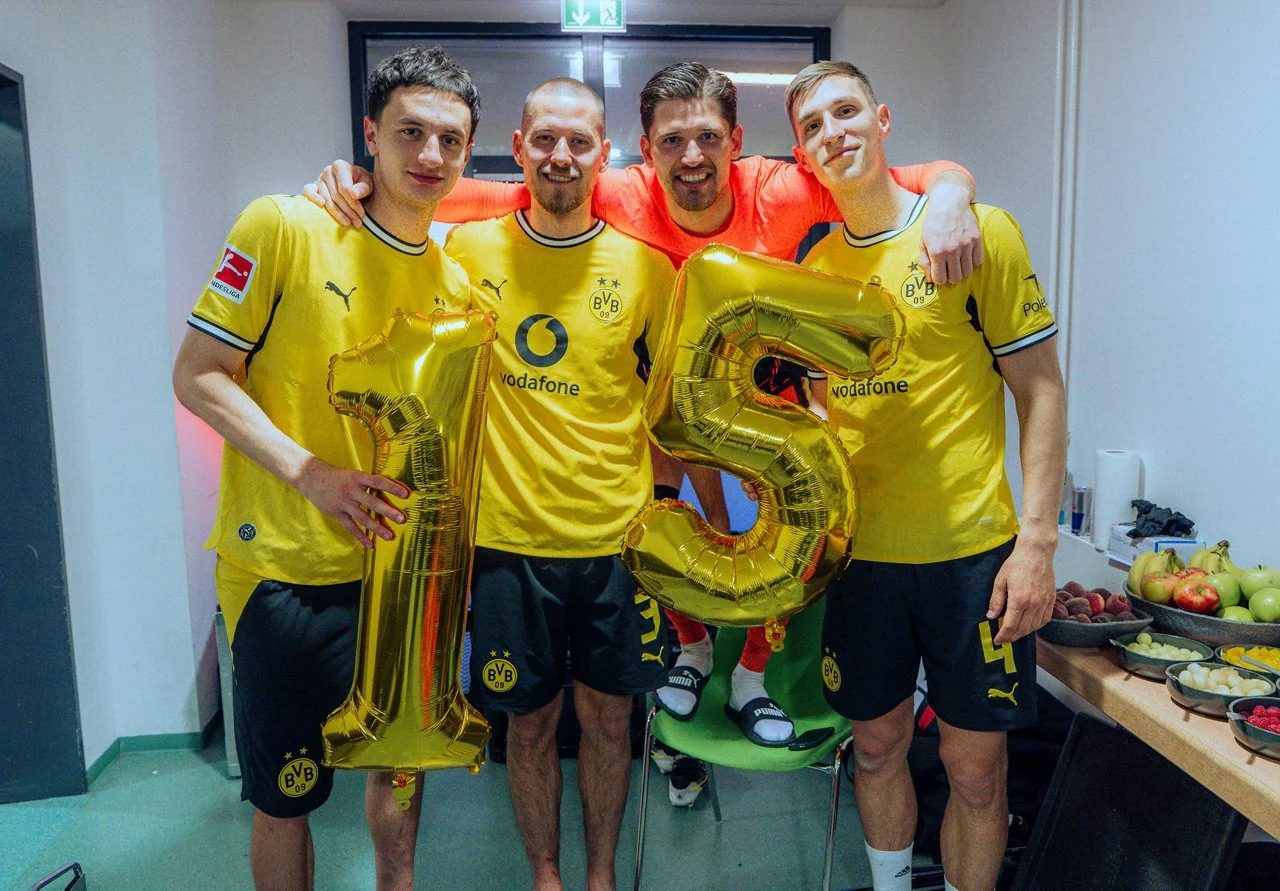
Schlotterbeck, Tah, Upamecano and Vušković represent different routes to defensive recognition. Some played for teams controlling large stretches of matches, while others had to make their influence felt under a different level of pressure. All four could contribute to possession as well as protecting their own penalty area. The interesting comparison is how they performed those jobs, rather than forcing them into unfamiliar full-back slots on a fantasy teamsheet.
Schlotterbeck and Vuskovic outside the champion's squad
Schlotterbeck's value at Dortmund combined defending with the ability to begin attacks from the back. A centre-back who can find a pass through the first line of pressure changes the opportunities available to midfielders. Opponents must decide whether to press him, leave a receiver or protect the space behind. His recognition alongside Kobel reflects the link between an organised defensive team and players capable of advancing the ball when possession is regained.
Vušković offered a striking contrast in Hamburg's return to the top flight. He played the season on loan from Tottenham and finished with six league goals according to the Bundesliga's retrospective. His aerial strength mattered in both boxes: defending crosses and giving Hamburg an additional attacking threat. That contribution is especially valuable when a team cannot assume it will dominate possession every week. His age made the season notable, but the award recognises performance rather than youth alone.
Tah and Upamecano in Bayern's defensive platform
Tah's first Bayern campaign after leaving Leverkusen brought experience to a side with ambitious attacking positions. Upamecano supplied pace, strength and the confidence to carry or pass the ball forward. In a possession-heavy team, central defenders can face long periods of circulation followed by an immediate demand to defend open space. Concentration and the first decision after a turnover become as important as the total number of tackles.
The pair's selection helps explain why Bayern's attacking excellence cannot be separated completely from the players behind it. Defenders who move possession securely allow the creative players to receive in useful areas. Defenders who can manage a recovery situation let the team maintain pressure with more confidence. These are enabling contributions, even when the final scoring sequence ends several passes later.
There is no need to pretend the four selected defenders form the only possible defensive unit in German football. Their individual qualities and club roles are the subject of the honour. Read the group as recognition of accomplished centre-back seasons, with different forms of control, recovery defending and set-piece influence. That interpretation makes their inclusion clearer without inventing an actual match plan that was never announced.
The midfield: Kimmich, Pavlovic and Stiller
Kimmich, Pavlović and Stiller give the selection a clear emphasis on controlling possession. The Bayern pair provided a familiar partnership, while Stuttgart's Stiller offered another example of a midfielder organising play through his passing. They were selected as midfielders rather than as three versions of the same player, and their influence is easier to see by following the ball before an attack reaches its final pass.
Control is a contribution even without the final pass
Pavlović explained his role in an April 2026 club interview through tempo, availability and awareness. He described the need to slow a game when necessary, accelerate when the opportunity appears and keep offering teammates a passing option. Those ideas provide a useful way to watch a midfielder without reducing his performance to goals. Being available under pressure can rescue a possession that might otherwise become an opponent's counterattack.
Kimmich's partnership with him gave Bayern several routes to move the ball from defence towards the creative players. A midfielder must recognise when a forward pass is possible, but also when recycling is the better decision. The quality lies in choosing the right moment, not in attempting the most ambitious option on every touch. Maintaining the team's structure can preserve the conditions for a more dangerous attack a few seconds later.
Stiller brought that broader midfield story beyond Munich. His left-footed distribution and role in Stuttgart's build-up made him a natural player to examine when considering how a team sets its rhythm. A short pass that draws pressure can prepare a longer one; a change of direction can give a winger a more favourable duel. These actions matter even when another teammate eventually receives the assist because he supplies the final ball.
Pavlović finished with 24 Bundesliga appearances according to the league's under-21 retrospective. That also reminds us not to assume every selected player had an identical amount of playing time. Consistency, availability and quality are connected but different questions. The selection does not require us to pretend their workloads or roles were the same in order to appreciate what each contributed.
For a practical viewing exercise, watch this group during a sequence that ends without a shot. Notice who offers a safe angle, who scans before receiving and who changes the speed of the move. Then watch their position if possession is lost. Midfield control includes preventing a broken attack from immediately becoming a defensive emergency. Recognising that work makes the season team feel less like a scoring leaderboard and more like a record of how good football is organised.
Bayern's front three: Diaz, Kane and Olise
The selected attack is an existing club combination: Diaz on the left, Kane through the centre and Olise on the right. Their shared understanding is a useful part of the story. A scorer can benefit from a winger's delivery, a winger can benefit from the striker drawing defenders away, and all three can alternate between supplying and finishing. The award team recognises a group whose strengths were demonstrated together, rather than three isolated reputations.
Kane supplies the finishing reference
Kane ended the Bundesliga campaign with 36 goals and a third successive scoring crown. That finishing made him the obvious reference point for the attack, but his involvement could begin before the penalty area. Dropping towards the ball can create an extra passing option and leave a channel for a wide attacker to enter. The scoring total captures the end product; the movement helps explain how other teammates also become dangerous.
Our 2025/26 final top-scorers guide gives the completed scoring context. The distinction matters because the original Team of the Season announcement was written while Kane was still described as being on course for the prize. His final tally is a later completed-season fact, not a number every April voter could already know.
Diaz and Olise create different wide threats
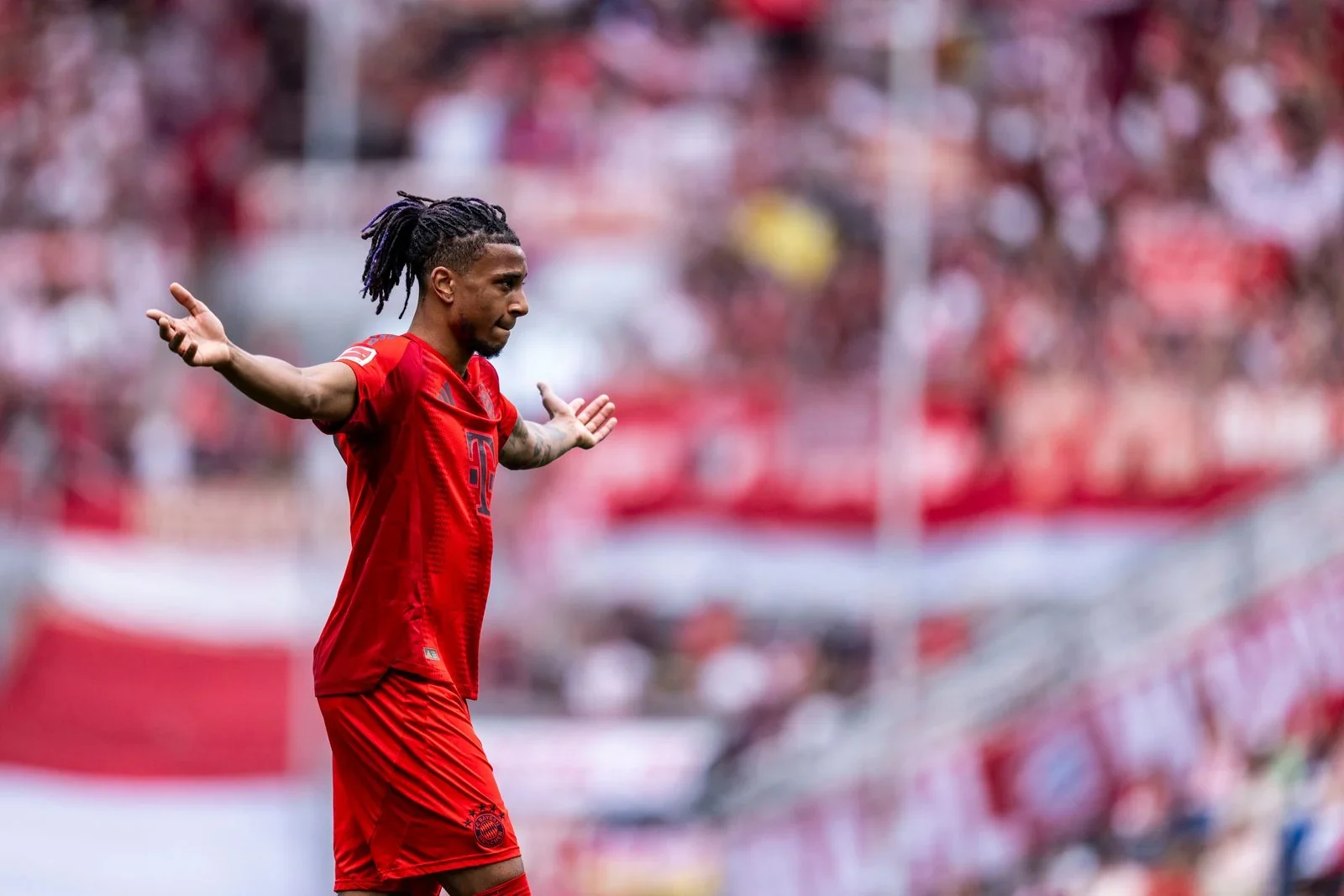
Diaz's direct running and Olise's ability to combine, cross or move inside gave defenders different problems on opposite sides. The 5-1 victory over Hoffenheim on 8 February is a concrete example. Diaz won both penalties converted by Kane and scored a hat-trick himself, with Olise supplying one of those goals. It was a sequence of linked contributions, not merely a match in which three famous attackers happened to appear.
Olise finished the league season with 15 goals and 19 assists under the Bundesliga's official convention, and subsequently received Player of the Season. Those figures support his standing without requiring a claim that every record mentioned as a possibility in April was broken. Assist definitions can differ across providers, so keep the same convention when making comparisons. A larger total on another site does not automatically mean it is counting the same actions.
The collective lesson is that a front three becomes especially difficult to defend when roles overlap without becoming identical. Kane can create as well as finish; Diaz can attack space and provoke challenges; Olise can supply a final ball or threaten the goal himself. Opponents cannot focus on only one outcome. Their selection together records both exceptional individual seasons and the attacking relationships that amplified those performances.
How the 2025/26 team was selected
The 2025/26 process began with a shortlist of 40 players selected using official Bundesliga match information. The final team combined three voting groups: supporters contributed 40 percent, club captains 30 percent and a selected expert panel 30 percent. A strong showing in a public discussion could therefore be part of the story without automatically determining the official result.
Stuttgart's contemporary nomination announcement recorded the team vote opening on 14 April and closing at 18:00 CEST on 17 April 2026. It named Stiller, Jamie Leweling and Deniz Undav among the candidates. Only Stiller appeared in the final eleven. That example makes the difference between nomination and selection concrete: recognition on a longlist is an achievement, but it is not the same result as winning a place in the team.
Those dates describe a completed historical ballot. An archived page inviting readers to vote does not mean the 2025/26 campaign is still open. Search engines can continue to surface nomination articles long after the result, so read the publication date and campaign heading together. For a later season, use its own official announcement instead of reusing the previous year's deadline or assuming the same shortlist.
The seasonal individual award followed the team selection. Stuttgart's May announcement described the eleven selected players as candidates for Player of the Season, with that vote running from 4 to 7 May. Olise ultimately won the official honour. It was therefore a related but separate decision: inclusion in the team put a player in the final seasonal field, while winning Player of the Season recognised one individual from that group.
This structure is useful when reading conflicting headlines. One report may celebrate a nomination, another a place in the eleven and a third the individual trophy. They can all be accurate while referring to different stages. Keep the stage and season attached to the claim. The result then becomes straightforward: this article records the official selected XI, rather than treating every candidate or later game item as an additional member of the same eleven.
What this XI does and does not tell you
The official XI records a particular award result, not a complete ranking of every Bundesliga player. Eleven places leave out excellent performers, and a player's absence does not prove his season was poor. Different roles, opportunity and the timing of the ballot all shape how an award is discussed. Treat the selected group as a starting point for understanding the campaign, rather than a reason to stop watching everyone else.
It also differs from the Bundesliga's under-21 editorial team, which used a stated condition of being 21 or younger on the season's opening day. That age-based selection included players who did not appear in the overall eleven. It answers a useful development question about young performers, but its criteria do not turn it into the same competition as the official Team of the Season or the separate Rookie of the Season award.
A game search introduces another distinction. EA's Football Ultimate Team promotion concerns special player items and game-specific attributes. An item rating is not a direct conversion of a real player's passing percentage or a guarantee about his next match. If you want card availability, objectives or challenge conditions, check the relevant official game information. The football selection and its performances remain the subject of this guide.
Finally, the team should not be treated as a prediction of the following season. Players can change clubs, roles and fitness, while opponents adjust their plans. The correct use of the 2025/26 award is historical: it identifies the chosen eleven and gives a framework for revisiting the games. Watch Kobel's goalkeeping, the centre-backs' distribution, the midfielders' control and the front three's combinations as related parts of the season's story.
That approach preserves room for disagreement without confusing the result. You may prefer an alternative editorial team or value a particular omitted player more highly. The confirmed official roster remains the eleven listed above. Understanding its date, selection process and different kinds of football contribution makes the discussion more precise, and gives you better reasons for your own choices than simply counting trophies or comparing the largest numbers on a game card.
JOIN THE DISCUSSION
Comments
Sign in with Google to comment. Keep the discussion focused on Bundesliga football and respectful to other supporters. New comments are reviewed before publication.
Loading comments…