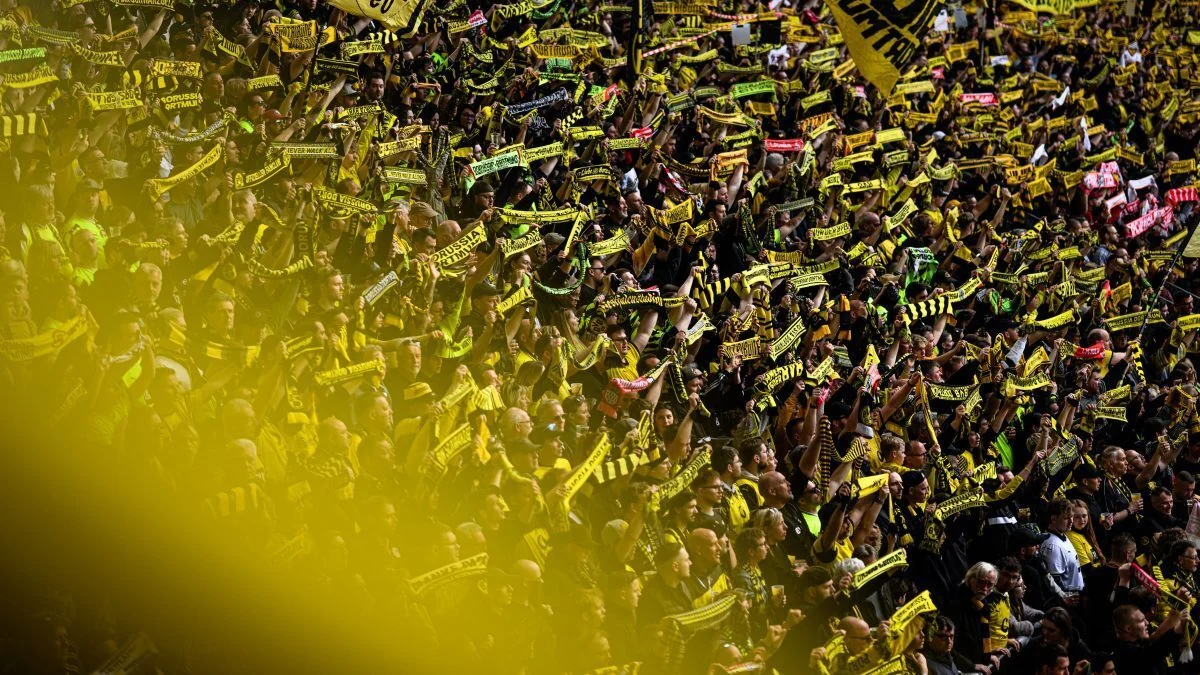
The 2026/27 Bundesliga has 18 clubs in 18 distinct match locations. Six are in North Rhine-Westphalia, five more sit across Bavaria and Baden-Württemberg, and the remaining seven stretch from Hamburg and Bremen to Berlin, Leipzig, Frankfurt, Mainz and tiny Spiesen-Elversberg. Borussia Dortmund owns the largest ground at 81,365; newly promoted Elversberg began with the smallest listed capacity at 10,000 while redevelopment continued.
This guide turns that distribution into a supporter-friendly map in words. It identifies every club, city and stadium, explains what promotion changed, and shows which locations combine well for an away weekend. Club membership is fixed for this season, but commercial venue names, capacities and precise kickoffs can change. Facts were checked on 13 September 2026; use the linked live schedule and club pages before buying tickets or transport.
Bundesliga Teams Map 2026/27: The Quick Answer
The 2026/27 Bundesliga map contains 18 clubs spread from Hamburg in the north to Munich and Freiburg in the south, but its centre of gravity sits in western and southern Germany. North Rhine-Westphalia alone supplies Borussia Dortmund, Bayer Leverkusen, Borussia Mönchengladbach, Cologne, Schalke and Paderborn. Bayern adds Bayern Munich and Augsburg, while Baden-Württemberg contributes Stuttgart, Freiburg and Hoffenheim.
That uneven distribution is the first thing a useful map should explain. The league is nationwide, yet it does not place one club neatly in every major region. Hamburg and Werder Bremen form the northern pair. Union Berlin and RB Leipzig are the only representatives based in Germany's eastern federal states or Berlin, while Frankfurt and Mainz create a compact central-western pairing on opposite sides of the Rhine. For travelling supporters, the result is a mixture of very short regional journeys and several trips that cross most of the country.
The map also changed significantly after 2025/26. Schalke returned to restore another major Ruhr destination, Paderborn survived the promotion play-off to add a second East Westphalian stop, and Elversberg reached the Bundesliga for the first time. Elversberg is the outlier that makes this edition especially interesting: a club from a municipality of roughly 13,000 residents now shares the same national division as Bayern Munich and Borussia Dortmund.
Use this guide as the geographic companion to the live site. The full club-by-club directory below fixes each team to its city and home ground; the regional sections then show which away days combine naturally. If you need the latest club pages rather than a static map, open the current Bundesliga teams directory, because form, fixtures and table position will change throughout the season even though the underlying geography will not.
All 18 Bundesliga Clubs, Cities and Home Stadiums
The directory below uses the league's official 2026/27 club list and its published Bundesliga capacities. Capacity is a planning indicator, not a promise of ticket availability: standing areas can be reconfigured for UEFA matches, commercial stadium names can change, and Elversberg's building work makes its number especially fluid.
| Club | Match city / municipality | Home stadium | 2026/27 listed capacity |
|---|---|---|---|
| Bayern Munich | Munich | Allianz Arena | 75,000 |
| Borussia Dortmund | Dortmund | Signal Iduna Park | 81,365 |
| RB Leipzig | Leipzig | Red Bull Arena | 47,800 |
| VfB Stuttgart | Stuttgart | MHPArena | 60,058 |
| TSG Hoffenheim | Sinsheim | SNP Arena | 30,150 |
| Bayer Leverkusen | Leverkusen | BayArena | 30,210 |
| SC Freiburg | Freiburg | Europa-Park Stadion | 34,700 |
| Eintracht Frankfurt | Frankfurt | Deutsche Bank Park | 58,000 |
| FC Augsburg | Augsburg | WWK Arena | 30,660 |
| Mainz 05 | Mainz | Mewa Arena | 33,305 |
| Union Berlin | Berlin | Stadion An der Alten Försterei | 22,012 |
| Borussia Mönchengladbach | Mönchengladbach | ista-Borussia-Park | 54,042 |
| Hamburger SV | Hamburg | Volksparkstadion | 57,000 |
| 1. FC Köln | Cologne | RheinEnergieStadion | 50,000 |
| Werder Bremen | Bremen | Weserstadion | 42,100 |
| Schalke 04 | Gelsenkirchen | Veltins-Arena | 62,271 |
| SV Elversberg | Spiesen-Elversberg | Ursapharm-Arena an der Kaiserlinde | 10,000* |
| SC Paderborn 07 | Paderborn | Home Deluxe Arena | 15,000 |
*The league's pre-season venue guide listed 10,000 while construction continued toward a planned 15,500. Check the club's ticket information for the match-specific usable capacity.
South and South-West Germany
Bayern Munich and Augsburg form the Bavarian pairing, although their grounds offer very different scales: 75,000 at the Allianz Arena against 30,660 at the WWK Arena. Stuttgart anchors the Neckar region with a 60,058-capacity venue. Freiburg sits much farther south-west, close to both France and Switzerland, while Hoffenheim's identity can mislead first-time visitors: the club play at the 30,150-capacity SNP Arena in Sinsheim, several kilometres from Hoffenheim village. The practical route search is therefore to Sinsheim, not merely “Hoffenheim.”
Rhine-Ruhr and the West
This is the league's busiest football corridor. Dortmund and Schalke occupy neighbouring Ruhr cities; Leverkusen and Cologne sit close together on the Rhine; Mönchengladbach lies to their west; Paderborn extends the cluster toward East Westphalia. A visitor based in Cologne, Düsseldorf or the Ruhr can reach several grounds without changing hotels. The names still require care: Schalke play in Gelsenkirchen, and the Leverkusen club name comes from its home city rather than nearby Cologne. Paderborn's return adds a compact 15,000-seat ground to a region otherwise associated with enormous crowds.
North, Central and Eastern Germany
Hamburg and Bremen are the two northern destinations, with the 57,000-capacity Volksparkstadion and riverside Weserstadion respectively. Frankfurt and Mainz sit close enough to function as another two-city trip, whereas Elversberg lies farther south-west in Saarland. In the east, Union's ground is in Köpenick on Berlin's south-eastern edge; it is not a central-city stadium despite the Berlin label. Leipzig is the other eastern stop and its Red Bull Arena holds 47,800. Those details matter when building an itinerary: the city on a map pin is only the starting point, and the final suburban or regional connection can decide whether a same-day train is realistic.
How Promotion Redrew the Bundesliga Map
Three clubs entered the Bundesliga for 2026/27 and three left: Schalke, Elversberg and Paderborn replaced St. Pauli, Heidenheim and Wolfsburg. That turnover changed the league's geography more sharply than a routine promotion cycle.
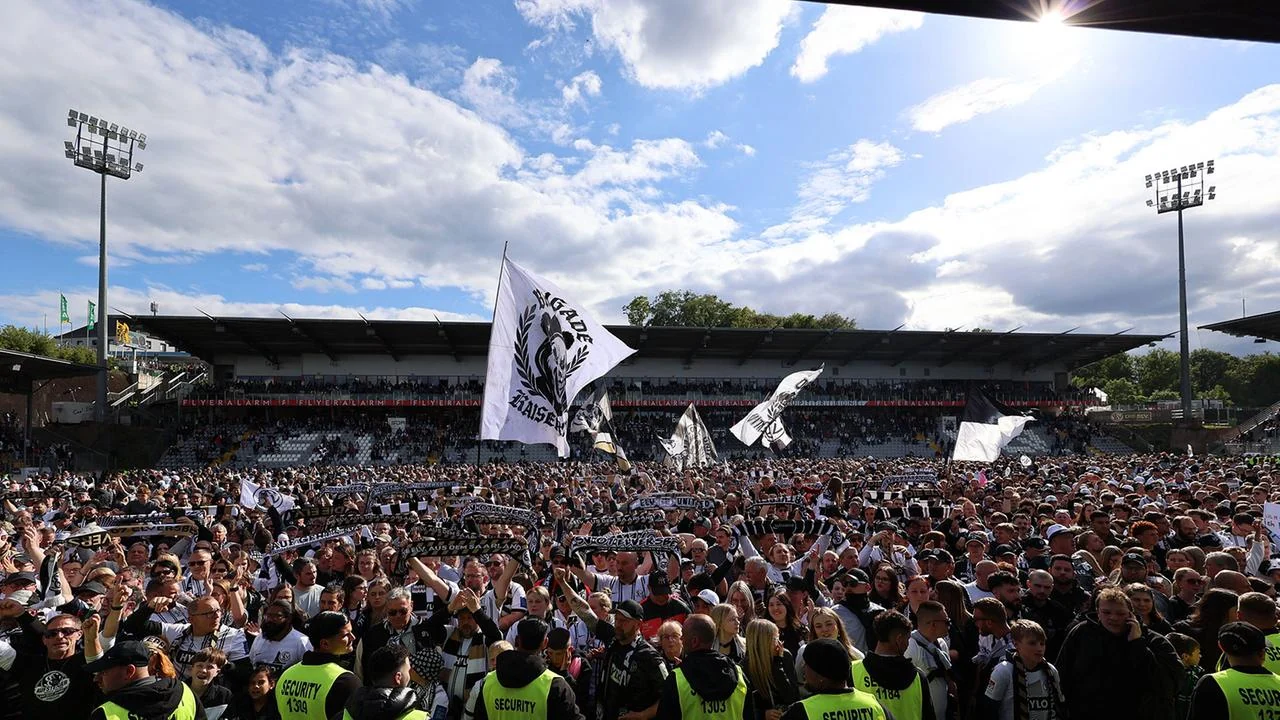
Schalke: Ruhr restored
The 2025/26 Bundesliga 2 champions returned after three seasons away, placing a 62,271-capacity destination back beside Dortmund in Germany's most concentrated football region.
Elversberg: a new Saarland pin
Automatic promotion made Elversberg the 59th club to appear in Bundesliga history and brought the league to a municipality of roughly 13,000 residents.
Paderborn: play-off route
Paderborn eliminated Wolfsburg 2-1 on aggregate, scoring the decisive goal in extra time of the second leg on 25 May 2026.
The outgoing locations matter too. St. Pauli's relegation removed one of two Hamburg clubs from the top flight, although HSV keeps the city on the map. Heidenheim's drop reduced the density east of Stuttgart, and Wolfsburg's first relegation after 29 consecutive top-flight years removed Lower Saxony from this season's club list. Paderborn's win was only the fifth time a second-tier side had won the modern promotion/relegation play-off, so that particular map change was anything but automatic.
For supporters, the biggest practical effect is ticket pressure at the newcomers. Schalke can absorb more than 62,000 spectators, yet demand from a membership exceeding 200,000 remains intense. Paderborn lists 15,000 places, while Elversberg began the season with the league guide listing 10,000 during work toward 15,500. An away allocation at either smaller ground is therefore a scarce product, not a casual purchase to leave until matchweek.
The sporting stories behind all three newcomers are covered in our 2026/27 promoted teams guide. When the next season approaches, check the relegation play-off page before assuming that the 16th- and third-place clubs will simply remain in their original divisions.
Where the Bundesliga Is Most Densely Clustered
The strongest cluster is unambiguous: six of the 18 clubs are in North Rhine-Westphalia. The rest of the map is built around smaller pairs—Hamburg and Bremen in the north, Berlin and Leipzig in the east, Munich and Augsburg in Bavaria, and Frankfurt and Mainz in the Rhine-Main area. Geography does not guarantee a derby, but it strongly shapes how supporters can combine matches.
The Rhine-Ruhr Away-Day Belt
Dortmund, Gelsenkirchen, Mönchengladbach, Leverkusen, Cologne and Paderborn give western Germany one-third of the division. Five of those cities sit within the Rhine-Ruhr transport network or immediately beside it; Paderborn is the eastern extension. Dortmund and Schalke are the headline pairing: route planners commonly put a rail journey from Dortmund to the Veltins-Arena area at under an hour, although matchday changes can lengthen it. Cologne and Leverkusen are closer still in geographic terms, while Düsseldorf—despite lacking a 2026/27 Bundesliga club—is a useful hotel and rail base between several grounds.
This density creates opportunity but also a scheduling trap. A Saturday 3:30 p.m. match in Cologne and a Sunday fixture in Dortmund can make an excellent two-game weekend. Two Saturday matches cannot. Nor should a traveller treat a straight-line distance as a station-to-turnstile time: suburban transfers, crowd controls and the walk to the away entrance all count. Start with the confirmed weekend fixture view, then test the complete route at the exact planned departure time.
The Long-Distance Edges of the Map
The hardest combinations sit across the map's edges. Hamburg to Munich or Freiburg is a cross-country commitment, not a casual regional hop. Union Berlin to Elversberg similarly links the north-east of the capital with Saarland near the French border. Even when an intercity train covers the main distance efficiently, Union's Köpenick location or Elversberg's local connection adds a meaningful final leg.
The eastern footprint is particularly thin. Union Berlin and RB Leipzig are the only current teams east of the old inner-German border line or in Berlin, leaving a large area without top-flight representation. Northern Germany is only slightly denser with Hamburg and Bremen. That imbalance is why a map conveys something a league table cannot: six away grounds can feel local to a supporter in the west, while a fan in the far north-east may travel several hours before reaching any Bundesliga stadium. For those edge-to-edge fixtures, an overnight plan is usually more resilient than relying on the last train after an evening kickoff.
Stadium Size Changes the Matchday Experience
The capacity gap is enormous: Dortmund lists 81,365 places, while Elversberg began 2026/27 with 10,000 during its redevelopment. Between those extremes sit Bayern at 75,000, Schalke at 62,271 and Stuttgart just above 60,000, followed by everything from the 58,000-capacity Frankfurt ground to Paderborn's 15,000-seat home.
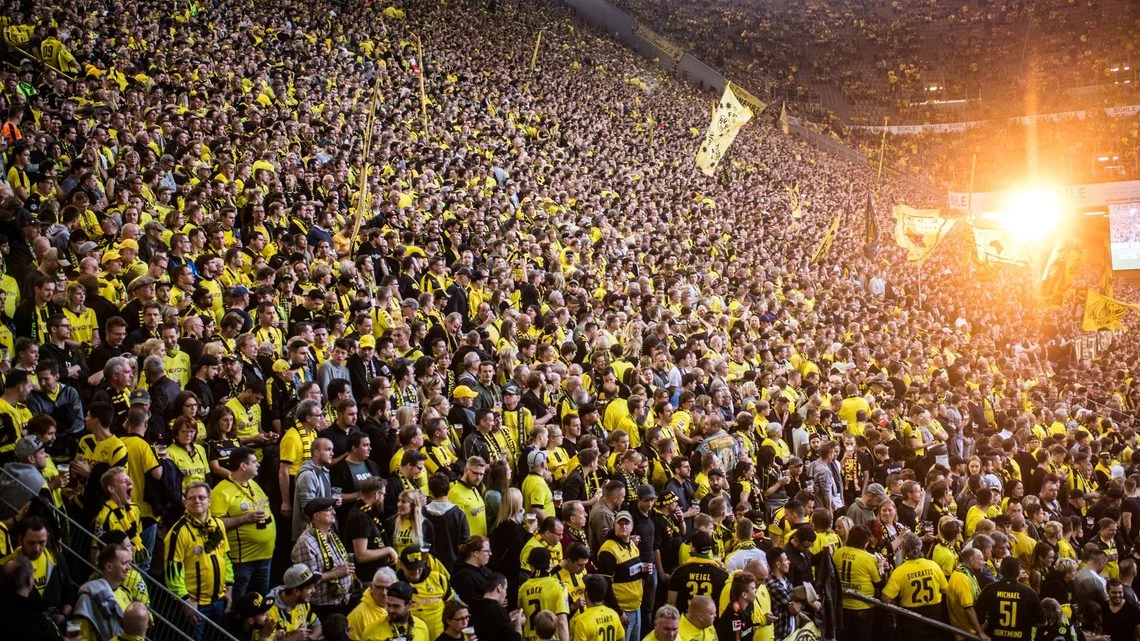
A large stadium does not necessarily produce easy access. Germany's professional leagues distributed a record 21.4 million tickets in 2025/26; the Bundesliga accounted for 12,718,097, or an average 41,562 per match. League occupancy reached 96.1 percent and 16 of 18 clubs exceeded 90 percent. Dortmund averaged almost 80,000, Bayern roughly 75,000 and Hamburg about 56,900. Their scale creates more inventory, but established season-ticket bases, member pre-sales and premium opponents can absorb it quickly.
The smaller grounds invert the equation. Union Berlin's mostly standing 22,012-capacity home creates an intimate, community-owned feel, yet a neutral visitor has fewer realistic routes into a sell-out. Paderborn's listed 15,000 and Elversberg's construction-limited capacity make away allocations proportionally small. Elversberg even staged its first home fixture of the season in Saarbrücken while work continued, a reminder to verify the actual venue as well as the city before booking transport.
Ticket-planning rule
Treat capacity as context, not availability. Buy through the home club or an explicitly authorised channel, check whether sales are member-only, and confirm the venue printed on the ticket. A 60,000-seat match can be harder to enter than a 30,000-seat fixture if demand is higher.
Affordability remains part of the attraction. Across 2025/26, the published average Bundesliga ticket price was €30.77 including VAT and the public-transport levy; seated tickets averaged €37.14 and standing tickets €12.27. Those are league-wide retrospective figures, not guaranteed 2026/27 prices. For the supporter, the map's real lesson is that every venue asks for a different strategy: pursue sales windows early at compact grounds, leave extra arrival time at giant arenas, and never assume that two stadiums with similar capacities offer the same access or atmosphere.
How to Plan a Bundesliga Away Trip by Region
A map becomes useful only when it produces a journey that survives fixture changes. The safest sequence is: choose a region, identify two or three possible matches, wait for exact kickoff confirmation, secure legitimate tickets, and only then lock in inflexible transport. The league publishes the opponent pairings well ahead of time, but it assigns precise Friday-to-Sunday slots in batches because European competition, DFB Cup ties, police requirements and major local events all affect the final decision.
Rail-First Trips and Same-Day Possibilities
Germany's intercity network makes rail the natural starting point. Base yourself in Cologne or Düsseldorf for Cologne, Leverkusen, Mönchengladbach, Dortmund and Schalke; add Paderborn only after checking the longer eastern connection. Frankfurt works for its own stadium and Mainz, while Munich connects naturally with Augsburg. Hamburg and Bremen can form a northern weekend when their fixtures fall on different days.
Search station to stadium—not city to city—and allow for crowd management after the final whistle. Deutsche Bahn's fan portal lists approaches to grounds across the top three divisions and can publish additional services. Still, a scheduled eight-minute connection is a fragile plan when thousands of people leave together. For a same-day return, build a later backup into the itinerary and check whether your match ticket includes local public transport; inclusion and valid zones depend on the ticket and club.
Airports, Overnight Stays and Fixture Confirmation
International visitors can group airports by football region: Düsseldorf or Cologne/Bonn for the western belt, Frankfurt for Frankfurt/Mainz and onward rail links, Munich for Bavaria, Hamburg for the north, and Berlin or Leipzig/Halle for the east. Freiburg is commonly reached by rail after flying into a larger regional airport; Elversberg requires extra attention to the final Saarland connection. An airport that appears closest on a map is not always the fastest after frequency, transfers and late-evening service are considered.
As of 10 September 2026, exact Bundesliga kickoffs had been published through Matchday 11, with the next batch expected in the week beginning 2 November after the DFB Cup round-of-16 draw. That date is a snapshot, not a permanent booking calendar. Use the site's calendar and this-weekend schedule to confirm the current status. If a listing still shows a Friday-to-Sunday range, do not buy a non-changeable flight that assumes Saturday afternoon.
- 1. Shortlist: choose a regional base and multiple acceptable fixtures.
- 2. Confirm: wait until the exact local date and kickoff appear.
- 3. Ticket: use the club's official sale and read membership restrictions.
- 4. Route: test the outbound trip, stadium transfer and post-match backup.
- 5. Protect: prefer changeable travel or an overnight buffer for evening games.
Bundesliga Map FAQ
These answers apply specifically to the 18 clubs in the 2026/27 Bundesliga. Promotion, relegation, stadium sponsorship and construction can change them in a later season.
Which Bundesliga Club Is Furthest North in 2026/27?
Hamburger SV is the northernmost Bundesliga club in 2026/27. Werder Bremen is the other northern representative. St. Pauli also played in Hamburg in 2025/26 but was relegated, leaving HSV as the city's sole top-flight club. Holstein Kiel, from farther north in Schleswig-Holstein, held the distinction during its 2024/25 Bundesliga season; it is not part of the current 18-team map.
What Is the Smallest Bundesliga City and Stadium?
Spiesen-Elversberg is the smallest locality represented, with roughly 13,000 residents, and Elversberg's Ursapharm-Arena was the smallest listed home ground at 10,000 early in 2026/27. The venue has been undergoing expansion toward 15,500, so the usable capacity and even venue arrangements should be checked for a specific match. Paderborn's Home Deluxe Arena is the next-smallest figure in the league table above at 15,000.
Where Can I See Live Tables and Club Schedules?
Use the live Bundesliga table for current positions and the teams directory to open an individual club's schedule. The full schedule is the right destination for matchdays and results. This article deliberately keeps those changing facts out of its map table: a stadium remains in the same city after a win or defeat, but a club's position can move several times in one weekend.
Bottom line: western Germany offers the greatest density of 2026/27 Bundesliga grounds, Hamburg marks the northern edge, Munich and Freiburg the southern reach, and Elversberg supplies the season's smallest and newest top-flight location.
JOIN THE DISCUSSION
Comments
Sign in with Google to comment. Keep the discussion focused on Bundesliga football and respectful to other supporters. New comments are reviewed before publication.
Loading comments…