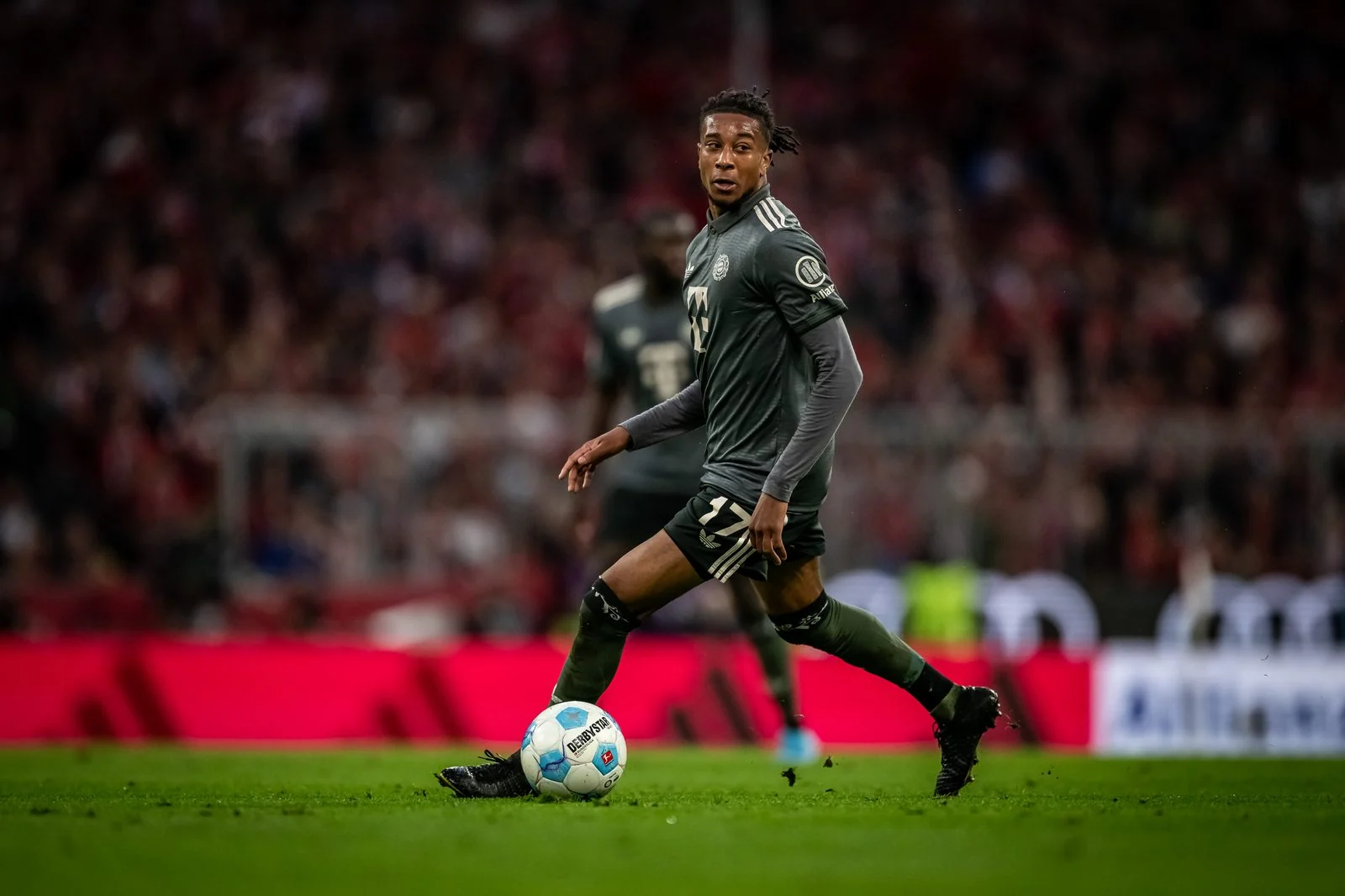
Michael Olise is Bayern Munich's left-footed creator on the right wing. His starting position stretches the pitch; his movement inside opens passing lanes, shooting angles and combinations with Harry Kane. Understanding that relationship explains his Bundesliga impact better than calling him simply a winger, midfielder or forward. This guide separates his established Bayern role from changing statistics and shows what to watch when the number 17 receives the ball.
What position does Michael Olise play for Bayern?
Olise predominantly plays on the right side of Bayern's attack, with the freedom to operate behind the striker. Bayern's official profile identifies that flexibility explicitly. His number is 17 and his stronger foot is his left, so the position creates an obvious route towards goal: begin outside the opposing left-back, move inside and bring the ball onto the foot best suited to the next pass or shot.
Right winger by starting position, creator by function
The useful distinction is between where Olise starts and what he does after receiving. On the touchline, he can force a defender to decide whether to step out or protect the penalty area. Inside, he becomes a playmaker. The narrow lane between a full-back and centre-back gives him access to a forward's run, a return pass from the striker or a curling attempt at goal. Width is therefore part of the creative process, rather than a restriction on it.
Bayern's April 2026 analysis of his performance against Real Madrid described an inverted winger with a strong left foot. That label helps, but it should not imply a single repeated action. A defender who blocks the inside route can expose space outside; a midfielder who comes across to help leaves another Bayern player free. Olise's advantage grows when he reads the whole defensive arrangement before choosing his touch. Watch the player approaching him as well as the player directly marking him.
Why moving inside does not make him a permanent number 10
A central receiving position is not proof of a permanent central assignment. A number 10 often begins between the opposition's midfield and defence. Olise can arrive there from the wing after someone else has occupied the full-back. The destination may look similar on a freeze-frame, but the movement that created the space is different. Bayern retain a wide threat while allowing a gifted passer to influence central situations.
His central experience with France makes that versatility credible; it does not establish the formation Bayern will use in their next match. Read a line-up alongside the opening exchanges. Who provides the right-side width when he moves inside? Who receives underneath him if the forward pass is blocked? Those answers reveal his actual job. The Bundesliga club directory provides the wider team context, while the match itself shows how the listed position turns into a working relationship.
How his journey through English football shaped his game
Olise arrived in Munich with senior experience rather than a reputation built solely on academy football. His route passed through Arsenal, Chelsea and Manchester City before Reading gave him the platform to enter the professional game in March 2019. A Championship debut at 17 was an important change of environment: technical promise had to survive opponents competing for league points, not simply impress in youth matches.
Crystal Palace followed in the 2021/22 season. Three years in the Premier League supplied another test, with different coaches, attacking partners and defensive approaches. Bayern's signing announcement counted 90 competitive Palace appearances, 16 goals and 25 assists. Those are all-competition figures, not a Bundesliga total or a Premier League-only record. They show that the balance between finishing and supplying teammates was established before his move to Germany.
The transfer became official on 7 July 2024, with a Bayern contract running to 30 June 2029. That date matters when judging his adaptation: he joined a new league and a new attacking structure, but he did not begin learning the right-wing role from scratch. Bayern recruited an attacker whose comfort carrying, passing and shooting could translate into a team that regularly controls the territory of a match.
There is a practical difference between creating during a transition and creating against an organised defence. In an open break, an attacker can exploit the space a retreating opponent has already left. Against a deeper block, he may have to manufacture the opening by slowing down, drawing a second defender or playing a quick return pass. Olise's previous experience made the first situation familiar. Bayern ask him to solve the second repeatedly, sometimes several times within the same possession.
That helps explain why a change of club can make a player's qualities more visible without inventing them. More sustained attacks provide more opportunities to attempt the disguised delivery or the combination around the edge of the box. Better movement from teammates can make a pass possible that was previously only an idea. Neither factor means every possession becomes productive; both change the problems the winger is asked to solve.
For supporters, the fair comparison is therefore between roles as well as totals. A Palace highlight shows where his skills were developed in senior football. A Bayern sequence shows how those skills function with more teammates occupying advanced positions. His story is a progression through increasingly demanding settings, and his Bundesliga success makes more sense when that earlier experience remains part of the picture.
The choices that make Olise difficult to defend
Olise's threat comes from making several different actions possible from a similar body position. The defender cannot safely commit to stopping only the shot, cross or dribble. His two goals and two assists in Bayern's 5-0 Bundesliga win at Bremen on 21 September 2024 provided an early example of that range. He could finish a team move, create for a teammate and then become the scorer again.
Beating a defender without always sprinting past him
A successful attacking action does not always involve running beyond a full-back. Sometimes it only requires shifting the defender's weight far enough to open a passing lane. A pause can be useful if it encourages the opponent to step forward. A small change of direction can then create the space for the next touch. That is why Olise's close control matters in a crowded attacking third where a long sprint may not be available.
The player's surroundings influence the duel. A supporting runner can draw the full-back away while Olise faces a midfielder instead. Bayern's account of the April 2026 Real Madrid match describes precisely that kind of contribution from Konrad Laimer. The lesson is broader than one passage: the teammate who never receives the ball may still create the winger's opportunity. Watch the run outside him before attributing everything to the dribble.
The final pass and the shot come from the same picture
When Olise moves onto his left foot, the goal and the runners can sit within the same field of vision. A defender protecting the shooting angle may leave a route into the box; one covering the pass may allow the attempt. This is an analytical way to understand his choices, rather than a claim that every inward movement succeeds. Bayern need him to recognise the opening quickly enough that the defence cannot recover.
The Bremen performance showed the difference between receiving attention and responding to it. Jamal Musiala's goal came from Olise's creation, while Kane later finished another of his assists. His own second goal supplied the complementary threat. Opponents could not treat him as a provider who would always look elsewhere. The shot makes the pass more credible, just as the passing option makes a defender hesitate before rushing to block.
His late finish in Bayern's 4-3 Champions League win over Real Madrid in April 2026 offered a different setting: a tight, high-pressure game rather than an early Bundesliga rout. That European example illustrates the technique, while Bremen shows its league relevance. The common feature is a decision made with the defender's balance and teammates' positions in mind. Highlights preserve the finish; watching the preceding few seconds explains why he was able to attempt it.
Why his connection with Harry Kane matters
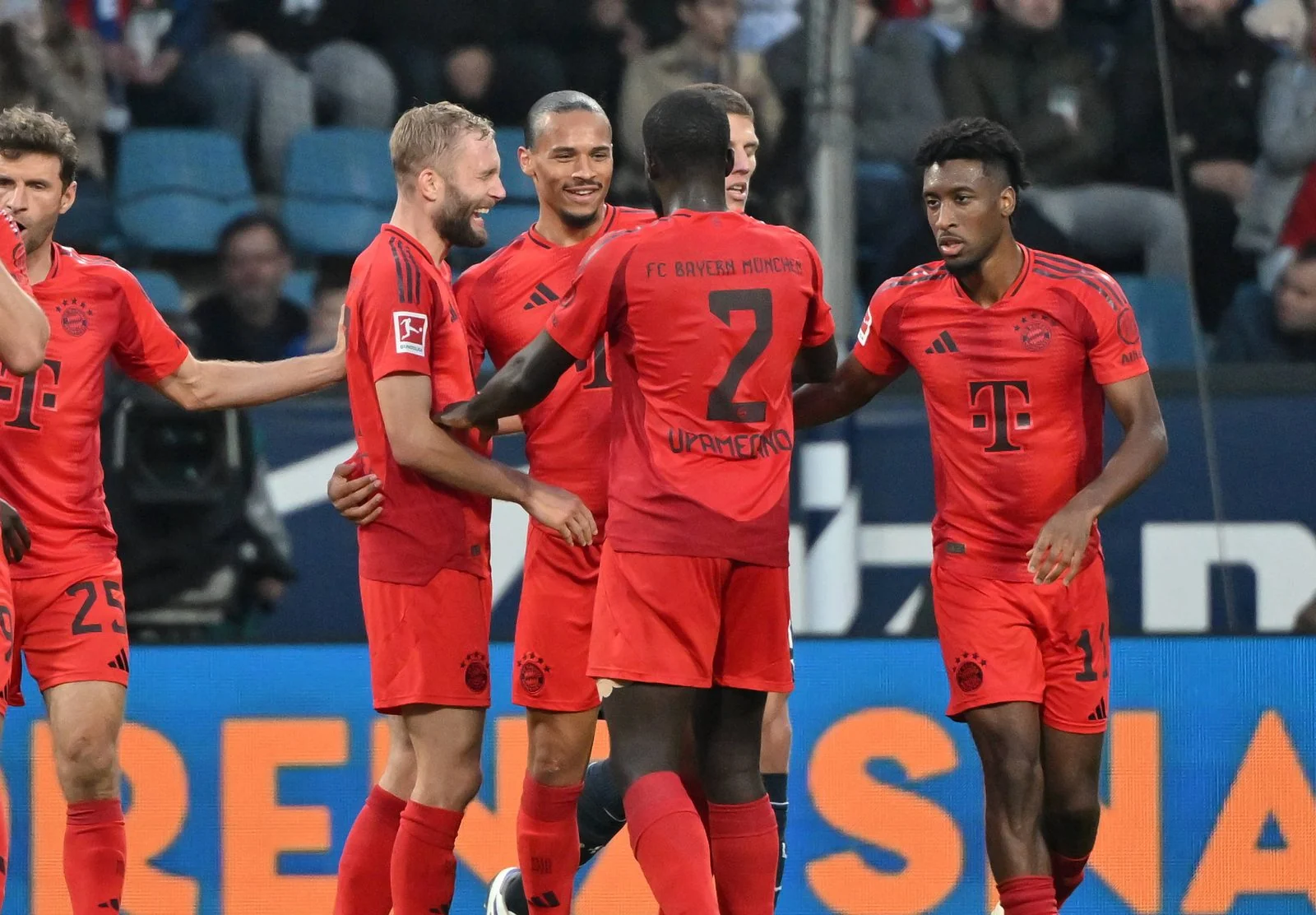
Kane gives Olise an elite target, but the relationship works in both directions. In the September 2024 Bremen win, Kane was involved in Olise's opening goal before scoring from his teammate's supply. That is a useful starting point for understanding Bayern's attack: the centre-forward can complete an opportunity and help create one. The winger can provide the delivery and attack the space opened by the striker.
A dangerous number nine occupies defenders even when he does not touch the ball. If a centre-back stays close to Kane, the room available to close down Olise can shrink. If that defender steps out, the striker may become accessible behind him. Bayern's other attackers are part of the calculation too. An opponent dealing with a threat on the left cannot always send unlimited support towards the right.
The scale of the collective production became clear during 2025/26. After 21 matchdays, Bayern reported that Kane, Olise and Luis Díaz had each reached at least 20 combined league goals and assists. That was a mid-season milestone, not their final tally. Its significance here is the distribution of responsibility: defenders faced several players who could both score and create, instead of a single provider feeding a single finisher.
A striker who can also make the creator's next run possible
Consider what happens when a striker drops towards the ball. A defender can follow him or remain in the back line. Following may open a lane for another attacker; staying can give the striker time to turn or connect play. For a winger with Olise's technical security, either situation can become useful. He can pass into feet and continue moving, or stay wide while the central connection develops. This is a tactical explanation of the options, not a promise that Bayern repeat one set combination.
Timing makes the difference. A pass arriving too early may force Kane to receive with his back to goal before support is ready. One arriving too late can allow a defender to block the lane. Likewise, Olise's movement after releasing the ball matters: stopping to watch the striker may waste the space that the pass has helped create. The most revealing passages are often the ones where both players contribute before the final action.
Our analysis of Kane's 100 Bundesliga goals in 98 games examines the finishing record. Watching Olise alongside him adds another layer: how Bayern deliver the ball into dangerous areas and keep an attack alive when the first route closes. A creator's influence can be visible in the striker's chance even when the official assist belongs to someone else.
What his Bundesliga numbers say—and what they leave out
Olise's completed league seasons support the description of an attacker who supplies and scores. He finished 2024/25 with 12 goals and 15 assists. The Bundesliga's 2025/26 Player of the Season announcement records 15 goals and 19 assists the following campaign. Those figures establish substantial production across two seasons; they do not require a current-season extrapolation to make the case.
Keep completed seasons separate from the current campaign
The table uses Bundesliga figures only. The first two rows are completed seasons. The final row is a dated snapshot from the league player profile, checked on 14 October 2026. Cup and European appearances belong to separate totals. This distinction matters because club squad pages can display all-competition numbers that appear larger without contradicting the league record.
| Season and scope | Goals | Assists | Status |
|---|---|---|---|
| 2024/25 Bundesliga | 12 | 15 | Final |
| 2025/26 Bundesliga | 15 | 19 | Final, league award figures |
| 2026/27 Bundesliga | 4 | 1 | Five appearances; checked 14 October 2026 |
The assist increase between the completed campaigns is four, while the goal increase is three. That straightforward comparison is more useful than treating a small opening sample as proof of another season's destination. Different opponents, minutes and match situations will shape the current campaign. The awards also need precise labels: Bayern's fan-voted club prize and the Bundesliga Player of the Season award are distinct honours, even when the same player receives both.
Read assists alongside chance creation and finishing
An assist records a completed scoring action, so its relationship with the creator's performance includes the teammate's finish. An excellent delivery can produce no assist if the shot misses. A simple pass can produce one if the receiver scores from a difficult position. This does not make assists meaningless; it makes them a starting point that benefits from watching the chances themselves.
Definitions can also vary between providers, particularly around deflections, penalties won and other indirect involvement. For this guide, the league's award account supplies the settled 2025/26 figure of 19. Keep that definition consistent when making comparisons. Adding an assist total from a different source to league goals can create an attractive number that answers a different statistical question.
The football explanation remains the important part. Does Olise put a teammate through in stride? Does he make the goalkeeper move before delivering? Does his threat force a defender to retreat, allowing Bayern to retain the attack? Those actions help explain why the end product repeats. The 2025/26 award recognises a season's influence; the video reveals the individual decisions that built it.
What to watch when Bayern play next
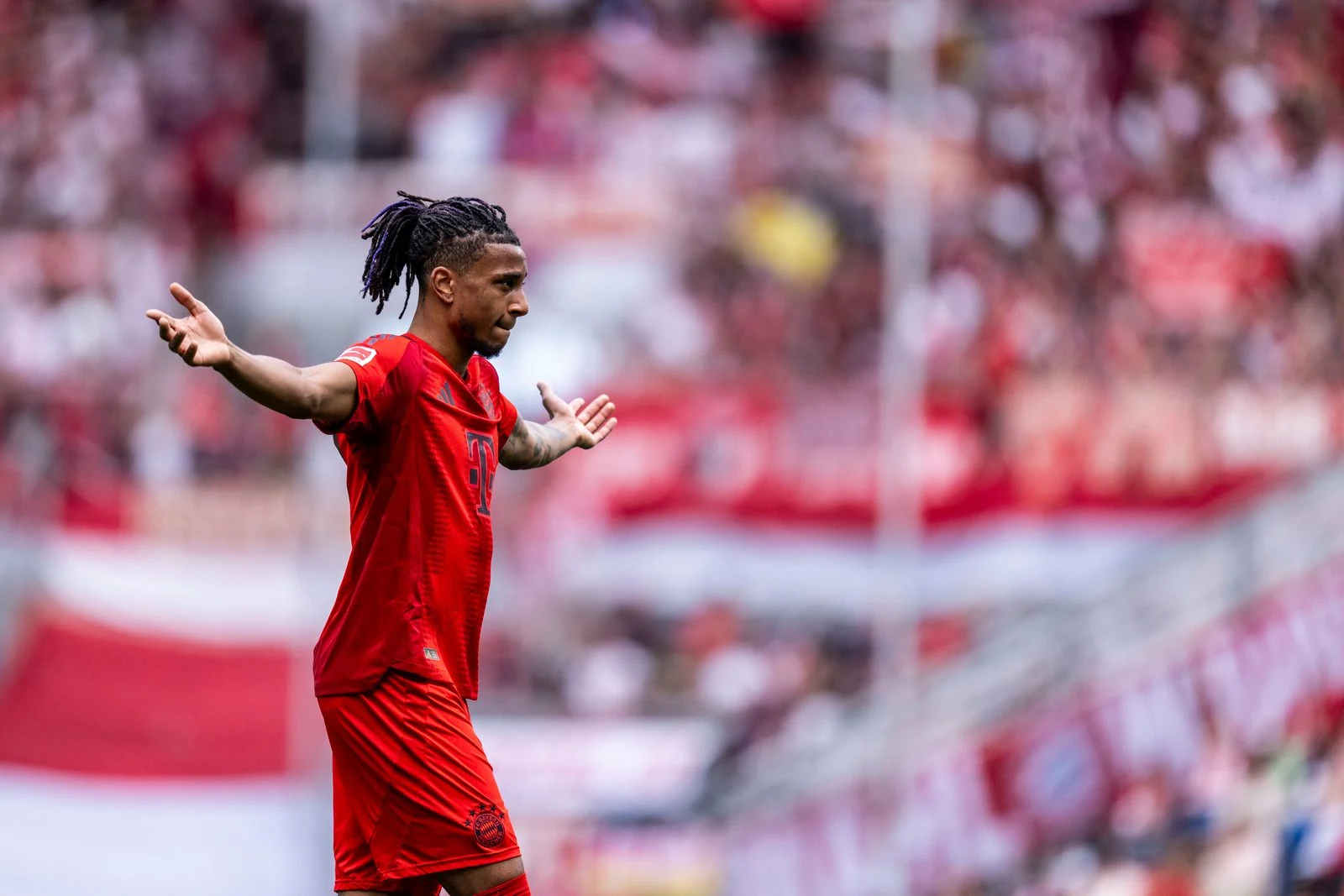
Start with the moments before Olise receives. Does Bayern's possession move him into an isolated duel, or is he collecting the ball with two opponents already close? Does he scan towards Kane before the pass arrives? The quality of the first touch depends partly on that preparation. A spectacular dribble is easy to notice, but a reception that immediately removes the need for one can be just as useful.
Next, watch the support on his outside and underneath him. A run beyond the full-back can create an inward route without becoming the eventual passing target. A midfielder offering a shorter option can let Bayern restart the attack when the box is closed. If Olise returns the ball rather than forcing the final pass, that may be the right choice for the situation. Patience and aggression are both parts of controlling an opponent.
Then follow the action after he passes. Does he move into the box, change his angle for a return or hold the width for the next switch? That second movement often explains whether the attack keeps its momentum. The easiest mistake when assessing a creative player is to stop watching once the ball leaves his foot. His next position can be useful even when another teammate becomes the visible protagonist.
The same principle applies when possession is lost. Look at whether he closes the immediate passing route, follows an advancing opponent or helps Bayern recover their shape. In a March 2026 club interview, Olise emphasised the collective and the clarity of the team's plans. That does not provide a pressing statistic, but it is a reminder that the attacking role belongs inside a wider team responsibility. Individual freedom depends on teammates being able to trust the response after a turnover.
There are constraints to notice too. A deep, compact defence can deny the inward lane. A supporting full-back may be occupied defensively. Fatigue and substitutions can change the relationships around him. The Bundesliga named Olise September 2026 Player of the Month, yet an award cannot guarantee the next starting place or reproduce the same match conditions. Read the announced XI and judge the actual game rather than assuming that the previous highlight will return.
Use the Bundesliga schedule to find Bayern's next fixture and the results page to place recent performances in sequence. On the pitch, the most revealing question is what each action makes possible for the team. Olise's impact lies in turning a wide reception into several credible threats—and choosing the one the defence has left available.
JOIN THE DISCUSSION
Comments
Sign in with Google to comment. Keep the discussion focused on Bundesliga football and respectful to other supporters. New comments are reviewed before publication.
Loading comments…