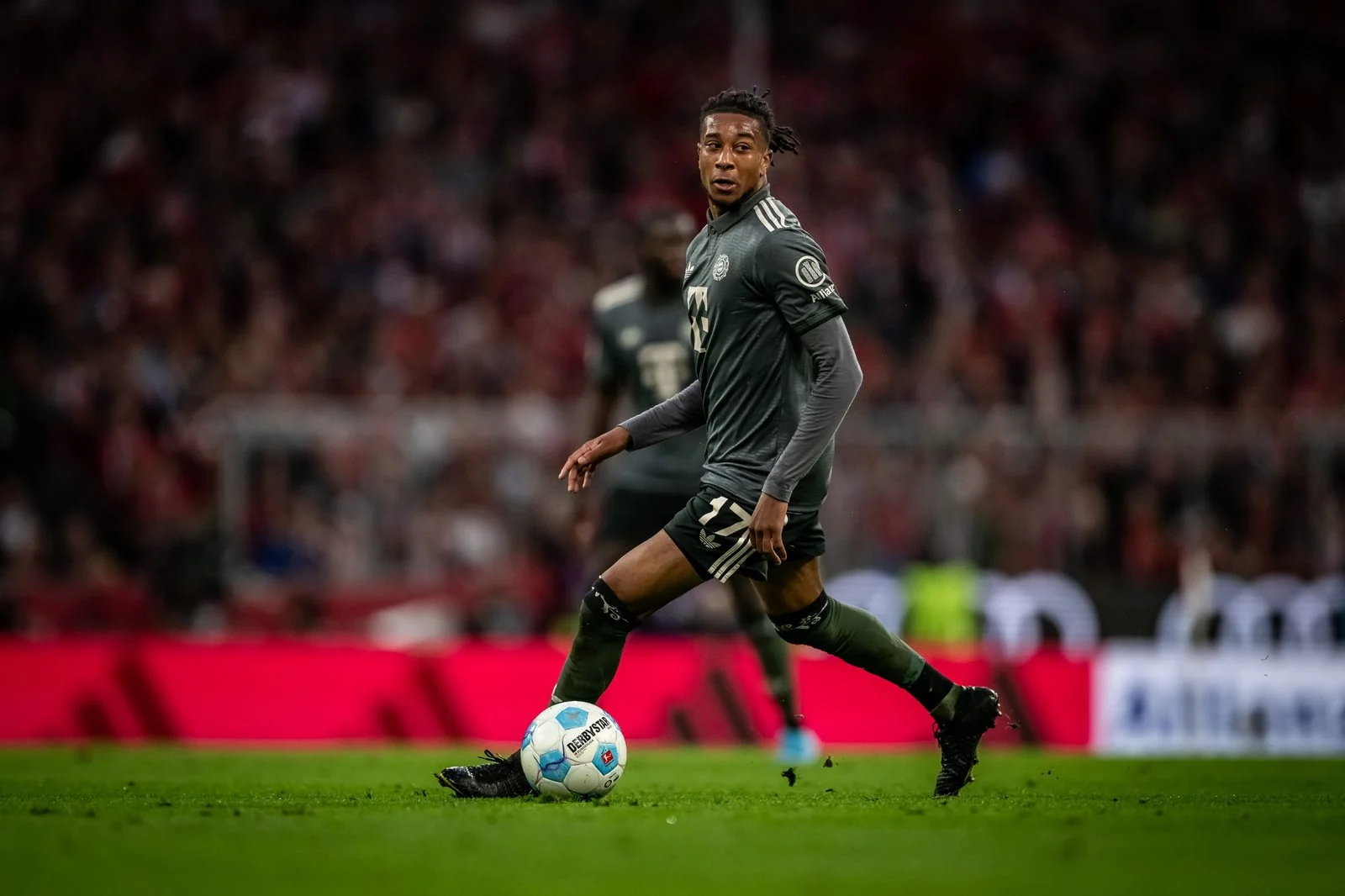
Michael Olise won Bundesliga Player of the Season for 2025/26 after scoring 15 league goals and providing 19 assists. His case combined sustained creation, a serious finishing threat and the availability to repeat both across Bayern Munich's championship campaign.
The result: Olise was the Bundesliga’s 2025/26 Player of the Season
Michael Olise won the official Bundesliga Player of the Season award for 2025/26. The league confirmed the result on 16 May 2026, with DFL chief executives Marc Lenz and Steffen Merkel presenting the trophy at the Allianz Arena. Bayern Munich also confirmed the honour after the final league match against Cologne. This was recognition across the Bundesliga, organised with EA SPORTS, rather than a poll restricted to Bayern supporters choosing their own club's outstanding player.
The central evidence is unusually balanced: Olise finished the league season with 15 goals and 19 assists. That is 34 direct goal involvements, calculated by adding the two published totals. He could decide attacks as the finisher or the player supplying the final pass. Bayern won the championship, but the award's significance lies in identifying Olise's individual contribution inside that successful collective. It invites a closer look at how the attack worked, not simply a celebration of the final standings.
There is an important limit to the word “why”. The organiser published the result and the voting system, but did not release every voter's reasoning or a complete ranking of the candidates. We can explain the footballing case for Olise through verified statistics, his responsibilities and the judgements expressed by his club and the league. We cannot reconstruct an undisclosed ballot, claim a precise margin over Harry Kane or pretend that one spectacular match alone determined the outcome.
This analysis therefore treats the result as established and the interpretation as a football argument. A winger who repeatedly creates openings while scoring himself offers a different kind of influence from a penalty-box striker, a controlling midfielder or a goalkeeper. Comparing those roles thoughtfully helps explain why the award did not have to follow the scoring chart. It also gives a supporter room to admire Kane's finishing or another candidate's season while understanding the case that made Olise such a persuasive choice.
The season label matters throughout. The figures here belong to the completed 2025/26 Bundesliga campaign, not all competitions and not the ongoing 2026/27 season. Later international performances can enrich the story of Olise's development, but they cannot be counted backwards into a league award presented in May. For the broader chronology, the official winners and voting guide places his achievement alongside earlier recipients.
Why 15 goals and 19 assists describe a dual threat
Olise's 15 goals and 19 assists describe two substantial sources of attacking value. The assist total led the Bundesliga's published 2025/26 ranking, while the goals meant opponents could not treat him only as a supplier. Adding them produces 34 direct goal involvements. That arithmetic is useful as a summary, but the combination is more revealing than the sum: a defender had to respect both the shot and the pass on the same possession.
The league's German award analysis also credited him with 174 shot involvements, the highest total in the division. That category extends the picture beyond attacks that ended in goals, covering his own attempts and the opportunities he supplied for teammates to shoot. It should not be confused with 174 chances of identical quality, or with 174 direct goal involvements. A blocked attempt from distance and an inviting chance close to goal demand different interpretations even when both appear in a season's attacking activity.
Final passes and finishing reinforce each other
Imagine a right-sided attacker receiving with a teammate running into the box. If the defender immediately steps towards the ball, a pass behind him becomes available. If he protects that passing lane, the attacker may have room to move inside and shoot. The value comes from forcing that decision repeatedly. A player with only one convincing option is easier to channel into a predictable action; Olise's scoring and supply made committing early a more uncomfortable choice.
An assist still depends on someone converting the opportunity. That is why the 19 assists should be read alongside the wider shot involvement rather than as a self-contained measure of creativity. Some excellent passes are followed by misses, and some relatively simple passes precede exceptional finishes. Watch the weight and timing of the ball, the receiver's position and the defensive pressure. Those details distinguish a winger regularly creating advantageous situations from someone merely touching the ball before a teammate produces something extraordinary.
The combination placed Olise in a notable historical bracket: the league identified him as the first player since Jadon Sancho in 2019/20 to reach at least 15 goals and 15 assists in one Bundesliga campaign. That does not make the two seasons tactically identical. It does show that being highly productive in both categories is unusual. For supporters asking why a winger could earn the overall award, this balance provides a stronger starting point than comparing only his goals with the centre-forward's total.
The right-wing decisions that made Bayern harder to defend
Olise's starting position on the right placed his left foot towards the centre of the pitch. That familiar configuration invites comparisons with Arjen Robben, but the comparison is most useful as a description of the defender's problem, not a demand that two players become identical. Bayern's own account of the award highlighted Olise's first touch and ability to unsettle a defence. The league had already identified his blend of dribbling and creation during his first season.
Cutting inside or releasing the runner
On the right flank, the direction of a first touch can decide whether the defender is still balanced when the next action arrives. A clean reception lets Olise face the pitch rather than spend an extra touch recovering the ball. If the defender closes the inside route, the pass to a teammate moving beyond him can become more attractive. If the defender stays narrow to protect the box, Olise can gain the time needed to deliver or change the angle again.
This is a reading of his attacking possibilities, not a claim that every Bayern possession followed one rehearsed move. The significance of the 2025/26 numbers is that they give substance to both outcomes. Fifteen goals establish a serious finishing threat; nineteen assists show that the final pass was more than an occasional alternative. Opponents could not safely solve the problem by assuming his only ambition was to arrive on his left foot and shoot.
Space created for Kane and the opposite flank
For the centre-forward, a winger drawing attention can alter the space available in front of goal. A centre-back stepping out to help the full-back may leave a different gap behind; a midfielder tracking across can loosen coverage elsewhere. Kane's movement then adds another decision. He can threaten the box or offer a passing connection, so the defence has to manage more than the player carrying the ball. This is why creative value can be collective even when an individual receives the award.
The opposite flank matters too. A defence compressed towards Olise's side has farther to travel if Bayern move the ball across. The winger's influence can therefore appear in the quality of a teammate's next situation, even when he is not credited with the last pass. That should not be turned into an invented extra assist total. It is a useful way to watch the attack: follow where defenders move, then see whether Bayern exploit the space that movement opens.
Our Olise playing-style profile explores the broader technical picture. For this award campaign, the key point is narrower: a right-wing role became a repeated source of both creation and finishing, giving Bayern another route to decide league matches.
Consistency, availability and the progression from rookie winner
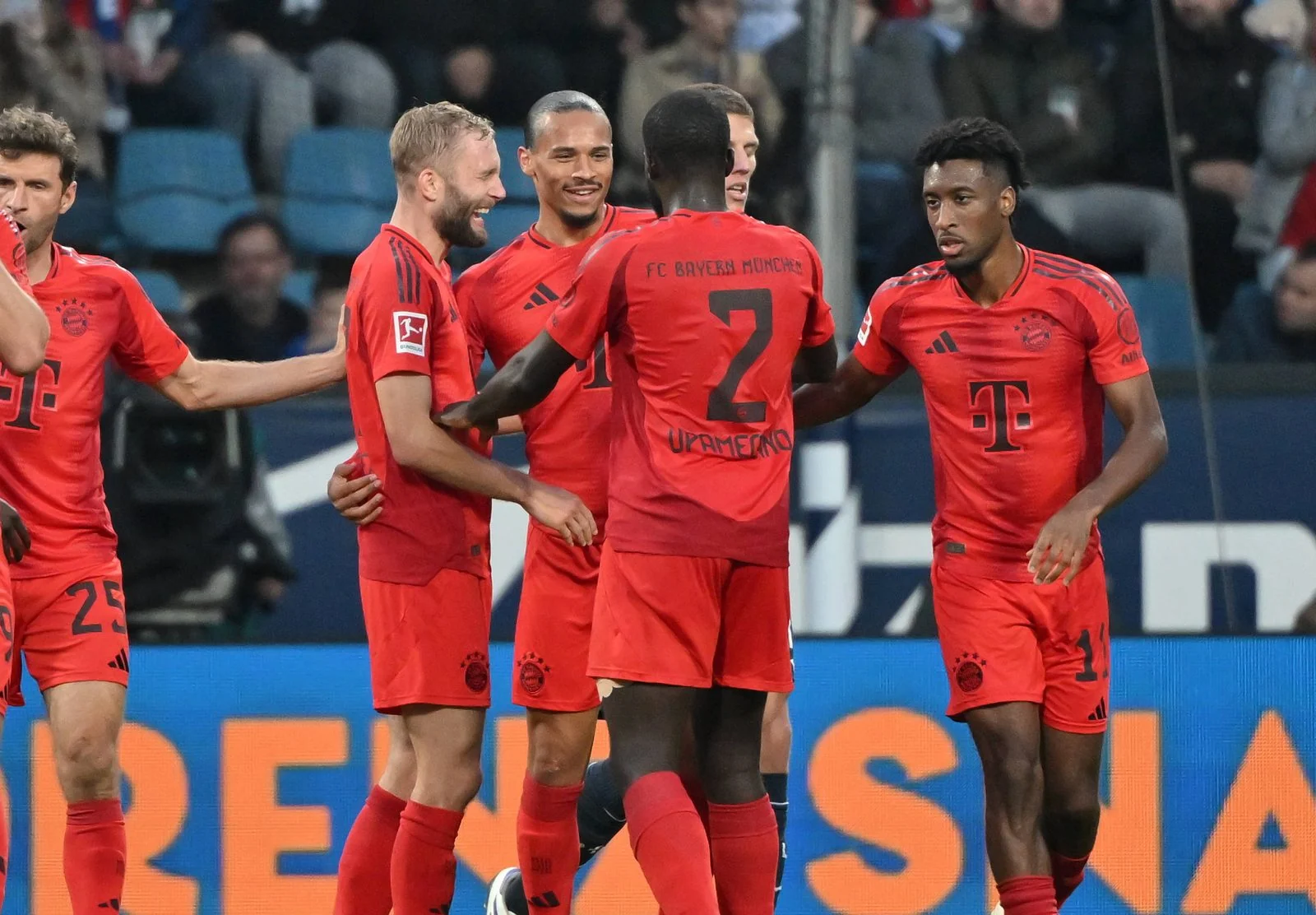
Olise's second Bundesliga season improved on an already excellent first one. In 2024/25 he scored 12 league goals, provided 15 assists and won Rookie of the Season. In 2025/26 the corresponding figures rose to 15 and 19. The increase is three goals and four assists, producing seven additional direct goal involvements. More importantly, the progression came after opponents had a full season of Bundesliga evidence about the threat he presented.
The rookie honour should not suggest that Olise had been an inexperienced senior footballer before Bayern signed him. He arrived from Crystal Palace in 2024 with top-flight experience elsewhere. The award relates to eligibility within the Bundesliga's rookie framework. His move from rookie winner to overall season winner is therefore best understood as a rapid rise in recognition within Germany, rather than a claim that he learned professional football from scratch in Munich.
Availability helped make that sustained influence possible. The league's analysis dated 16 May 2026 reported appearances in 66 of the 68 possible Bundesliga matches across his first two seasons. It identified the two absences as a suspension against Bremen and a rest against Mönchengladbach, rather than an injury lay-off. Those are historical statements at that cutoff. They should not be repeated as a current medical assessment, or used to predict that a player will avoid injury in the future.
For a coach, repeated availability can mean more than adding another name to a team sheet. Teammates learn the timing of a familiar receiver's first touch and the situations in which he will pass or carry. A full-back can judge an overlapping run with a clearer expectation of when the ball might arrive. The striker can read whether the winger is preparing to cross or draw an opponent closer. Continuity allows those relationships to become more fluent through repeated competitive situations.
There is also a difference between one explosive afternoon and a season's dependable threat. An attacker can produce a spectacular collection of clips while having long quiet periods. Bayern's award announcement specifically emphasised Olise's recurring influence in the final third. That is a club's assessment, but it fits the published season totals and the account of his availability. The award case was about a player sustaining a difficult blend of scoring and creation over a league campaign, not merely supplying one memorable finish for an end-of-season montage.
Why the award did not simply follow the Golden Boot
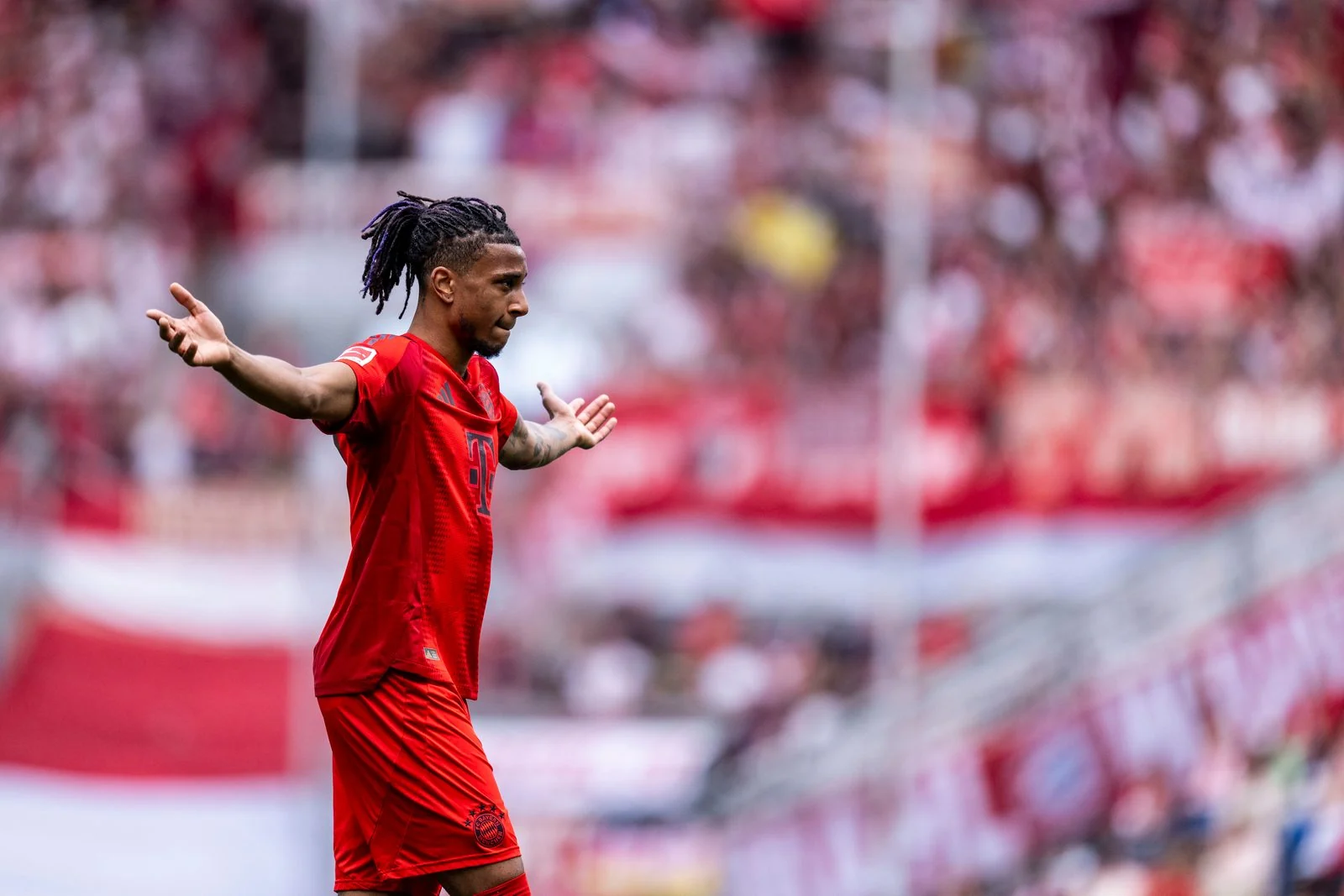
Harry Kane finished as the Bundesliga's leading scorer in 2025/26 with 36 goals, ahead of Deniz Undav on 19 and Serhou Guirassy on 17. Olise's 15 was a different kind of total from a different attacking role. Kane's scoring achievement answers who finished the most league goals. Player of the Season asks a broader question, so there is no rule requiring the two honours to go to the same person.
It would be equally misleading to dismiss Kane as only a finisher in order to strengthen Olise's case. Bayern's centre-forward also helps connect attacks, draws defenders and gives teammates an exceptional target. Olise's award does not subtract from that contribution. The more useful comparison asks how each player expanded the team's possibilities: Kane supplied the dominant central scoring threat; Olise combined a substantial goal return with the division's highest assist total from a wide starting position.
How the vote balanced fans, clubs and experts
The 2025/26 award process selected the Team of the Season from 40 candidates, then chose Player of the Season from that XI. Fans carried 40 percent of the weighting, clubs 30 percent and selected experts 30 percent. Kane, Olise and Luis Díaz all appeared in the attacking group of the official team. That put their achievements inside a broader selection recognising different positions, rather than a simple extension of the goals table.
Those published rules explain how a decision was made, but not every detail of the result. No complete vote breakdown in the announcement establishes that Kane finished second, identifies a decisive constituency or gives Olise's winning margin. Calling him the winner is factual. Claiming that voters specifically preferred one statistic, or that a given percentage rejected Kane, would go beyond what was published. Football analysis should illuminate the case without pretending to supply a missing ballot report.
The result also provides no mathematical conversion rate between an assist and a goal. A voter may place special value on creation, another on scoring in difficult match states, another on all-round involvement. Those judgements are part of what an overall award accommodates. Anyone wanting the separate scoring record can use our 2025/26 final top-scorer guide. Keep the two records alongside each other: one establishes Kane's exceptional finishing season, while the other records the league-wide recognition given to Olise's wider attacking campaign.
How to judge Olise’s season when watching it again
Begin with the 2025/26 goal-and-assist compilation, then use a full match to test what the highlights leave out. A compilation efficiently shows the range of outcomes; it cannot show every reception, misplaced pass, recovery run or possession in which the winger helped Bayern hold an opponent in its own half. Watching both forms prevents a spectacular final action from becoming the entire explanation of a season built on repeated involvement.
One specific sequence to revisit is Olise's goal in Bayern's 4-0 league victory over Union Berlin in March 2026. Bayern's analysis described his first touch from Leon Goretzka's pass, the move beyond Stanley Nsoki and the curling finish in the 43rd minute. Watch the preparation as closely as the shot. The touch and change of angle help create the moment in which the left-footed finish becomes possible, rather than leaving the attacker to strike through a defender already set in front of him.
Next, watch several assists and stop the action before Olise releases the ball. Is the eventual scorer already free, or does the winger draw an opponent away first? Does the pass invite a first-time finish, or force the receiver to adjust? Then follow an attack that produces no goal. An excellent delivery followed by a miss can still reveal the same quality of decision. This exercise gives the season's 19 assists context without inventing a new statistic to credit everything the final total omits.
Keep the competition visible when changing videos. A Champions League performance against Real Madrid may demonstrate the same technical qualities, but it is not a Bundesliga appearance. Likewise, France's World Cup matches occurred after the league award was presented. Mixing those achievements into one long montage can produce an impressive account of a footballer while confusing the specific case for his 2025/26 domestic prize. The league season deserves to stand on its own evidence.
The clearest reading is that Olise combined elite supply, meaningful scoring and sustained involvement within a championship attack. That is a compelling case for an overall award, even though no individual trophy can settle every comparison between positions. Watch the reception, the defender's response and the next runner before admiring the finish. Those connections explain more about his season than treating the trophy as either a popularity contest or a permanent declaration that every rival was inferior.
JOIN THE DISCUSSION
Comments
Sign in with Google to comment. Keep the discussion focused on Bundesliga football and respectful to other supporters. New comments are reviewed before publication.
Loading comments…